Vans are among the hardest-working vehicles in any market, and they are not all the same. A courier van stopping hundreds of times a day, a loaded cargo van and a passenger minibus all place different demands on their brakes, which means a single approach to van brake pads will not serve every customer. For distributors, that variation is an opportunity: get the fitment and material right for each van type and you become the supplier fleets return to. This guide covers how van types differ, what their duty cycles demand, and how to source van brake pads at wholesale.
Vans sit within the wider light commercial segment. For the fleet-level view, see our LCV brake pads sourcing guide. This article focuses specifically on vans.
Why Van Brake Pads Deserve Their Own Approach
A van spends its life doing something a passenger car rarely does: carrying weight, all day, often in traffic. That produces a distinct wear pattern:
- Constant stop-start braking, especially in urban delivery work, which heats pads repeatedly.
- Variable load. A van may be empty in the morning and fully loaded by afternoon.
- High annual mileage, meaning faster wear and more frequent replacement.
Van Types and What They Demand
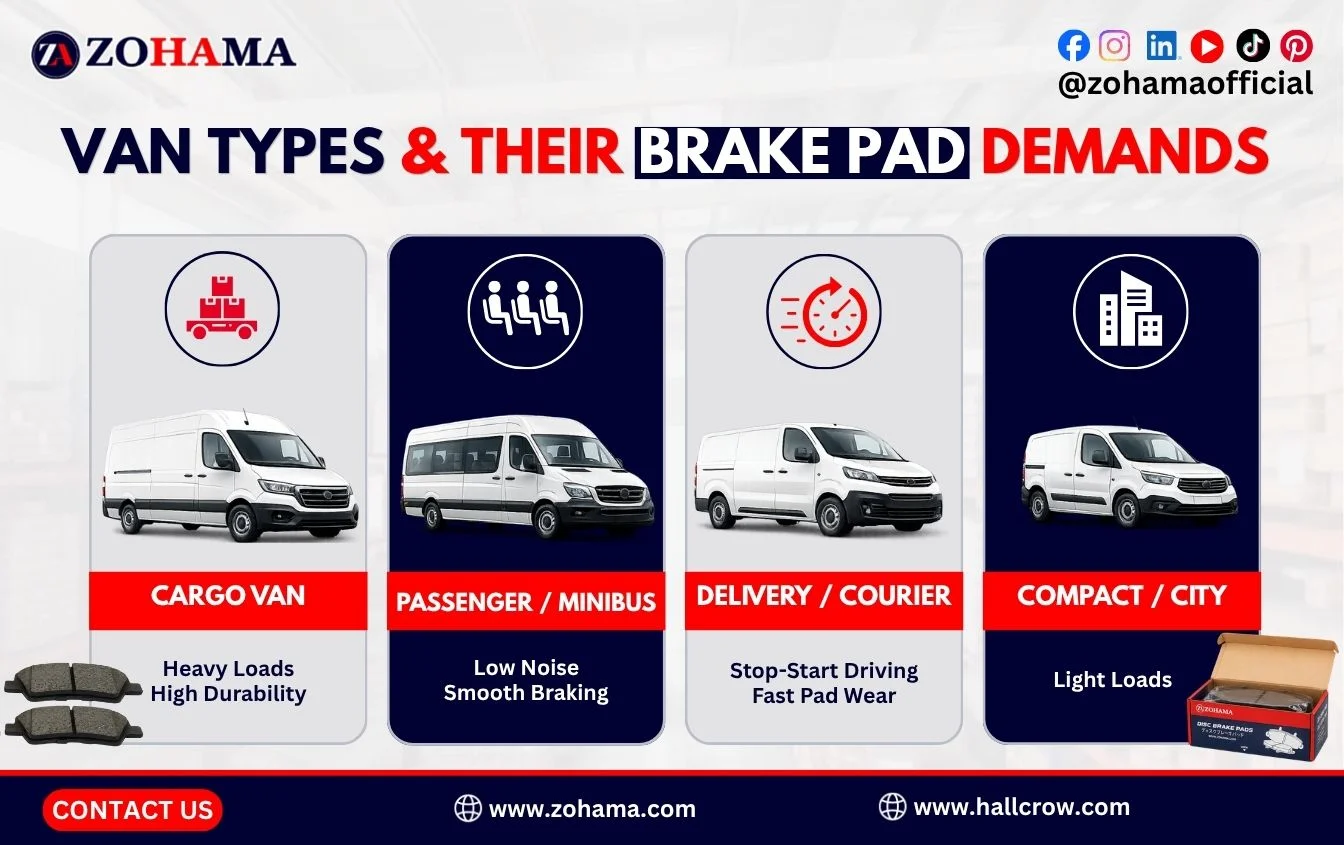
Before you build a range, understand that vans split into distinct use cases with different priorities:
| Van type | What it means for brake pad demand |
|---|---|
| Panel / cargo van | Carries loads and stops constantly, so pads wear fast and need durability. |
| Passenger / minibus van | Carries people, so comfort, low noise and smooth braking matter more. |
| Delivery / courier van | Very high stop-start cycles in urban use, the hardest wear pattern of all. |
| Compact / city van | Lighter loads allow more material choice, closer to passenger car demand. |
This is why one pad specification cannot serve every van customer. Match the pad to how the van is actually used.
Choosing Materials for Van Applications
Load and heat push most working vans toward tougher materials, while passenger and compact vans allow more choice. Low-metallic suits loaded, high-mileage vans, semi-metallic handles the hardest-working duty cycles, while NAO and ceramic fit lighter and passenger-carrying vans where comfort matters. Our guide on matching brake pad material to market helps you decide the mix.
Fitment Accuracy Matters More on Vans

Vans often come in several variants of the same model, with different weight ratings, wheelbases and brake specifications. That makes fitment errors easy and costly:
- Confirm the exact variant, not just the model name.
- Match by OEM reference and dimension, using our brake pad part-number lookup guide.
- Check the axle and hardware version, since front and rear specifications differ.
- Verify against OEM specifications with our OEM brake pads approach.
What Van Fleet Buyers Want
Van operators are businesses, so their priorities are commercial:
- Long service life, to reduce how often vehicles come off the road.
- Immediate availability, because a van waiting for parts is not earning.
- Consistent performance under load, for safety and driver confidence.
Sourcing Van Pads at Wholesale
Van demand is steady and repeat, which makes it well suited to volume buying on the common references. Forecast usage, keep the fast movers in stock, and order deeply on those while keeping rare variants lean. For the full process, see our guide on bulk buying car brake pads, and confirm your supplier can deliver consistently using choosing a passenger car brake pad supplier.
Quality Standards for Working Vans
A van carries loads and often people, so pad quality is a safety matter as much as a commercial one. Approve a sample, check every batch against it, and confirm the compliance your market requires. See our quality checks for car brake pads.
Build Your Van Brake Pad Range
Vans deliver steady, repeat demand and loyal fleet customers when you get fitment and durability right. If you want a manufacturer with coverage across common van models and variants at consistent quality, explore our distributor and partner program to request a catalogue and pricing for your market. For mixed fleets, see also our brake pads for heavy and light vehicles range.
Frequently Asked Questions
Why do van brake pads wear faster than car pads?
Vans carry weight, brake constantly in urban traffic and cover high annual mileage. That combination heats and wears pads far faster than typical passenger car use.
Do all vans use the same brake pads?
No. Cargo, passenger, delivery and compact vans have different duty cycles and priorities, and the same model often comes in variants with different brake specifications. Always confirm the exact variant.
Which material suits van brake pads?
Low-metallic for loaded, high-mileage vans, semi-metallic for the hardest duty cycles, and NAO or ceramic for lighter and passenger-carrying vans where comfort matters.
How do I avoid fitment errors on vans?
Confirm the exact variant rather than the model name, match by OEM reference and dimension, and check the axle and hardware version before ordering.
Conclusion
Van brake pads reward distributors who look past the model name. Understand how cargo, passenger, delivery and compact vans differ, match materials to the real duty cycle, confirm fitment by variant and reference, and hold quality high on vehicles that carry loads and people. Do that and vans become one of the most loyal, repeat-demand segments you serve.