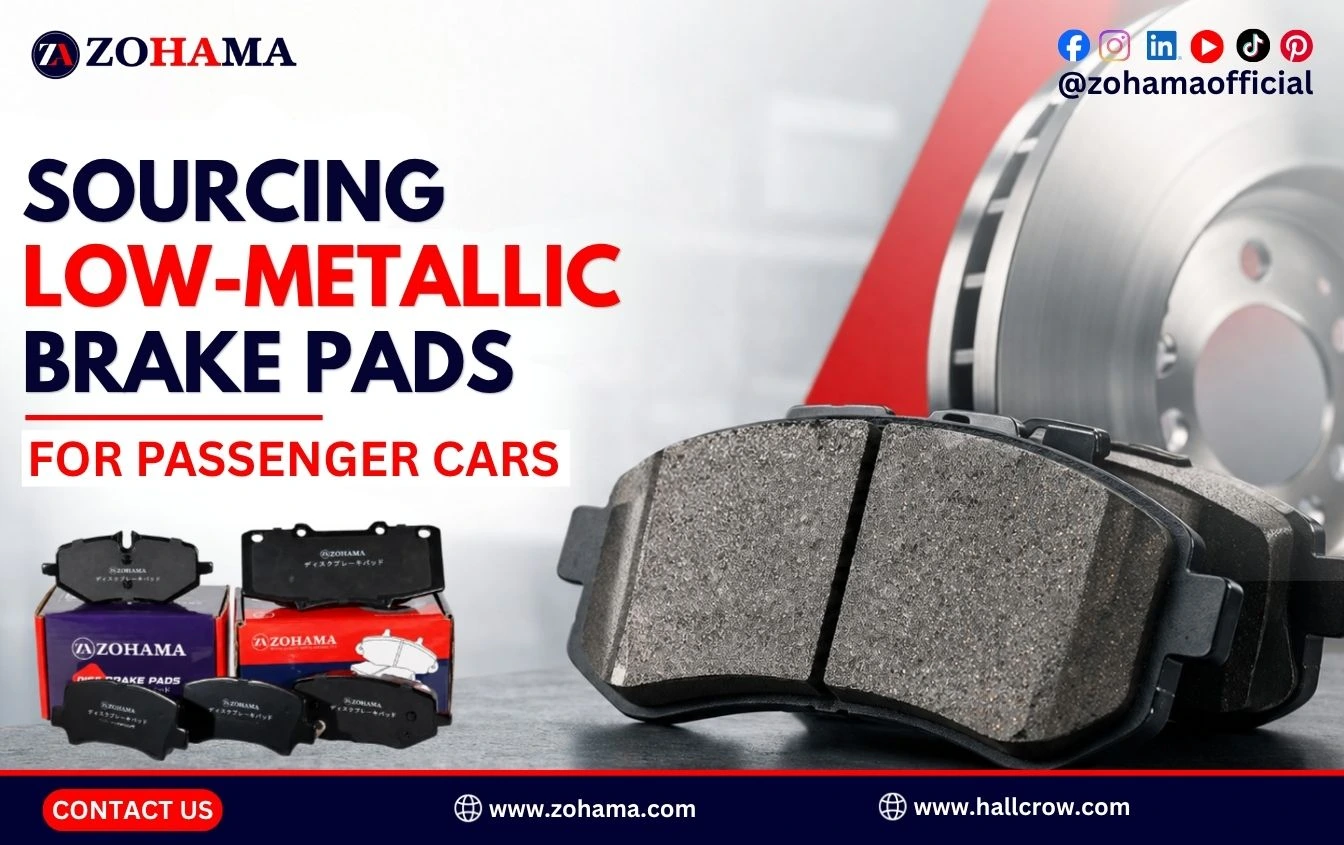
Low-metallic pads sit between soft organic materials and full ceramic, blending organic material with a measured amount of metal to deliver strong, confident braking. For a distributor, they serve the customers who want more bite and better heat handling than a basic pad, which makes them a valuable middle tier in your range. This guide is a B2B specification and bulk-sourcing guide, not a consumer comparison: it covers why low-metallic sells, where it fits, what to look for when sourcing it, and how to spec and buy it in volume.
For the technical background on low-metallic and how it sits alongside other materials, our low-metallic and NAO brake pads and brake pad materials breakdown pages cover that. This article focuses on sourcing.
Why Low-Metallic Brake Pads Sell
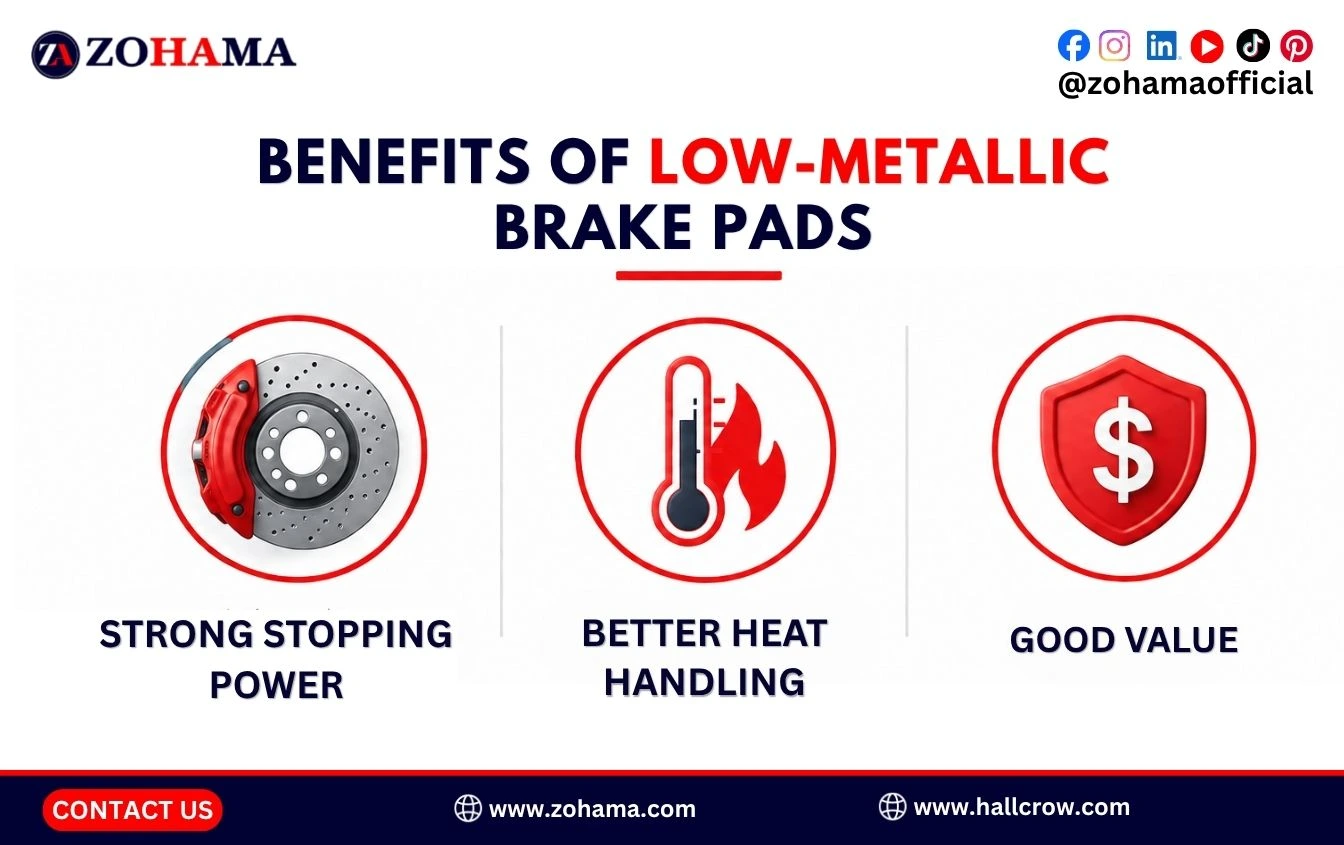
Low-metallic pads appeal to drivers who want more braking performance. In a disc brake system, the metal content helps the pad bite and shed heat, which translates into clear selling points:
- Strong stopping power. More confident bite than a basic organic pad.
- Better heat handling. Holds up under heavier or more demanding braking.
- Good all-round value. More performance without the price of premium options.
Where Low-Metallic Fits in Your Range
Low-metallic is a performance-leaning everyday choice, so stock it where that demand is strongest and be clear about the trade-offs:
- Best fit: heavier cars, hillier or hotter regions, and drivers who want stronger, more consistent braking.
- Trade-offs: more dust and noise than ceramic or NAO, so it suits performance-minded buyers more than comfort-first ones.
Stocking low-metallic alongside ceramic and NAO lets you cover the full range from comfort to performance.
What to Look for When Sourcing Low-Metallic Pads
Low-metallic quality depends heavily on the material blend, so focus your sourcing on:
- A correct metal-to-organic balance for the intended performance, not a cheap, overly hard mix.
- Strong bonding of the friction material to the backing plate.
- Batch consistency, so every pad performs the same.
- The compliance your market requires, such as ECE R90, plus copper-free rules where they apply.
Vetting the maker is part of this, as covered in our guides on what to look for in a Chinese auto parts factory and choosing a passenger car brake pad supplier.
How to Spec a Low-Metallic Pad Order
Make your requirement precise so every quote is accurate and comparable:
- State the exact reference (OEM, WVA or FMSI number) for each pad. See our brake pad part-number lookup guide.
- Specify low-metallic clearly, and the compliance your market needs.
- Confirm hardware and sensor versions for each application.
- Ask for test data that backs the performance and compliance claims.
Quality Checks Specific to Low-Metallic
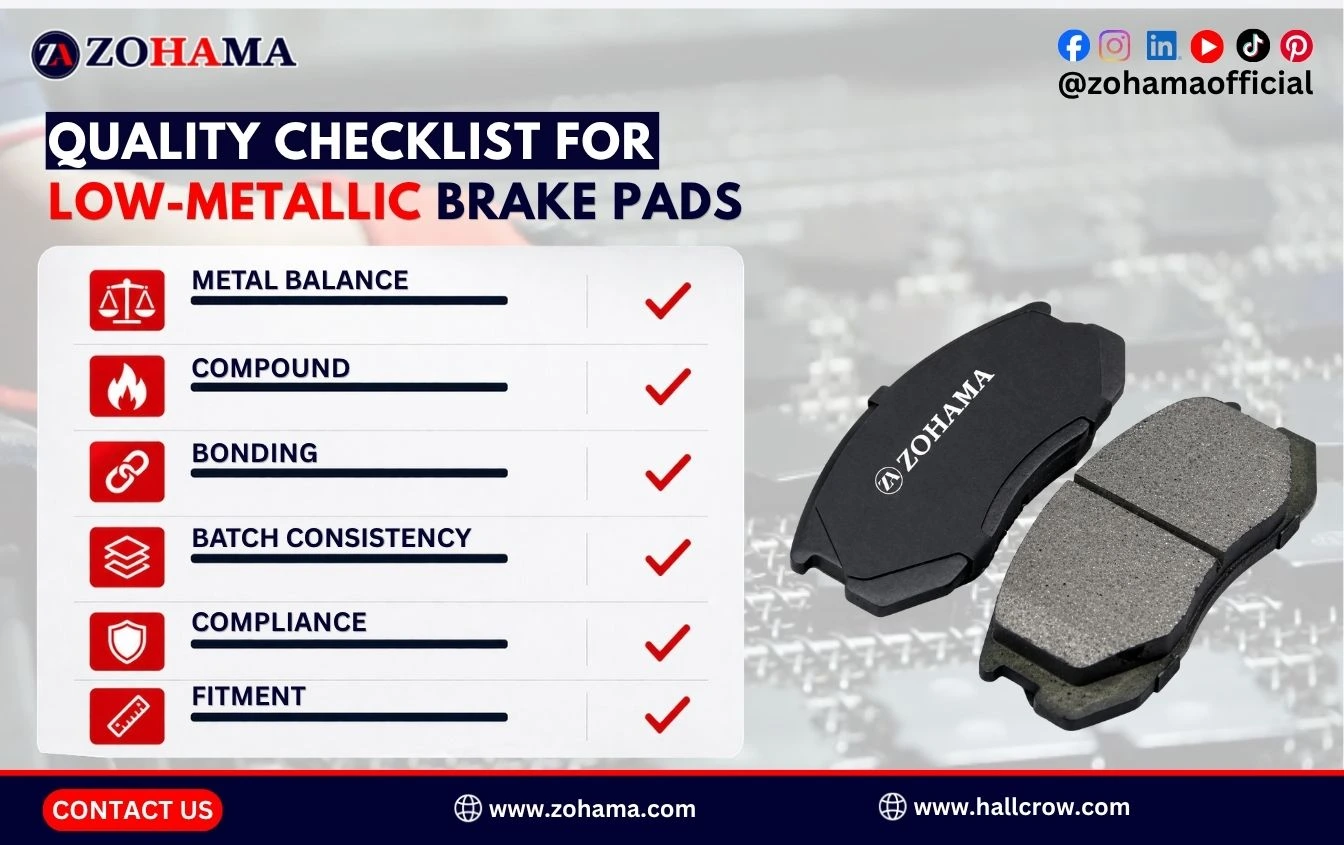
Judge low-metallic pads against a clear standard so quality is never a guess:
| Check | What a good low-metallic pad shows |
|---|---|
| Metal content balance | The right blend of metal and organic material for the intended braking performance. |
| Compound quality | A genuine, correctly formulated low-metallic material, not a cheap mix. |
| Bonding | Friction material firmly bonded to the backing plate, with no cracks. |
| Batch consistency | Even density and finish across the whole batch. |
| Compliance | Meets the standard your market requires, such as ECE R90, and copper-free rules where they apply. |
| Dimensions & fitment | Length, height and thickness match the reference exactly. |
Approve a sample as your reference standard and check every batch against it. For the full inspection process, see our quality checks for car brake pads.
Getting the Best Value on Low-Metallic
Low-metallic offers strong performance at a sensible price, but the material blend is where quality is made or lost, so do not buy on price alone. A poorly balanced pad can be noisy, harsh on rotors or inconsistent. Compare suppliers on total landed cost and proven quality, and use steady demand as your leverage. For the volume-buying process, see our guide on bulk buying car brake pads.
Build Your Low-Metallic Range With Confidence
Low-metallic is the performance tier that completes a well-rounded range. If you want a manufacturer that produces genuine, compliant low-metallic pads with broad passenger-car coverage, explore our distributor and partner program to request a catalogue and pricing for your market.
Frequently Asked Questions
What are low-metallic brake pads?
They blend organic material with a measured amount of metal to deliver stronger bite and better heat handling than a basic organic pad, while remaining more affordable than premium options.
Why do low-metallic pads sell?
They give drivers more confident braking and better heat performance, which suits heavier cars, demanding conditions and performance-minded buyers.
What should I check when sourcing low-metallic pads?
The metal-to-organic balance, strong bonding, batch consistency, and the compliance your market requires, including copper-free rules where they apply, all backed by test data.
Where does low-metallic fit in my range?
As the performance tier, alongside NAO for value and ceramic for comfort. It suits heavier cars and demanding conditions, with the trade-off of more dust and noise.
Conclusion
Low-metallic brake pads are the performance tier that rounds out a full range, but their quality lives in the material blend. Understand why they sell, place them correctly, verify the balance and compliance, spec them precisely, and check every batch against a clear standard. Do that and low-metallic becomes a dependable, higher-performance line that widens the customers you can serve.