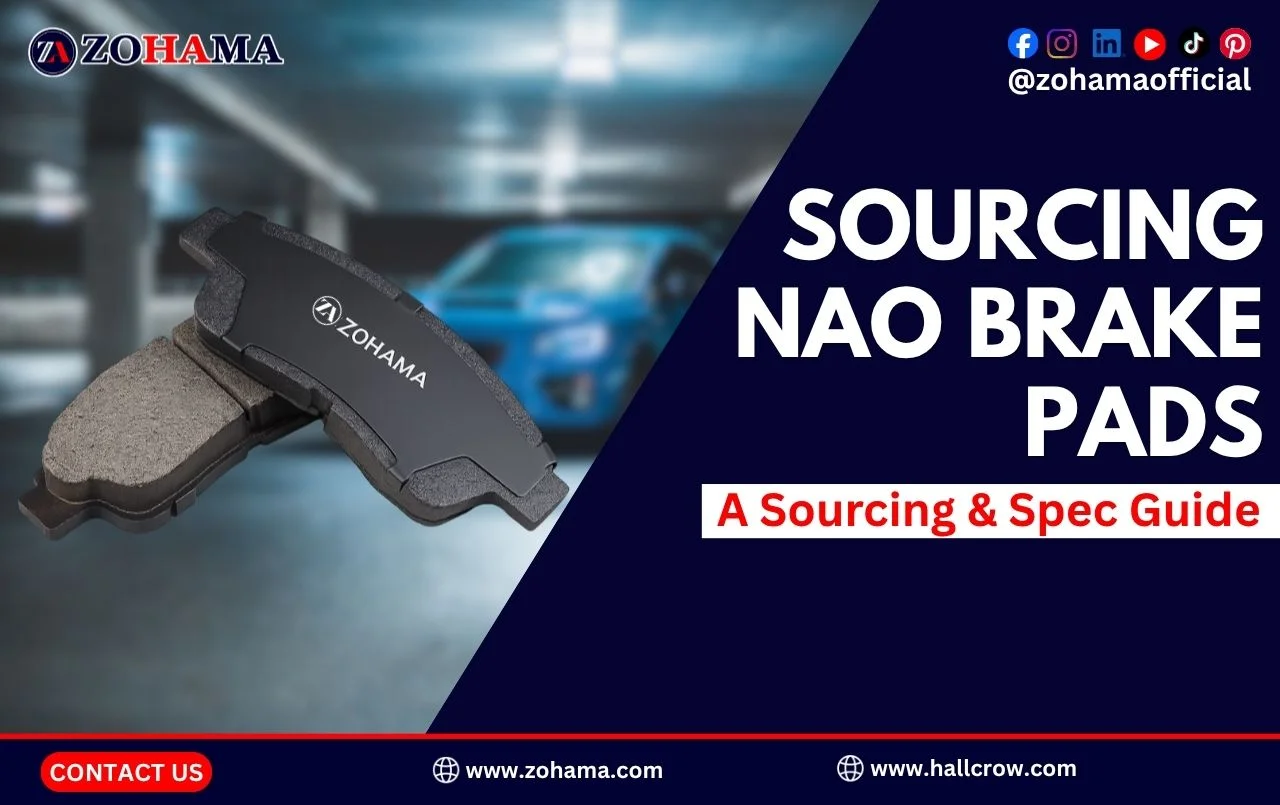
NAO, short for non-asbestos organic, is one of the most widely fitted brake pad materials on everyday cars. It is quiet, gentle on rotors and affordable, which makes it a core line for any distributor serving the passenger-car and economy segments. This guide is a B2B sourcing and specification guide, not a consumer comparison: it covers why NAO sells, where it fits in your range, what to look for when sourcing it, and how to spec and buy it with confidence.
For the technical background on NAO and how it sits alongside other materials, our low-metallic and NAO brake pads and brake pad materials breakdown pages cover that. This article focuses on sourcing.
Why NAO Brake Pads Sell
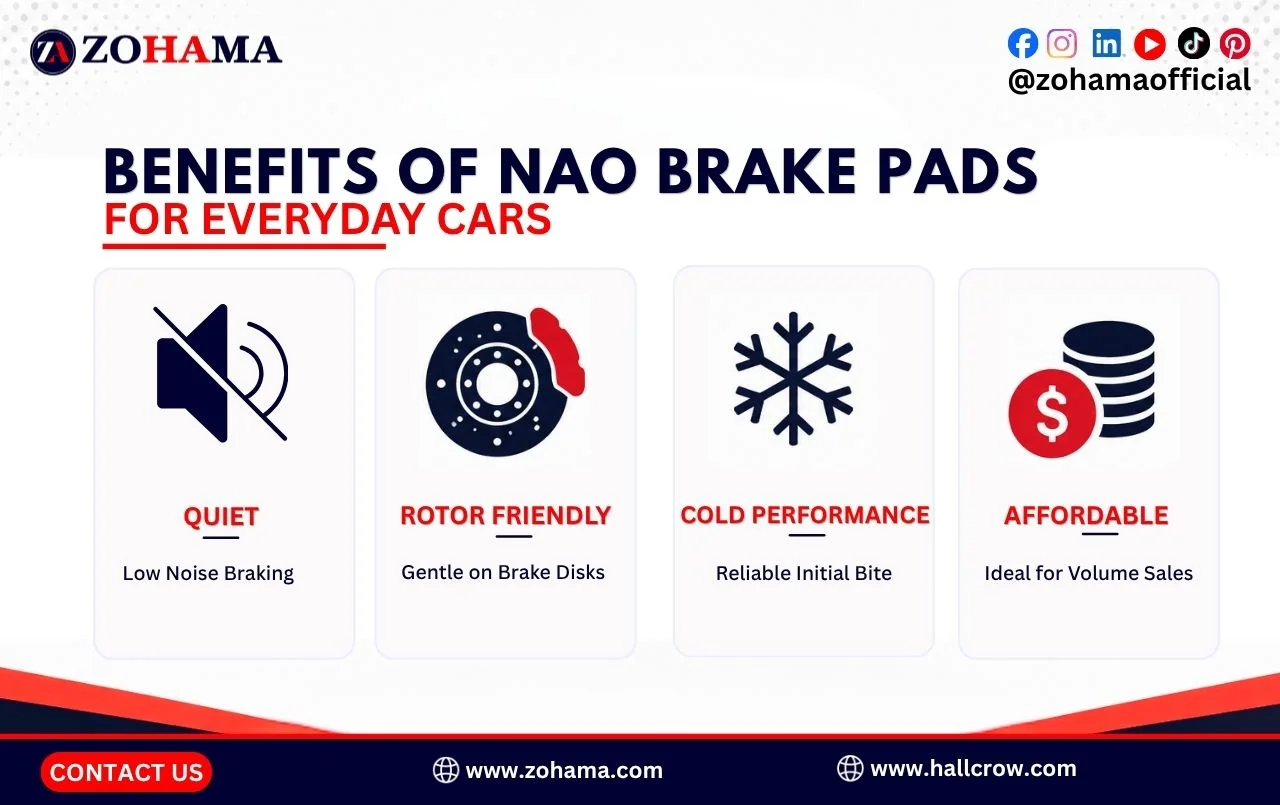
NAO pads are popular because they suit the majority of everyday driving. For a distributor, that means broad, steady demand:
- Quiet and comfortable. Smooth, low-noise braking that everyday drivers like.
- Gentle on rotors. A softer material that is easy on the braking system.
- Good cold performance. Reliable bite in normal driving conditions.
- Affordable. A cost-effective option for economy and volume segments.
Where NAO Fits in Your Range
NAO is a strong everyday choice, so stock it where that demand is highest and be clear about its limits:
- Best fit: economy cars, compact cars and everyday passenger driving where comfort and value matter most.
- Less suited: heavy loads, high heat or performance use, where the softer material wears faster.
Stocking NAO alongside ceramic lets you serve both the value and premium ends of the market. Our guide on sourcing ceramic brake pads for passenger cars covers the premium side.
What to Look for When Sourcing NAO Pads
NAO quality varies, so focus your sourcing on what actually matters. Because the name itself means non-asbestos organic, verified asbestos-free status is essential, alongside:
- A genuine, well-formulated NAO compound, not a cheap filler mix.
- Strong bonding of the friction material to the backing plate.
- Batch consistency, so every pad performs the same.
- The compliance your market requires, such as ECE R90, backed by test data.
Vetting the maker is part of this, as covered in our guides on what to look for in a Chinese auto parts factory and choosing a passenger car brake pad supplier.
How to Spec an NAO Pad Order
Make your requirement precise so every quote is accurate and comparable:
- State the exact reference (OEM, WVA or FMSI number) for each pad. See our brake pad part-number lookup guide.
- Specify NAO clearly, and confirm asbestos-free certification.
- Confirm hardware and sensor versions for each application.
- Ask for the compliance data your destination market needs.
Quality Checks Specific to NAO
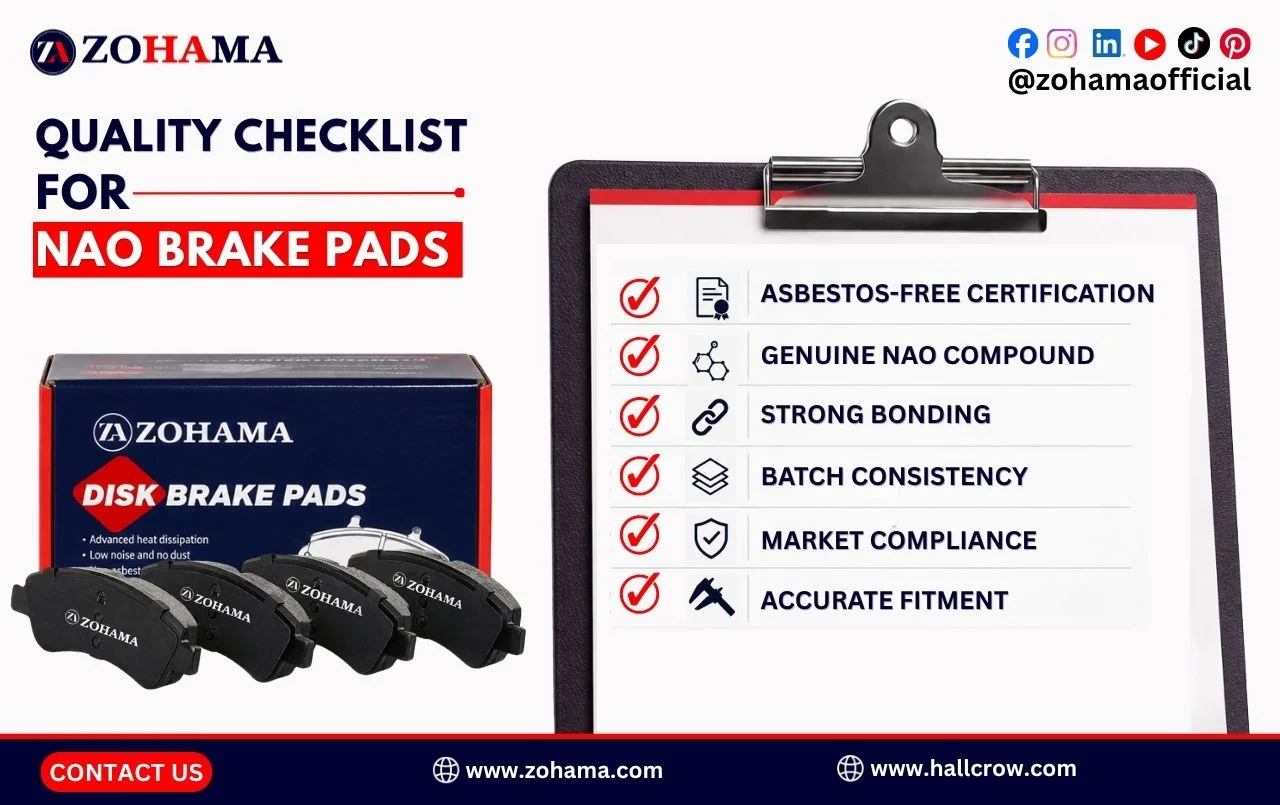
Judge NAO pads against a clear standard so quality is never a guess:
| Check | What a good NAO pad shows |
|---|---|
| Asbestos-free certification | Documented proof the pad uses a non-asbestos organic formula. |
| Compound quality | A genuine, correctly formulated NAO material, not a cheaper filler mix. |
| Bonding | Friction material firmly bonded to the backing plate, with no cracks. |
| Batch consistency | Even density and finish across the whole batch. |
| Compliance | Meets the standard your market requires, such as ECE R90. |
| Dimensions & fitment | Length, height and thickness match the reference exactly. |
Approve a sample as your reference standard and check every batch against it. For the full inspection process, see our quality checks for car brake pads.
Getting the Best Value on NAO
NAO is an affordable material, which makes it tempting to buy on price alone. Resist that. A poorly made NAO pad wears fast and generates complaints, which costs more than it saves. Compare suppliers on total landed cost and proven quality, and use steady demand as your leverage. For the volume-buying process, see our guide on bulk buying car brake pads.
Build Your NAO Range With Confidence
NAO is a high-volume, everyday category that underpins a broad catalogue. If you want a manufacturer that produces genuine, certified asbestos-free NAO pads with wide passenger-car coverage, explore our distributor and partner program to request a catalogue and pricing for your market.
Frequently Asked Questions
What are NAO brake pads?
NAO stands for non-asbestos organic. They are made from organic materials without asbestos, and are valued for quiet, comfortable, affordable braking on everyday cars.
Why do NAO pads sell so well?
They suit the majority of everyday driving: quiet, gentle on rotors, good cold performance and cost-effective. That makes them a broad, steady category for distributors.
What should I check when sourcing NAO pads?
Verify asbestos-free certification, a genuine NAO compound, strong bonding, batch consistency and the compliance your market requires, all backed by test data.
Where does NAO fit best in my range?
In economy and everyday passenger driving where comfort and value matter most. It is less suited to heavy loads or high heat, so pair it with a premium option like ceramic.
Conclusion
NAO brake pads are a high-volume everyday category, but only genuine, certified, consistent NAO pads protect your margin and reputation. Understand why they sell, place them correctly in your range, verify asbestos-free quality, spec them precisely, and check every batch against a clear standard. Do that and NAO becomes one of the most dependable, broad-selling lines you stock.