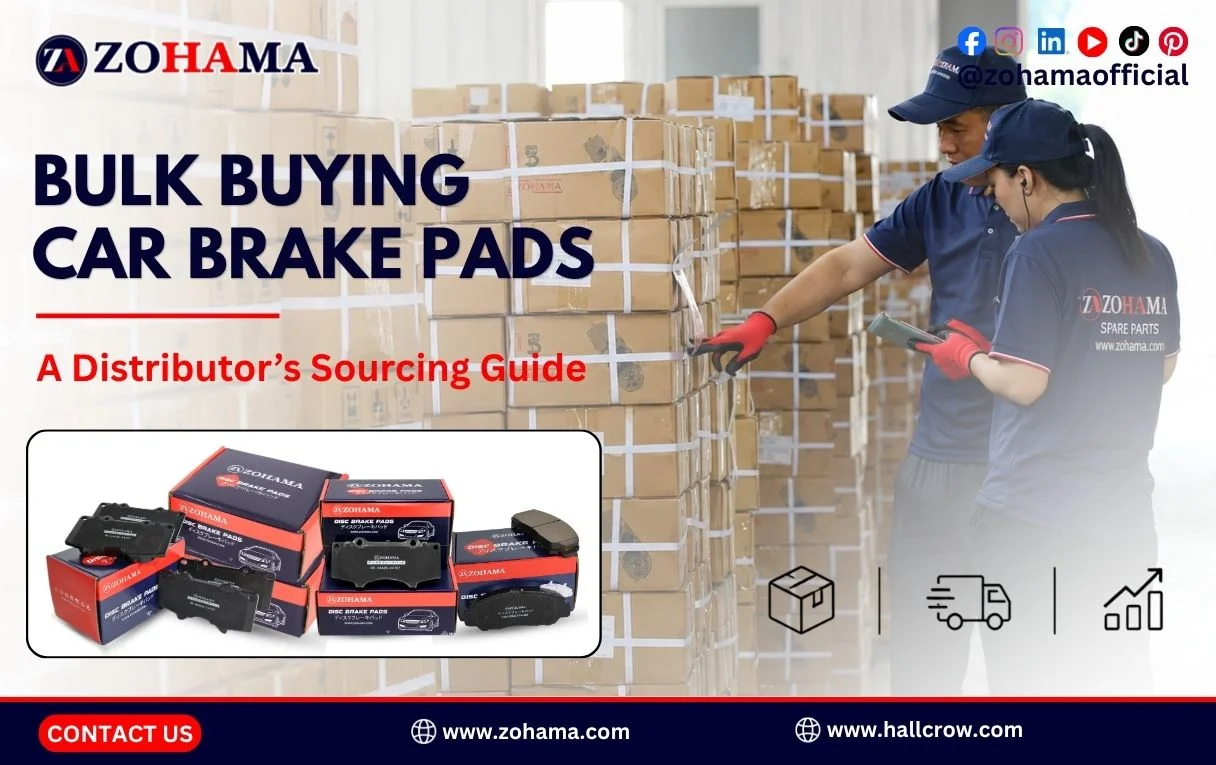
For a distributor, bulk buying is where margins are made or lost. Buy too much of the wrong reference and capital sits idle on a shelf; buy too little and you miss sales and pay more per unit. Buying car brake pads in bulk well is a skill: it blends demand planning, smart order sizing and disciplined quality control. This guide walks through how to do it, so each bulk order strengthens your business rather than straining it.
If you are still setting up your supply in the first place, start with our guides on sourcing light-vehicle brake pads from China and choosing a passenger car brake pad supplier. This article focuses on the bulk-buying stage.
Why Bulk Buying Matters for Distributors
Buying in volume is not just about a lower price. Done well, it gives you three advantages at once:
- Better unit economics. Volume pricing improves your margin on every pad you sell.
- Reliable availability. Holding the right stock means you can fill customer orders immediately.
- Stronger supplier terms. Consistent volume makes you a priority customer and can improve service and pricing over time.
Forecast Demand Before You Buy
The most common bulk-buying mistake is ordering on instinct instead of evidence. Before you commit, build a simple demand picture using your own sales history and market signals. A basic approach to forecasting demand will tell you which references move fast and which sit still.
- Use past sales to rank your fastest-moving car pad references.
- Watch the local car parc so you stock pads for the vehicles actually on the road in your market.
- Allow for seasonality and any growth in the models you serve.
Right-Sizing Your Bulk Order
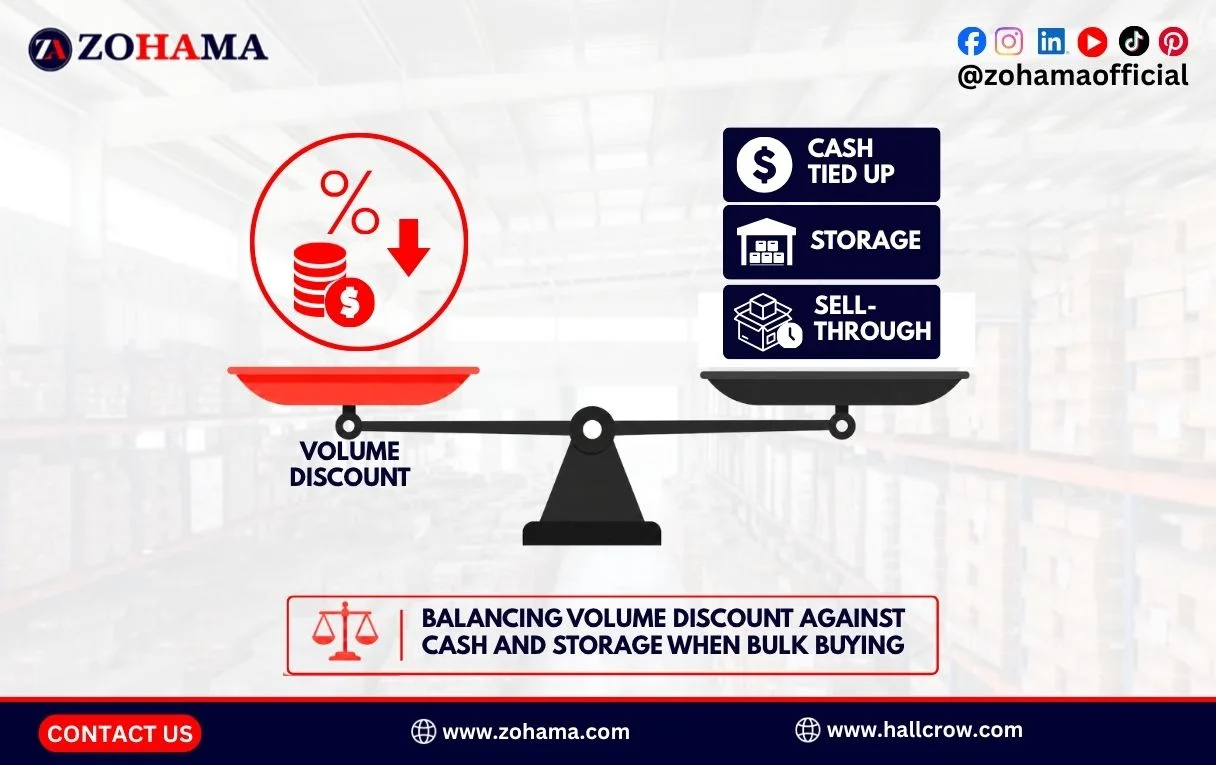
Once you know what sells, decide how much to buy. The goal is the quantity that captures a good price without tying up cash or filling your warehouse with slow stock. Weigh these factors together, and if you want a formal method, the idea of an economic order quantity is a useful reference:
| Factor | What to weigh when sizing a bulk order |
|---|---|
| Volume pricing | Larger quantities usually lower the unit price, which improves your margin. |
| Cash tied up | Bigger orders lock up more capital, so balance the discount against your cash flow. |
| Storage & handling | More stock needs more warehouse space and adds holding cost. |
| Sell-through speed | Order what you can realistically sell before it ages in the warehouse. |
| Shipping efficiency | Full-container or consolidated loads cut the freight cost per unit. |
A practical rule: order deeper on your proven fast movers and stay conservative on unproven references until the demand is clear.
Consolidate References to Buy Smarter
You can often reduce the number of separate items you stock by cross-referencing. One correctly matched reference may cover several vehicle applications, which means fewer lines to buy, store and track. Our brake pad part-number lookup guide and OEM brake pads page show how to map references correctly so you buy a leaner, more efficient range.
Getting the Best Bulk Price
Price is easiest to control when you make quotes directly comparable. To buy well in volume:
- Send a structured request with exact references, quantities and specifications to every supplier.
- Compare on total landed cost, not just the unit price, so freight and terms are included.
- Agree clear shipping terms such as FOB or CIF, so responsibility and cost are transparent.
- Use steady, repeat volume as your leverage for better pricing over time.
Quality Consistency Across Large Batches
A bulk order multiplies both good and bad quality. Protect yourself before the full quantity ships:
- Approve a sample first and keep it as the reference standard.
- Ask for a pre-shipment check against that approved sample.
- Confirm batch consistency, so the last pad in the container matches the first.
Understanding pad construction helps you judge what you are buying. Our brake pad materials breakdown explains what separates a quality pad from a weak one.
Logistics and Inventory for Bulk Orders
The order does not end at the factory gate. Plan the flow from shipment to shelf:
- Match order timing to lead times so stock arrives before you run out.
- Consolidate shipments to cut freight cost per unit.
- Rotate stock so older inventory sells first and nothing ages unnecessarily.
For buyers who also serve mixed fleets, our brake pads for heavy and light vehicles range is a useful reference when planning coverage.
Build a Repeatable Bulk-Buying Cycle
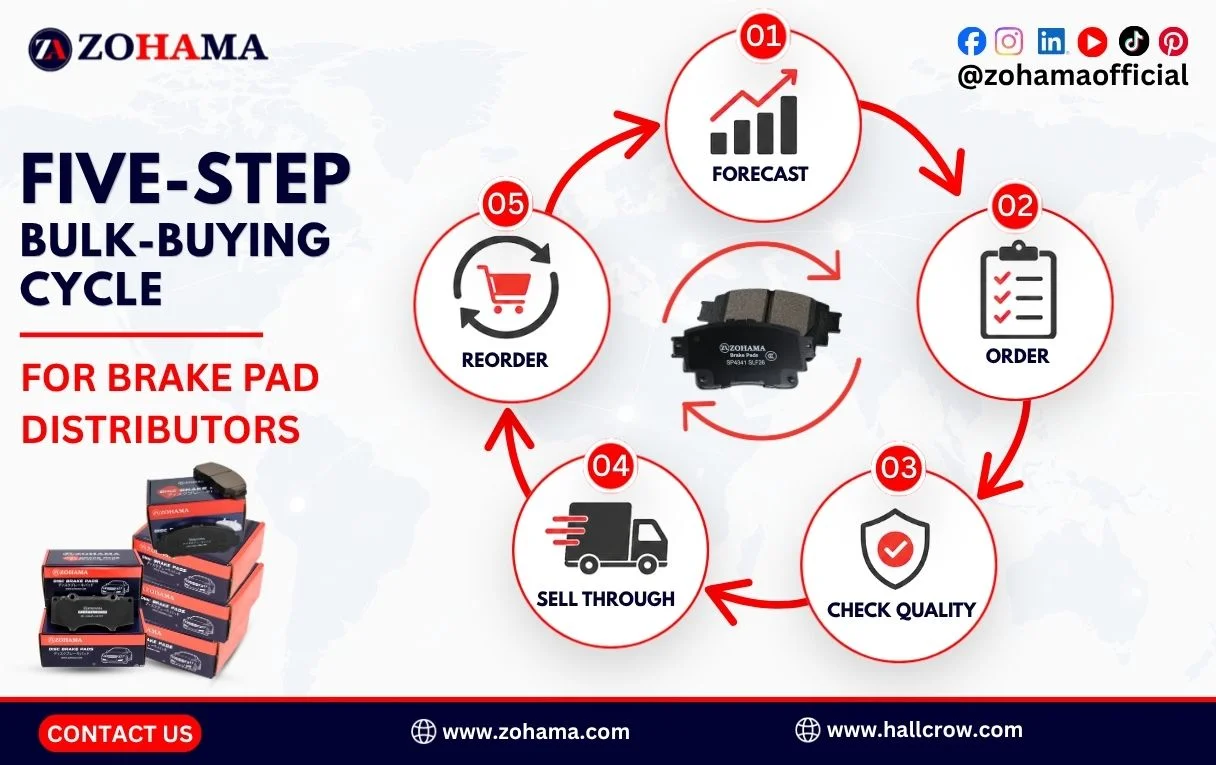
The best distributors turn bulk buying into a rhythm: forecast, order the right quantity, check quality, sell through, and reorder. If you want a manufacturing partner who can support that cycle with broad passenger-car coverage and part-number-level help, explore our distributor and partner program to request a catalogue and pricing for your market, and see our overview of the top brake pads manufacturers in China.
Frequently Asked Questions
How much stock should I buy in a bulk order?
Enough of your proven fast movers to capture a good price and sell through in a reasonable time, while staying conservative on unproven references. Balance the volume discount against cash tied up and storage cost.
How do I get the best price on bulk car brake pads?
Send a structured request with exact references and quantities to several suppliers, compare on total landed cost rather than unit price, agree clear shipping terms, and use steady repeat volume as leverage.
How do I keep quality consistent across a large batch?
Approve a sample as your reference standard, ask for a pre-shipment check against it, and confirm the supplier maintains batch consistency so the whole container matches the sample.
How can I reduce the number of items I stock?
Cross-reference your pads. One correctly matched reference can cover several vehicle applications, which lets you hold a leaner range that is easier to buy, store and track.
Conclusion
Bulk buying car brake pads is a discipline, not a gamble. Forecast demand from real data, size each order to balance price against cash and storage, consolidate references to stay lean, protect quality across the batch, and plan the logistics from container to shelf. Repeat that cycle and every bulk order becomes a step forward for your business.