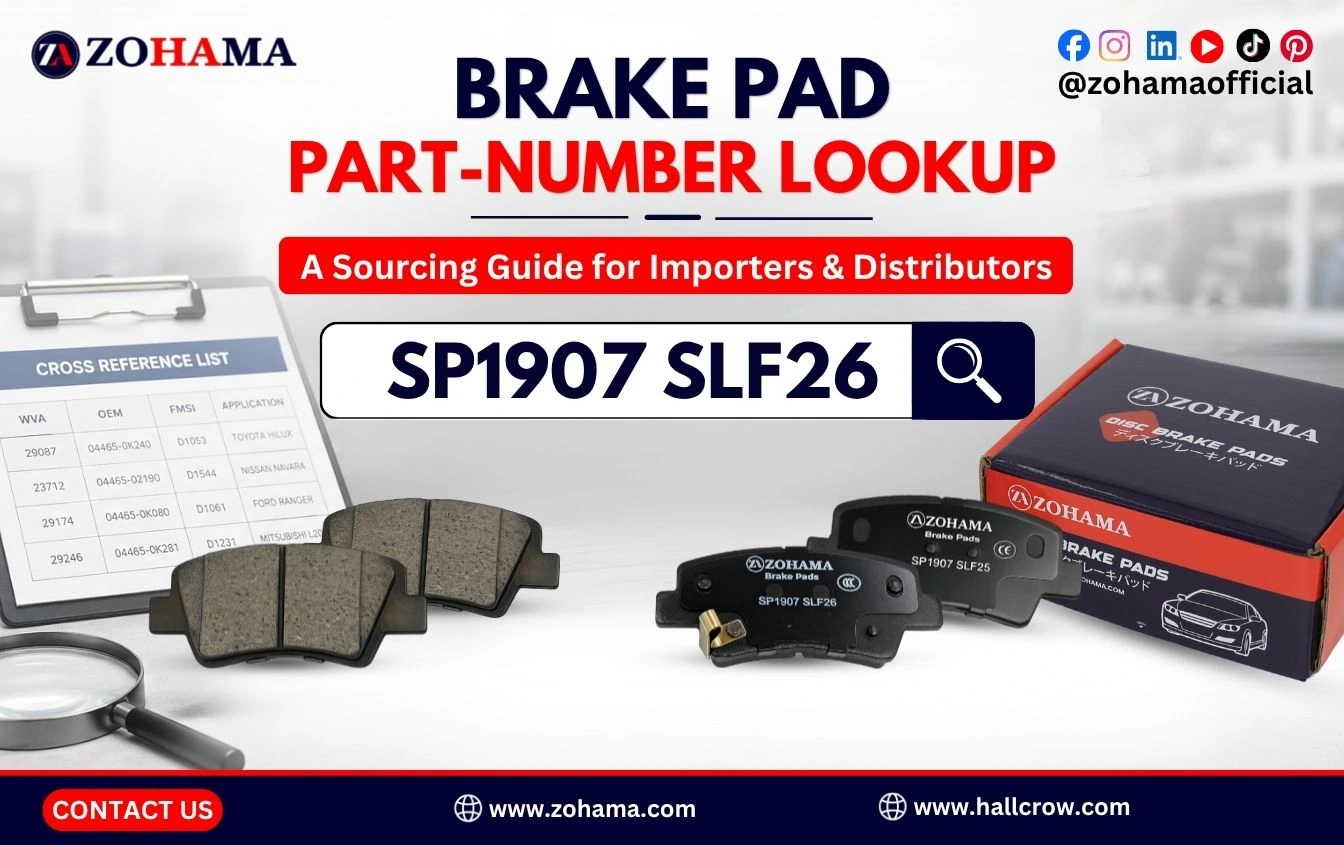
For an importer or distributor, every brake pad order begins the same way: a customer sends you a number. A workshop quotes a WVA, a fleet sends an OEM code, a reseller forwards an FMSI reference. Your job is to turn that number into the right pad, at the right price, from a supplier you trust — faster than the next distributor.
This guide is a practical sourcing workflow for buying brake pads by part number: how to look a number up, build a reusable cross-reference list, send a request for quotation that gets accurate prices, and compare supplier quotes without ending up with dead stock.
Why the Part Number Drives the Sale
In the aftermarket, buyers do not describe parts in words — they speak in numbers. Whoever can confirm fitment and quote first usually wins the order. That makes your part-number process a direct commercial advantage:
- Speed. A fast, accurate quote beats a slow, hesitant one almost every time.
- Accuracy. Matching the exact reference avoids returns, refunds and damaged trust.
- Repeat business. Customers come back to the supplier who never sends the wrong pad.
Know Your Number Before You Source It
Before you can source a pad, you need to know which numbering system you are looking at — WVA, OEM or FMSI — and how they cross-reference. We cover that in detail in our complete WVA number guide, so this article focuses on the sourcing side. In short: confirm the system, match the dimensions, and check the sensor or hardware variant before you treat two numbers as equivalent.
Building a Part-Number Lookup (Cross-Reference) List
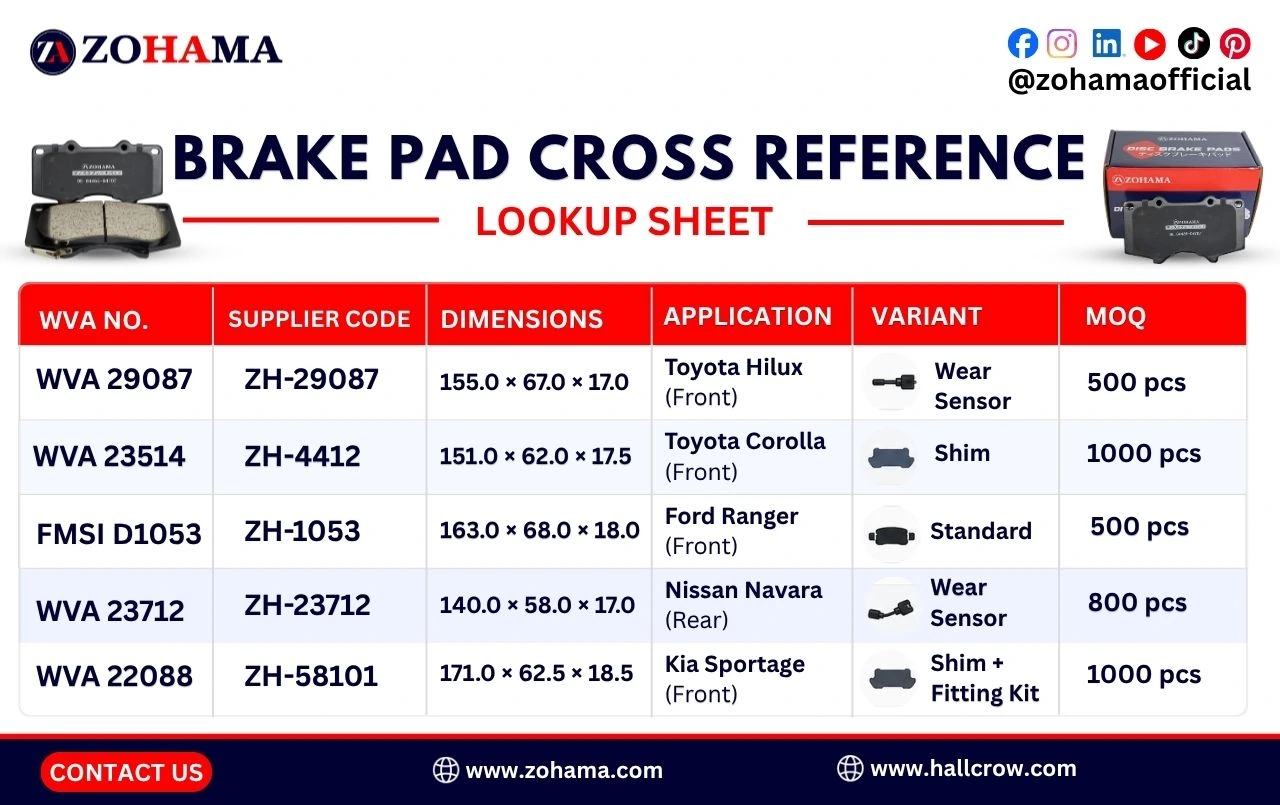
The single most valuable asset for a parts distributor is a master cross-reference list — a sheet that maps the numbers your customers use to the products you can actually supply. A good lookup list contains, at minimum:
- Customer-facing number (the WVA / OEM / FMSI the customer quotes).
- Your supplier’s product code and material option.
- Key dimensions (length, height, thickness) for quick verification.
- Vehicle / application and axle position.
- Sensor / hardware variant and current price + MOQ.
Keep it in a spreadsheet you update continuously. Over time this list becomes your fastest route from “customer enquiry” to “quote sent.” It also reveals where one reference covers several OEM numbers, which is the key to a leaner catalogue. See our OEM brake pads overview for how OE-matched references are structured.
How to Send a Brake Pad RFQ (Request for Quotation)
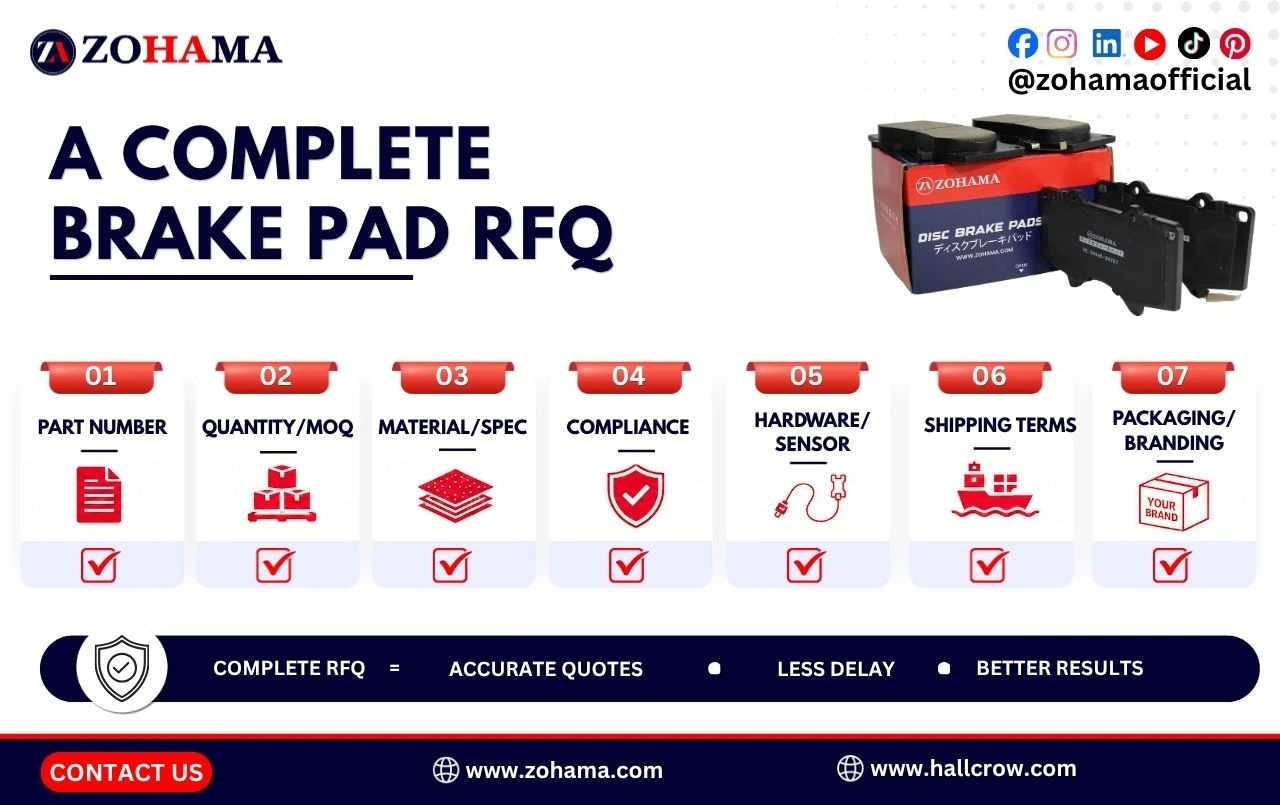
Once you know the number, the next step is asking suppliers for a price. A vague enquiry gets a vague quote. A clear request for quotation gets accurate, comparable pricing. Include the following every time:
| Include in your RFQ | Why it matters |
|---|---|
| Part number(s) | State the WVA, OEM or FMSI number exactly as printed so the supplier matches the right pad. |
| Quantity & order frequency | Lets the supplier confirm MOQ and offer volume pricing. |
| Material / specification | Ceramic, semi-metallic, low-met NAO — affects price and suitability. |
| Compliance required | ECE R90, copper-free, asbestos-free — depends on your destination market. |
| Hardware & sensor | Wear-sensor version, shims and fitting kits must match the customer’s need. |
| Destination & shipping terms | Port and Incoterm (FOB, CIF, EXW) so the quote reflects true landed cost. |
| Packaging / branding | Neutral, OEM-style or your own private label — confirm up front. |
Send the same structured RFQ to every supplier so you can compare quotes like-for-like instead of guessing what each price actually includes.
Evaluating Supplier Quotes by Part Number
When the quotes come back, resist the urge to simply pick the lowest number. Compare on a like-for-like basis:
- Same reference, same dimensions. Confirm each supplier is quoting the identical pad, not a near-match.
- Same material and compliance. A cheaper pad with the wrong certification is useless for a regulated market.
- Total landed cost, not unit price. Factor in MOQ, shipping terms and lead time.
- Supplier reliability. The right reference from an unreliable maker still loses you customers.
Vetting the manufacturer is a separate but essential step — our guide on what to look for in a Chinese auto parts factory walks through it.
Import Considerations When Sourcing by Part Number
Sourcing across borders adds a few details that affect your real cost and delivery time:
- Customs classification. Brake pads have a specific code under the Harmonized System used for customs; using the correct HS code avoids clearance delays and duty errors.
- Shipping terms. Agree the international trade terms such as FOB and CIF up front so responsibility and cost are clear.
- Documentation. Commercial invoice, packing list and any compliance certificates should reference the same part numbers you ordered.
Turning Part-Number Requests Into Repeat Business
Distributors who answer a part-number enquiry quickly and correctly build a reputation that compounds. If you supply workshops, fleets or resellers and want a manufacturing partner who maintains full WVA and OE cross-references — and can quote by part number fast — explore our distributor and partner program to request a cross-reference list and pricing for your market. For fleet-heavy buyers, our commercial vehicle brake pads range is a useful starting point.
Frequently Asked Questions
Can I source a brake pad using only an OEM number?
Usually yes. An OEM number can be cross-referenced to its WVA and FMSI equivalents and matched to a supplier product. Always confirm dimensions and any sensor variant before ordering.
What is the difference between WVA and FMSI numbers?
WVA is the European reference system and FMSI is the North American one; they are equivalents that cross-reference to each other. Our WVA number guide explains both in detail.
What should a brake pad RFQ include?
At minimum: the exact part number, quantity and order frequency, material/specification, required compliance, hardware/sensor variant, destination and shipping terms, and packaging or branding needs.
How do I avoid ordering the wrong stock?
Match by dimension (not number alone), confirm the variant, request a sample for any large order, and only buy from vetted suppliers. The types of brake pads guide helps you confirm you are quoting the right material.
Conclusion
Sourcing brake pads by part number is a repeatable process, not a guessing game. Know your numbering system, keep a living cross-reference list, send a structured RFQ, and compare quotes on total landed cost from suppliers you trust. Do that consistently and the part-number requests landing in your inbox turn into reliable, repeat orders.