Few components in a passenger vehicle carry as much responsibility as the brake pads. They are the first point of friction between your moving vehicle and a complete stop, and when they fail to perform, the consequences can be severe. Yet brake pad inspection remains one of the most neglected aspects of routine vehicle maintenance, largely because many drivers assume that checking wear requires a workshop visit and a full wheel removal.
The good news is that a basic but informative inspection can often be done without lifting the vehicle off the ground or touching a single lug nut. For most modern cars and light vehicles fitted with disc brakes, including those using light vehicle brake pads, the brake caliper and pad assembly are at least partially visible through the wheel spokes. With the right technique, a torch, and an understanding of what to look for, a driver, technician, or fleet maintenance coordinator can make a reasonable assessment of the remaining brake pad material in just a few minutes.
This guide covers the complete process of inspecting brake pads without removing the wheel, including what you can reliably determine, where visual inspection has its limits, and how to interpret the warning signs your vehicle is already sending you. It also addresses the broader quality and supply considerations that matter to auto parts distributors, workshop operators, and B2B buyers sourcing brake pads at scale.
What Are Brake Pads and Why Do They Wear Out?
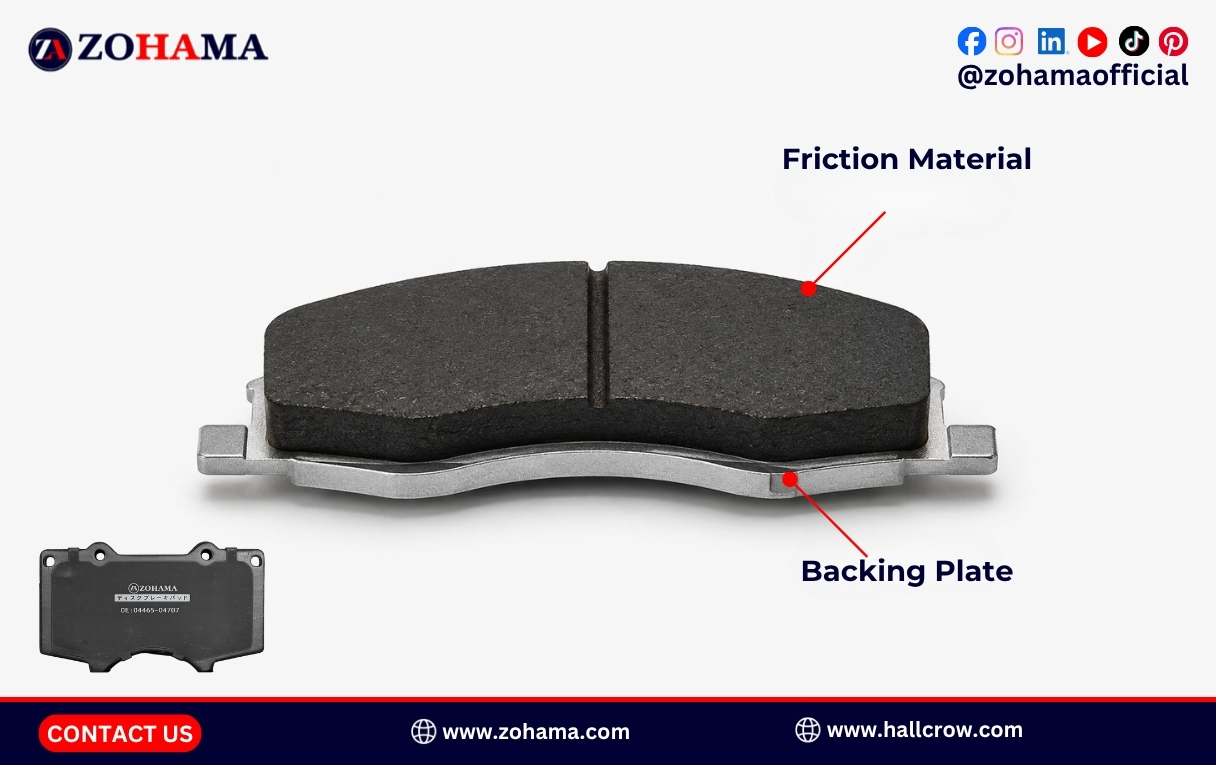
Brake pads are the replaceable friction components that press against the brake rotor (disc) to slow and stop a vehicle. In a disc brake system, hydraulic pressure from the master cylinder pushes the brake caliper pistons outward, clamping the pads against both sides of the spinning rotor. The resulting friction converts the kinetic energy of the moving vehicle into heat, bringing the wheel to a stop.
Each brake pad consists of two primary parts: a steel backing plate and a bonded or riveted layer of friction material. The friction material is the sacrificial element. It is engineered to wear gradually under controlled conditions, allowing it to be replaced before the steel backing makes contact with the rotor. Depending on the formulation, friction compounds may be ceramic, semi-metallic, organic (NAO), or low-metallic. Each compound offers different trade-offs between noise, dust, heat resistance, stopping power, and service life.
Light vehicle brake pads wear at varying rates depending on several factors. Driving style has the most significant influence. Frequent hard braking generates extreme heat that accelerates material degradation. Urban driving with constant stop-and-go traffic places far greater demands on pads than highway driving at consistent speeds. Vehicle weight is another major variable, as heavier cars require greater braking force and therefore consume friction material faster. Road gradient, towing loads, and even the quality of the pad compound itself all contribute to how quickly a set of brake pads reaches the replacement threshold.
Can You Check Brake Pad Wear Without Removing the Wheel?
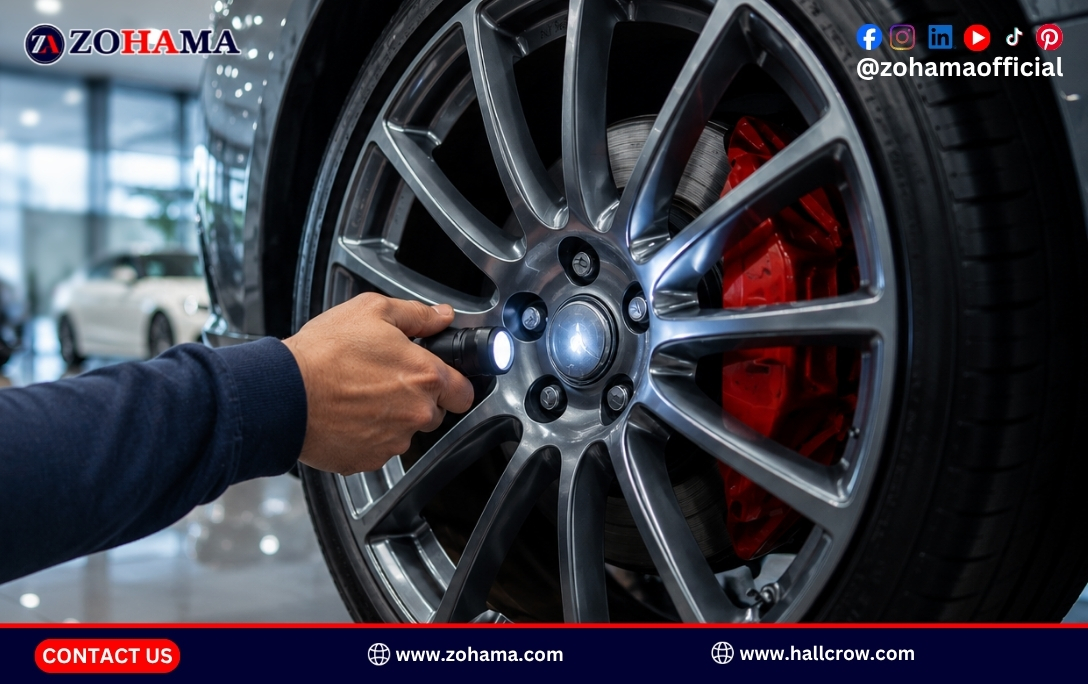
Yes, in most cases you can, and for many vehicles it provides enough information to make a confident decision about whether replacement is imminent. On vehicles fitted with open-spoke alloy or steel wheels, the brake caliper is often clearly visible from the side. Through the spokes you can see the outboard brake pad pressed against the rotor face, and with a good light source you can estimate the remaining friction material thickness.
However, this method has meaningful limitations. You are typically only observing the outer pad, not the inner pad on the opposite side of the rotor. If the caliper is seized or dragging, the inner and outer pads may be wearing at different rates, and a visual check of just one face will give you an incomplete picture. Vehicles with full wheel covers, hub caps, or certain wheel designs with narrow spoke openings may block any useful view of the braking components altogether.
Drum brake systems, which are still common on the rear axle of many budget and mid-range light vehicles, cannot be inspected this way at all. Drum brakes enclose the brake shoes inside a cast iron drum, making any external visual check impossible without either removing the drum or accessing the inspection port on the backing plate. For disc brakes, visual inspection through the wheel is a reliable first screen, but it should be followed up with a professional measurement if the pad appears to be approaching the minimum thickness zone.
How to Visually Inspect Brake Pads Through the Wheel
Inspecting a brake pad through the wheel requires no special tools beyond a flashlight and a few minutes of your time. Follow this process carefully and you will get a reliable read on the condition of your disc brakes.
Step 1: Park on a Level Surface and Secure the Vehicle
Before inspecting anything, park the vehicle on flat, level ground and engage the parking brake. The engine should be off and the vehicle cooled down. Brake components, especially rotors, retain significant heat after driving. Performing the inspection on a recently driven vehicle does not create a safety hazard for a visual-only check, but it is good practice to give the system a few minutes to cool before looking closely.
Step 2: Turn the Wheel for Better Access
For front wheels, turning the steering wheel fully to one side opens up a much wider viewing angle through the spokes. This gives you a direct line of sight to the caliper and pad assembly. For rear wheels, you are working with whatever the spoke geometry allows from directly behind the wheel.
Step 3: Remove Wheel Covers if Present
Plastic wheel covers and hubcaps will block your view entirely. Most snap-fit covers can be removed by hand or with a flat-head screwdriver wrapped in a cloth to avoid scratching the trim. Remove the cover, set it aside safely, and you will typically have an unobstructed view of the brake assembly behind the wheel.
Step 4: Shine a Light Through the Spokes
Angle a bright flashlight through the widest spoke opening so the beam illuminates the space between the caliper and the rotor. You are looking for the friction material layer on the outer brake pad. This is the layer sitting between the caliper bracket and the flat face of the rotor. The rotor itself appears as a smooth or slightly grooved disc, and the pad is the thicker element pressed against it.
Step 5: Estimate the Remaining Material Thickness
Once you can see the pad, focus on the thickness of the friction material layer. A new pad typically measures between 10 and 12 millimetres. What you are looking for is the rough height of the compressible friction layer sitting on top of the flat steel backing plate. If the friction material looks as thick as a pencil eraser or more, you are likely in good shape. If it appears paper thin or barely distinguishable from the backing plate, replacement is overdue. A reference point is to compare what you see with the thickness of the rotor itself. Brake pads in good condition typically extend noticeably beyond the rotor face in thickness.
How Much Brake Pad Material Should Be Left?
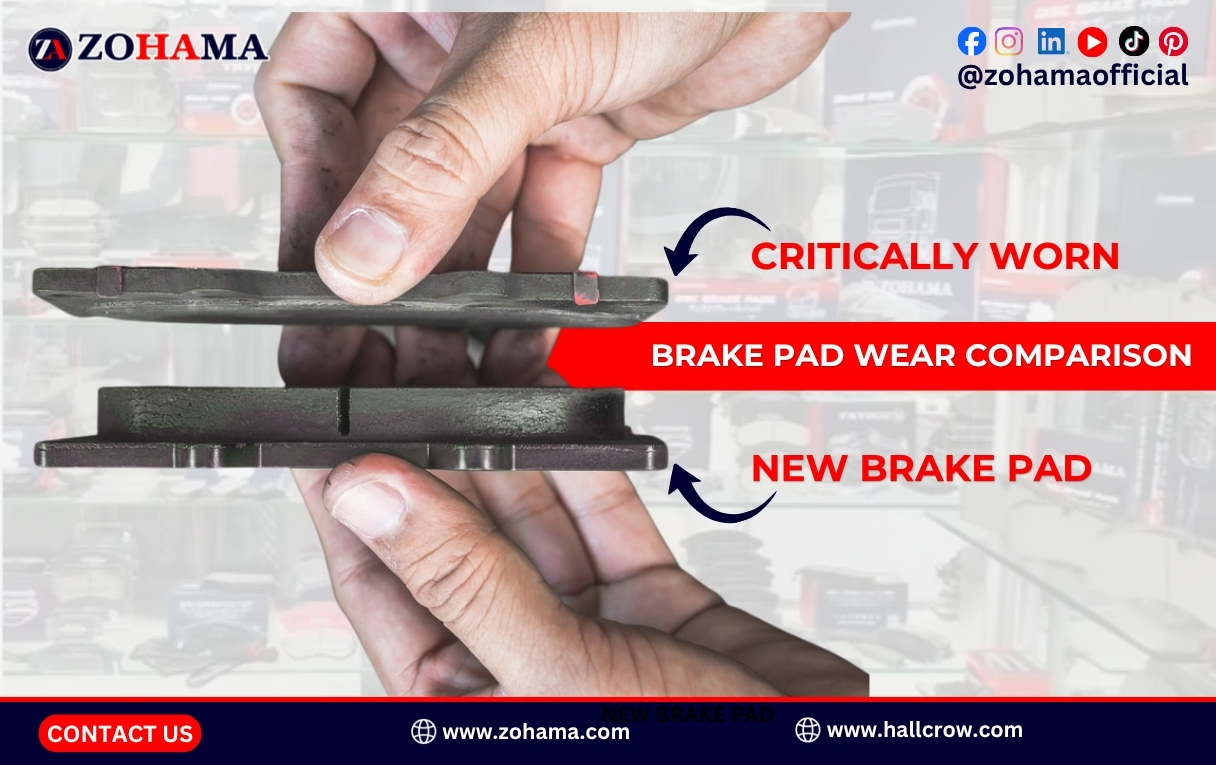
Understanding the thickness thresholds for brake pads helps translate a visual estimate into a practical decision. A brand-new brake pad for a light passenger vehicle typically starts with friction material between 10 and 12 millimetres thick. Some rear brake pads may be slightly thinner from new, typically in the 8 to 10 millimetre range, depending on the axle load distribution of the vehicle.
The generally accepted replacement threshold among mechanics and vehicle manufacturers is 3 millimetres of remaining friction material. At this point, braking performance remains adequate but there is very little margin left before the pad reaches the metal backing plate. Planning the replacement at 3 to 4 millimetres allows for normal usage without risking metal-to-metal contact during the next service interval.
Once a pad drops below 2 millimetres, the safety risk increases sharply. The friction material can no longer dissipate heat effectively, stopping distances increase, and any delay between the wear indicator alerting the driver and a service appointment may be enough for the pad to wear through completely. Many wear indicators are designed to produce a warning squeal at around the 2 to 3 millimetre mark, providing an audible prompt before the situation becomes critical.
From a fleet or workshop perspective, proactive replacement at 3 to 4 millimetres protects the brake rotor from damage and reduces the total cost of brake service. Rotors scored by fully depleted pads almost always require replacement or resurfacing alongside the pad change, adding significantly to repair time and parts cost.
Warning Signs Your Brake Pads May Be Worn
Visual inspection is one tool, but your vehicle communicates brake pad wear in several other ways. Recognising these signals allows a driver to act before the situation becomes dangerous.
Squealing or High-Pitched Screeching
Most modern brake pads incorporate a small metal wear indicator tab embedded near the top of the friction material. As the pad wears down to the warning threshold, this tab makes contact with the rotor surface and produces a consistent high-pitched squeal when the brakes are applied. This sound is intentional. It is designed to be audible inside the cabin at moderate speed and should not be dismissed. Note that brief squealing on first application after overnight parking, particularly in wet or cold weather, is usually caused by surface oxidation on the rotor and is not a pad wear indicator. The concern is a squeal that persists across multiple brake applications throughout normal driving.
Metal Grinding During Braking
A grinding, scraping, or growling noise when braking indicates that the friction material has worn away completely and the steel backing plate of the pad is making direct metal-to-metal contact with the rotor. This is a serious and urgent condition. Every braking event at this stage is scoring the rotor surface, potentially warping it and significantly increasing the cost of the next service. A vehicle producing this sound should be inspected by a qualified technician without delay.
Reduced Braking Responsiveness
When stopping distances seem longer than usual or the brakes feel less responsive to pedal pressure, pad wear is one possible cause. Thinned friction material generates less friction per unit of clamping force, meaning the vehicle takes longer to reach a complete stop from the same speed. This degradation is gradual and is therefore easy to normalise over time, which is why periodic inspections matter more than relying solely on feel.
Dashboard Brake Warning Indicators
Many newer vehicles are equipped with electronic brake pad wear sensors that trigger a dashboard warning light when the pad reaches minimum thickness. Unlike the acoustic wear indicator, which is a passive mechanical feature, these electronic sensors send a signal to the vehicle’s onboard diagnostic system. If this light illuminates, the pad condition should be verified physically rather than simply cleared with a diagnostic tool.
Vehicle Pulling to One Side When Braking
If the vehicle drifts or pulls to the left or right when the brakes are applied, this is not always a pad wear issue, but it can indicate uneven wear between the pads on either side of the axle. One caliper may be sticking, causing the pad on that side to wear faster, or a single pad may have degraded more rapidly due to manufacturing variability in a lower-quality product. Either scenario warrants a thorough inspection of the entire brake assembly on both wheels.
Pedal Vibration or Pulsation
A pulsating or vibrating brake pedal during application often points to a warped rotor, which is frequently caused by heat build-up from brake pads that have worn thin or, in some cases, are of inconsistent material density. While the rotor is technically a separate component, the condition of the pad directly affects the thermal load on the disc. Vibration during braking is therefore a useful signal that both the pads and the rotor surface should be evaluated together.
When Visual Inspection Is Not Enough
A wheel-side visual check is a useful screening tool, but there are situations where it simply cannot provide the information you need. Understanding these limitations prevents false confidence and ensures genuinely worn pads are not missed.
The most significant limitation is that you are almost always viewing only the outboard pad. In a disc brake caliper, there are two pads, one on each side of the rotor. The inboard pad, which is closer to the vehicle hub, is rarely visible through the wheel spokes without a mirror or endoscope. If the caliper is not sealing evenly, the inboard pad may wear considerably faster than the outboard pad, leaving the outboard pad looking acceptable while the inboard pad is at or beyond its limit.
Hidden or tapered wear presents a similar challenge. Brake pads do not always wear evenly across their full surface. The leading edge of a pad sometimes wears faster than the trailing edge, creating a wedge profile rather than a flat surface. From the side, through a spoke opening, a tapered pad can look thicker than it actually is at its thinnest point.
The rotor itself should also be part of any complete brake inspection. Significant grooving or scoring on the rotor face is visible through the spokes if you look carefully, and deep grooves indicate that a pad may have already worn through in that area. Rotor minimum thickness specifications are stamped on the hat or edge of the disc and should be measured with a micrometer during a proper service, not estimated visually. A professional inspection, including both sides of each pad and a physical measurement of rotor thickness, should be conducted at least once a year or at every second tyre rotation.
Common Mistakes People Make During Brake Pad Inspection
One of the most frequent errors is confusing the steel backing plate for friction material. If you are looking at a pad that appears thin, the darker or smoother layer closest to the rotor face is the friction compound. The brighter, flat steel plate behind it is the backing. Mistaking the backing plate for remaining pad material leads people to significantly underestimate how worn the pad actually is.
Relying on one wheel as representative of all four is another common mistake. Brake wear is not always symmetrical. Front pads typically wear faster than rear pads because the front axle absorbs a greater share of braking force during deceleration. Within the same axle, calipers can also wear unevenly if one is sticking. Checking only one wheel and assuming the others are in similar condition can result in missed wear on another corner.
Another overlooked issue is poor lighting. Trying to assess pad thickness in low ambient light without a torch produces an unreliable estimate. The space inside the wheel is shaded even in daylight, and the friction material is often dark grey or near-black in colour. A bright, narrow-beam torch aimed directly at the pad face is the minimum requirement for a usable inspection.
Finally, some drivers delay replacement because the vehicle is still stopping adequately. Adequate stopping performance and safe stopping performance are not the same thing. A pad at 2 millimetres may still slow the vehicle, but its ability to handle emergency braking demands, high-speed stops, or a succession of rapid decelerations is significantly compromised. Acting at the recommended 3 millimetre threshold keeps a genuine safety margin in reserve.
Brake Pad Maintenance Tips to Extend Service Life
While brake pads are a wear item by design, how you use and maintain them has a direct effect on how long they last. Smooth, progressive braking from a safe following distance preserves friction material far more effectively than repeated hard stops from high speed. Engine braking, where appropriate for the driving situation, reduces the load on the friction system and allows pads to cool between applications.
Carrying unnecessary weight in the vehicle increases the braking load on every stop. Removing roof racks when not in use and avoiding excessive cargo weight both reduce the thermal and mechanical demands placed on the brake system. Similarly, towing beyond the vehicle’s rated capacity places disproportionate strain on the rear brakes.
Bedding in new brake pads correctly is a step that is often skipped but makes a meaningful difference to long-term performance. Bedding involves a series of moderate-to-firm brake applications from progressively higher speeds, followed by cooling periods. This process deposits a thin, even layer of friction material onto the rotor face, ensuring consistent contact and reducing the risk of hot spots or glazing during the early life of the pad.
Caliper maintenance is equally important and is frequently ignored. A seized or sticky caliper piston keeps the pad in constant contact with the rotor even when the brake is not applied, generating abnormal heat and accelerating friction material loss. Having the caliper slides lubricated and the pistons checked for free movement during each brake service prevents premature pad wear from a source that has nothing to do with driving style.
How Fleet Operators, Distributors, and Auto Parts Buyers Evaluate Brake Pad Quality
For individual vehicle owners, brake pad selection is primarily a question of compound type and price. For fleet operators, auto parts distributors, and importers sourcing in volume, the evaluation criteria go considerably deeper. Quality at scale means consistency, not just peak performance on a single unit. A pad that performs excellently in isolation but varies in compound density from batch to batch creates unpredictable wear rates and increases warranty exposure for the distributor.
Material consistency begins with the formulation itself. Reputable manufacturers maintain tight tolerances on the ratio of friction modifiers, binders, fillers, and metal fibres in each production batch. The friction coefficient of the finished pad, typically measured to SAE J2522 or similar international standards, should fall within a defined and repeatable range. Buyers evaluating automotive brake pads for wholesale should request friction coefficient certification alongside any product sample.
Compressibility testing, shear strength measurement, and thermal cycling are additional quality indicators relevant to professional buyers. Compressibility ensures the pad does not deform excessively under high hydraulic pressure, which would compromise pedal feel. Shear testing verifies the bond between friction material and backing plate, as delamination at the bond line is a serious failure mode. Thermal cycling tests confirm that the friction compound maintains stable performance across repeated heat-and-cool cycles representative of real-world driving.
Packaging and labelling standards also matter at the distribution level. Consistent, clearly labelled packaging with application-specific part numbers reduces picking errors and returns. For brands distributing across multiple markets, the ability to receive product with custom branding and documentation in the required language is a practical requirement rather than a luxury. Compliance with established automotive industry standards for product identification, traceability, and documentation further supports efficient inventory management and reduces the risk of distribution errors throughout the supply chain.
Why Direct Factory Production Matters for Brake Pad Buyers
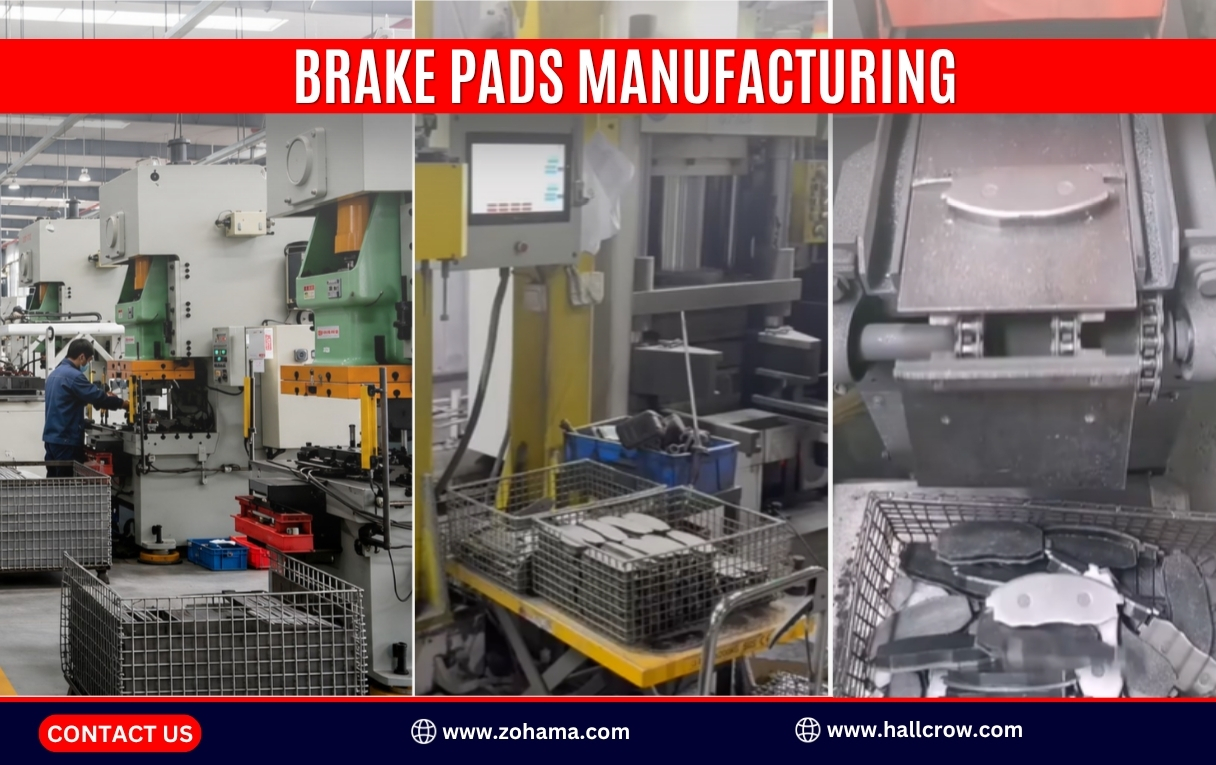
The automotive aftermarket is large, fragmented, and contains a wide range of product quality. Many brake pad products available through intermediary channels have passed through multiple hands between the original manufacturing facility and the end distributor. Each step in that chain reduces visibility into the actual production process and introduces the possibility of specification drift, substituted materials, or compromised handling conditions.
Direct factory production removes those intermediary layers. When a distributor or importer sources brake pads from the manufacturing facility itself, they gain direct access to the production team, quality control records, and formulation documentation. Specification changes can be communicated and confirmed at the production level rather than relayed through multiple agents. Batch traceability is maintained from raw material intake to finished product shipment, which is essential when handling warranty claims or investigating a quality issue in the field.
Cost control is another tangible benefit. Factory-direct pricing eliminates the margin layered on by wholesale intermediaries, making it possible for distributors to price competitively in their respective markets while maintaining acceptable margins. Long-term supply stability is also enhanced when the relationship is with the producer directly, as lead times, minimum order adjustments, and seasonal capacity planning can be discussed and agreed upon without a third party introducing delays.
For B2B buyers managing inventory across multiple SKUs and vehicle applications, factory-direct sourcing also simplifies product customisation. Pad dimensions, friction compound selection, chamfer angles, and slot patterns can be adjusted to meet regional fitment requirements or performance preferences, with the modifications implemented at the production stage rather than adapted after the fact.
OEM and Private Label Opportunities for Automotive Brands
For automotive parts brands looking to expand their braking product catalogue without investing in manufacturing infrastructure, OEM and private label manufacturing represent a well-established and commercially efficient route to market. An OEM manufacturing arrangement allows a brand to source brake pads built to their specification, with their part numbers and branding, produced by a factory that already has the tooling, certifications, and compound expertise in place.
Private label manufacturing takes this a step further by giving brands full control over the product name, packaging design, and market positioning. A distributor operating in a specific regional market can take a well-engineered brake pad compound, dress it in their own brand identity, and bring it to market with confidence in the underlying product quality. This approach is particularly common among regional aftermarket brands in Asia, the Middle East, Africa, and Latin America, where established global brands may not have strong local distribution but demand for reliable braking components remains high.
Product customisation under an OEM or private label arrangement goes beyond branding. Buyers can typically specify the friction compound formulation, backing plate surface treatment, chamfer and slot configuration, and shim or hardware inclusions based on the vehicle applications they are targeting in their home market. This level of customisation allows a brand to offer a product that genuinely fits their customer base rather than adapting a generic catalogue product.
Global Supply and Container Shipping Considerations
International bulk supply of brake pads involves logistics considerations that go well beyond simply loading a pallet onto a freight carrier. Brake pads are typically shipped in cartonised form, with inner boxes containing individual pad sets and outer cartons sized to maximise pallet and container utilisation without compromising product protection. Packaging must withstand the vibration and humidity exposure that is inherent in sea freight, particularly on longer routes across the Indian Ocean or Pacific.
Container loading efficiency directly affects the landed cost per unit for the importer. A well-organised factory packs containers to maximise cubic utilisation while maintaining the product hierarchy required by the importer for their warehouse receiving process. FCL (Full Container Load) shipments are standard for high-volume distributors, while LCL (Less than Container Load) consolidation offers a practical option for buyers building up initial inventory of a new product range.
International buyers also need to consider certification requirements in their destination market. Brake pads sold in the European market are subject to ECE R90 certification, which mandates testing against original equipment performance benchmarks. Different markets may require additional documentation, country-specific labelling, or compliance with local environmental regulations such as low-copper compound requirements that apply in several US states. A manufacturer experienced in worldwide container shipment should be able to advise on documentation requirements per destination and prepare the necessary export paperwork, including certificates of origin, material safety data sheets, and product compliance certifications.
Lead times in international supply chains are influenced by both the production schedule and the shipping window. Buyers ordering on a regular replenishment cycle should coordinate production and departure dates to avoid gaps in warehouse stock. Reputable manufacturers maintain production planning visibility that allows buyers to confirm quantity and departure schedules well in advance, reducing the risk of supply disruptions that would affect a distributor’s ability to serve their own customer base.
Why Choosing the Right Brake Pad Manufacturing Partner Matters
For distributors, importers, and auto parts brands evaluating sourcing options, the choice of manufacturing partner has long-term implications that extend well beyond the initial purchase order. A manufacturer with robust quality systems, reliable production capacity, and transparent communication reduces the operational burden on the buyer and protects them from product quality issues reaching the end market.
Zohama operates as a manufacturer and wholesale supplier of automotive brake pads, with a particular focus on light vehicle applications. The company supports the full range of B2B business relationships common in the automotive parts trade, including OEM manufacturing, private label production, bulk supply for distributors, and worldwide container shipping for importers. With manufacturing operations backed by international quality certifications and a production infrastructure built around consistent output, Zohama is positioned to serve buyers seeking a reliable, factory-direct source for brake pad supply.
What distinguishes a credible manufacturing partner from a commodity supplier is the combination of technical capability and commercial reliability. Technical capability means the ability to produce to specification across varying order volumes, maintain compound consistency between batches, and support buyers with documentation, testing data, and application guidance. Commercial reliability means predictable lead times, transparent pricing, and the responsiveness to handle custom requirements without lengthy delays.
For auto parts brands entering new markets, the ability to access a private label brake pad programme with sufficient vehicle coverage across the most common platforms in that market is often the deciding factor. Coverage breadth, compound quality, and the flexibility to build a product range around a specific market’s most popular vehicle makes and models are all capabilities that separate a manufacturer with genuine aftermarket expertise from one that simply fills orders.
Conclusion
Checking brake pad wear without removing the wheel is a practical and accessible skill for any driver or vehicle maintenance professional. For disc brake equipped vehicles with open-spoke wheels, a flashlight and a few minutes of careful observation can provide a reliable initial assessment of remaining friction material. Knowing what to look for, what thickness thresholds matter, and when to escalate to a professional inspection transforms a simple visual check into a genuine safety tool.
The key takeaways are straightforward. New light vehicle brake pads start at 10 to 12 millimetres and should be replaced when the friction material reaches approximately 3 millimetres. Brake inspection includes checking pad thickness, rotor condition, brake fluid level, and inspecting both inboard and outboard pads (often requiring wheel removal for full assessment). Visual inspection through the wheel spokes is reliable for the outboard pad but does not cover the inboard pad or rotor condition. Warning sounds such as persistent squealing or metallic grinding, dashboard warning lights, longer stopping distances, and vehicle pulling during braking are all signals that demand prompt attention.
For B2B buyers, fleet operators, and automotive parts brands, brake pad sourcing decisions carry consequences that extend well beyond the individual component. Material quality, production consistency, certification compliance, and the reliability of the supply chain all affect end-market performance and the business reputation of everyone in the distribution chain. Choosing a manufacturing partner with the capability, transparency, and capacity to support long-term growth is one of the most important supply chain decisions an automotive parts brand can make.
FAQ: Frequently Asked Questions
Q1. Can you really check brake pads without removing the wheel?
Yes, on most modern vehicles fitted with disc brakes and open-spoke alloy or steel wheels. By shining a torch through the wheel spokes and turning the steering to full lock on front wheels, you can see the outboard brake pad pressed against the rotor. This allows a visual estimate of the remaining friction material. It will not show you the inboard pad and is not a substitute for a full professional inspection, but it is a reliable first check.
Q2. What is the minimum safe brake pad thickness for a passenger car?
The widely accepted replacement threshold is 3 millimetres of remaining friction material. While a pad at 2 millimetres may still produce braking friction, it is approaching the wear indicator contact zone and offers very little safety margin. Most mechanics and vehicle manufacturers recommend replacement at or before 3 millimetres to protect both the driver and the brake rotor. New passenger vehicle pads typically start at 10 to 12 millimetres.
Q3. What does it mean when brake pads squeal persistently during braking?
A persistent high-pitched squeal when the brakes are applied is the most common warning from a mechanical wear indicator tab, a small metal clip embedded in the friction material. When the pad wears down to the indicator’s level, the tab contacts the rotor and produces the squeal. This is a deliberate safety design, not a coincidental noise. It means the pad is approaching minimum thickness and should be inspected and likely replaced soon. A brief squeal only on first application in wet or cold weather is generally surface rust and is not a concern.
Q4. What is the advantage of sourcing brake pads directly from a factory rather than through a trading company?
Direct factory production gives the buyer access to quality control records, compound documentation, and the production team itself. It removes intermediary margin from the price, improves batch traceability, and allows specification changes to be implemented at the manufacturing level. For importers, distributors, and auto parts brands sourcing in volume, a direct relationship with the producer provides greater transparency, more consistent product quality, and better control over lead times and customisation requirements.
Q5. What certifications should I look for when evaluating an automotive brake pad supplier?
The most relevant certifications for a serious brake pad manufacturer include IATF 16949 (the international standard for automotive quality management systems), ISO 9001 (general quality management), and ECE R90 (the European type-approval regulation for replacement brake linings). Some markets also require SAE friction coefficient classification or equivalent national standards. Buyers should also request material safety data sheets and confirm that the friction compound complies with low-copper regulations if exporting to regulated US state markets.