Every internal combustion engine depends on three critical substances to function: clean oil, clean air, and clean fuel. Without proper filtration of all three, engine wear accelerates, fuel efficiency drops, and component failures become inevitable. For B2B buyers, fleet operators, wholesale distributors, and OEM procurement teams, understanding how each filter type works is not just useful technical knowledge. It directly affects sourcing decisions, maintenance contract planning, and the long-term profitability of the fleets or vehicle lines you support.
This guide breaks down the function, construction, and supply chain significance of the oil filter, air filter, and fuel filter. We also address what differentiates high-quality vehicle maintenance filters from low-grade alternatives, and what that means for businesses purchasing automotive filters at volume.
What Is an Oil Filter and What Does It Do?
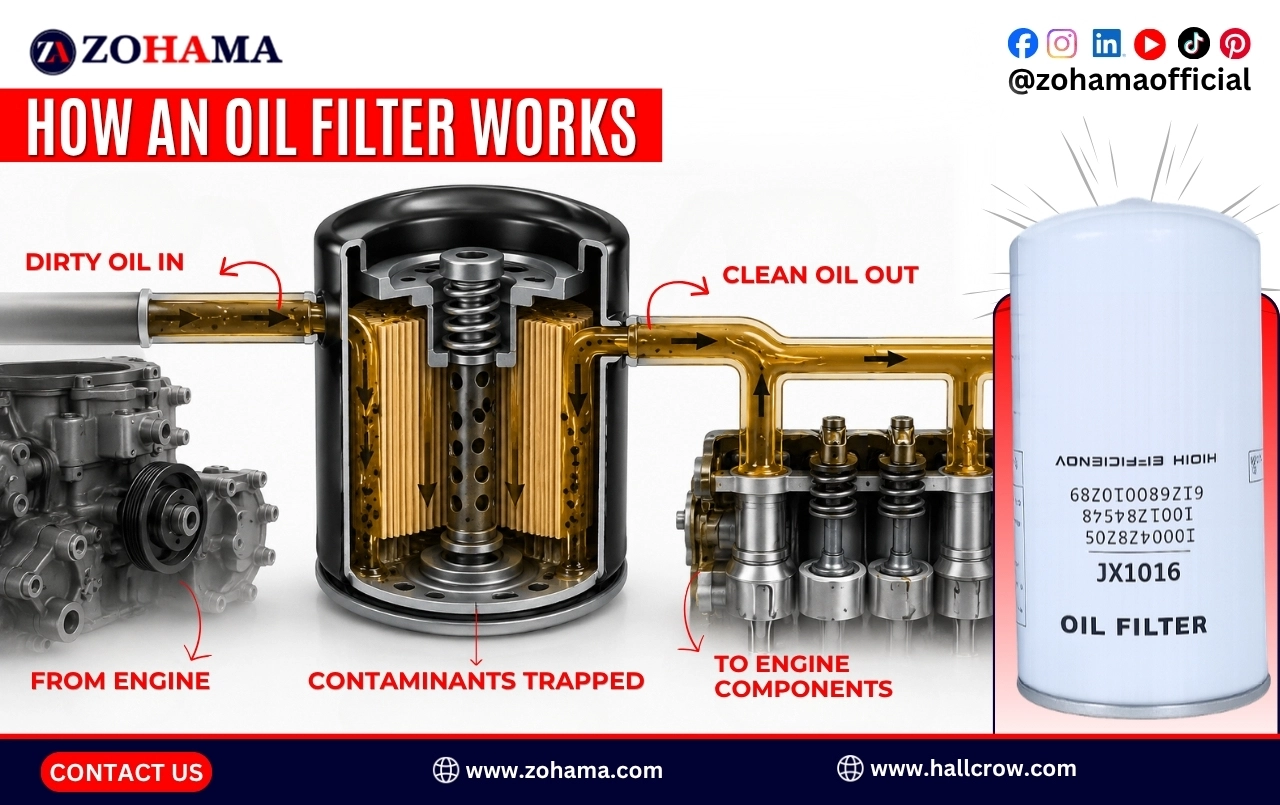
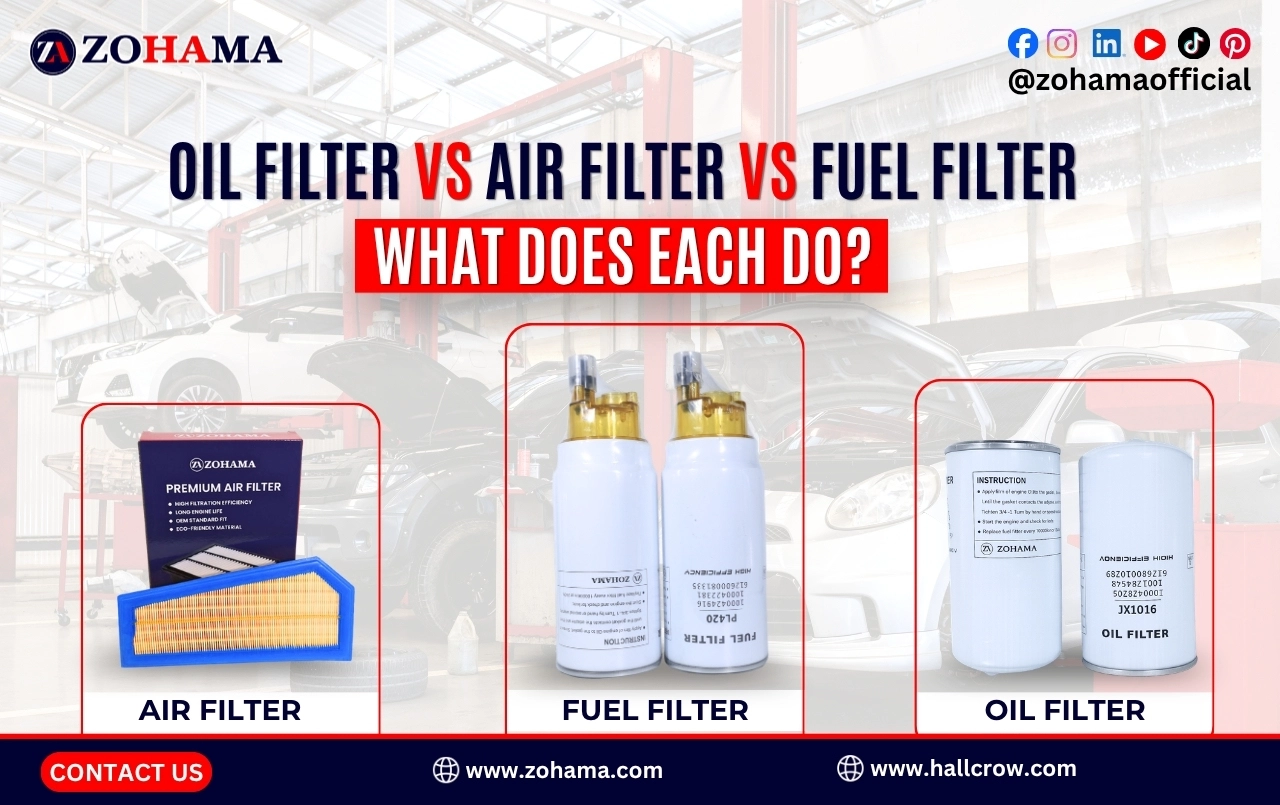
The oil filter is mounted directly on the engine block and works in continuous operation every time the engine runs. Engine oil circulates through the lubrication system at high pressure, reaching all moving metal components: crankshaft bearings, camshafts, valve trains, and piston walls. As it does, it collects metallic particles, carbon deposits, dirt, and combustion byproducts.
Without filtration, this contaminated oil would re-enter the engine system and act as an abrasive, grinding down precision components with every revolution. The oil filter removes these particles before the oil returns to the lubrication circuit.
How Oil Filters Are Constructed
A standard spin-on oil filter contains a pleated filter media (typically cellulose or synthetic fiber), a check valve that prevents oil from draining back when the engine is off, and a bypass valve that allows oil to flow even if the filter becomes blocked. This bypass function is critical in cold starts, when oil is viscous and filter resistance is temporarily high.
Premium OEM oil filters use synthetic or blended synthetic media that captures particles as small as 20 to 30 microns while maintaining low restriction to flow. Filters with higher capacity media hold more contaminants before bypassing, extending the effective service interval.
Why Oil Filter Quality Matters at Scale
For fleet managers and wholesale distributors, filter quality directly correlates with engine rebuild frequency and oil change intervals. A low-grade filter that begins bypassing at 3,000 km instead of 10,000 km provides no protection during the remainder of the service period. Over hundreds of vehicles, the cumulative cost in premature engine wear is significant.
What Is an Air Filter and What Does It Do?
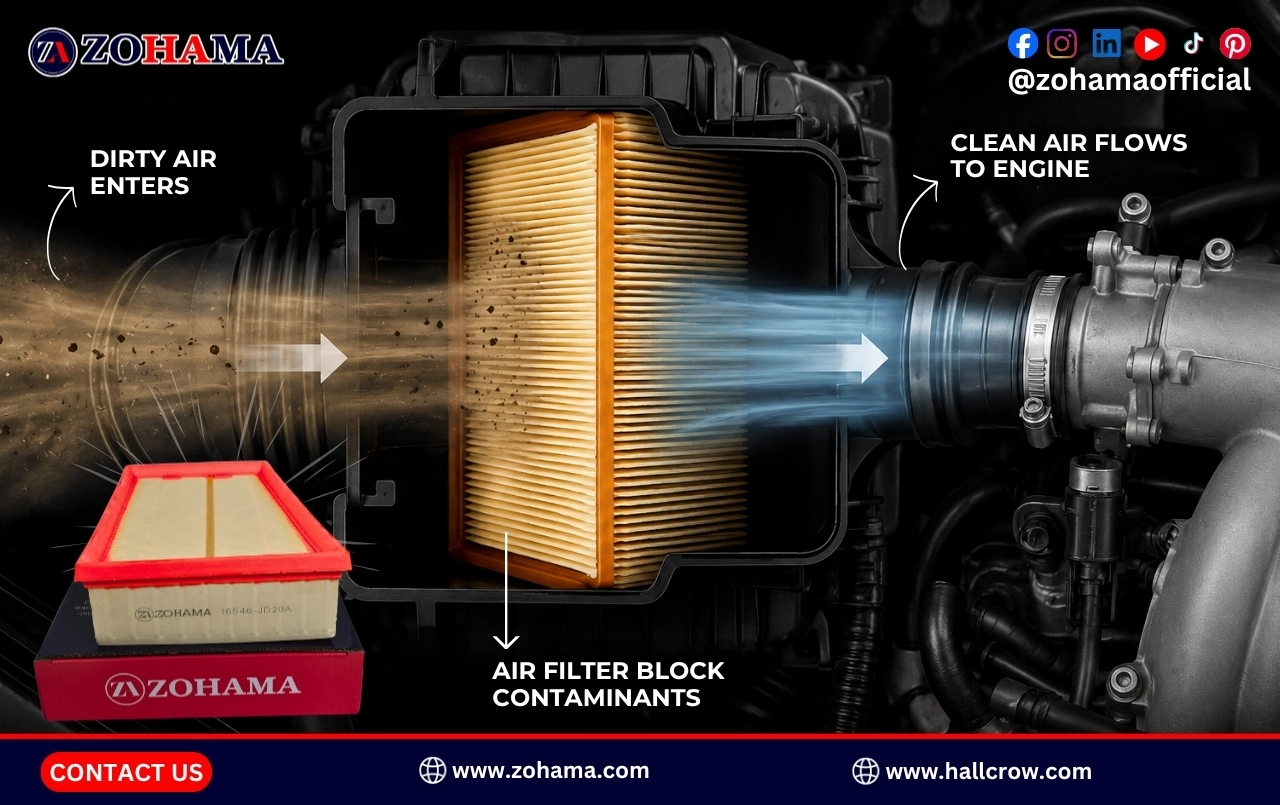
The engine air filter sits within the air intake system, positioned before the throttle body and intake manifold. Its purpose is to remove airborne contaminants before they enter the combustion chamber.
Combustion engines draw in large volumes of air. For every liter of fuel burned, approximately 10,000 liters of air pass through the engine. That air carries dust, pollen, sand particles, industrial particulate, and road grime. If these reach the combustion chamber, they act as abrasives on cylinder walls, piston rings, and valve seats, causing measurable wear within relatively short operating periods.
Air Filter Types and Construction
The most common type is the panel filter, used in passenger cars and light commercial vehicles. It consists of folded filter media, typically pleated paper or cotton gauze, housed in a plastic frame. The pleating maximizes surface area while keeping the unit compact.
Heavy-duty trucks and construction equipment often use radial seal filters or two-stage filtration systems that include a pre-cleaner stage to remove coarser particles before the main filter element. For diesel applications operating in high-dust environments, effective air filtration is especially critical since diesel combustion is more sensitive to intake air quality than gasoline engines.
The engine filtration system performs best when air filters are matched precisely to vehicle application, ensuring the correct restriction rating, particle efficiency, and filter capacity for the operating environment.
Air Filter and Engine Performance
A clogged or damaged air filter restricts airflow to the engine, which causes the fuel mixture to run rich, reduces combustion efficiency, and increases fuel consumption. Modern engines with mass airflow sensors may also produce diagnostic fault codes when intake restriction rises above calibrated limits.
For distributors supplying to workshop chains or fleet operators, providing air filters with correct OEM fit specifications eliminates installation errors and warranty disputes.
What Is a Fuel Filter and What Does It Do?
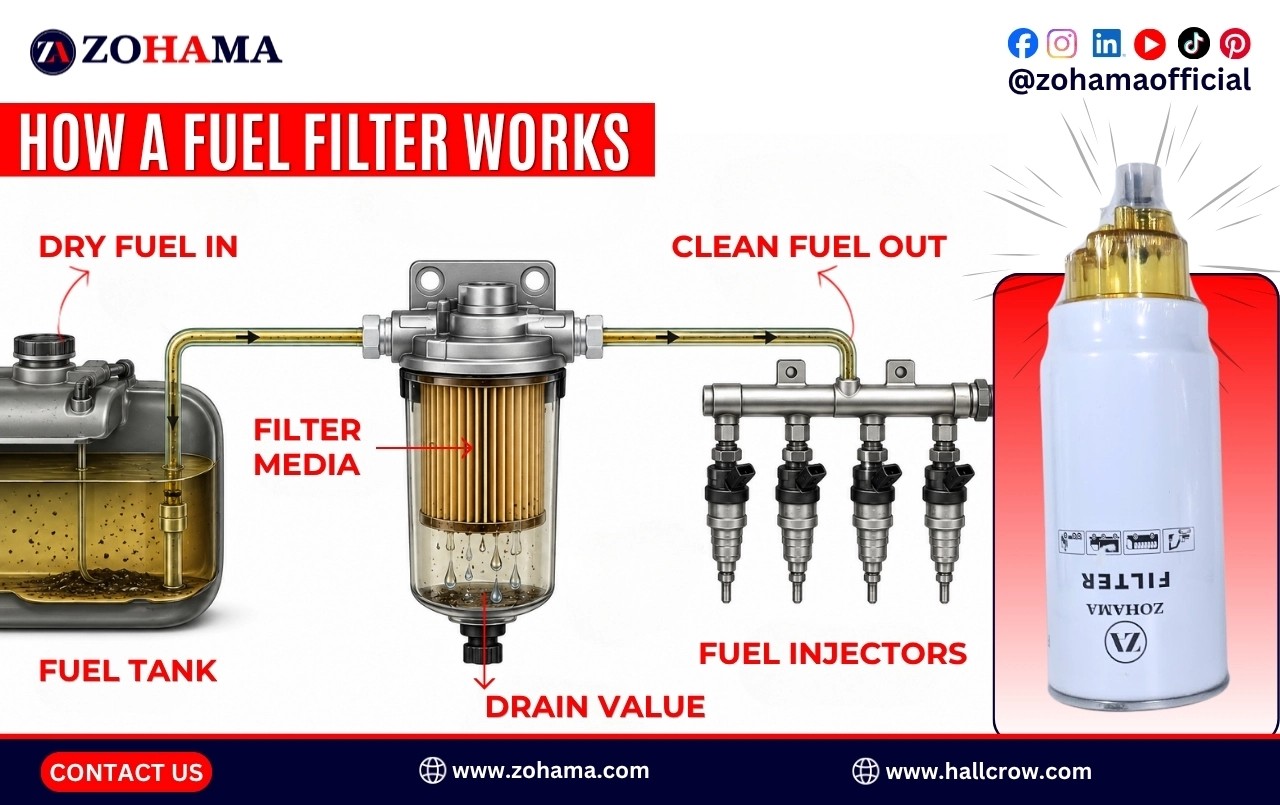
The fuel filter removes contaminants from the fuel before it reaches the fuel injectors or carburetor. Contaminated fuel is one of the most common causes of injector failure and poor combustion performance across both gasoline and diesel systems.
Fuel can contain water, rust particles from storage tanks, microbial growth, wax crystals in cold diesel, and fine sediment that accumulates during transport and storage. Without filtration, these contaminants clog injector nozzles, damage high-pressure fuel pumps, and cause erratic combustion that increases emissions and reduces power output.
Gasoline Filter Systems
In gasoline filter systems, the filter is typically positioned in the fuel line between the tank and the fuel rail. Older vehicles use an inline canister filter that is serviceable as a standalone component. Many modern vehicles integrate the filter into the fuel pump module inside the fuel tank, which means the filter is serviced less frequently but is more complex to replace.
Gasoline fuel filters use fine paper or synthetic media capable of filtering particles in the 10 to 30 micron range, which is sufficient to protect modern multi-port and direct injection systems.
Diesel Filter Systems
A diesel filter system requires more complex filtration than gasoline applications. Diesel is more susceptible to water contamination, which can cause injector corrosion and fuel pump cavitation. High-pressure common rail diesel engines operate fuel systems at pressures exceeding 2,000 bar, and injector tolerances are measured in microns. Particle filtration requirements for these systems are often in the 2 to 5 micron range.
As a result, diesel fuel filter systems typically incorporate a water separator stage with a drain valve, a primary filter for coarser particles, and in some applications a secondary or final filter close to the high-pressure pump. Heating elements may also be integrated for wax prevention in cold climates.
For wholesale buyers supplying diesel filter systems to commercial vehicle workshops, truck fleets, or agricultural equipment distributors, specification accuracy is non-negotiable. The filter must match the vehicle’s OEM filtration rating, housing dimensions, and sealing system. You can explore Zohama’s dedicated coverage of fuel filter types and sourcing for different vehicle categories to understand the full range of available configurations.
Key Differences Between Oil Filters, Air Filters, and Fuel Filters
| Feature | Oil Filter | Air Filter | Fuel Filter |
|---|---|---|---|
| Primary function | Removes contaminants from engine oil | Removes airborne particles from intake air | Removes particles and water from fuel |
| Media type | Cellulose, synthetic, or blended fiber | Pleated paper or cotton gauze | Fine paper or synthetic membrane |
| Typical service interval | 5,000 to 15,000 km (varies by oil type) | 15,000 to 30,000 km | 30,000 to 60,000 km (application dependent) |
| Diesel-specific considerations | Higher capacity required for diesel oil | Two-stage systems common in heavy duty | Water separation is mandatory |
| Failure consequence | Engine bearing and component wear | Power loss, fuel overconsumption | Injector failure, pump damage |
| OEM fit criticality | High (pressure rating, thread size) | High (housing fit, airflow restriction) | Critical (pressure rating, micron rating) |
Why Filter Quality Directly Affects Fleet and Engine Performance
The relationship between filter quality and total cost of ownership is well established in commercial fleet management. A substandard oil filter that fails to maintain media integrity at high oil temperatures allows contaminants to bypass and accelerate bearing wear. An air filter with poor sealing at the gasket allows unfiltered air to enter the intake, bypassing the media entirely.
For businesses operating mixed fleets of gasoline and diesel vehicles, maintaining a consistent supply of correctly specified automotive filters from a reliable wholesale supplier reduces operational risk. Standardizing on OEM-grade or OEM-equivalent filters eliminates the variance in performance that comes from mixing different quality tiers.
Filter specification also affects compliance in regulated industries. Commercial trucks in many markets must meet maintenance standards tied to filter replacement intervals. Using filters with correct OEM specifications ensures maintenance records align with manufacturer service requirements, which matters for warranty claims, resale value, and regulatory inspections.
The B2B Wholesale and Distributor Perspective
For importers, distributors, and fleet procurement managers, automotive filters represent one of the highest-volume SKUs in any parts catalog. Demand is consistent, repeat purchasing is predictable, and the category has low return rates when specifications are accurate.
The primary risks in wholesale filter procurement are specification mismatch, inconsistent media quality between production batches, and packaging that does not protect filter integrity during shipping and storage.
When evaluating a wholesale auto filters supplier, B2B buyers should assess the following factors. Does the supplier have traceability systems for media source and production batch? Are dimensional tolerances verified against OEM measurements? Is there documented quality control data for burst pressure, flow rate, and particle capture efficiency?
Zohama supplies OEM-grade automotive filters to distributors and importers across multiple markets, with manufacturing supported by verified factory partners. For businesses evaluating sourcing strategies, understanding what to look for when choosing a Chinese auto parts factory is an important first step before placing volume orders.
OEM Auto Parts Filters: Manufacturing and Supply Chain Advantages
OEM auto parts filters are manufactured to meet the original equipment specifications defined by the vehicle manufacturer. This means the filter media, housing dimensions, bypass valve opening pressure, and sealing materials are engineered specifically for the target engine system.
Aftermarket filters that claim OEM equivalence but are manufactured to looser tolerances may fit the housing but underperform on particle capture efficiency or pressure ratings. For high-pressure diesel fuel systems in particular, a filter rated at 10 microns when the OEM specification requires 5 microns provides inadequate protection for the fuel injectors.
The advantage of working with an established OEM-level supplier is access to filter ranges that cover wide vehicle application databases. Rather than sourcing from multiple vendors for different vehicle makes and models, a single wholesale auto filters supplier with broad application coverage simplifies procurement and reduces administrative overhead.
For businesses that also source other drivetrain components, working with a supplier that covers multiple product categories, from filtration to suspension, delivers further consolidation benefits. Zohama’s position as a multi-category automotive parts manufacturer supports this approach, and their distributor and partner program is designed specifically for importers and regional distributors seeking long-term supply arrangements.
Filter Replacement Intervals and Maintenance Guidance
Correct replacement intervals vary by filter type, vehicle application, and operating environment. The intervals below represent general industry benchmarks. Always defer to the vehicle manufacturer’s service manual for specific recommendations.
Oil filters should be replaced at every oil change. Most passenger car gasoline engines running synthetic oil recommend oil changes between 10,000 and 15,000 km. Diesel engines and vehicles running conventional mineral oil may require shorter intervals. High-duty-cycle commercial vehicles may require more frequent changes.
Air filters typically require replacement between 15,000 and 30,000 km for passenger vehicles. Vehicles operating in dusty environments such as construction sites, agricultural areas, or unpaved road networks may need replacement at half the standard interval. Inspecting the filter visually at each major service is good practice.
Fuel filters in diesel applications often require replacement between 30,000 and 60,000 km, though high-pressure common rail systems may specify shorter intervals due to the tight injector tolerances involved. Fuel filters in gasoline systems integrated into the fuel tank module may have extended replacement intervals of 80,000 km or more, though symptoms of restriction should prompt earlier replacement.
Postponing filter replacement beyond recommended intervals creates compounding risk. A blocked oil filter operating in bypass mode provides no filtration protection whatsoever. A degraded fuel filter increases strain on the fuel pump motor, potentially causing secondary failures that far exceed the cost of a timely filter replacement.
For B2B customers who also supply brake components, maintenance interval planning across filter and brake systems can be coordinated. Understanding how long brake pads last alongside filter service schedules helps fleet managers build comprehensive preventive maintenance programs.
Sourcing Car Filters from China: Quality Assurance Considerations
China is the world’s largest producer of automotive aftermarket parts, including the full range of car filters. The quality range within Chinese manufacturing is broad, from commodity-grade filters intended for low-cost markets to fully OEM-equivalent products that meet international quality standards including ISO/TS 16949 and ISO 9001.
For importers, the critical differentiation between suppliers lies in process control, not simply in claimed specifications. A supplier that documents media GSM, pleat depth, burst pressure test results, and dimensional inspection records provides meaningful quality assurance. One that offers only marketing claims about OEM equivalence does not.
Zohama sources and supplies fuel filters with verified specifications, and their resource on fuel filters from China provides practical guidance for importers navigating supplier selection. The same quality evaluation framework applies to oil and air filter procurement.
Top-tier Chinese auto parts manufacturers also invest in application engineering databases to ensure that filter part numbers map correctly to vehicle makes, models, and engine variants. This cross-reference capability is a basic requirement for any wholesale supplier serving workshop chains or fleet operators who need fast, accurate parts identification.
For buyers expanding their supplier network across multiple product lines, the ability to consolidate oil filter, air filter, and fuel filter procurement under a single verified source reduces vendor management overhead and improves quality consistency across the catalog.
Conclusion: Why Filter Specification and Supplier Quality Define Long-Term Value
The oil filter, air filter, and fuel filter each address a distinct contamination risk within the engine system. Together, they form the core of any functional engine filtration system, protecting precision components that would otherwise degrade rapidly under operating conditions.
For B2B buyers, the distinction between adequate and excellent filter quality is not abstract. It is measurable in engine longevity, warranty claim rates, fleet downtime, and total maintenance cost per vehicle. Sourcing OEM-grade automotive filters from a supplier with verified manufacturing standards and broad application coverage is a procurement decision with direct financial consequences.
Zohama supplies automotive filters and related drivetrain components to distributors, importers, and fleet procurement teams globally. Whether you are building a filter catalog for a multi-brand workshop network, sourcing for a commercial vehicle fleet, or establishing a regional distribution partnership, the combination of product range, OEM specification compliance, and supply chain reliability determines long-term supplier value.
Contact Zohama to discuss application requirements, minimum order quantities, and distributor pricing for oil filters, air filters, fuel filters, and the broader automotive parts range.
Frequently Asked Questions
Q: What is the difference between an oil filter and an air filter?
An oil filter removes contaminants from engine lubricating oil as it circulates through the engine. An air filter removes dust, pollen, and particulate matter from the intake air before it enters the combustion chamber. Both protect the engine from different contamination sources and require periodic replacement.
Q: Can I use a non-OEM fuel filter in a high-pressure diesel system?
Only if the aftermarket filter meets or exceeds the OEM micron rating, pressure rating, and water separation performance. High-pressure common rail diesel systems operate at very tight tolerances, and underspecified filters can allow injector damage within relatively short service periods. Always verify specifications against the OEM data sheet, not just the product label.
Q: How do I know when a fuel filter needs replacement?
Common indicators include hard starting, hesitation under acceleration, reduced power output, and increased fuel consumption. In diesel vehicles, water-in-fuel warning lights may also indicate that the filter’s water separator bowl requires draining or that the filter has reached capacity. Always follow the manufacturer’s service interval as a baseline.
Q: Why does filter quality matter for wholesale buyers?
Wholesale buyers and distributors are responsible for the performance of filters they supply to end users. A substandard filter that causes premature engine wear creates liability, warranty exposure, and reputational risk. Sourcing from verified OEM-grade suppliers reduces these risks while maintaining competitive pricing at volume.
Q: Are diesel filter systems different from gasoline filter systems?
Yes, significantly. Diesel filter systems require finer particle filtration (often 2 to 5 microns vs. 10 to 30 microns for gasoline), mandatory water separation, and in some climates a heating function to prevent fuel waxing. The housing design, sealing system, and media construction are all different from gasoline fuel filter configurations.
Q: How often should oil filters be replaced?
Oil filters should be replaced at every oil change. The interval depends on the oil type and engine application. Synthetic oil in a passenger gasoline engine typically allows 10,000 to 15,000 km between changes. Diesel engines and vehicles in severe duty service may require shorter intervals. Consult the vehicle manufacturer’s service manual for specific guidance.