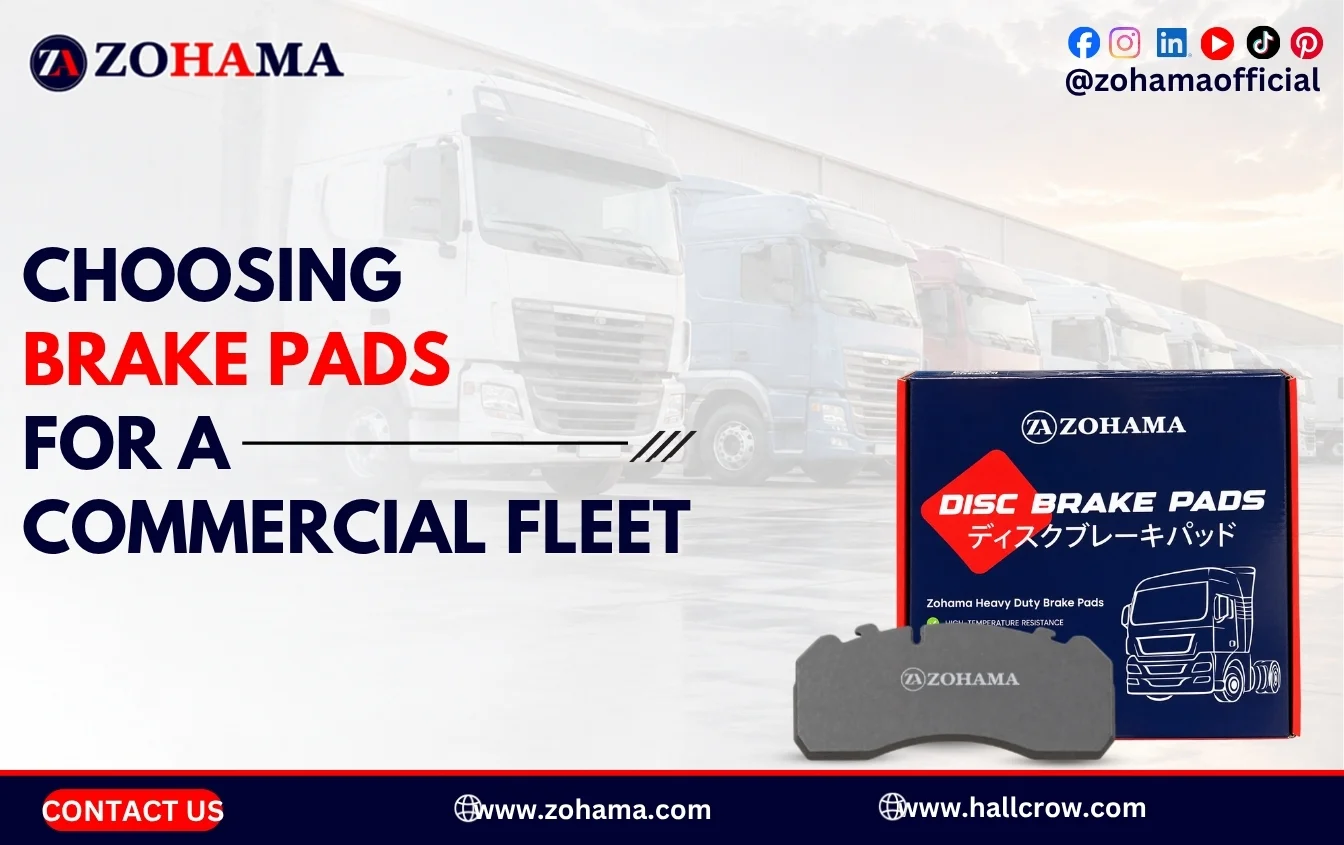
Choosing brake pads for a commercial fleet is a business decision, not just a technical one. A fleet manager is balancing safety, uptime and cost across many vehicles at once, and the wrong choice multiplies quickly: a pad that wears fast or fails inspection is not one problem but a whole fleet of them. For distributors who supply fleets, understanding how these buyers decide is the key to serving them well. This guide sets out the factors that matter, how to match materials, and how to think about cost and sourcing.
This sits alongside our product range for the segment. For the vehicles themselves, see our brake pads for commercial vehicles and heavy-duty truck brake pads pages.
Why Fleet Selection Is Different
A private owner chooses a pad for one vehicle; a fleet chooses for dozens or hundreds. That changes the priorities. Consistency across the fleet, predictable replacement intervals and total running cost matter more than the price of a single pad. A fleet also cannot afford surprises, so proven, reliable performance outweighs a marginal saving.
The Factors That Shape the Choice
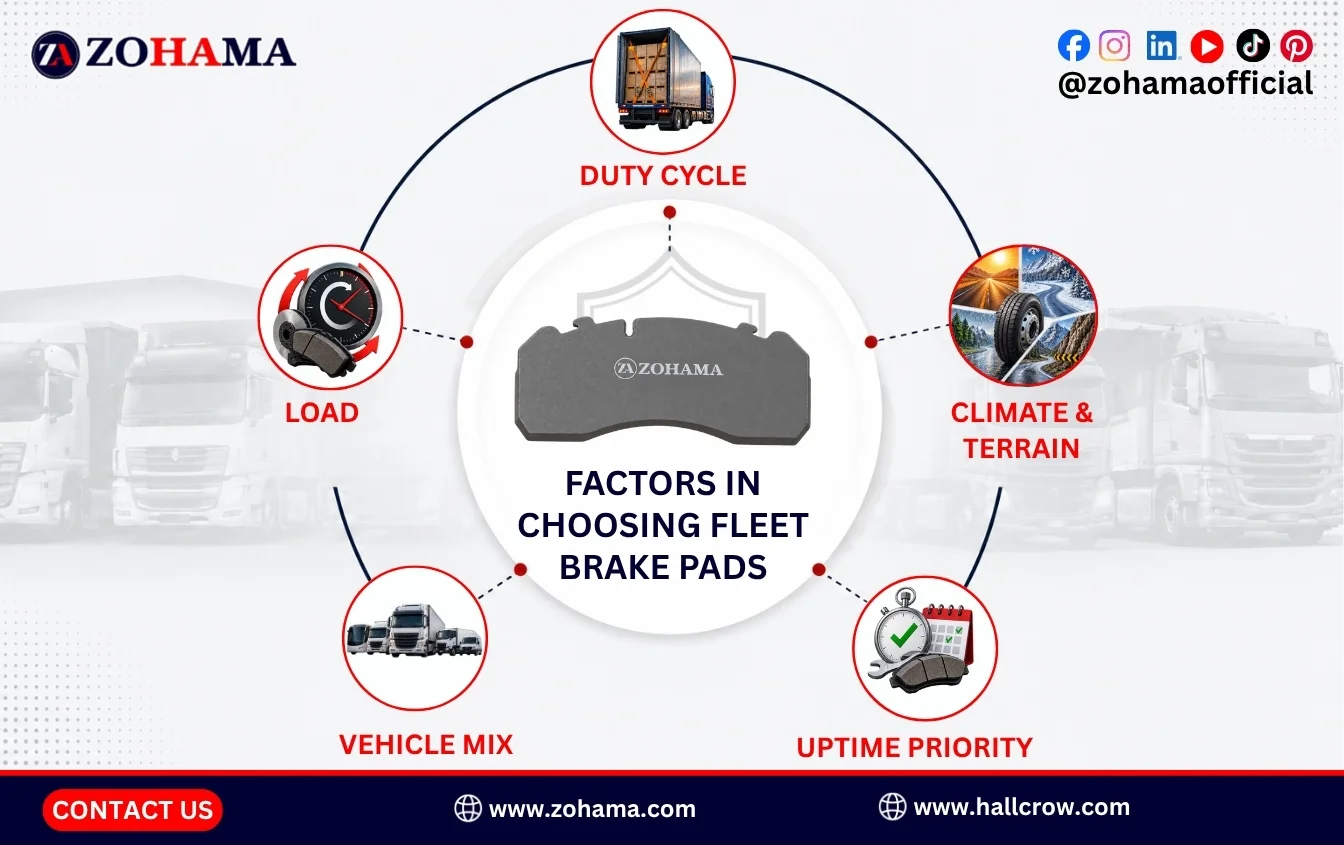
Before selecting a pad, a fleet should assess how its vehicles are actually used:
| Fleet factor | How it shapes the choice |
|---|---|
| Duty cycle | Long-haul, urban stop-start and off-road all wear pads differently and favour different materials. |
| Load | Heavier loads demand more heat resistance and durability. |
| Climate and terrain | Hot or hilly regions push toward heat-handling materials. |
| Vehicle mix | Mixed fleets need coverage across several makes and axle types. |
| Uptime priority | The more costly downtime is, the more life and reliability matter over unit price. |
Reading these factors honestly is what turns a guess into an informed choice, and it is the same assessment a distributor should make when recommending a pad.
Matching Material to the Fleet
Commercial fleet use generally favours tougher materials. Semi-metallic suits heavy loads and heat, low-metallic gives strong everyday performance for mixed duty, and lighter commercial vehicles can use quieter materials where comfort matters. Our brake pad materials breakdown explains how each behaves under load, so the choice fits the fleet rather than a one-size approach.
Think in Total Cost, Not Unit Price
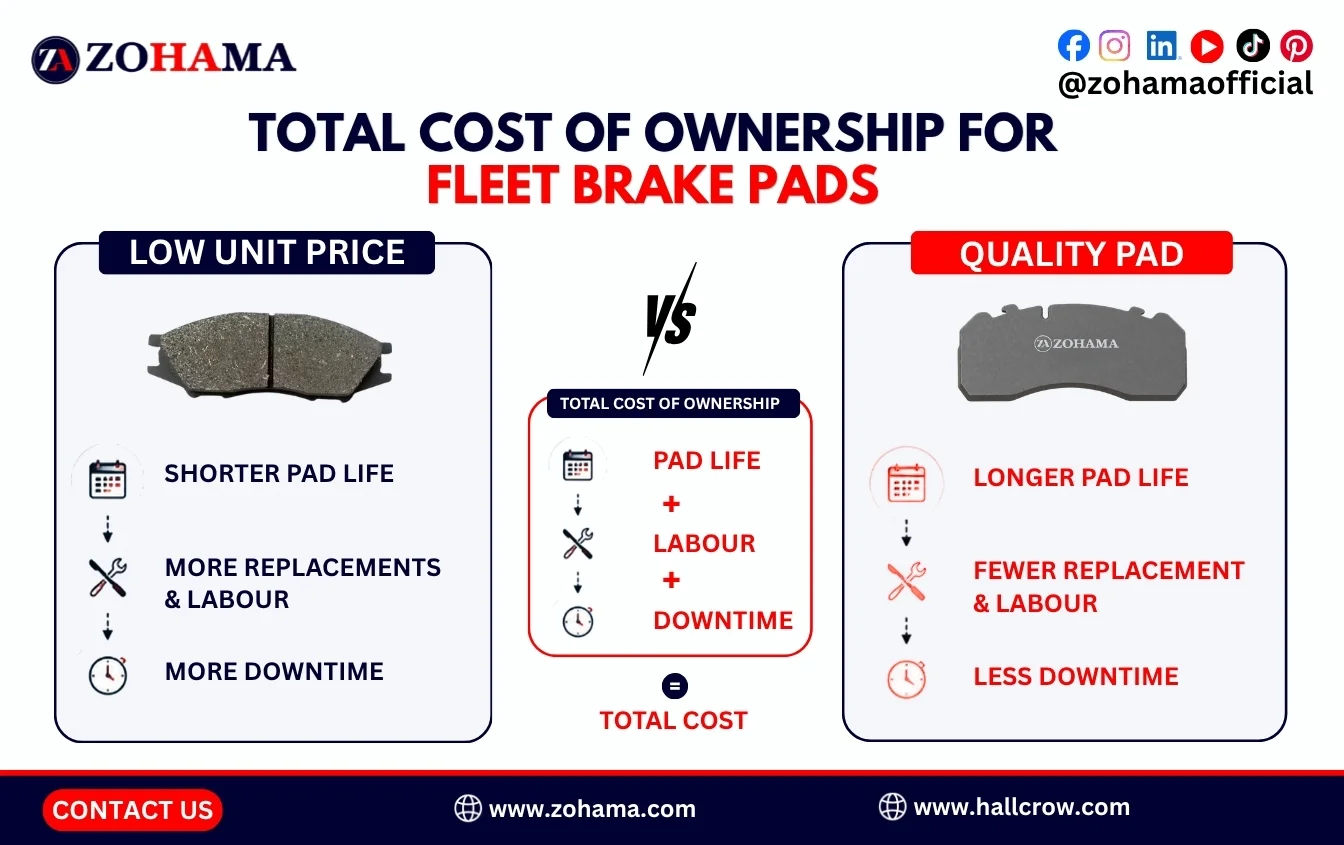
The cheapest pad is rarely the cheapest choice for a fleet. What matters is total cost of ownership, which includes pad life, labour to replace, and the cost of downtime while a vehicle is off the road. A pad that lasts longer and keeps trucks moving usually wins on total cost even at a higher unit price. Frame the decision this way and the right pad becomes clear.
Consistency and Availability Across the Fleet
Two practical needs sit above almost everything else for a fleet:
- Consistency. Every replacement should perform the same, so the fleet behaves predictably and maintenance is simple.
- Availability. Common references must be in stock, because a vehicle waiting for parts is losing money.
For distributors, meeting these means forecasting fleet demand and keeping the fast movers on the shelf, as covered in our guide on bulk buying brake pads.
Getting Fitment and Quality Right
A mixed fleet spans several makes and axle types, so exact fitment is essential. Identify each reference by OEM and WVA number using our brake pad part-number lookup and WVA numbers for commercial brake pads guide. Because fleet vehicles carry loads and people, quality is safety-critical, so source from a supplier who tests their pads and inspect batches as covered in our quality checks for brake pads.
Serve Fleets with the Right Range
Distributors who understand how fleets decide can offer the right pad for each duty, backed by consistent quality and availability. If you want a certified manufacturer with broad coverage across commercial fleet applications, explore our distributor and partner program to request a catalogue and pricing for your market.
Frequently Asked Questions
How is choosing fleet brake pads different?
A fleet chooses for many vehicles at once, so consistency, predictable replacement intervals and total running cost matter more than the price of a single pad. Reliability outweighs a marginal saving.
Which material suits a commercial fleet?
It depends on duty and load. Semi-metallic suits heavy loads and heat, low-metallic suits mixed everyday duty, and lighter commercial vehicles can use quieter materials. Match the material to how the fleet runs.
Why look at total cost rather than unit price?
Total cost includes pad life, labour and downtime, not just the purchase price. A longer-lasting pad that keeps vehicles moving usually costs less overall, even at a higher unit price.
What matters most for fleet supply?
Consistency, so every replacement performs the same, and availability, so common references are always in stock. A vehicle waiting for parts is losing money.
Conclusion
Choosing brake pads for a commercial fleet means thinking like a fleet: assess the duty cycle, load, climate and vehicle mix, match materials to how the vehicles actually run, and judge cost across the whole life of the pad rather than the sticker price. Add consistent quality, exact fitment and reliable availability, and the choice serves the fleet instead of creating problems across it.