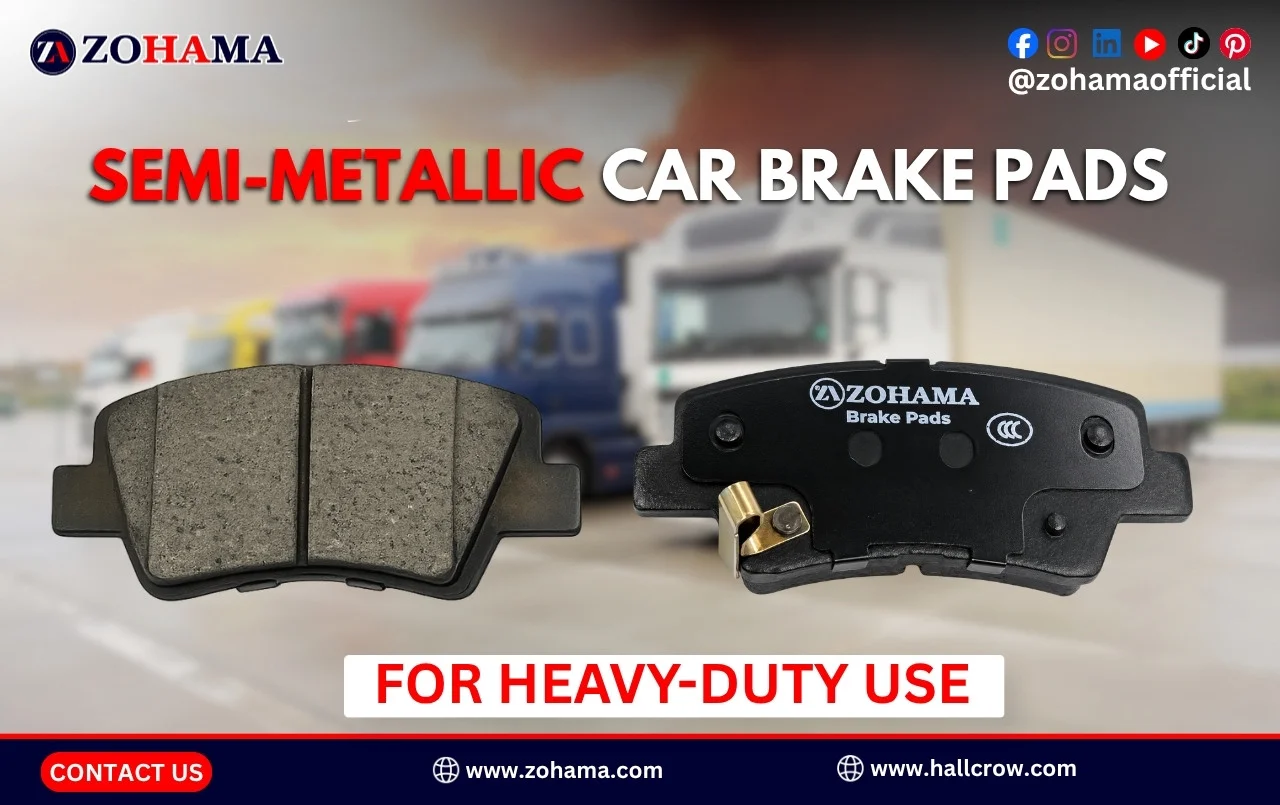
Semi-metallic pads are the heavy-duty specialists of the brake pad world. With a high metal content, they handle heat and hard use better than any other everyday material, but they are noisier and dustier, so they are not right for every market. That makes stocking them a decision rather than a default. This guide is a B2B stocking guide: it explains what makes semi-metallic different, when it is worth adding to your range, when it is not, and what to look for when you source it.
For the technical comparison with other materials, our semi-metallic vs ceramic brake pads and brake pad materials breakdown pages cover that. This article focuses on the stocking decision.
What Makes Semi-Metallic Different
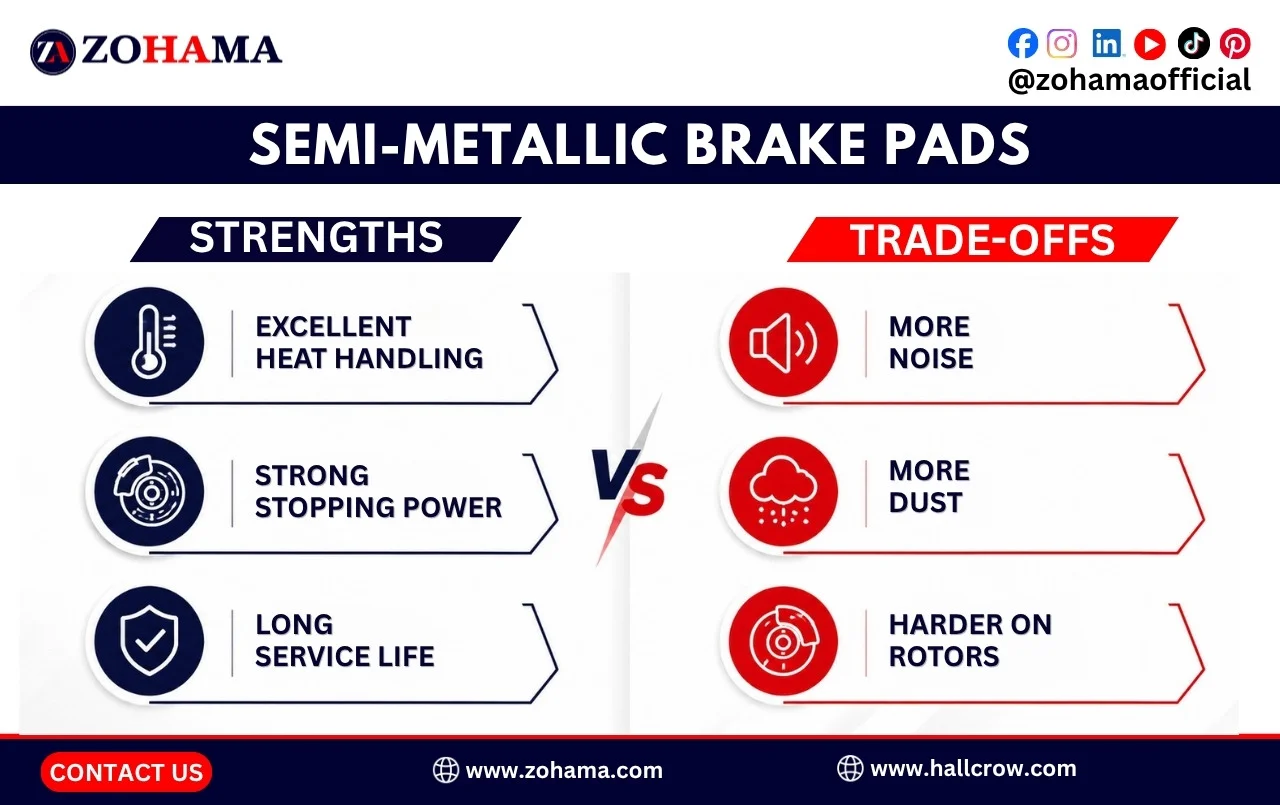
A high metal content gives semi-metallic pads a clear set of strengths and trade-offs. Knowing both is the key to a good stocking call:
- Strengths: excellent heat handling, strong stopping power and durability under heavy or sustained use.
- Trade-offs: more noise and dust, and harder on rotors than ceramic or NAO.
This positions semi-metallic as a performance and heavy-duty option rather than a comfort one. Our types of brake pads page sets out where each material sits.
When You Should Stock Semi-Metallic
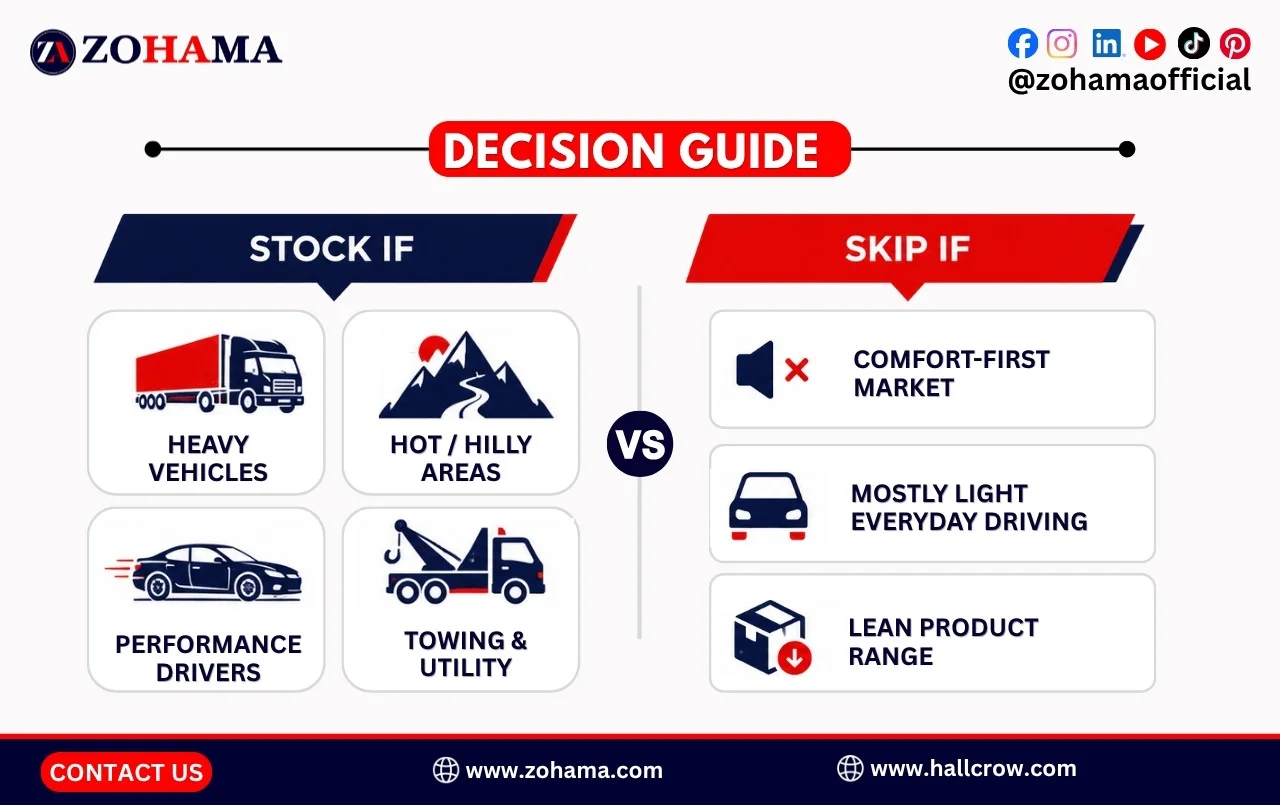
Add semi-metallic to your range when your market shows these signals:
- Heavy or loaded vehicles that put sustained demand on the brakes.
- Hot or hilly regions where heat handling matters.
- Performance-minded drivers who prioritise strong, consistent braking over comfort.
- Towing and utility use, where durability under load is essential.
If you also serve commercial and heavier vehicles, semi-metallic pairs naturally with that range. See our overview of brake pads for heavy and light vehicles.
When You Might Not
Semi-metallic is not the right addition for every business. You may skip or limit it when:
- Your market is comfort-first, where dust and noise are dealbreakers for customers.
- Most of your demand is everyday light driving, which NAO or ceramic already covers well.
- You want to keep the range lean and focus stock on your fastest movers.
In those cases, ceramic, NAO and low-metallic may cover your demand without adding a specialist line.
What to Look for When Sourcing Semi-Metallic
Because semi-metallic pads work hardest under heat, quality really shows in demanding use. In a disc brake under load, a poorly made pad fades or wears fast. When sourcing, focus on:
- A correct high-metal formulation built for heat and durability.
- Proven heat performance, backed by test data.
- Strong bonding and batch consistency, so performance is reliable.
- The compliance your market requires, such as ECE R90.
Vetting the maker is part of this, as covered in our guide on choosing a passenger car brake pad supplier.
How to Spec and Quality-Check Semi-Metallic
Spec the order precisely with the exact reference (see our brake pad part-number lookup guide), the material, compliance and sensor variant. Then judge each order against a clear standard:
| Check | What a good semi-metallic pad shows |
|---|---|
| Metal content & formula | A correct high-metal formulation built for heat and durability, not a rough, brittle mix. |
| Heat performance | Holds up under heavy or sustained braking, backed by test data. |
| Bonding | Friction material firmly bonded to the backing plate, with no cracks. |
| Batch consistency | Even density and finish across the whole batch. |
| Compliance | Meets the standard your market requires, such as ECE R90. |
| Dimensions & fitment | Length, height and thickness match the reference exactly. |
Approve a sample as your reference standard and check every batch against it. For the full inspection process, see our quality checks for car brake pads.
Position Semi-Metallic Correctly in Your Range
Sold well, semi-metallic completes a range that spans comfort to heavy-duty: NAO for value, ceramic for comfort, low-metallic for everyday performance, and semi-metallic for heat and hard use. Match each material to the customer rather than pushing one. For the volume-buying process once you decide to stock it, see our guide on bulk buying car brake pads.
Build the Right Range for Your Market
The best range is the one that matches your market, and semi-metallic is a valuable part of it for the right buyers. If you want a manufacturer that produces genuine, compliant semi-metallic pads alongside the other materials, explore our distributor and partner program to request a catalogue and pricing for your market.
Frequently Asked Questions
When should a distributor stock semi-metallic pads?
When your market includes heavy or loaded vehicles, hot or hilly regions, performance-minded drivers, or towing and utility use, where heat handling and durability matter most.
Why are semi-metallic pads not right for every market?
They are noisier, dustier and harder on rotors than ceramic or NAO. In comfort-first markets those trade-offs can be dealbreakers, so they suit performance and heavy-duty demand more.
What should I check when sourcing semi-metallic pads?
The high-metal formulation, proven heat performance, strong bonding, batch consistency and the compliance your market requires, all backed by test data.
Where does semi-metallic fit among the other materials?
As the heat and heavy-duty tier, alongside NAO for value, ceramic for comfort and low-metallic for everyday performance. Match each to the customer and use case.
Conclusion
Semi-metallic is a specialist tier, not a default line. Stock it when your market has the vehicles, conditions and customers that need heat handling and durability, and be ready to skip it where comfort comes first. Source the high-metal formulation carefully, spec it precisely, and check every batch against a clear standard. Get that decision right and semi-metallic strengthens your range exactly where it counts.