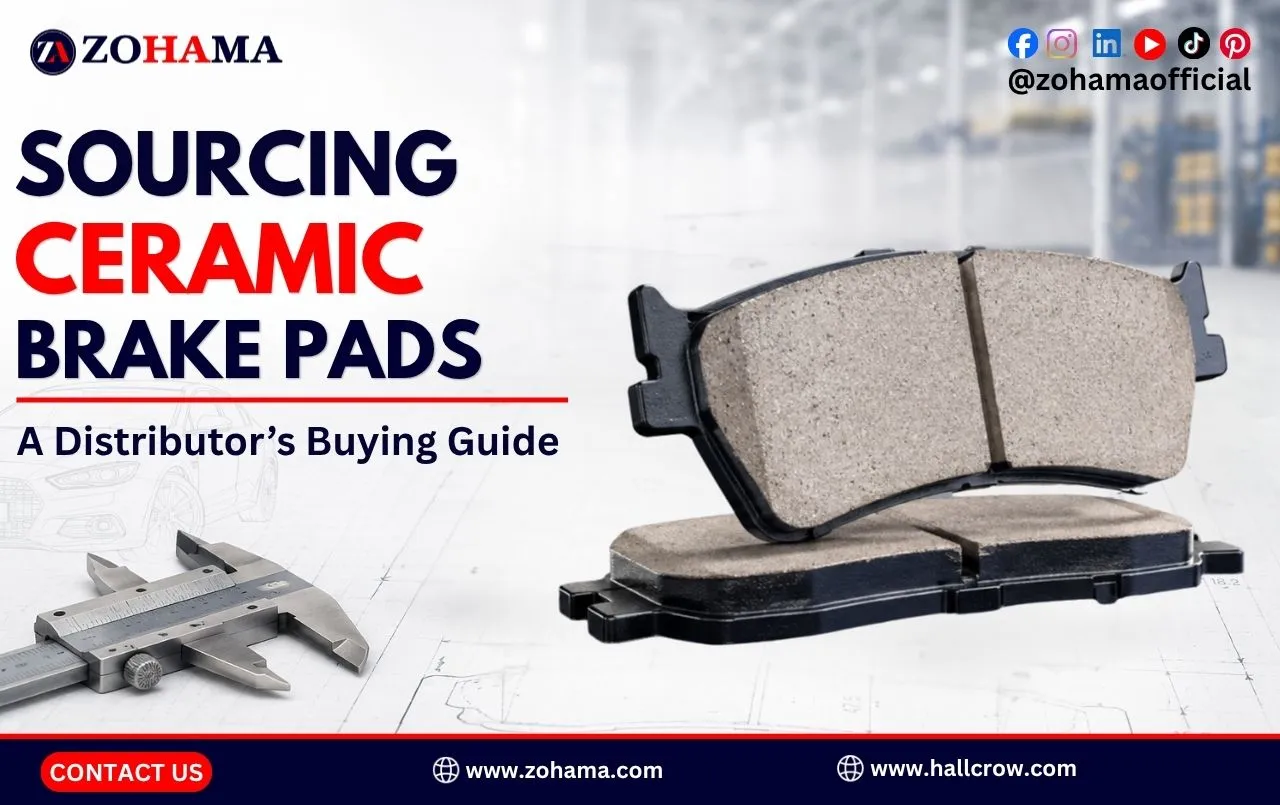
Ceramic is one of the most in-demand brake pad materials for passenger cars, prized by drivers for quiet, clean, long-lasting braking. For a distributor, that demand is a clear margin opportunity, but only if you source ceramic pads that genuinely perform. This guide is a B2B buying guide, not a consumer comparison: it covers why ceramic sells, where it fits in your range, what to look for when sourcing it, and how to buy it in bulk with confidence.
If you want the technical background on how ceramic compares with other materials, our ceramic vs organic brake pads and brake pad materials breakdown pages cover that. This article focuses on sourcing.
Why Ceramic Brake Pads Are Worth Stocking
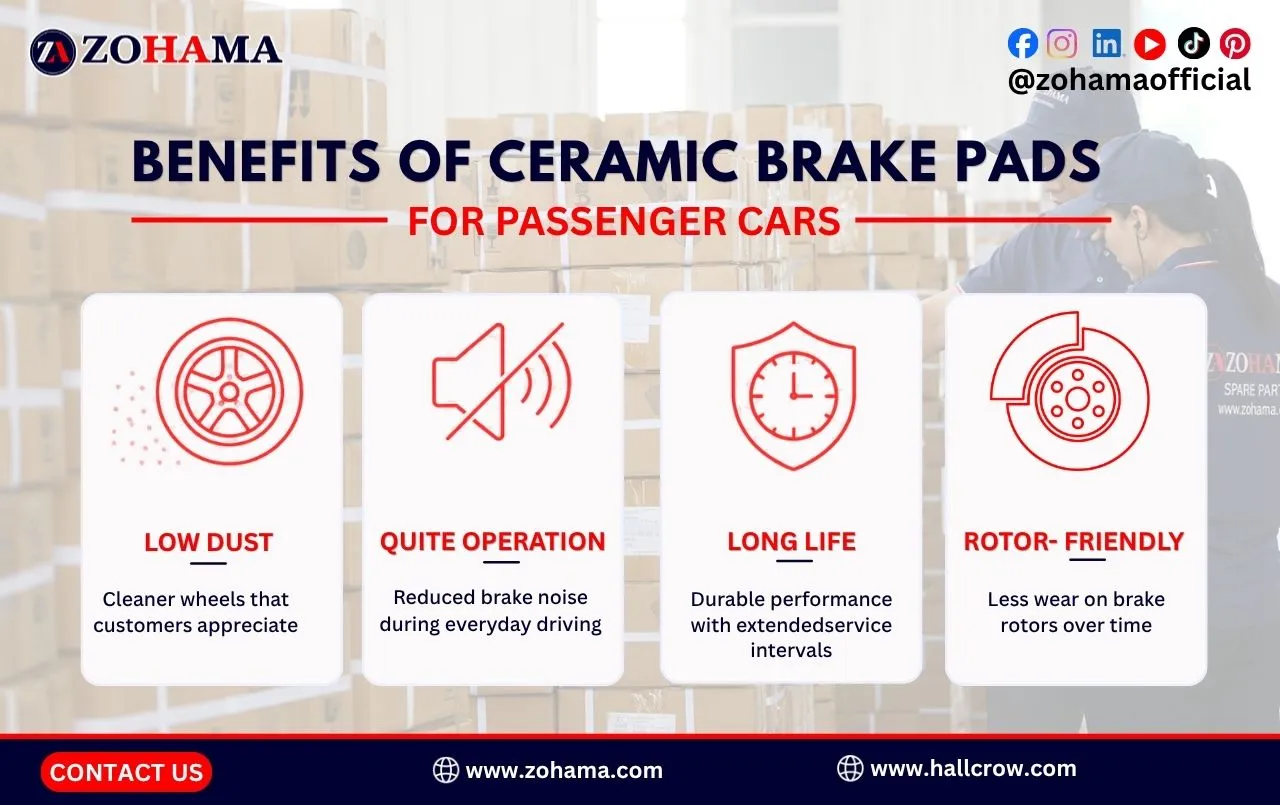
Ceramic pads sell because they solve the things everyday drivers notice. For a distributor, those benefits translate into steady demand:
- Low dust. Cleaner wheels, which customers value on modern cars.
- Quiet operation. Less noise than many alternatives.
- Long life and stable performance. A strong selling point for everyday driving.
- Gentler on rotors. Often a longer service life for the whole braking system.
Our ceramic brake pads lifespan page is a useful reference when you explain these benefits to your own customers.
Where Ceramic Fits in Your Range
Ceramic is not the answer for every vehicle, so stock it where demand is strongest and be clear about where it fits:
- Best fit: passenger cars, SUVs and everyday driving where comfort, low dust and long life matter most.
- Less suited: very heavy-duty or high-performance use, where other materials may be preferred.
Stocking ceramic alongside other materials lets you serve every customer with the right pad rather than pushing one type.
What to Look for When Sourcing Ceramic Pads
The word ceramic is sometimes used loosely, so quality varies widely. When sourcing, focus on:
- A genuine ceramic-based compound, not a cheaper material marketed as ceramic.
- Strong bonding of the friction material to the backing plate.
- Batch consistency, so every pad performs the same.
- The compliance your market requires, such as ECE R90, backed by test data.
Vetting the maker is part of this. Our guide on what to look for in a Chinese auto parts factory and choosing a passenger car brake pad supplier walk through it.
How to Spec a Ceramic Pad Order
Make your requirement precise so every quote is accurate and comparable:
- State the exact reference (OEM, WVA or FMSI number) for each pad. See our brake pad part-number lookup guide.
- Specify ceramic clearly, and the compliance your market needs.
- Confirm hardware and sensor versions for each application.
- Ask for test data that backs the ceramic performance claims.
Quality Checks Specific to Ceramic
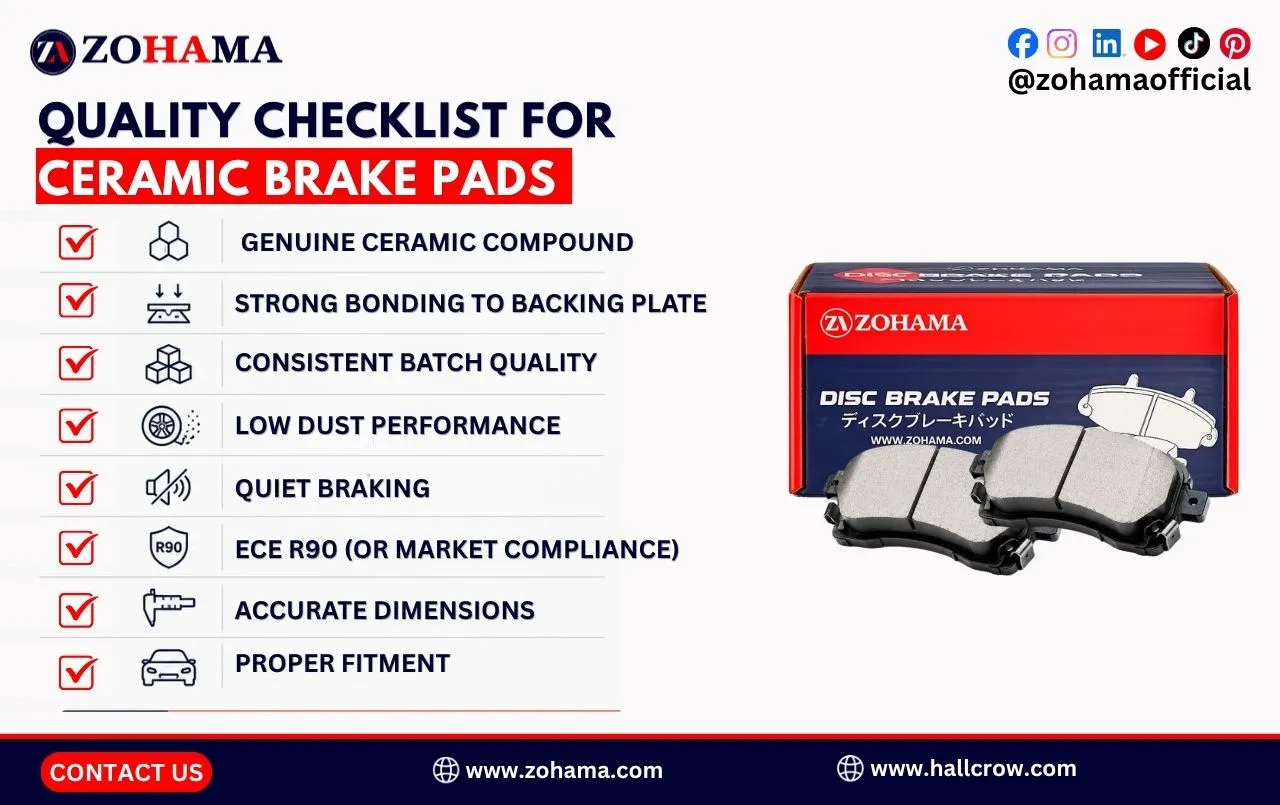
Judge ceramic pads against a clear standard so quality is never a guess:
| Check | What a good ceramic pad shows |
|---|---|
| Compound quality | A genuine ceramic-based friction formula, not a cheaper material sold as ceramic. |
| Bonding | Friction material firmly bonded to the backing plate, with no cracks or gaps. |
| Batch consistency | Even density and finish across the whole batch, not just the top layer. |
| Low dust & noise | Performs as ceramic should: quiet operation and cleaner wheels. |
| Compliance | Meets the standard your market requires, such as ECE R90. |
| Dimensions & fitment | Length, height and thickness match the reference exactly. |
Approve a sample as your reference standard and check every batch against it. For the full inspection process, see our quality checks for car brake pads.
Getting the Best Value on Ceramic
Ceramic usually sits above basic materials on price, so do not chase the lowest number. A cheap pad sold as ceramic that does not perform will cost you in returns. Compare suppliers on total landed cost and proven quality, and use steady demand as your leverage. For the volume-buying process, see our guide on bulk buying car brake pads, and agree clear shipping terms so landed cost is transparent.
Build Your Ceramic Range With Confidence
Ceramic is a category customers actively ask for, so getting it right strengthens your whole range. If you want a manufacturer that produces genuine, compliant ceramic pads with broad passenger-car coverage, explore our distributor and partner program to request a catalogue and pricing for your market.
Frequently Asked Questions
Why do ceramic brake pads sell well for passenger cars?
They offer low dust, quiet operation, long life and stable performance, which are exactly the things everyday drivers value. That makes them a steady, in-demand category for distributors.
How do I know a ceramic pad is genuine?
Look for a real ceramic-based compound backed by test data, strong bonding, batch consistency and the compliance your market requires. The word ceramic is sometimes used loosely, so verify rather than assume.
Should I stock only ceramic pads?
No. Ceramic suits passenger cars and everyday driving, but other materials fit heavy-duty or high-performance use better. Stock a range so you can serve every customer with the right pad.
How do I get the best value on ceramic pads?
Compare on total landed cost and proven quality, not the lowest unit price. A cheap pad that does not perform costs more in returns than a genuine ceramic pad.
Conclusion
Ceramic brake pads are a strong, in-demand category for passenger cars, but only genuine, compliant, consistent ceramic pads protect your margin and reputation. Know why they sell, place them correctly in your range, source them carefully, spec them precisely, and check quality against a clear standard. Do that and ceramic becomes one of the most dependable lines you stock.