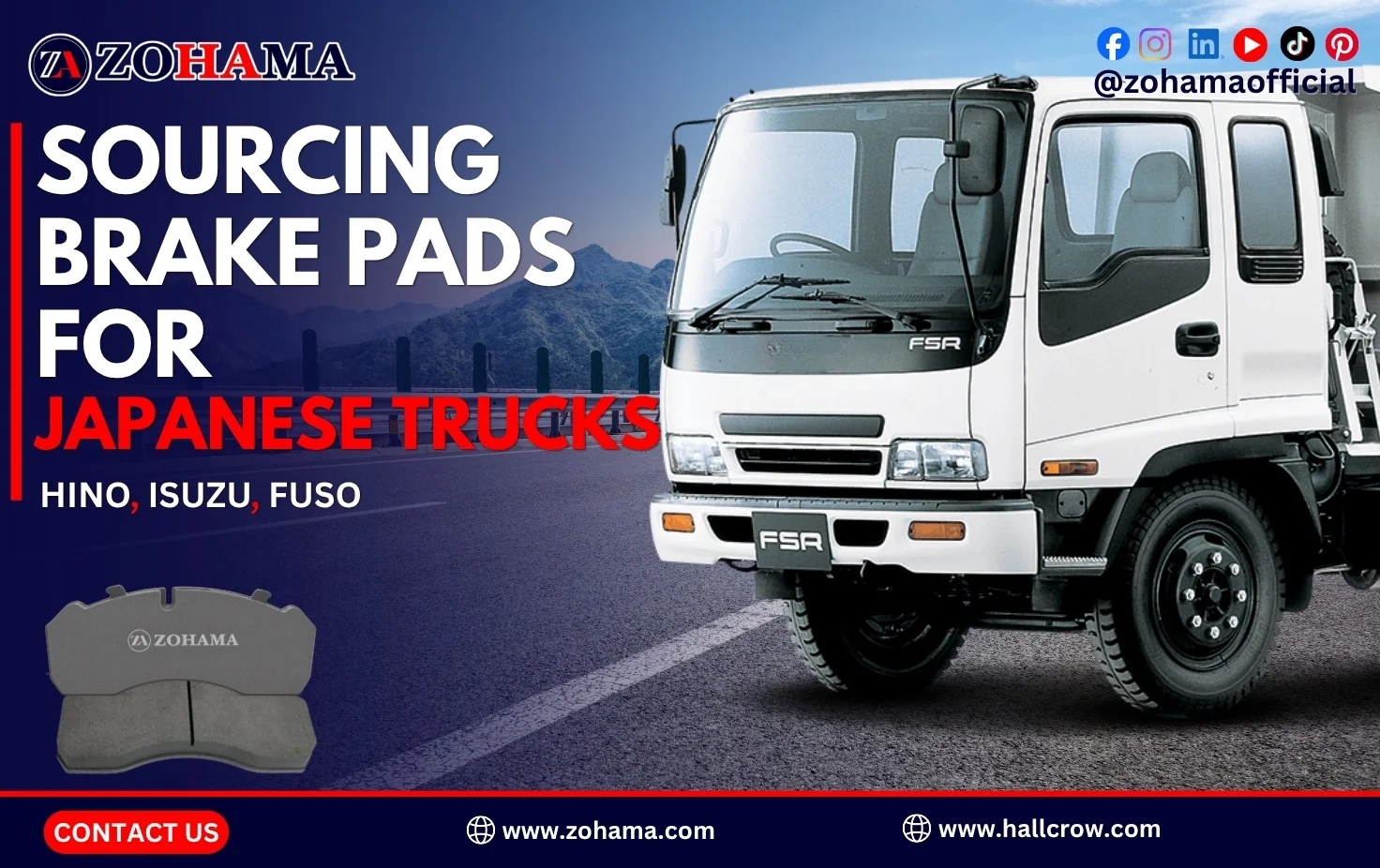
Japanese trucks are everywhere. Across the GCC, Africa, Asia and beyond, Hino, Isuzu and Fuso vehicles carry a huge share of commercial transport, prized for reliability and long life. For distributors, that popularity makes their brake pads one of the steadiest, highest-volume lines a commercial parts business can stock. This guide covers why Japanese trucks are such a strong sourcing line, what their pads demand, and how to buy the right ones with confidence.
These pads sit within the heavy-vehicle range. For the wider segment, see our heavy-duty truck brake pads page and our guide on sourcing heavy-duty brake pads from China.
Why Japanese Trucks Are a Strong Sourcing Line
Japanese trucks earn their place in fleets through reliability, and that reliability creates steady aftermarket demand. Because so many are in service and they stay on the road for years, the need for replacement brake pads is constant and predictable. For a distributor, a commercial vehicle line with this much installed base is exactly the kind of dependable, repeat-order business worth building around.
The Brands: Hino, Isuzu and Fuso
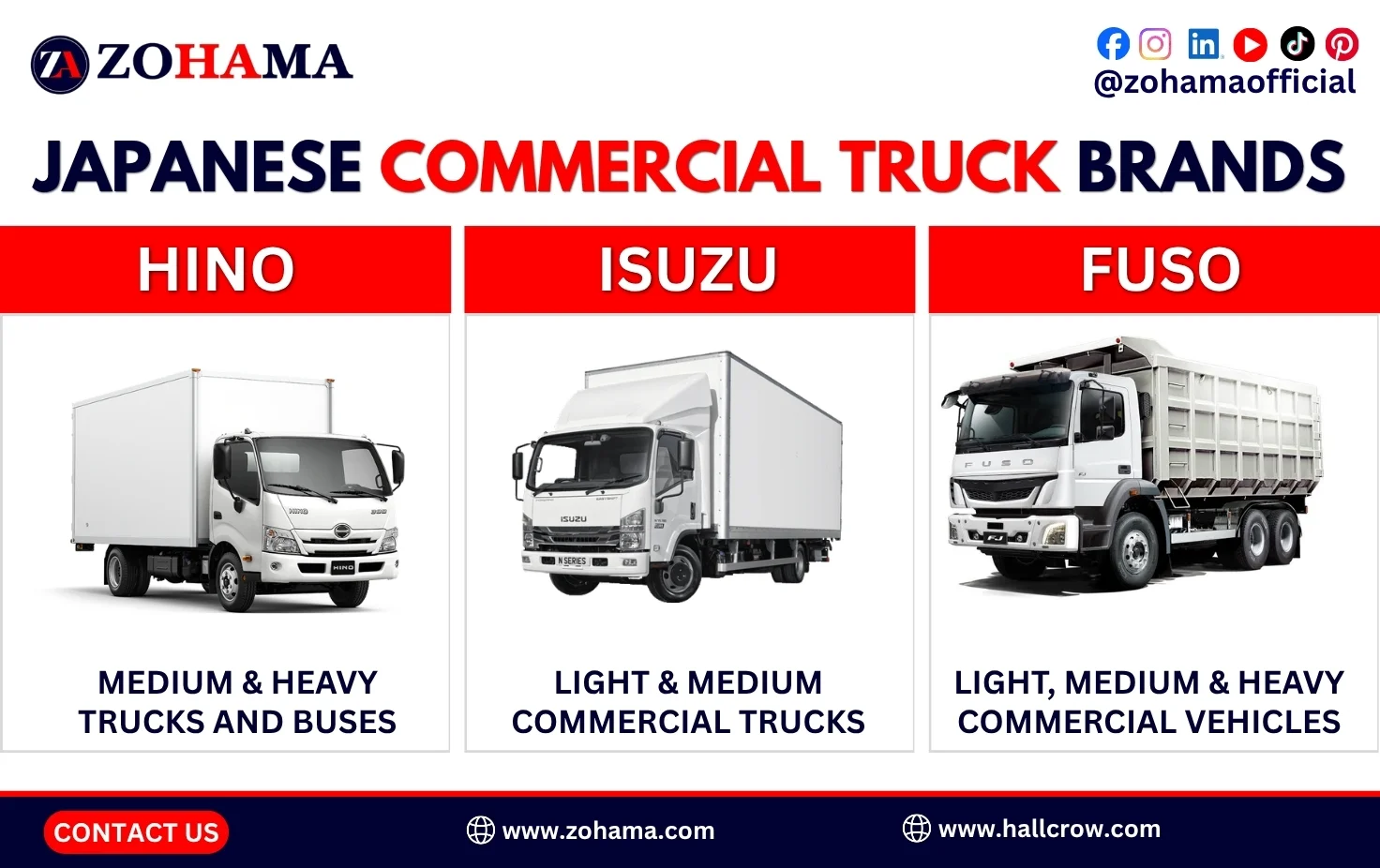
Three brands account for most Japanese commercial truck demand, each with its own place in the market:
| Brand | Where it fits in the market |
|---|---|
| Hino | Widely used in medium and heavy trucks and buses across export markets, known for reliability. |
| Isuzu | Very common in light and medium commercial trucks, a workhorse in many fleets. |
| Fuso | Popular across light, medium and heavy commercial vehicles in many regions. |
Covering all three lets a distributor serve the bulk of the Japanese truck aftermarket from one supplier, which is the goal a strong range should aim for.
What Japanese Truck Brake Pads Demand
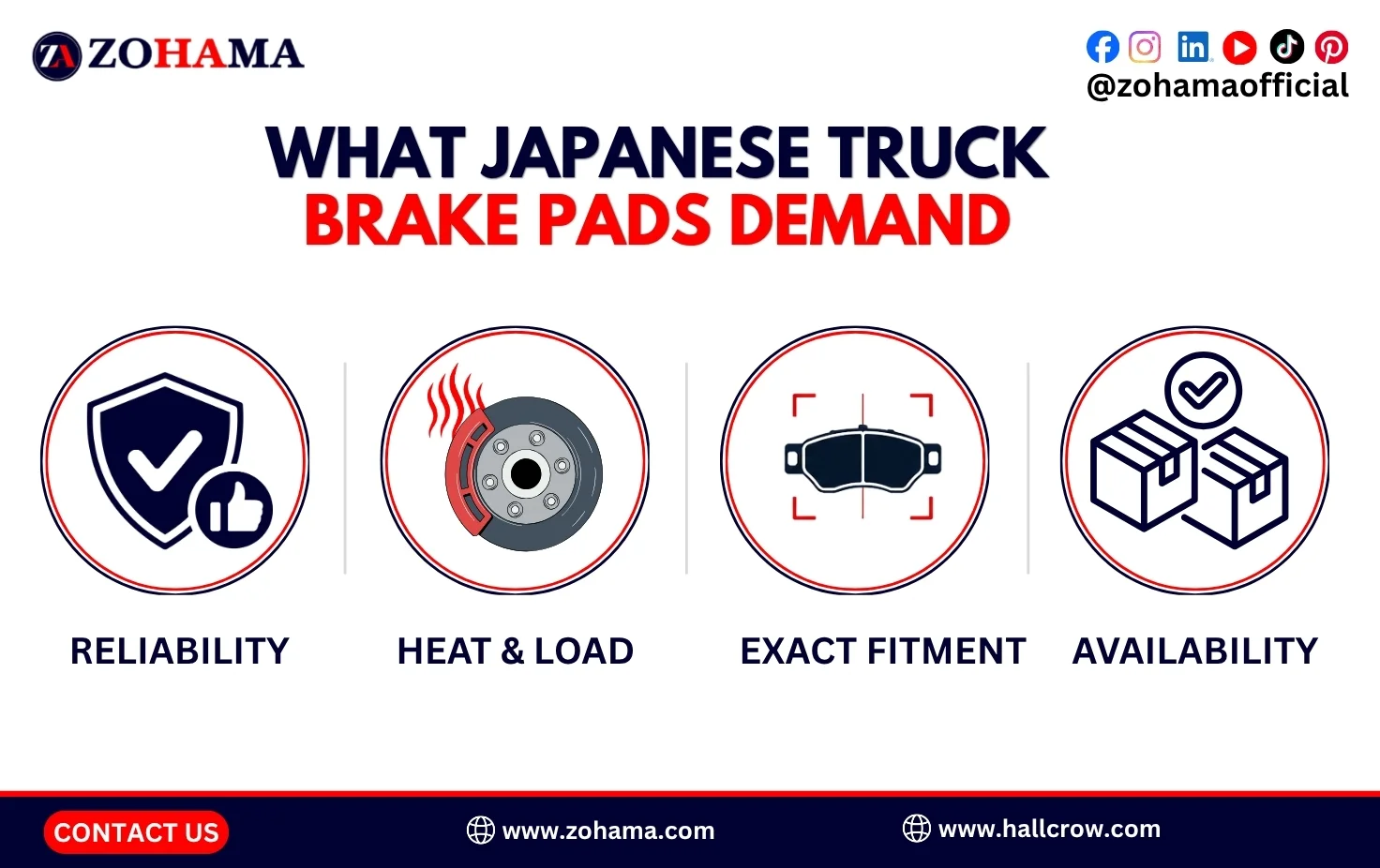
Japanese commercial trucks span light to heavy duty, so their pads must meet the demands of real working vehicles:
- Reliability and long life, to match the reputation the trucks are bought for.
- Heat and load handling, for medium and heavy models carrying real loads.
- Exact fitment, across the many models and generations in service.
- Consistent availability, because these are high-use vehicles that cannot wait for parts.
Which Materials Suit Them
Material choice follows the duty. Lighter Isuzu and Fuso models can use balanced materials, while heavier Hino and Fuso trucks lean toward semi-metallic for heat and durability under load, with low-metallic a strong all-round option. Our guide on brake pad materials for trucks and towing explains how each behaves.
Getting Fitment Right
With many models and generations in service, exact fitment is essential. Identify each pad by OEM and WVA number using our brake pad part-number lookup and OEM cross-reference for commercial trucks guide, and verify against OEM brake pads specifications before ordering.
Sourcing Japanese Truck Pads
Steady, high-volume demand suits volume buying on the common Hino, Isuzu and Fuso references. Forecast fleet usage, keep the fast movers in stock, and confirm quality on every batch, since these are hard-working commercial vehicles. See our quality checks for brake pads and our guide on choosing a brake pad supplier.
Build Your Japanese Truck Range
Hino, Isuzu and Fuso pads are among the most dependable lines a commercial distributor can stock. If you want a certified manufacturer with coverage across Japanese truck applications, explore our distributor and partner program to request a catalogue and pricing for your market. See also our brake pads for commercial vehicles range.
Frequently Asked Questions
Why are Japanese truck brake pads a good line to stock?
Hino, Isuzu and Fuso trucks are widespread and long-lived, so replacement demand is constant and predictable. A line with this much installed base gives steady, repeat-order business.
Which Japanese truck brands should I cover?
Hino for medium and heavy trucks and buses, Isuzu for light and medium trucks, and Fuso across light, medium and heavy vehicles. Covering all three serves most of the market.
Which material suits Japanese truck pads?
It depends on duty. Lighter models can use balanced materials, while heavier trucks lean toward semi-metallic for heat and durability, with low-metallic a strong all-round option.
How do I get fitment right across so many models?
Identify each pad by OEM and WVA number, cross-reference carefully, and verify against OEM specifications before ordering, since many models and generations are in service.
Conclusion
Japanese trucks are a cornerstone of commercial transport across many markets, and their brake pads are one of the steadiest lines a distributor can build. Cover Hino, Isuzu and Fuso, match materials to duty, get fitment exactly right across the models in service, and source from a supplier who tests quality. Do that and Japanese truck pads become a dependable, high-volume anchor in your commercial range.