In the commercial parts trade, cross-referencing is the skill that wins orders. A distributor who can take a truck’s OEM number and quickly find the right pad closes the sale, while one who cannot loses it to a competitor who can. For commercial trucks, where fleets run many makes and fitment must be exact, strong OEM cross-referencing is one of the most valuable assets a supplier can offer. This guide explains what OEM cross-referencing means for commercial trucks, why it matters so much, and how to build it into your catalogue.
This builds on the identification skills in our brake pad part-number lookup guide and our WVA numbers for commercial brake pads guide, applied to trucks.
What OEM Cross-Referencing Means for Trucks
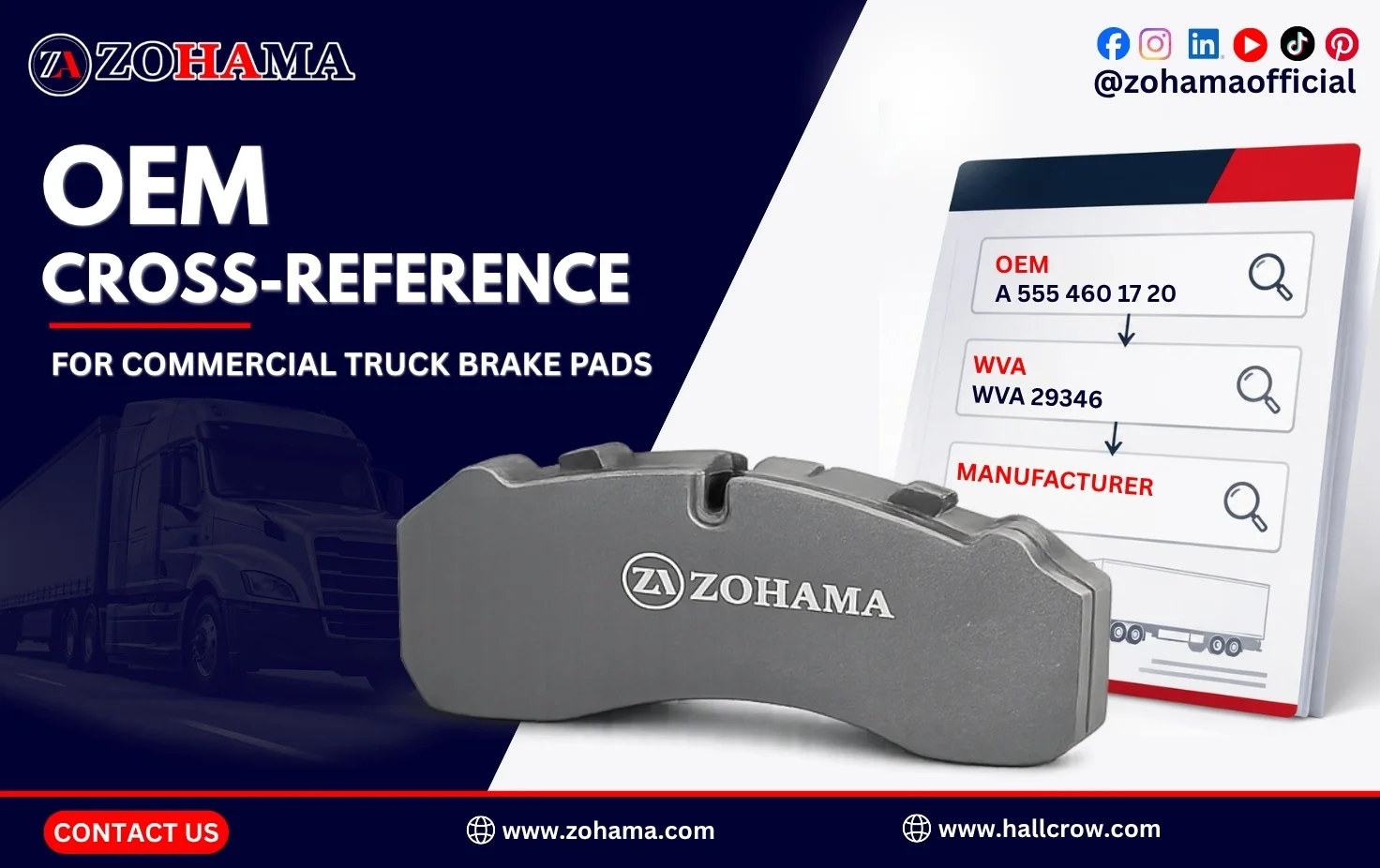
An OEM number is the truck maker’s own reference for a part, the most precise way to identify the exact pad a vehicle needs. Cross-referencing is the work of linking that OEM number to the equivalent aftermarket pad, its WVA number and the supplier’s own reference. Like any part number, its value is that it points to one exact pad, and cross-referencing lets a buyer arrive with any number and leave with the right one.
Why It Matters More for Commercial Trucks
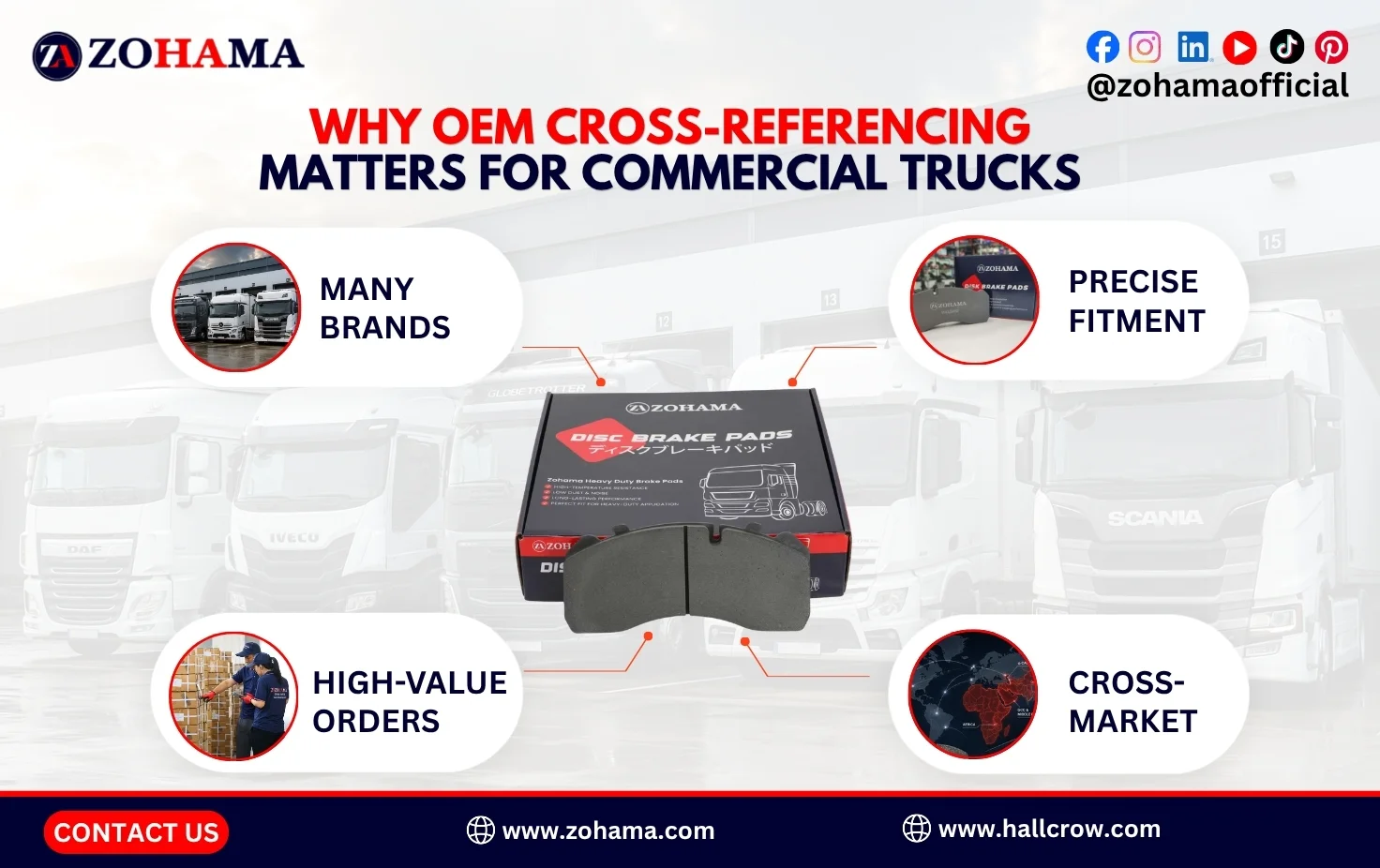
Cross-referencing is useful for any pad, but for commercial trucks it is close to essential:
- Many brands in one fleet. Commercial fleets mix European, Japanese and Chinese trucks, each with its own OEM numbers.
- Precise, safety-critical fitment. A loaded truck cannot tolerate a wrong pad, so exact matching matters more.
- High-value, repeat orders. Getting the reference right first time protects a valuable commercial relationship.
- Cross-market sourcing. An OEM number lets a buyer in any market find the same pad.
The Reference Systems You Connect
A single commercial pad usually carries several references at once, and cross-referencing links them together:
| Reference | What it identifies |
|---|---|
| OEM number | The vehicle maker’s own part number, the most precise reference for a specific truck or bus. |
| WVA number | A standard reference widely used on commercial and European applications. |
| Manufacturer reference | The supplier’s own code, which should map back to the OEM and WVA numbers. |
Mapping these to each other, and verifying against OEM brake pads specifications, is the core of accurate commercial sourcing.
How to Cross-Reference a Commercial Truck Pad
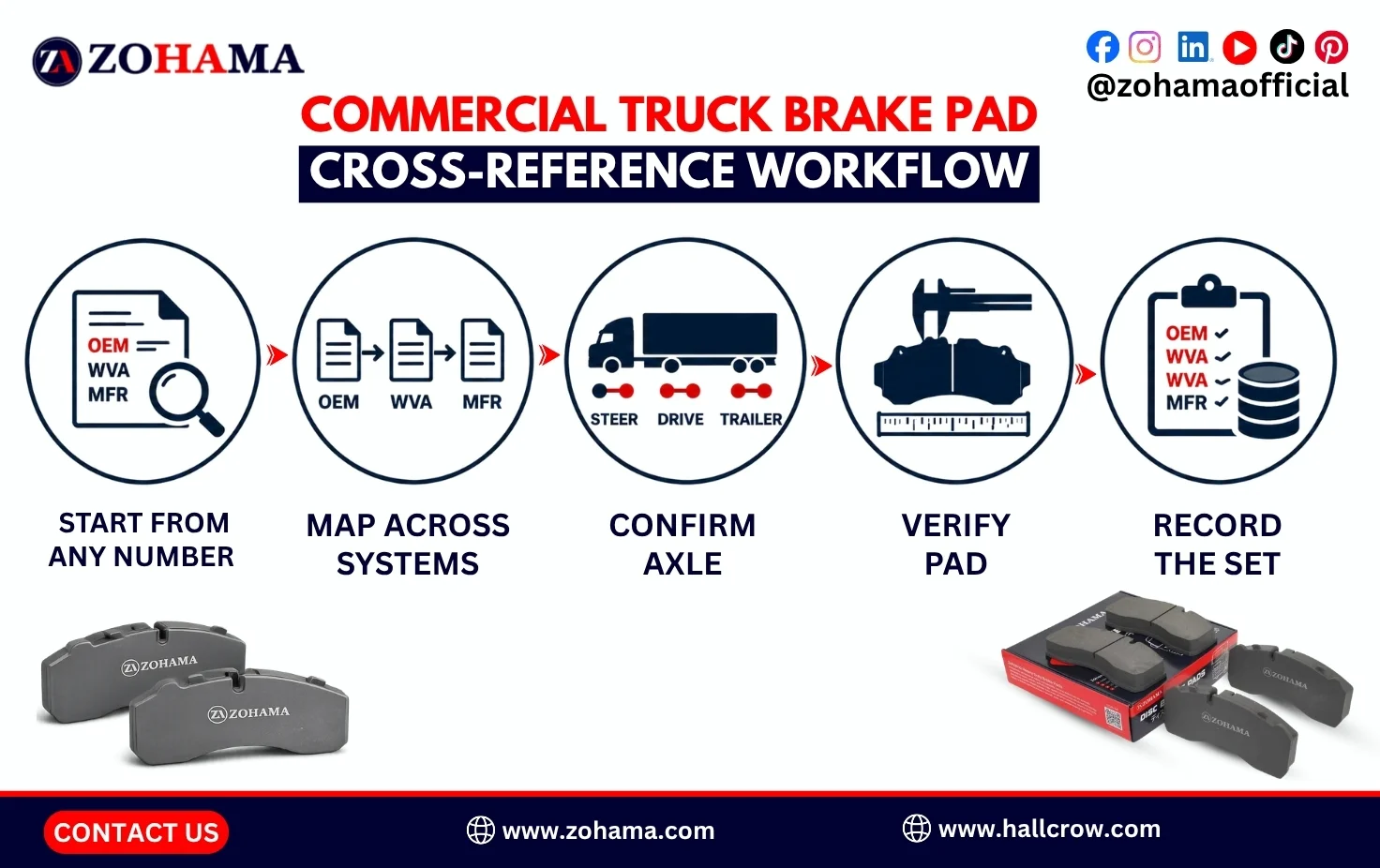
A simple workflow makes cross-referencing reliable:
- Start from the known number, whether OEM, WVA or a manufacturer reference.
- Map it across systems to find the equivalent references for the same pad.
- Confirm the axle and configuration, since commercial trucks vary by steer, drive and trailer axle.
- Verify against the physical pad and its dimensions before ordering.
- Record the full reference set so the pad is findable by any of its numbers.
Building an OEM Cross-Reference Into Your Catalogue
The distributors who convert the most commercial enquiries are the ones whose catalogue lets a fleet buyer arrive with any truck’s OEM number and leave with the right pad. Add OEM numbers to your commercial references alongside WVA and manufacturer codes, keep them updated as new trucks appear, and make them searchable. This cross-reference strength is one of the clearest advantages a heavy-vehicle distributor can build, and it supports the wider brake pads for commercial vehicles range.
Common Pitfalls to Avoid
- Assuming the number alone proves fit. Always confirm against the physical pad and its dimensions.
- Ignoring axle differences. The same truck can use different pads front and rear.
- Missing revisions. An updated truck model may carry a revised OEM reference.
- Relying on one system. Cross-referencing across OEM, WVA and manufacturer numbers is safer than trusting one.
Cross-Reference as a Competitive Advantage
Strong OEM cross-reference data is one of the most valuable things a commercial parts distributor can build, and it is where the right manufacturer makes the difference. If you want a supplier that provides clear OEM, WVA and manufacturer references with detailed cross-reference support for trucks and buses, explore our distributor and partner program to request a catalogue for your market. See also our heavy-duty truck brake pads range and our guide on sourcing heavy-duty brake pads from China.
Frequently Asked Questions
What is OEM cross-referencing for truck brake pads?
It is the work of linking a truck’s OEM part number to the equivalent aftermarket pad, its WVA number and the supplier’s reference, so a buyer can find the right pad from any of those numbers.
Why does it matter more for commercial trucks?
Fleets mix many truck brands with different OEM numbers, fitment is precise and safety-critical, and orders are high-value and repeat, so getting the reference right first time protects the relationship.
How do I cross-reference a truck pad?
Start from any known number, map it across OEM, WVA and manufacturer systems, confirm the axle and configuration, and verify against the physical pad and its dimensions before ordering.
Why build OEM cross-references into my catalogue?
Commercial buyers often search by OEM number. A catalogue that lets them find a pad by any of its references captures demand and turns more enquiries into orders.
Conclusion
OEM cross-referencing is the skill that turns commercial enquiries into orders. Understand what it connects, respect why trucks make it essential, follow a reliable workflow, and build the references into a searchable catalogue. Do that and any fleet buyer can arrive with any truck’s OEM number and leave with the right pad, which is exactly the capability that wins and keeps commercial customers.