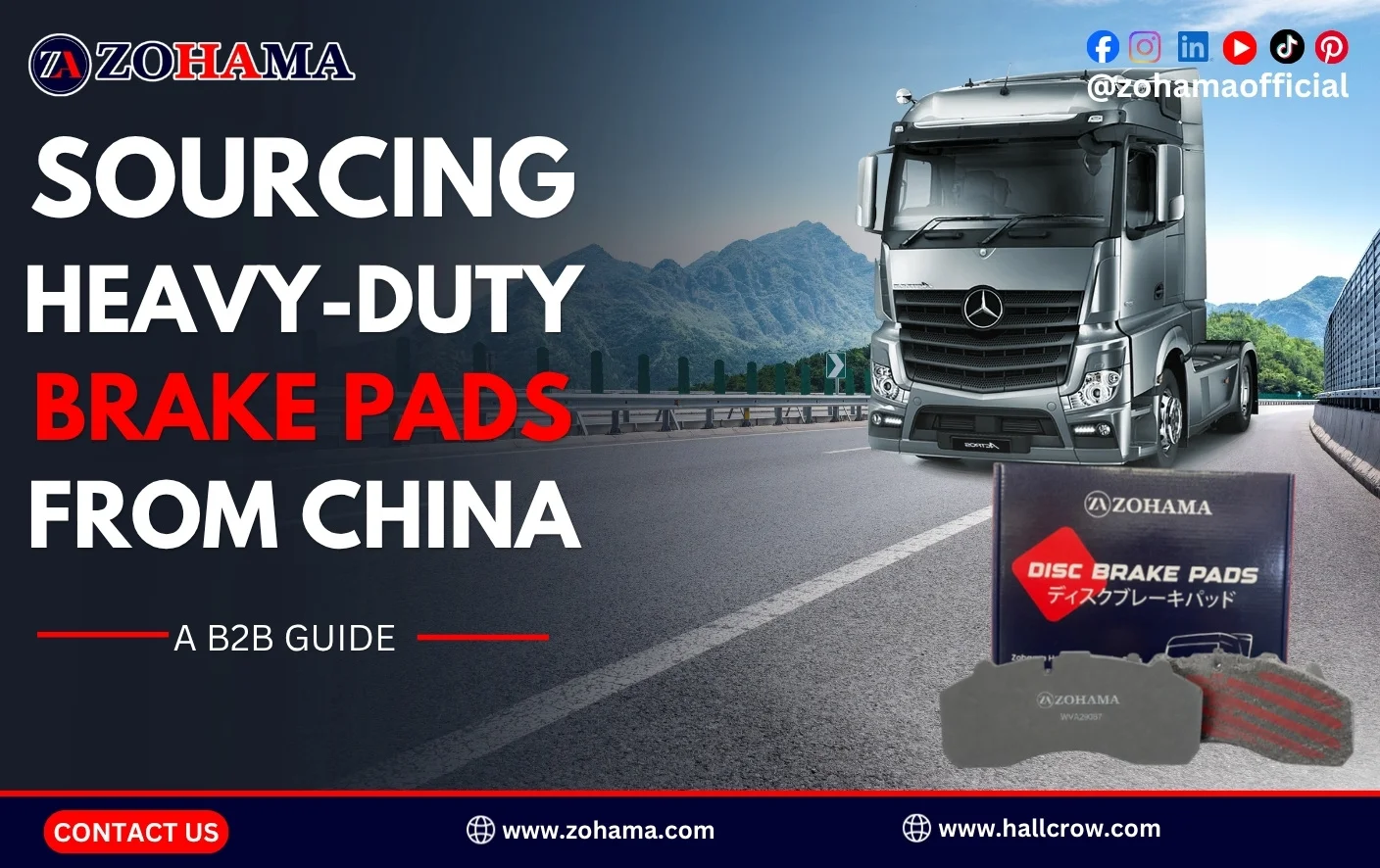
Heavy-duty brake pads are a growing opportunity for distributors, and China is the natural place to source them. Trucks, buses and commercial vehicles are multiplying across export markets, and their pads wear faster and matter more than any passenger part, because a heavy vehicle brakes under load. That makes sourcing a decision to take seriously: the right supplier protects your customers and your reputation, while the wrong one creates returns and safety risk. This guide covers why China leads, what makes heavy-duty sourcing different, which materials fit, and how to buy with confidence.
For the wider heavy-vehicle range, see our heavy-duty truck brake pads page and our brake pads for commercial vehicles overview.
Why Source Heavy-Duty Brake Pads from China
China is the world’s largest vehicle and parts manufacturing base, which gives sourcing here real advantages for a distributor:
- Scale and capacity. Large, consistent production runs suit the volumes commercial fleets need.
- Competitive factory-direct pricing, which matters in a price-sensitive commercial market.
- Broad coverage, across European, Japanese and Chinese truck and bus applications from one source.
The key is to source from a genuine manufacturer rather than a trader. Our guides on choosing a top brake pads manufacturer in China and what to look for in a Chinese auto parts factory cover how to tell the difference.
What Makes Heavy-Duty Sourcing Different
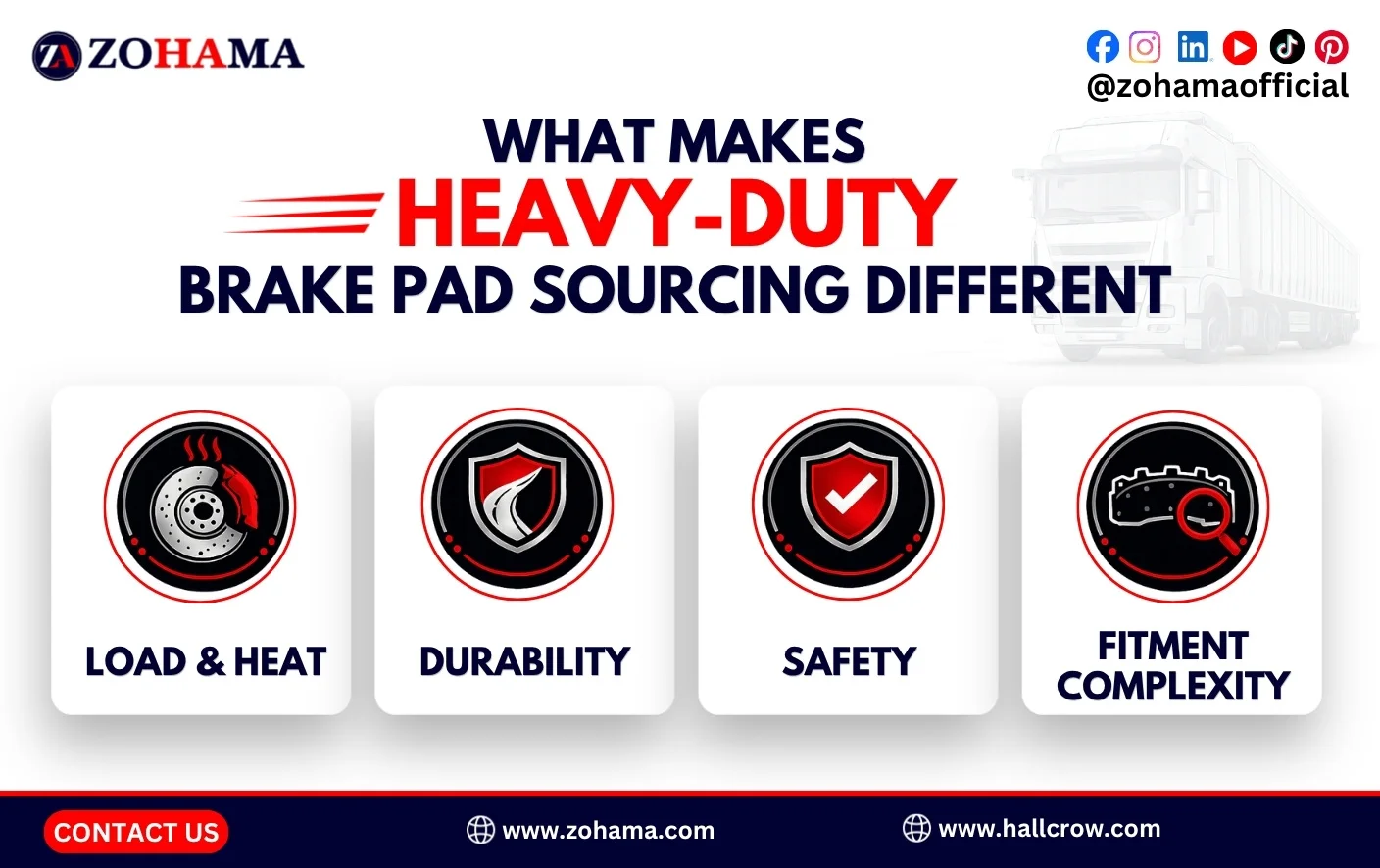
A commercial vehicle places demands on its brakes that a car never does, so heavy-duty sourcing is not simply buying bigger pads:
- Load and heat. Loaded braking generates far more heat, so materials must resist fade.
- Durability under high mileage. Commercial vehicles cover long distances, so pads must last.
- Safety weight. A brake failure on a loaded truck is far more serious, raising the quality bar.
- Fitment complexity. Commercial references are precise and vary by axle and configuration.
Which Vehicles and Segments to Cover
Heavy-duty is a broad segment, and a strong range spans several vehicle types: trucks and semi-trucks, buses and coaches, and off-highway machines used in construction and agriculture. Lighter commercial vehicles bridge into the segment too, as covered in our brake pads for heavy and light vehicles. Decide which of these your market needs before you source, so your range matches demand.
What to Look for in a Heavy-Duty Supplier
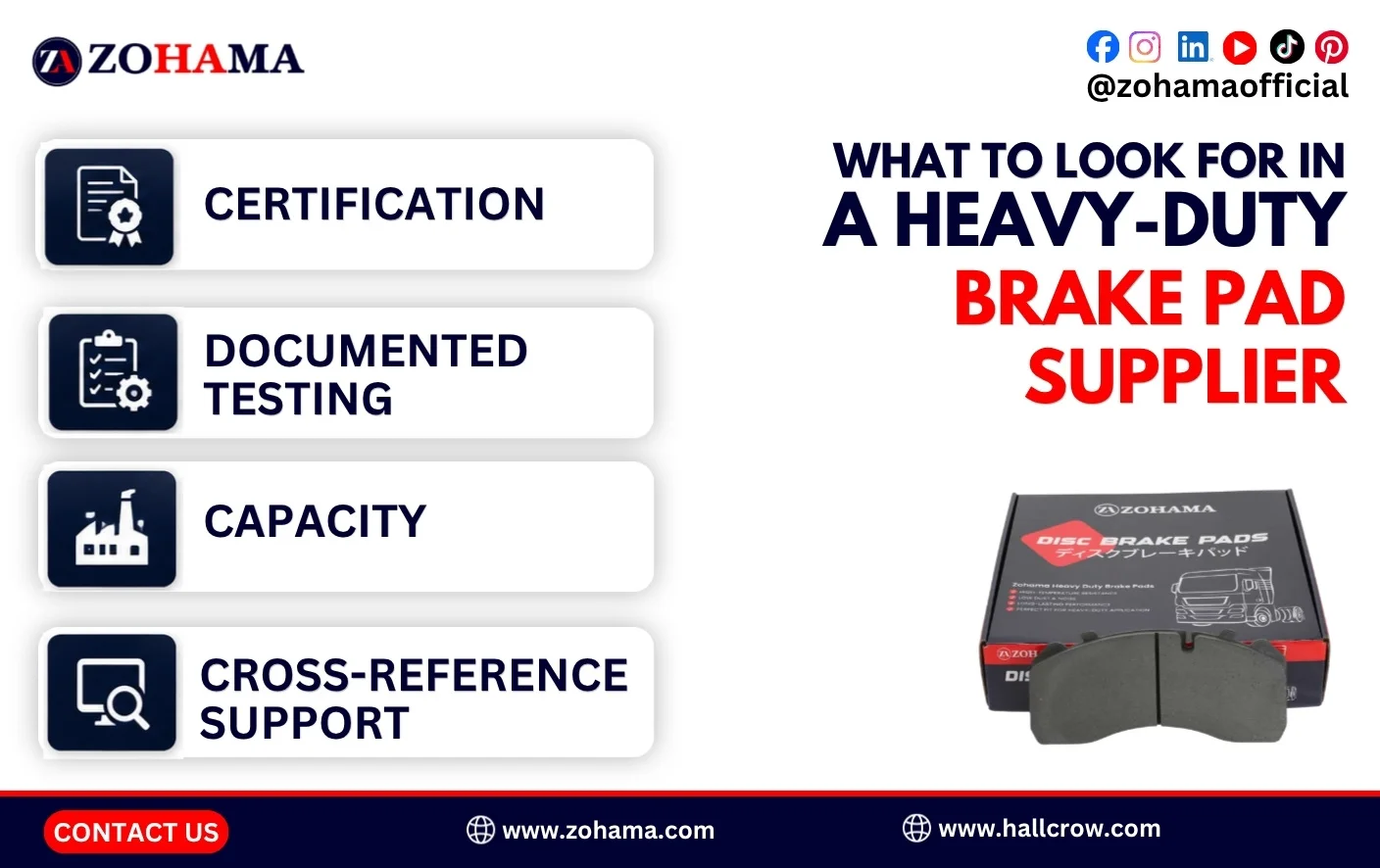
Because heavy pads are safety-critical, supplier selection matters even more than for cars. Prioritise:
- Certification and quality systems, such as ISO 9001 and IATF 16949.
- Documented testing of friction, heat and wear performance under load.
- Production capacity that can supply fleet volumes consistently.
- Cross-reference support, so you can confirm fitment by OEM and WVA number.
The supplier-selection principles in our guide on choosing a brake pad supplier apply here, with even more weight on testing and capacity.
Materials for Heavy-Duty Applications
Load and heat push heavy-duty demand toward tougher materials. Match the material to the duty:
| Material | Why it suits heavy-duty use |
|---|---|
| Semi-metallic | Excellent heat handling and durability under sustained load, the workhorse of heavy-duty braking. |
| Low-metallic | Strong bite and good heat resistance for demanding commercial use. |
| Heavy-duty ceramic | Used where lower noise and dust are needed on lighter commercial vehicles. |
Our sourcing guides for semi-metallic and low-metallic cover the workhorse heavy-duty materials, and the brake pad materials breakdown explains how each behaves.
Getting Fitment Right
Commercial fitment errors are costly, so confirm every reference. Heavy vehicles are identified by OEM and WVA numbers, and matching them correctly is the core of accurate sourcing. Use our brake pad part-number lookup guide and our WVA number complete guide to identify each pad, and verify against OEM brake pads specifications before you order.
Quality Assurance Before You Import
On a loaded vehicle, a weak batch is a safety issue as much as a commercial one, so quality control is essential. Approve a sample as your reference standard, check every batch against it, and confirm the compliance your market requires. See our quality checks for brake pads before bulk import, and for the volume-buying process see our guide on bulk buying brake pads.
Build Your Heavy-Duty Range
Sourced well, heavy-duty brake pads are a durable, high-demand line that anchors a commercial parts business. If you want a certified manufacturer with broad coverage across truck, bus and commercial applications, explore our distributor and partner program to request a catalogue and pricing for your market.
Frequently Asked Questions
Why source heavy-duty brake pads from China?
China offers manufacturing scale, competitive factory-direct pricing and broad coverage across European, Japanese and Chinese truck and bus applications, all of which suit commercial fleet demand.
How is heavy-duty sourcing different from car pads?
Heavy vehicles brake under load, generating more heat and demanding more durability, and a failure is far more serious. Fitment is also more complex, so testing, capacity and cross-reference support matter more.
Which materials suit heavy-duty brake pads?
Semi-metallic is the workhorse for heat and durability under load, low-metallic gives strong bite for demanding commercial use, and heavy-duty ceramic suits lighter commercial vehicles where noise and dust matter.
How do I avoid fitment errors on commercial pads?
Identify each pad by OEM and WVA number, confirm the axle and configuration, and verify against OEM specifications before ordering, since commercial references are precise.
Conclusion
Sourcing heavy-duty brake pads from China rewards distributors who treat it as a considered decision. Source from a genuine, certified manufacturer, respect what makes heavy braking different, match materials to load and heat, confirm fitment by OEM and WVA number, and never skip quality checks on parts that stop loaded vehicles. Get that right and heavy-duty becomes one of the strongest, most durable lines in your range.