Shims and hardware are the parts distributors forget to stock and customers complain about later. A perfectly good brake pad fitted with worn clips and no shim will squeal, wear unevenly and come back as a warranty claim, even though the pad itself was never the problem. For a distributor, hardware kits are a small, low-cost line that prevents complaints, adds margin and makes your pad offer complete. This guide covers what these kits contain, why they matter, and how to source and stock them.
Hardware sits alongside the pad itself, so this pairs with our brake pad dimensions and fitment reference, which covers the pad measurements.
What Is in a Brake Hardware Kit
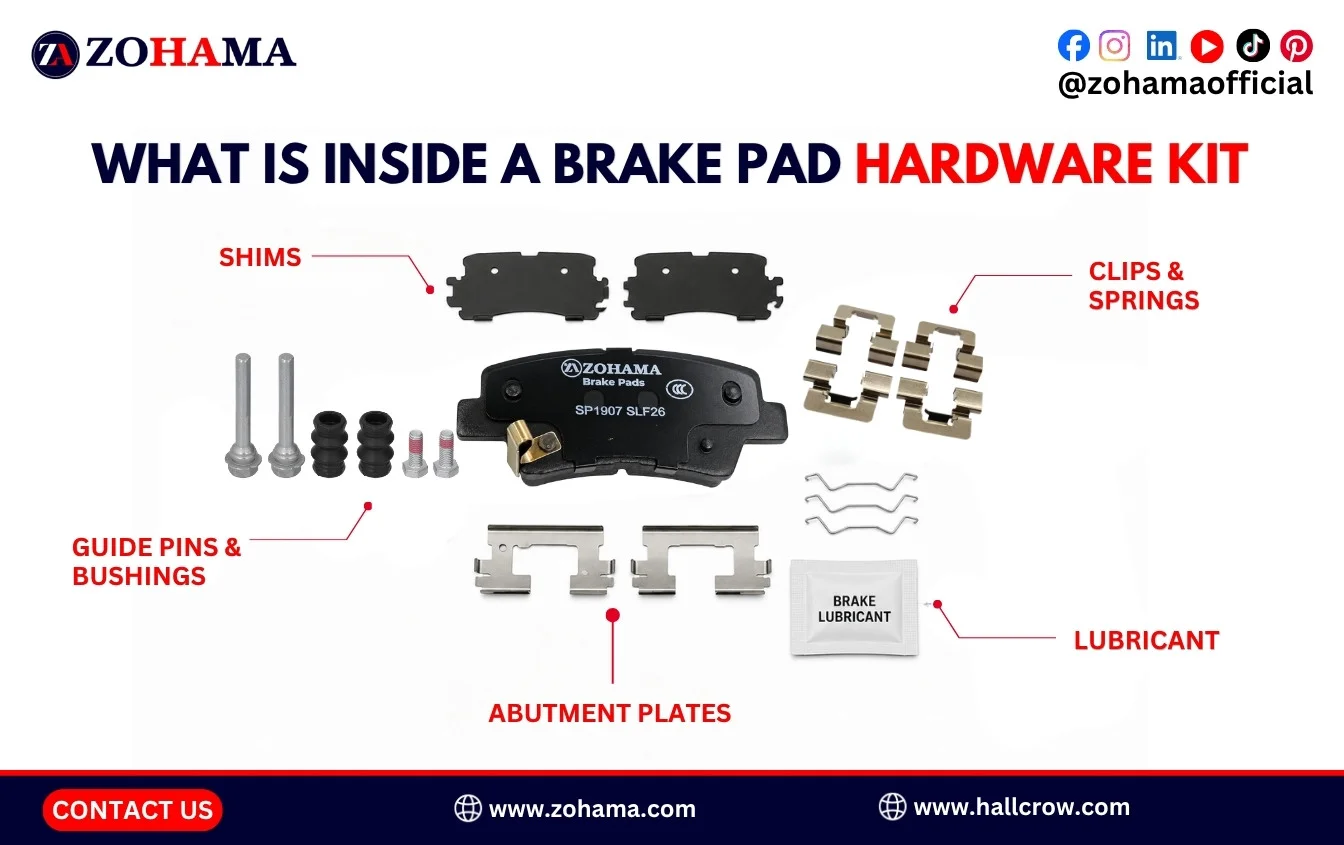
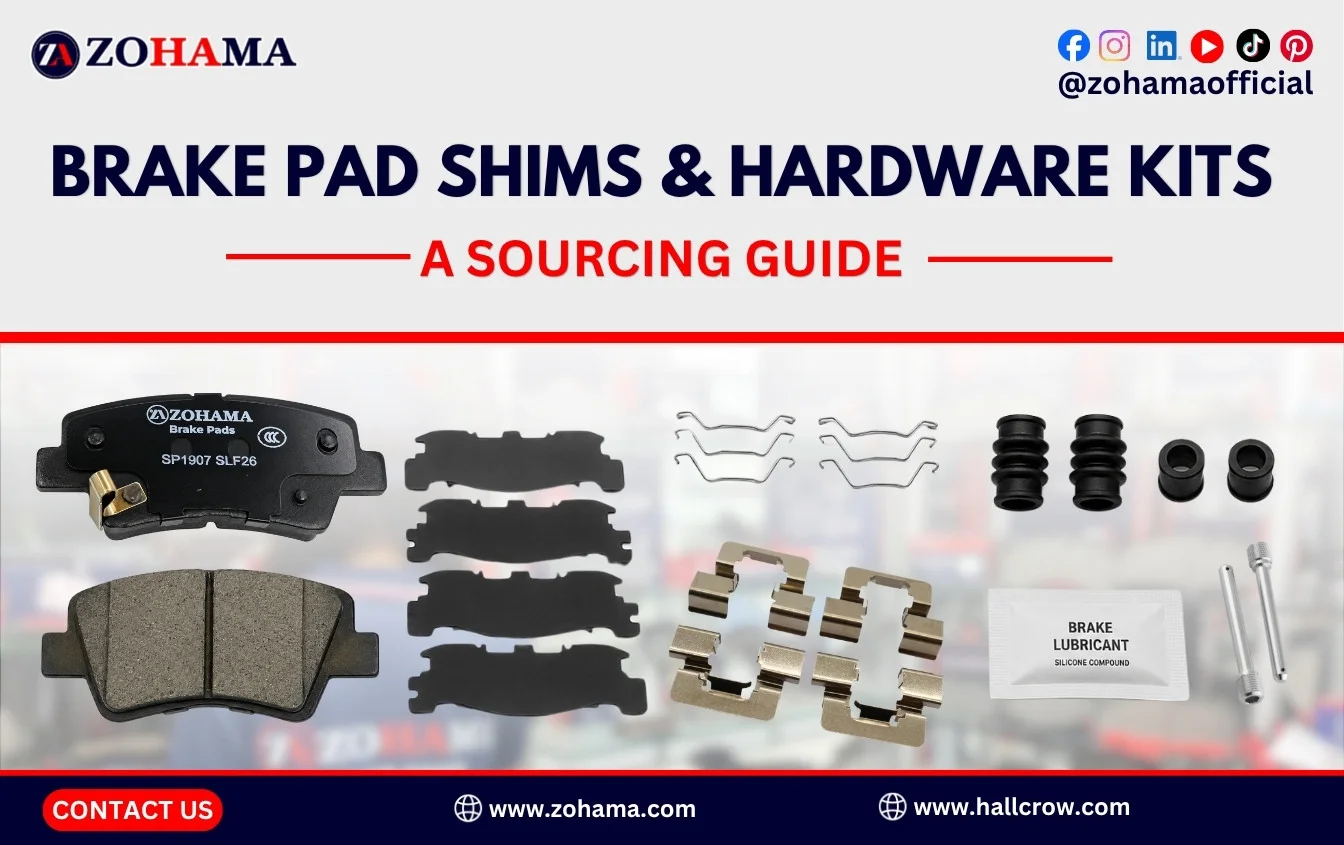
Kit contents vary by vehicle, but most contain a familiar set of small components that each do a specific job:
| Component | What it does |
|---|---|
| Shims | Sit behind the pad to damp vibration, which is the main defence against brake squeal. |
| Clips & springs | Hold the pad securely in the bracket and control movement and rattle. |
| Guide pins & bushings | Let the caliper slide freely, preventing uneven and premature pad wear. |
| Abutment plates | Provide a clean contact surface so pads move smoothly and do not seize. |
| Lubricant sachet | Included in many kits for correct assembly of contact points. |
Individually these are inexpensive items. Together they determine whether a brake job is quiet and lasts, or noisy and comes back.
Why Shims and Hardware Matter More Than Their Price Suggests
Most brake noise complaints are vibration problems rather than pad problems. Shims damp that vibration, which is why reusing old, flattened shims is one of the most common causes of brake squeal. Worn clips and seized guide pins cause a second family of issues:
- Uneven wear, where one pad wears far faster than the other.
- Premature replacement, because a sticking caliper drags the pad against the rotor.
- Rattle and vibration, which customers immediately blame on the new pads.
So hardware protects the reputation of the pad you sold, not just the vehicle.
Why Distributors Should Stock Hardware Kits
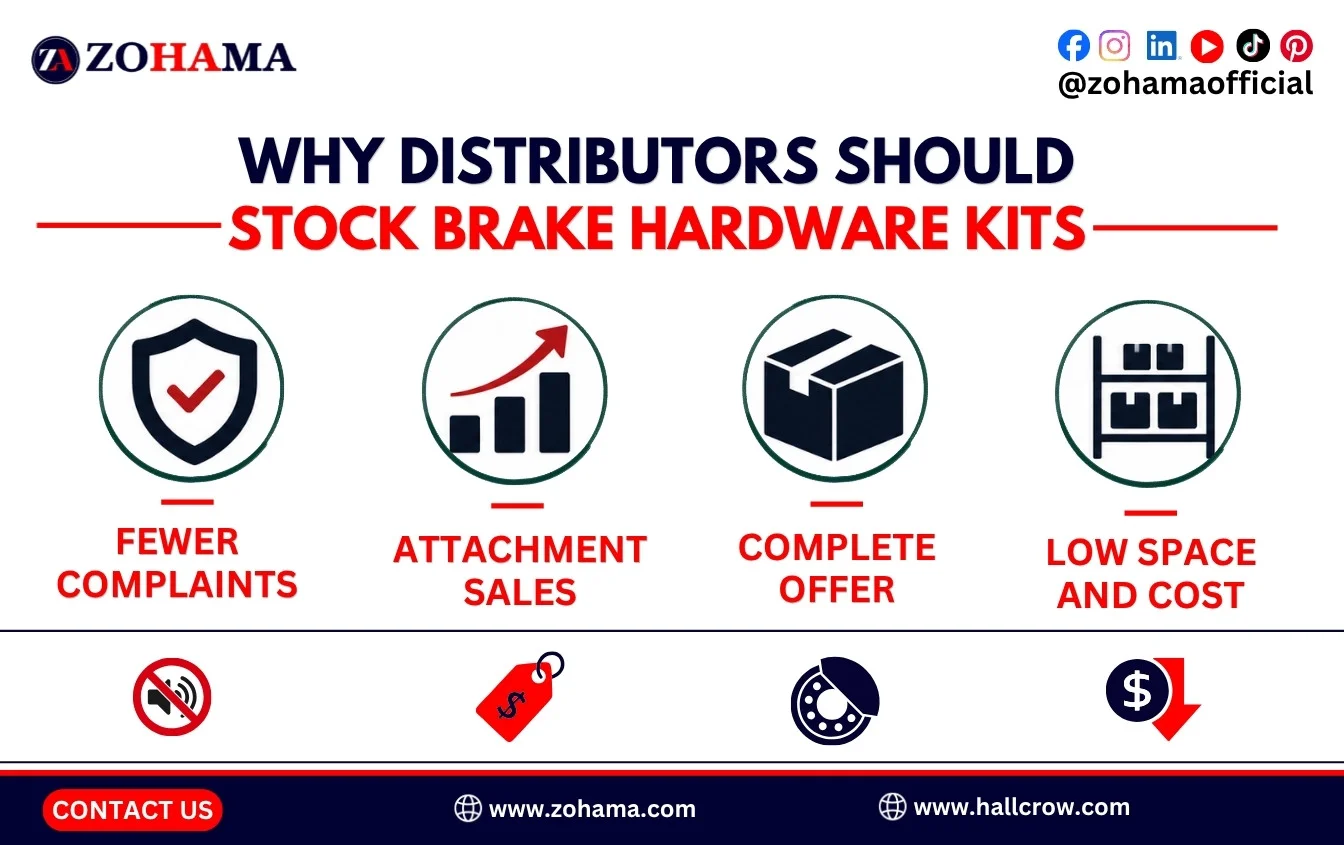
Hardware is one of the easiest additions to a brake range, and it earns its place commercially:
- It reduces complaints. Fewer noise and wear issues means fewer returns and warranty claims.
- It adds attachment sales. A small extra sale on almost every pad order.
- It completes the offer. Workshops prefer a supplier who provides everything the job needs.
- It is compact and low cost. Kits take little warehouse space and tie up little cash.
Sourcing Hardware Kits Correctly
The main risk with hardware is fitment, since kits are vehicle-specific and easily mismatched:
- Match the kit to the exact pad reference and vehicle application. See our brake pad part-number lookup guide.
- Confirm the axle, since front and rear kits differ.
- Check the kit contents list, as coverage varies between suppliers.
- Verify material quality, particularly corrosion resistance on clips and springs.
- Source from the same supplier as your pads where possible, so pad and hardware are designed to work together.
Quality Points to Check
Cheap hardware fails quickly and quietly, then gets blamed on the pad. When evaluating a kit, look for corrosion-resistant coating on the metal parts, correct spring tension in the clips, shims that are properly formed rather than flimsy, and packaging that keeps the small parts together and identifiable. Apply the same inspection discipline you use for pads, covered in our quality checks for car brake pads, and confirm supplier consistency using our guide on choosing a passenger car brake pad supplier.
Selling Pads and Hardware Together
The strongest approach is to treat hardware as part of the brake job rather than an optional extra. Pair each fast-moving pad reference with its matching kit in your catalogue, recommend them together, and stock them in similar proportions so you never have pads without hardware. This is the same coverage thinking used when bulk buying car brake pads, applied to a smaller, cheaper line. For workshop-focused customers, it also strengthens the range described in our guide on sedan and hatchback brake pads.
Complete Your Brake Range
Hardware kits turn a pad sale into a complete brake solution and quietly prevent most noise complaints. If you want a manufacturer that supplies matched pads and hardware across common car applications, explore our distributor and partner program to request a catalogue and pricing for your market. See also our OEM brake pads range.
Frequently Asked Questions
What is included in a brake pad hardware kit?
Typically shims, clips and springs, guide pins and bushings, abutment plates, and often a lubricant sachet. Contents vary by vehicle application.
Why do shims matter?
Shims damp vibration behind the pad, which is the main defence against brake squeal. Reusing old, flattened shims is one of the most common causes of noise complaints after a brake job.
Should hardware be replaced with every pad change?
Replacing hardware alongside pads is the reliable approach, because worn clips and seized guide pins cause uneven wear, dragging and noise that customers blame on the new pads.
Why should distributors stock hardware kits?
They reduce noise and wear complaints, add an attachment sale on almost every pad order, complete the offer for workshops, and take very little space or capital.
Conclusion
Shims and hardware are small parts with an outsized effect on whether a brake job succeeds. Understand what each component does, stock kits matched to your fast-moving pad references, check quality as carefully as you do on pads, and sell the two together. Do that and you cut complaints, add margin, and give workshops a supplier who provides everything the job actually needs.