Most wrong-fitment problems in the brake pad trade come from the same mistake: trusting a part number without checking the pad itself. Numbers get mistyped, catalogues carry errors, and manufacturers revise specifications mid-model. The measurements never lie. For a distributor, knowing which dimensions matter and how to verify them is the difference between a smooth order and a container of pads that will not fit. This reference explains the measurements that define fitment and how to confirm them before you buy.
This works alongside reference matching rather than replacing it. Start with our brake pad part-number lookup guide to identify the pad, then use this article to verify it.
Why the Part Number Alone Is Not Enough
Part numbers are the fastest way to identify a pad, but they are not proof of fit. Errors creep in when:
- Catalogue data is wrong or outdated, especially for newer or less common models.
- Specifications change mid-model, so the same model year can have two versions.
- Similar numbers get confused, since references often differ by a single character.
- Variants are overlooked, such as different trim levels or brake system options.
Checking the dimensions turns an assumption into a confirmation.
The Measurements That Define Fitment

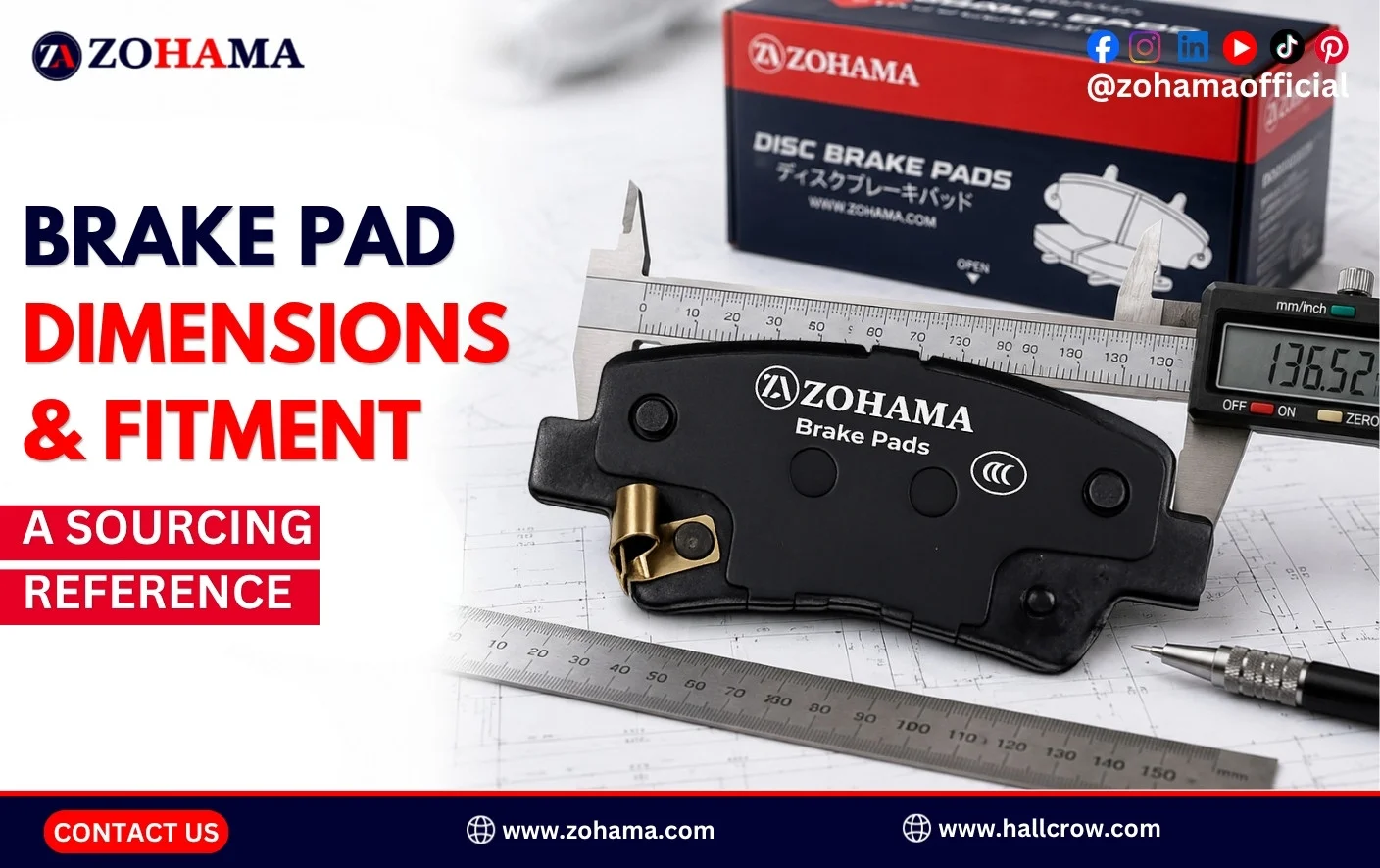
A brake pad has to sit precisely within the brake caliper and meet the rotor face correctly. These are the measurements that matter:
| Dimension | Why it matters |
|---|---|
| Length | The pad must sit correctly in the caliper bracket. Too long or short and it will not seat. |
| Height | Determines how the pad meets the rotor face. Wrong height causes uneven contact and wear. |
| Thickness | Affects clearance and service life. Too thick will not fit; too thin wears out early. |
| Backing plate shape | Ears, notches and cut-outs must match the specific caliper design. |
| Sensor slot / position | The wear sensor must sit in the correct place for the vehicle to read it. |
Length, height and thickness are the three core figures, but the backing plate shape and sensor position are just as decisive in practice.
How to Verify Dimensions Before You Order

A simple verification routine prevents almost every fitment problem:
- Get the specification sheet with stated dimensions for the reference you are buying.
- Compare against a known-good reference, such as the OEM specification. See our OEM brake pads approach.
- Measure the physical sample, rather than trusting the sheet alone.
- Check the backing plate shape and sensor slot visually against the original.
- Record the verified dimensions in your own cross-reference records for future orders.
Front and Rear Are Not Interchangeable
It sounds obvious, but front and rear pads for the same vehicle are different products with different dimensions and often different materials. Front brakes typically do more of the work, so their pads are usually larger and specified differently. Always confirm the axle before ordering, and keep front and rear references clearly separated in your records and stock.
Using Dimensions to Consolidate Your Range
Verified dimensions are not only a safety check, they are also a commercial tool. When you know the exact measurements of the pads you stock, you can identify where one reference covers several vehicle applications and reduce the number of lines you carry. That is the same logic behind building a lean cross-reference range, covered in our brake pad part-number lookup guide and in the coverage approach for sedans and hatchbacks.
Fitment Errors Cost More Than They Look
A wrong-fitment order does not just mean returned stock. It costs shipping both ways, workshop time, customer trust and often the next order too. That is why dimensional verification belongs in your standard inspection routine rather than being treated as optional. See our quality checks for car brake pads for the full process, and choosing a passenger car brake pad supplier for confirming a supplier documents specifications properly.
Order With Fitment Confidence
Accurate fitment is the foundation of a parts business that customers trust. If you want a manufacturer that documents dimensions clearly and supports reference-level verification, explore our distributor and partner program to request a catalogue and cross-reference support for your market.
Frequently Asked Questions
Which brake pad dimensions matter most?
Length, height and thickness are the three core measurements, along with the backing plate shape and the wear sensor position, which are equally decisive in practice.
Why is the part number not enough to confirm fitment?
Catalogue data can be wrong or outdated, specifications sometimes change mid-model, similar references are easily confused, and variants get overlooked. Measuring confirms what the number only suggests.
Are front and rear brake pads interchangeable?
No. They are different products with different dimensions and often different materials, since front brakes usually do more of the work. Always confirm the axle before ordering.
How can dimensions help me reduce stock?
Knowing exact measurements lets you spot where one reference covers several vehicle applications, so you can carry fewer lines while maintaining the same coverage.
Conclusion
Part numbers identify a brake pad; dimensions prove it fits. Know the measurements that matter, verify them against a specification and a physical sample, keep front and rear clearly separated, and record what you confirm. Build that habit into your buying routine and wrong-fitment orders, along with the cost and lost trust they bring, largely disappear.