Electric and hybrid cars are arriving in export markets faster than most parts businesses have planned for, and they brake differently from anything a distributor has stocked before. Because regenerative braking does much of the work, EV pads are used less, last longer and face a different set of demands. That changes what to stock, how much, and which pads to source. This guide explains how EV and hybrid braking differs, which materials fit, and how to build an EV pad range before the demand fully arrives.
For the background on how EV pad wear compares with combustion vehicles, see our page on electric versus combustion vehicle brake pad lifespan. This article focuses on sourcing and stocking.
How Regenerative Braking Changes Everything
The defining difference is regenerative braking, which slows the vehicle by recovering energy through the motor rather than by friction alone. The friction brakes still exist and still matter, but they are called on less often. That single change reshapes what a pad has to do:
| EV characteristic | What it means for the brake pad |
|---|---|
| Regenerative braking | The friction brakes are used less often, so pads last longer but sit idle more. |
| Extra battery weight | More mass to stop when the friction brakes are called on. |
| Quiet cabin | With no engine noise, brake noise is far more noticeable to the driver. |
| Less frequent use | Corrosion resistance matters, since pads and rotors work less often. |
So EV pads are not simply car pads with a different label. They face a different balance of demands, and buyers who understand that stock better.
What This Means for Demand and Stock
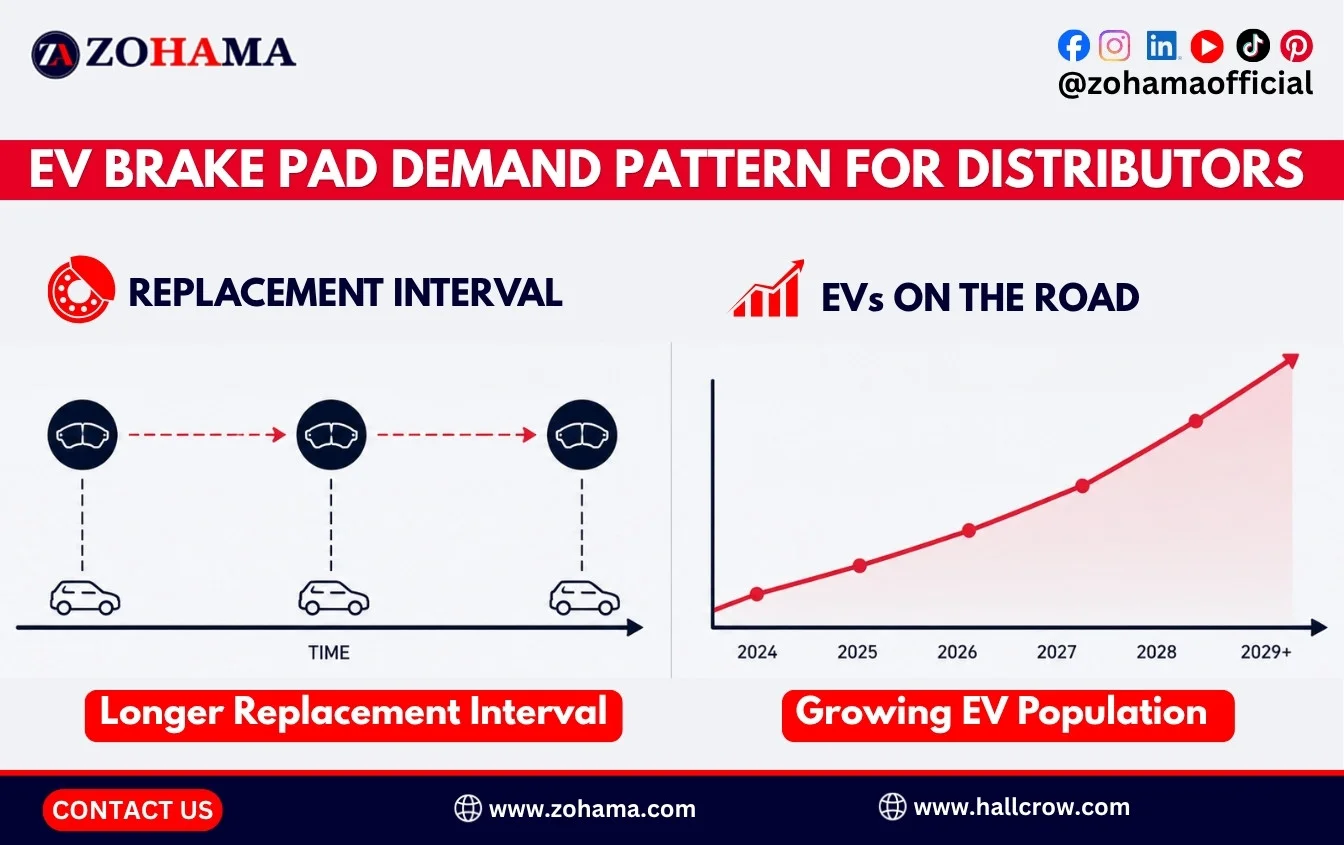
For a distributor, the commercial picture is nuanced. EV pads sell differently rather than simply less:
- Longer replacement intervals. Each vehicle needs pads less often, so plan turnover accordingly.
- Rapidly growing vehicle count. More EVs on the road offsets the slower replacement rate over time.
- Early-mover advantage. Few suppliers cover EV fitment well, so establishing coverage now builds position.
- Higher expectations. EV owners notice noise and dust more, so quality complaints surface faster.
Which Materials Fit Electric and Hybrid Cars
Quiet operation, low dust and corrosion resistance matter most, which favours refined materials. Ceramic is often the strongest fit for EVs and hybrids because it is quiet and clean, which suits a silent cabin. NAO suits lighter hybrids and value-focused demand. Heavier EVs and performance models may need more capable materials, and our guide on matching brake pad material to market helps you weight the choice.
What to Look for When Sourcing EV Pads
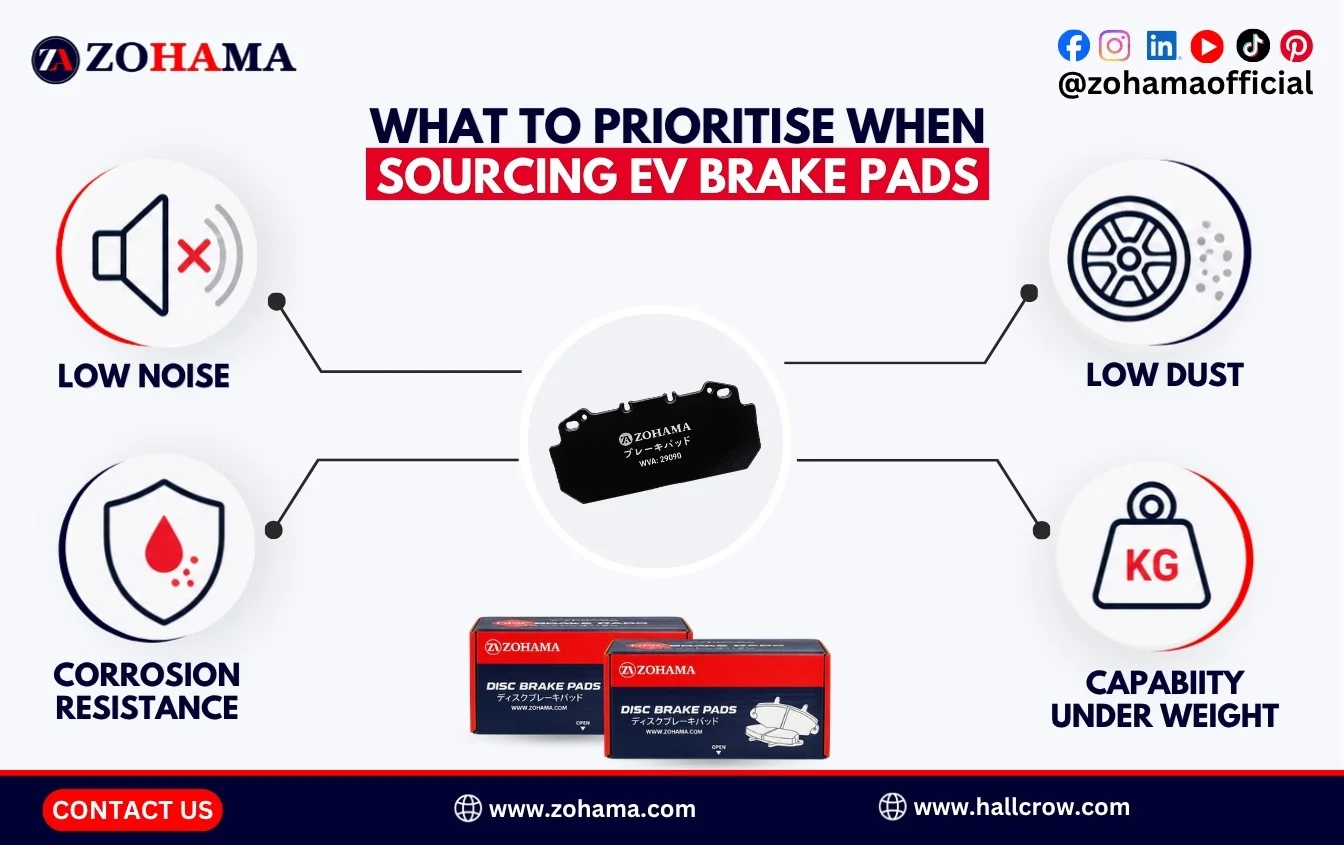
Because the duty cycle is different, prioritise different qualities than you would for a combustion car:
- Low noise, since there is no engine sound to mask it.
- Low dust, because EV buyers are typically quality-conscious.
- Corrosion resistance, as pads and rotors are used less frequently.
- Capability under weight, since batteries add mass when the friction brakes are needed.
- Confirmed fitment, using the exact reference. See our brake pad part-number lookup guide.
Building EV Coverage Before the Demand Peaks
The practical approach is to start with the EV and hybrid models already selling in your market, confirm their references, and hold modest stock while demand builds. Add models as the local vehicle population grows. Because EV adoption varies widely by country, let your own market guide the pace rather than importing broadly on speculation. For the volume-buying process once demand is proven, see our guide on bulk buying car brake pads.
Quality Expectations in a Quiet Vehicle
A pad that squeals in a combustion car may go unnoticed; in an electric car it is obvious. That raises the quality bar. Approve a sample, check batches against it, and source from a supplier who delivers consistent refinement. See our quality checks for car brake pads and our guide on choosing a passenger car brake pad supplier.
Prepare Your Range for the EV Shift
EV and hybrid pads are a segment where early, careful coverage pays off later. If you want a manufacturer building fitment for electric and hybrid models alongside conventional cars, explore our distributor and partner program to request a catalogue and pricing for your market.
Frequently Asked Questions
Do electric cars still need brake pads?
Yes. Regenerative braking does much of the slowing, but every electric car still has friction brakes that require pads. They are simply used less often.
Do EV brake pads last longer?
Generally yes, because regenerative braking reduces how often the friction brakes are used. That means longer replacement intervals, which distributors should factor into stock planning.
Which material is best for electric and hybrid cars?
Ceramic is often the strongest fit because it is quiet and low dust, which suits a silent cabin and quality-conscious owners. NAO suits lighter hybrids and value demand.
Should I stock EV brake pads now?
Start with the EV and hybrid models already selling in your market and hold modest stock while demand builds. Coverage established early is an advantage as the vehicle population grows.
Conclusion
Electric and hybrid cars change the brake pad equation rather than removing it. Pads are used less but judged more harshly, on heavier vehicles in quieter cabins. Understand the regenerative braking effect, prioritise quiet, clean and corrosion-resistant pads, confirm fitment carefully, and build coverage in step with your local market. Do that and you are positioned for the shift before your competitors are.