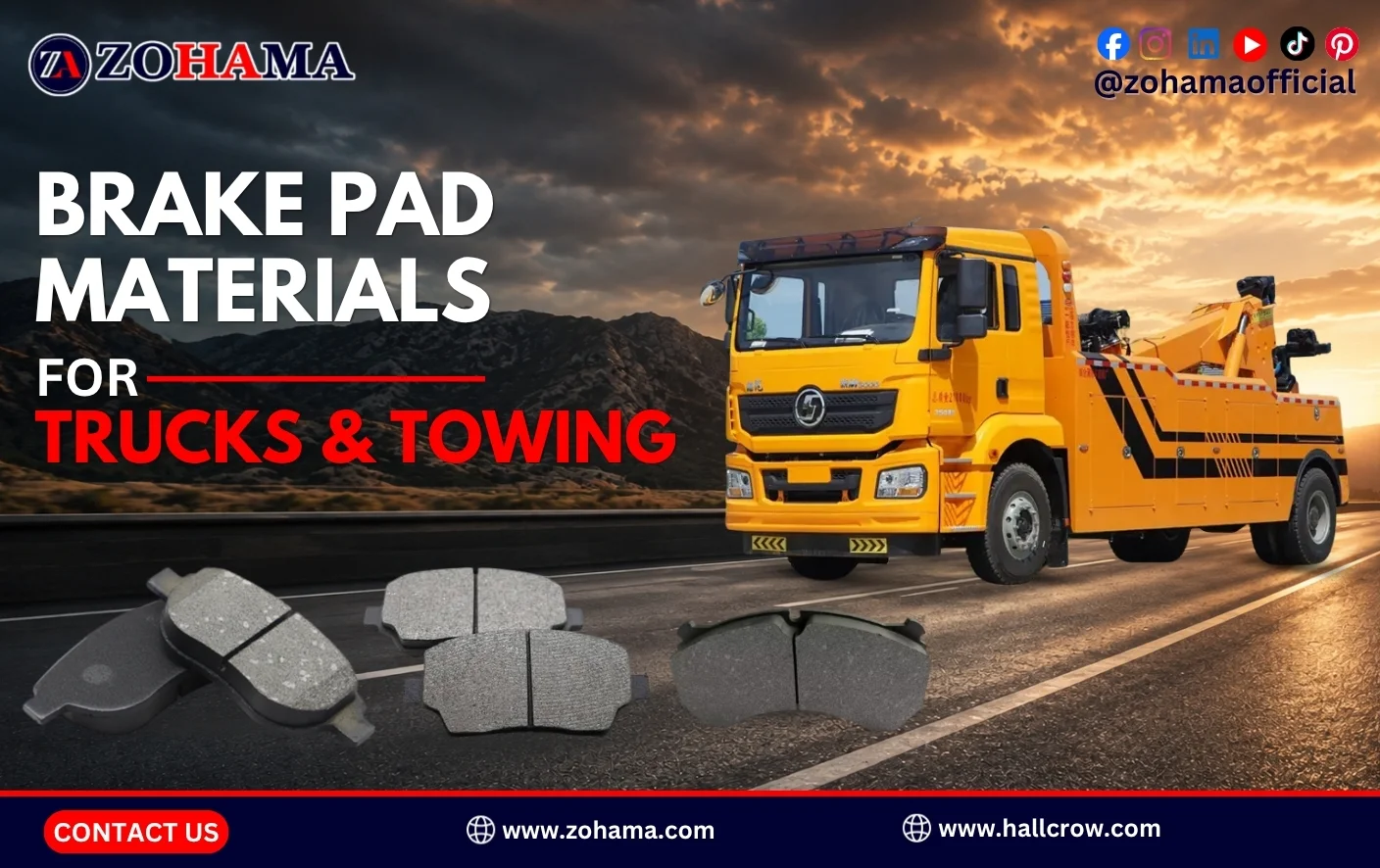
For trucks and towing, the friction material is the single biggest factor in how a brake pad performs. The same pad shape can behave completely differently depending on what it is made of, and under load that difference is the line between confident braking and dangerous fade. For distributors, knowing which material suits which duty is the key to stocking the right pad and advising commercial buyers well. This guide compares the main materials for trucks and towing and explains how to source the right one.
This applies material choice to the heavy segment. For the wider range, see our heavy-duty truck brake pads page, and for how materials behave in general, our brake pad materials breakdown.
Why Material Matters More Under Load
A loaded truck or a towing vehicle puts far more energy through its brakes than an unladen car, and most of that energy becomes heat. The friction material decides how well the pad copes with that heat: a material suited to light use will overheat and fade under load, while a material built for it stays stable. This is why material choice is the first decision for any truck or towing application, ahead of almost everything else.
The Main Materials Compared

Three materials cover most truck and towing needs, each with a clear best use:
| Material | Strengths for trucks and towing | Best suited to |
|---|---|---|
| Semi-metallic | Excellent heat handling and durability under sustained load. | Heavy loads, towing, long descents, hot climates. |
| Low-metallic | Strong bite and good heat resistance with reasonable comfort. | Mixed commercial duty and lighter trucks. |
| Ceramic (heavy-duty grade) | Lower noise and dust, but needs a grade rated for the load. | Lighter commercial vehicles where comfort matters. |
The pattern is simple: the heavier the load and the harder the duty, the more the choice leans toward semi-metallic.
Matching Material to Duty
Rather than a single best material, there is a best material for each job:
- Heavy loads and towing: semi-metallic, for its heat handling and durability. See our guide on sourcing semi-metallic brake pads.
- Mixed commercial duty: low-metallic, for strong bite with reasonable comfort. See sourcing low-metallic brake pads.
- Lighter commercial vehicles: a heavy-duty ceramic grade where noise and dust matter, provided it is rated for the load.
- Hot climates: lean toward semi-metallic, as covered in our guide on hot-climate and desert truck brake pads.
A Note on Ceramic for Towing
Ceramic is popular for its quiet, clean braking, but standard ceramic is not automatically the right choice for towing or heavy loads. Only a heavy-duty ceramic grade rated for the vehicle’s load should be used, and for the heaviest towing, semi-metallic usually remains the safer choice. Matching the grade to the load matters as much as the material name.
How to Source the Right Material
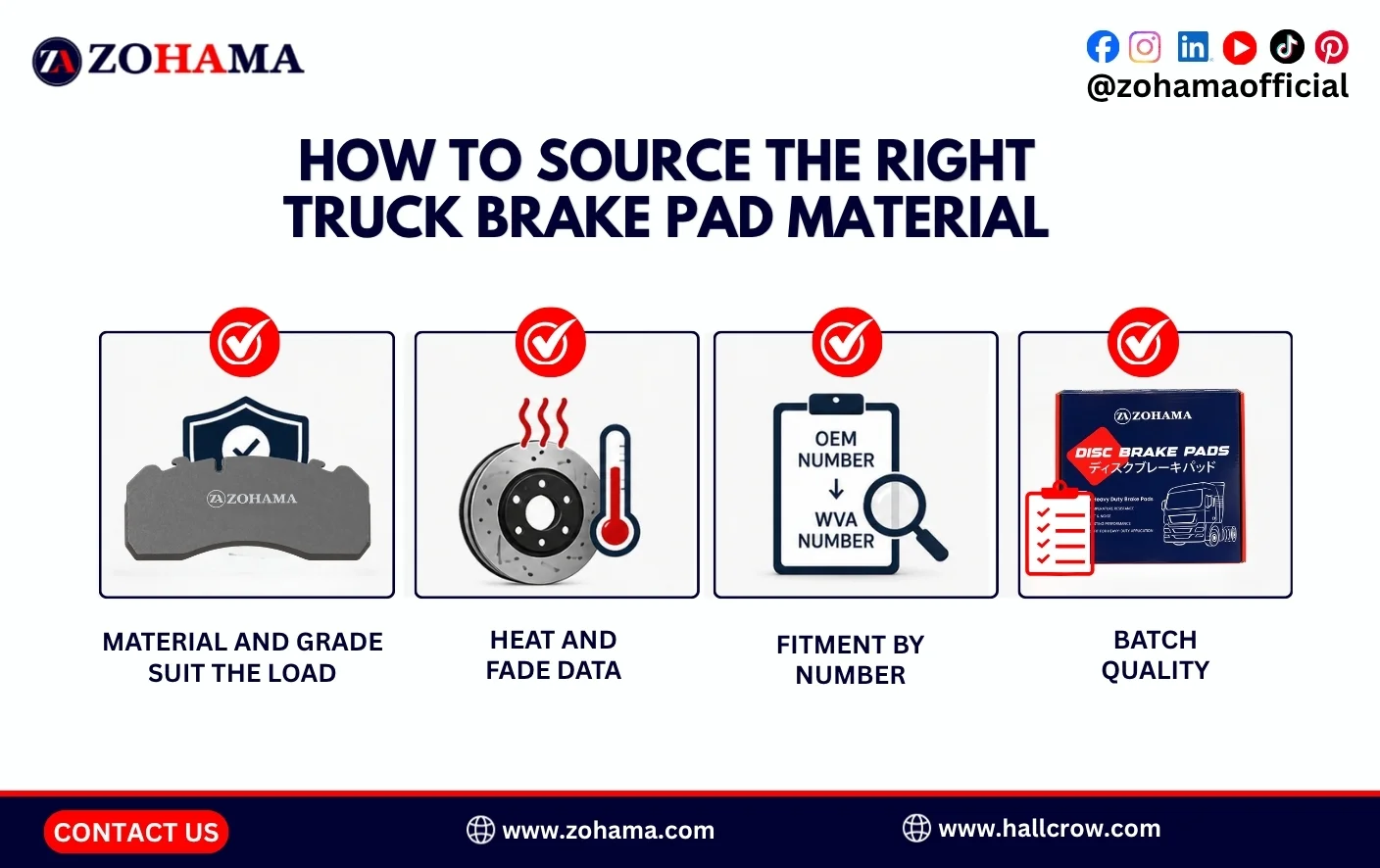
Turn material choice into a sound purchase with a few checks:
- Confirm the material and grade suit the duty and load, not just the vehicle type.
- Ask for heat and fade data for loaded conditions.
- Match fitment by OEM and WVA number, using our brake pad part-number lookup.
- Check quality on every batch, as covered in our quality checks for brake pads.
Stock the Right Material for Every Truck
A distributor who can match material to duty serves commercial buyers with confidence and avoids costly returns. If you want a certified manufacturer offering the right friction materials across truck and towing applications, explore our distributor and partner program to request a catalogue and pricing for your market. See also our brake pads for commercial vehicles range.
Frequently Asked Questions
Which brake pad material is best for towing?
Semi-metallic is usually best for towing and heavy loads because of its heat handling and durability. Low-metallic suits mixed duty, and only a heavy-duty ceramic grade rated for the load should be used where comfort matters.
Why does material matter more for trucks?
A loaded truck puts far more energy through its brakes, most of it heat. A material suited to light use will overheat and fade under load, while a material built for it stays stable.
Is ceramic good for heavy loads?
Standard ceramic is not automatically right for heavy loads or towing. Only a heavy-duty ceramic grade rated for the vehicle’s load should be used, and for the heaviest towing semi-metallic is usually safer.
How do I source the right material?
Confirm the material and grade suit the duty and load, ask for heat and fade data, match fitment by OEM and WVA number, and check quality on every batch.
Conclusion
For trucks and towing, the friction material decides how a pad performs under load, so it is the first choice to get right. Match the material to the duty, lean toward semi-metallic as loads get heavier, treat ceramic with care for towing, and confirm grade, fitment and quality before you buy. Do that and you stock the right pad for every truck, and advise commercial buyers with confidence.