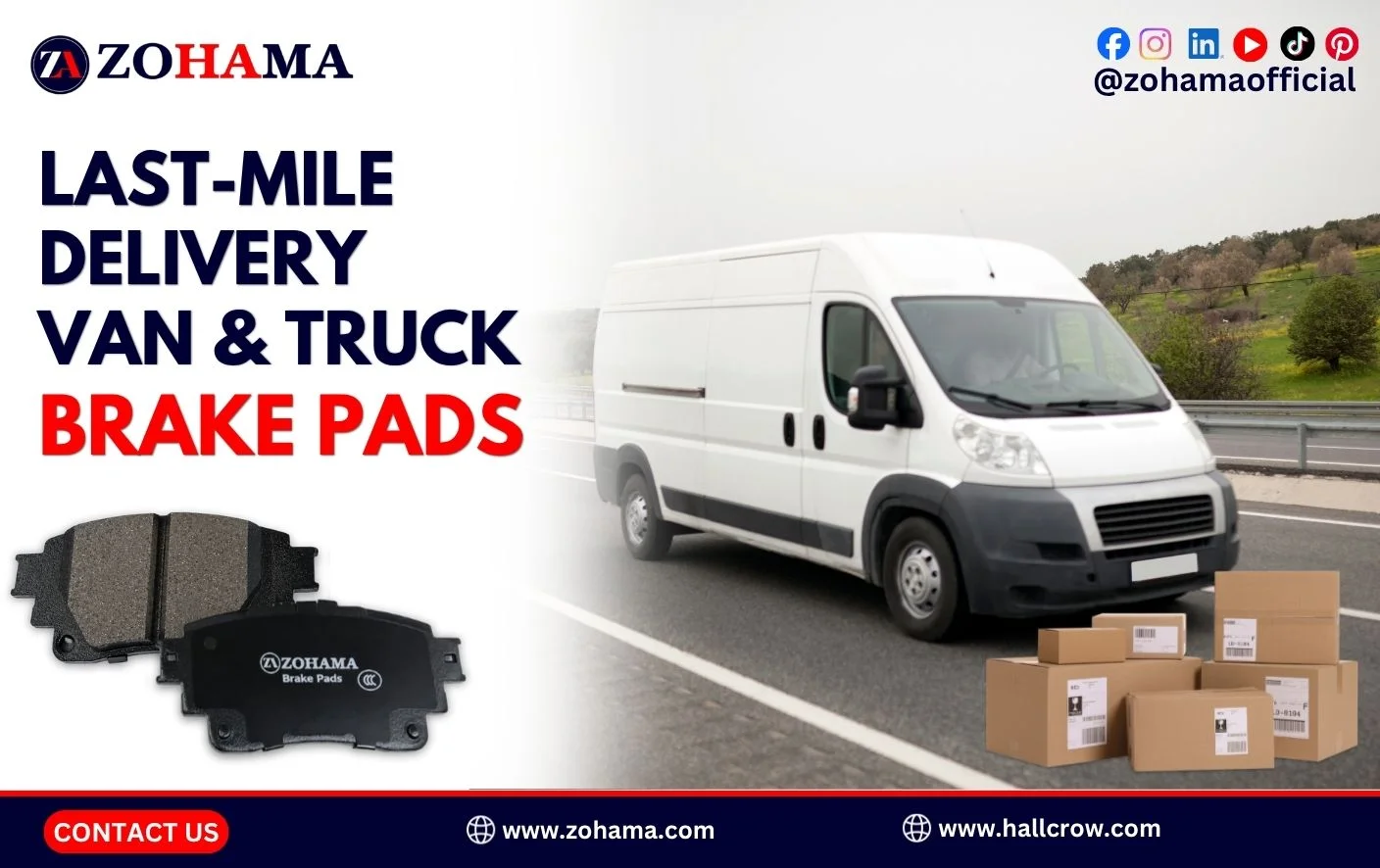
The rise of e-commerce has put more delivery vans and light trucks on the road than ever, and every one of them brakes hundreds of times a day. That stop-start urban duty is unlike anything a highway truck faces, and it wears brake pads fast. For distributors, last-mile delivery fleets are a fast-growing, high-consumption line with their own demands. This guide covers why urban delivery braking is so hard on pads, what these vehicles need, and how to source them.
Last-mile vehicles bridge the light and commercial segments. For related coverage, see our guides on van brake pads and LCV brake pads, and our brake pads for commercial vehicles range.
Why Last-Mile Braking Is So Hard on Pads
A delivery van on a city route stops and starts constantly, often hundreds of times in a single shift, in traffic, at junctions and at every drop. Each stop wears the friction material a little, so over a day the wear adds up far faster than the steady braking of a highway vehicle. Add stop-go heat that raises the risk of brake fade, and full loads at the start of each route, and it is clear why last-mile pads wear quickly and need to be chosen for the duty.
The Vehicles: Vans and Light Delivery Trucks
The last-mile segment covers a range of vehicles: panel vans and car-derived vans for parcels and courier work, light delivery trucks for larger loads, and the growing number of electric delivery vehicles entering urban fleets. Each shares the same stop-start urban duty, and each keeps a distributor’s delivery-fleet line turning over at high volume.
What Last-Mile Brake Pads Need
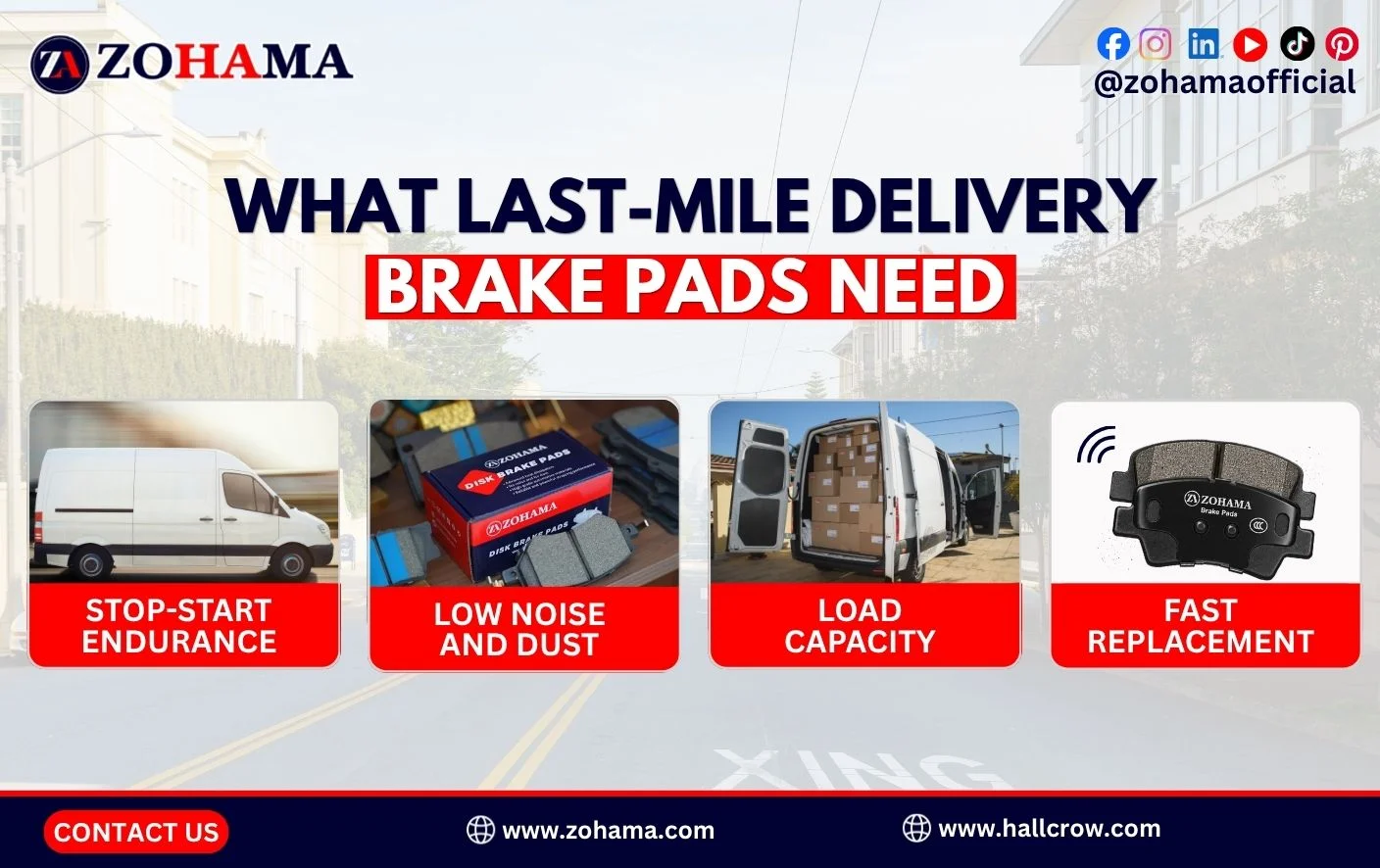
Urban delivery duty sets its own demands:
| Demand | Why it matters on last-mile vehicles |
|---|---|
| Stop-start endurance | Hundreds of stops a day wear pads far faster than highway driving. |
| Low noise and dust | Vehicles work in residential streets where noise and dirt are noticed. |
| Load capacity | Vans run fully loaded at the start of a route, so pads carry real weight. |
| Fast, easy replacement | Downtime is lost deliveries, so quick pad changes keep vans earning. |
A pad that meets these keeps a delivery van quiet, clean and reliable through a long day of stops, and back on the road quickly when it needs a change.
Which Materials Suit Them
Last-mile duty favours materials that stay quiet and clean while handling frequent, moderate-heat braking. Well-formulated low-metallic pads give strong, consistent braking with good wear behaviour for loaded vans, while quieter compounds suit the residential streets these vehicles work in. For heavier delivery trucks, semi-metallic adds heat capacity. Our guide on brake pad materials for trucks and towing explains the trade-offs.
The Electric Delivery Shift
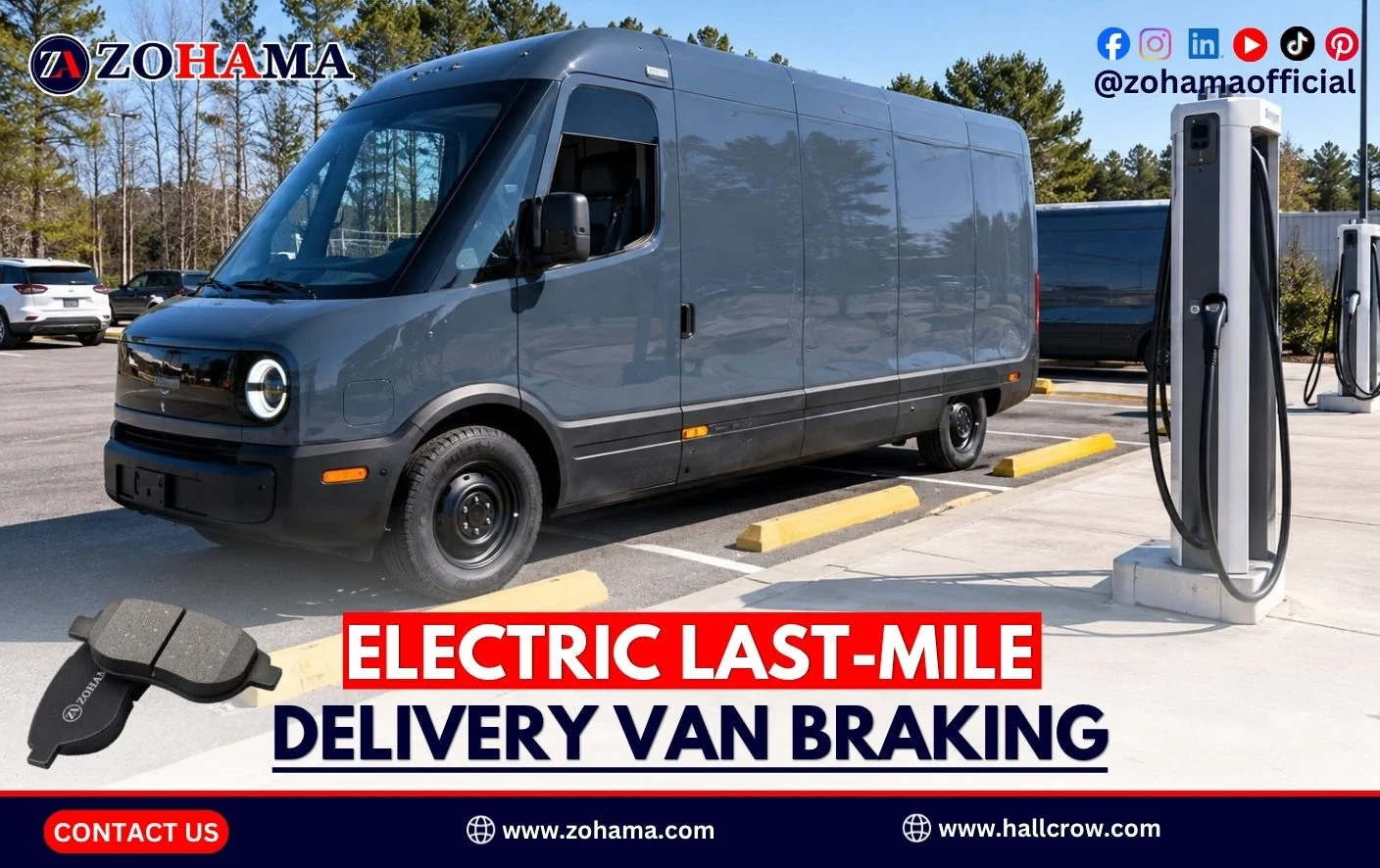
A growing share of last-mile fleets is electric, and electric delivery vans change pad demand: regenerative braking does more of the everyday slowing, so pads are used less but must resist corrosion from underuse and still bite cleanly when needed. This is covered in our guide on electric and hybrid truck and bus brake pads, and it is worth planning for as urban fleets electrify.
Getting Fitment Right
Delivery vans and light trucks span many makes and models, so confirm every reference. Identify each pad by OEM number using our brake pad part-number lookup and verify against OEM brake pads specifications before ordering.
Sourcing Last-Mile Pads
High stop-start consumption makes last-mile pads a strong, repeat-order line, and the segment is growing fast. If you want a certified manufacturer with quiet, durable pads for delivery fleets, explore our distributor and partner program to request a catalogue and pricing. See also our guide on bulk buying commercial vehicle brake pads.
Frequently Asked Questions
Why do last-mile vans wear brake pads so fast?
They brake hundreds of times a day in stop-start urban traffic, often fully loaded, which wears the friction material far faster than the steady braking of a highway vehicle.
Which vehicles does this cover?
Panel and car-derived delivery vans, light delivery trucks, and the growing number of electric delivery vehicles in urban fleets.
Which material suits last-mile pads?
Quiet, clean, well-formulated low-metallic for loaded vans, with semi-metallic for heavier delivery trucks that need more heat capacity.
How do electric delivery vans change pad choice?
Regenerative braking means pads are used less but must resist corrosion from underuse and still bite cleanly, so corrosion-resistant compounds matter.
Conclusion
Last-mile delivery is one of the fastest-growing corners of the commercial vehicle world, and its stop-start duty is hard on brake pads. Match quiet, durable materials to urban delivery work, plan for the electric shift, expect high consumption and stock accordingly, and confirm fitment across many van and truck models. Do that and last-mile pads become a strong, growing, repeat-order line for any urban market.