Electric buses and hybrid trucks are moving into commercial fleets fast, especially in cities and public transport, and they change what a brake pad has to do. Regenerative braking means the friction brakes are used less often, but when they are needed they still have to stop a heavy vehicle safely, and underuse brings its own problems. For distributors, electric and hybrid commercial vehicles are a growing line with different demands. This guide explains how their braking differs, what their pads need, and how to source them.
This is the commercial companion to our light-vehicle guide on sourcing EV and hybrid brake pads, and it builds on how electric and combustion braking differ.
Why Electric and Hybrid Commercial Vehicles Change Braking
On an electric or hybrid vehicle, much of the braking is done by the electric motor, which slows the vehicle and recovers energy. This regenerative braking means the friction pads do less of the work day to day. That sounds like less wear, and it is, but it also changes the wear pattern in ways a fleet needs to plan for.
The Regenerative Braking Effect
Because the friction brakes are used less, pads on electric and hybrid vehicles last longer, but they can also sit unused for long periods. That underuse can let pads and rotors corrode or glaze, so that when a hard stop is finally needed, the first bite is poor until the surface cleans up. The goal for these pads is to survive light, infrequent use and still deliver full, clean braking on demand.
What Pads for Electric and Hybrid Trucks and Buses Need
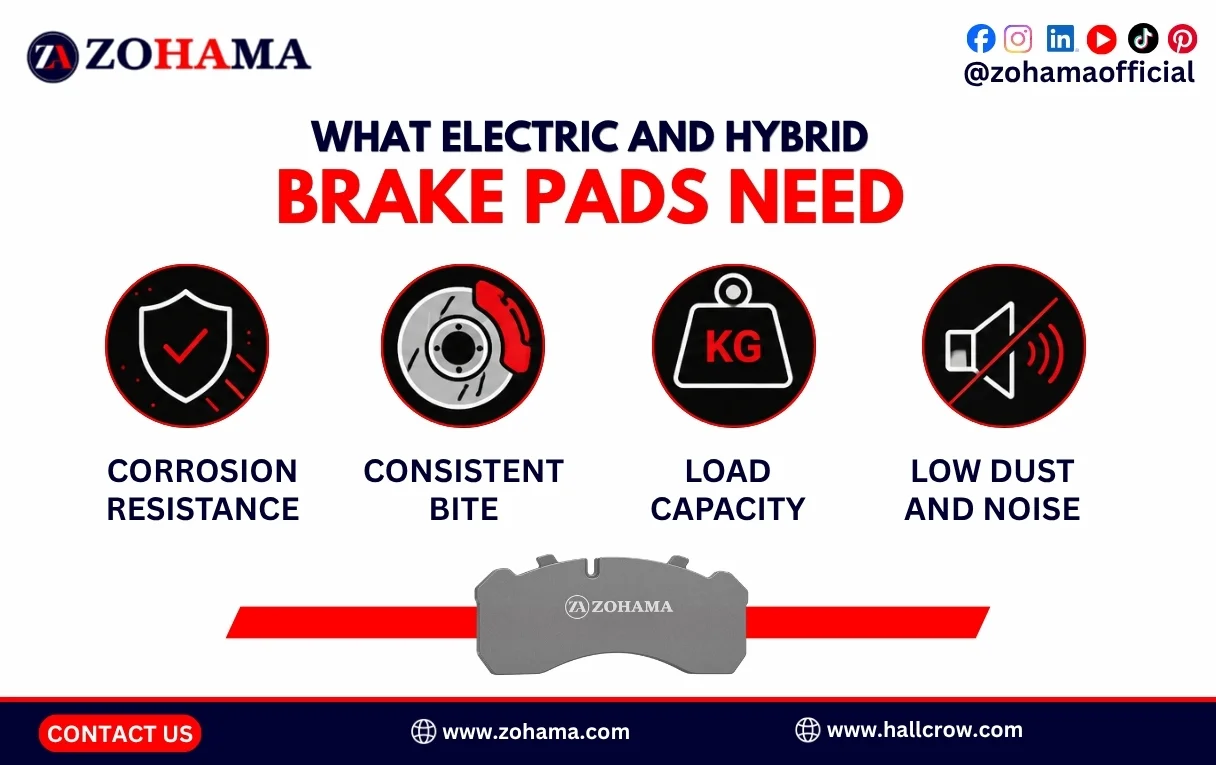
The duty is different, so the demands are different:
| Demand | Why it matters on electric and hybrid vehicles |
|---|---|
| Corrosion resistance | Pads used less often can rust or seize, so they must resist corrosion. |
| Consistent bite when needed | After long regen-only spells, the pad must still grip cleanly on hard stops. |
| Load capacity | Battery weight makes these vehicles heavier, so pads must handle more mass. |
| Low dust and noise | Quiet electric drivetrains make pad noise and dust more noticeable. |
A pad that meets these points keeps an electric or hybrid fleet safe and quiet through long regen-only stretches and sudden hard stops alike.
Which Materials Suit Them
For electric and hybrid commercial vehicles, corrosion resistance and clean, quiet bite matter more than raw heat endurance, since the pads run cooler on average. Well-formulated low-metallic pads offer strong, consistent braking with good corrosion behaviour, while quieter compounds suit the near-silent electric drivetrain. For the heaviest electric trucks that still see hard braking, semi-metallic remains relevant. Our guide on brake pad materials for trucks and towing explains the trade-offs.
Weight Matters
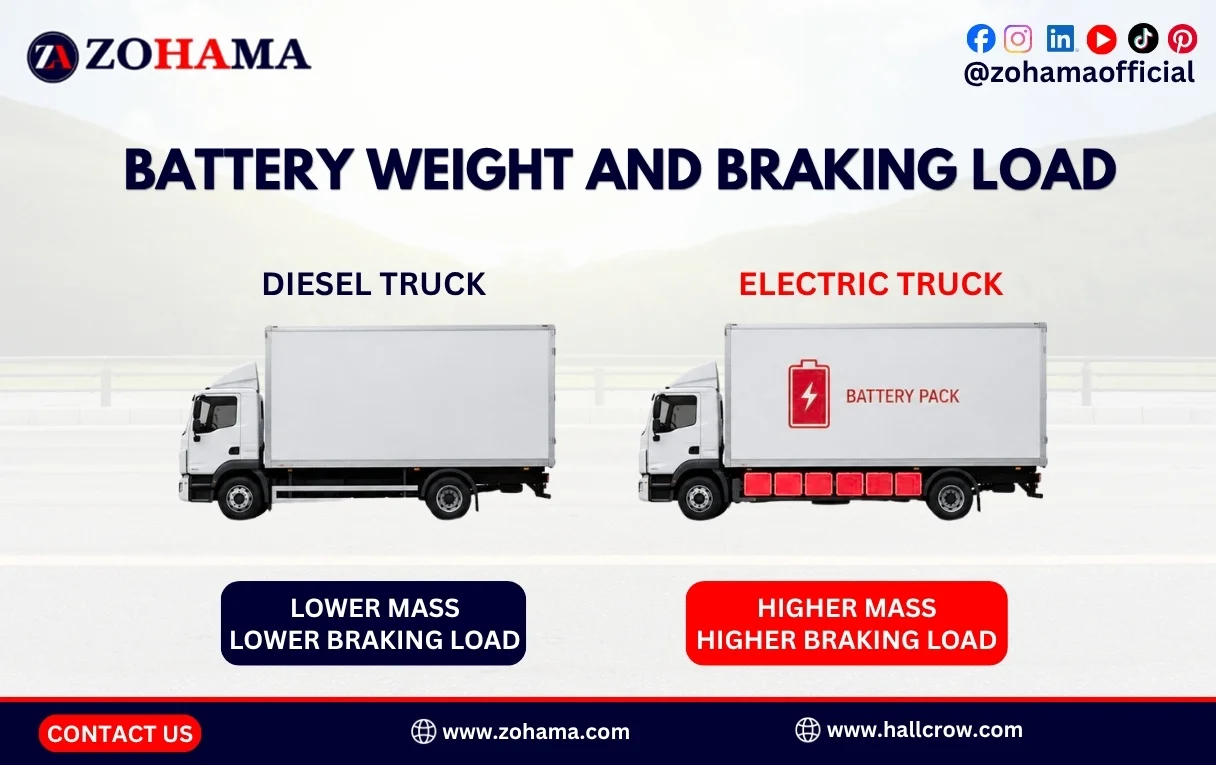
Battery packs make electric trucks and buses heavier than their diesel equivalents, so even with regenerative braking, the friction pads must handle more mass when they are called on. That extra weight is why load capacity stays on the list of demands, and why cheap, underspecified pads are a poor choice for these vehicles.
Getting Fitment Right
Electric and hybrid commercial models are newer and varied, so exact fitment matters. Identify each pad by OEM and WVA number using our brake pad part-number lookup and OEM cross-reference for commercial trucks guide, and verify against OEM brake pads specifications before ordering.
Sourcing for Electric and Hybrid Fleets
Electric and hybrid commercial vehicles are a forward-looking line, and getting into it early positions a distributor for where public transport and city logistics are heading. If you want a certified manufacturer with pads suited to electric and hybrid duty, explore our distributor and partner program to request a catalogue and pricing. See also our heavy-duty truck brake pads page.
Frequently Asked Questions
Do electric and hybrid vehicles still need brake pads?
Yes. Regenerative braking does most of the everyday slowing, but friction pads are still needed for hard stops and to hold the vehicle, and they must work reliably when called on.
Do brake pads last longer on electric and hybrid vehicles?
Usually yes, because the friction brakes are used less. But underuse can cause corrosion or glazing, so pads must resist those and still bite cleanly on demand.
Which material suits electric and hybrid commercial pads?
Corrosion-resistant, quieter compounds such as well-formulated low-metallic suit the cooler, lighter duty, with semi-metallic still relevant for the heaviest electric trucks.
Does battery weight affect brake pad choice?
Yes. Batteries make these vehicles heavier, so the pads must handle more mass on hard stops, which rules out cheap, underspecified pads.
Conclusion
Electric and hybrid trucks and buses are reshaping commercial braking, not removing the need for it. Their pads must survive light, infrequent regen-only use, resist corrosion, bite cleanly on demand, and carry extra battery weight. Match materials to that cooler, heavier duty, get fitment right on these newer models, and source from a supplier who understands the segment. Do that and electric and hybrid pads become a forward-looking line as fleets electrify.