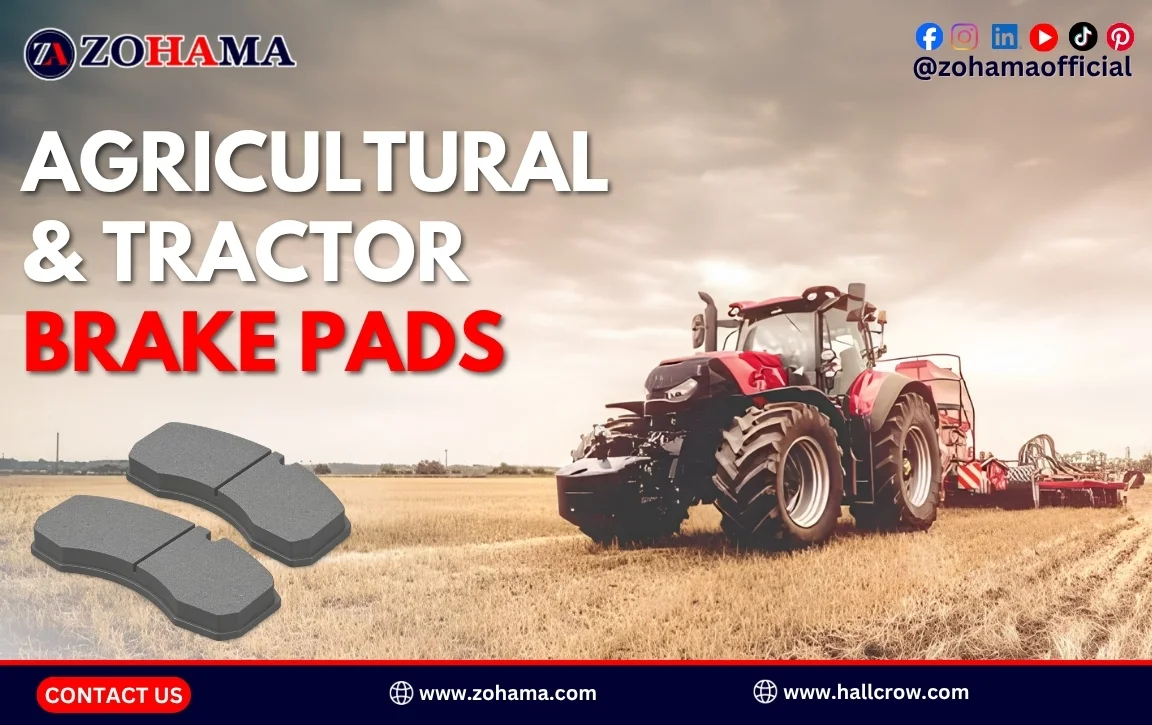
Agricultural machinery is a segment of its own. Tractors, harvesters and their trailers work in conditions no road truck faces: mud, dust, water and heavy towing, in intense bursts at harvest and long idle spells in between. Their brake pads have to cope with all of it. For distributors in farming regions, agricultural pads are a distinct, seasonal line with steady underlying demand. This guide covers why farm braking is different, what these pads need, and how to source them for the market.
Agricultural machines sit alongside other off-highway equipment, so this guide pairs well with our guide on heavy equipment and construction brake pads. For the wider segment, see our heavy-duty truck brake pads page.
Why Agricultural Braking Is Different
A tractor does not brake like a truck. It works off-road in dirt and moisture, moves slowly and precisely for much of its work, and pulls heavy implements and trailers that add to the braking load. Add long seasonal idle periods, and the pad faces a mix of contamination, heavy towing and infrequent use that road pads never see. That combination is why farm machinery needs pads built for its own duty.
The Vehicles: Tractors, Harvesters and Trailers
The agricultural segment covers a range of machines, each with braking needs: tractors of every size, from compact utility machines to large field tractors; harvesters and combines that carry heavy loads through the season; and agricultural trailers that haul crops and equipment. Covering the common references across these lets a distributor serve the whole farm, not just one machine.
What Agricultural Brake Pads Need
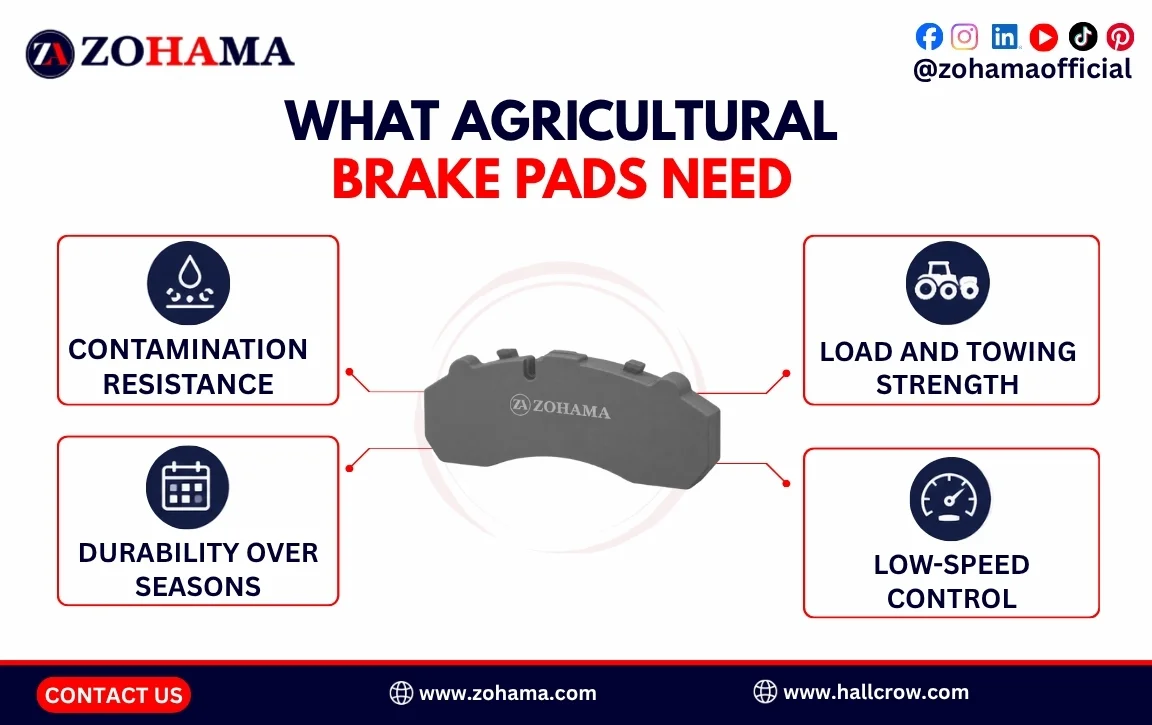
Farm duty sets its own demands:
| Demand | Why it matters on farm machinery |
|---|---|
| Contamination resistance | Mud, dust and water are constant, so pads must resist grit and moisture. |
| Load and towing strength | Tractors pull heavy implements and trailers, so pads must hold heavy loads. |
| Durability over seasons | Intense use at harvest, long idle spells otherwise, without seizing. |
| Low-speed control | Much farm work is slow and precise, needing steady, controllable braking. |
A pad that meets these keeps farm machinery safe and controllable through the hardest weeks of the season and the quiet months between.
Which Materials Suit Them
Agricultural pads favour tough, contamination-resistant materials that hold up to grit and moisture and pull heavy loads. Semi-metallic suits the heat and load of heavy towing and harvest work, while low-metallic gives strong, controllable braking for mixed duty. Our guide on brake pad materials for trucks and towing explains how each stands up to load.
A Seasonal, Regional Market
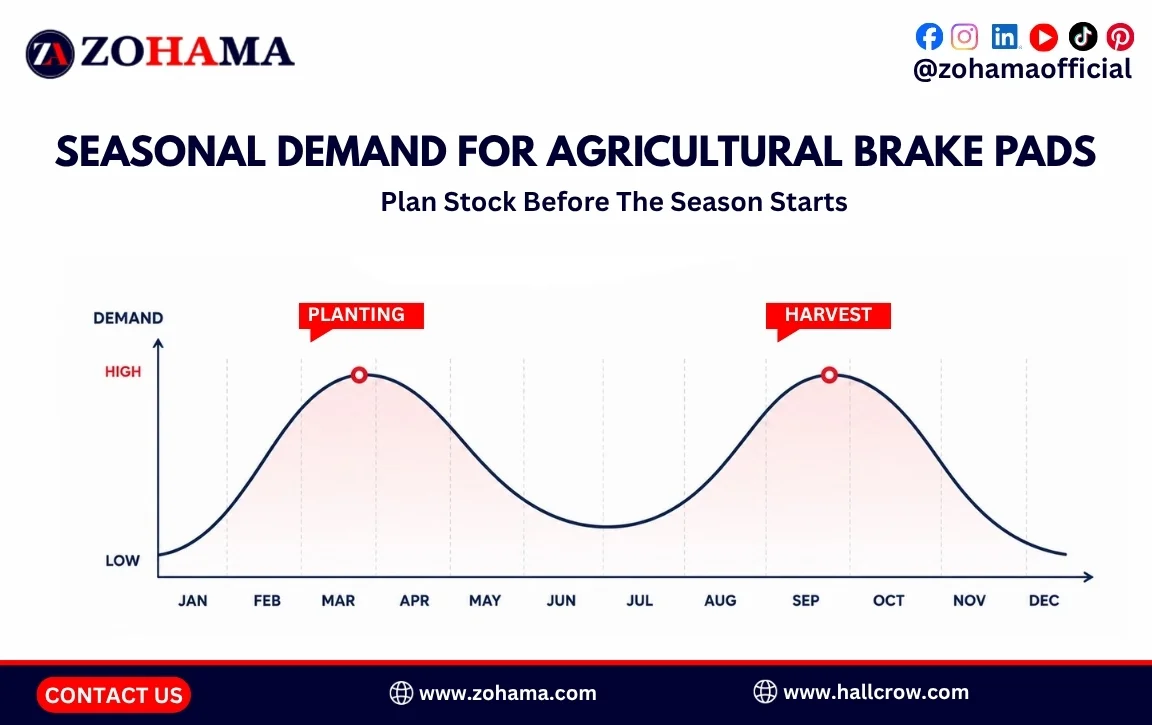
Agricultural demand is seasonal and regional. It peaks around planting and harvest and concentrates in farming areas, so a distributor in the right region can plan stock around the season and serve a market that larger, general suppliers often overlook. Forecast around the local farming calendar, and hold the fast movers before the season starts, not during it.
Getting Fitment Right
Farm machinery spans many makes and models, so exact fitment matters. Identify each pad by OEM and part number using our brake pad part-number lookup and verify against OEM brake pads specifications before ordering, and cross-reference carefully as covered in our OEM cross-reference for commercial trucks guide.
Sourcing Agricultural Pads
Agricultural pads are a distinct line that rewards a supplier who understands off-highway duty. If you want a certified manufacturer with tough, contamination-resistant pads for farm machinery, explore our distributor and partner program to request a catalogue and pricing for your region. See also our brake pads for commercial vehicles range.
Frequently Asked Questions
Why are agricultural brake pads different?
Farm machinery works off-road in mud, dust and water, moves slowly and precisely, pulls heavy loads, and sits idle between seasons, so its pads face contamination, heavy towing and infrequent use that road pads do not.
Which machines need agricultural brake pads?
Tractors of every size, harvesters and combines, and agricultural trailers. Covering the common references across these serves the whole farm.
Which material suits agricultural pads?
Tough, contamination-resistant materials. Semi-metallic suits heavy towing and harvest work, while low-metallic gives strong, controllable braking for mixed duty.
Is the agricultural market seasonal?
Yes. Demand peaks around planting and harvest and concentrates in farming regions, so stock is best planned around the local farming calendar.
Conclusion
Agricultural braking is a world of its own: mud and dust, heavy towing, slow precision and seasonal bursts. Pads for tractors, harvesters and farm trailers must resist contamination, hold heavy loads, and stay reliable across seasons. Match tough materials to that duty, plan stock around the farming calendar, get fitment right across many makes, and source from a supplier who knows off-highway work. Do that and agricultural pads become a distinct, defensible line in farming regions.