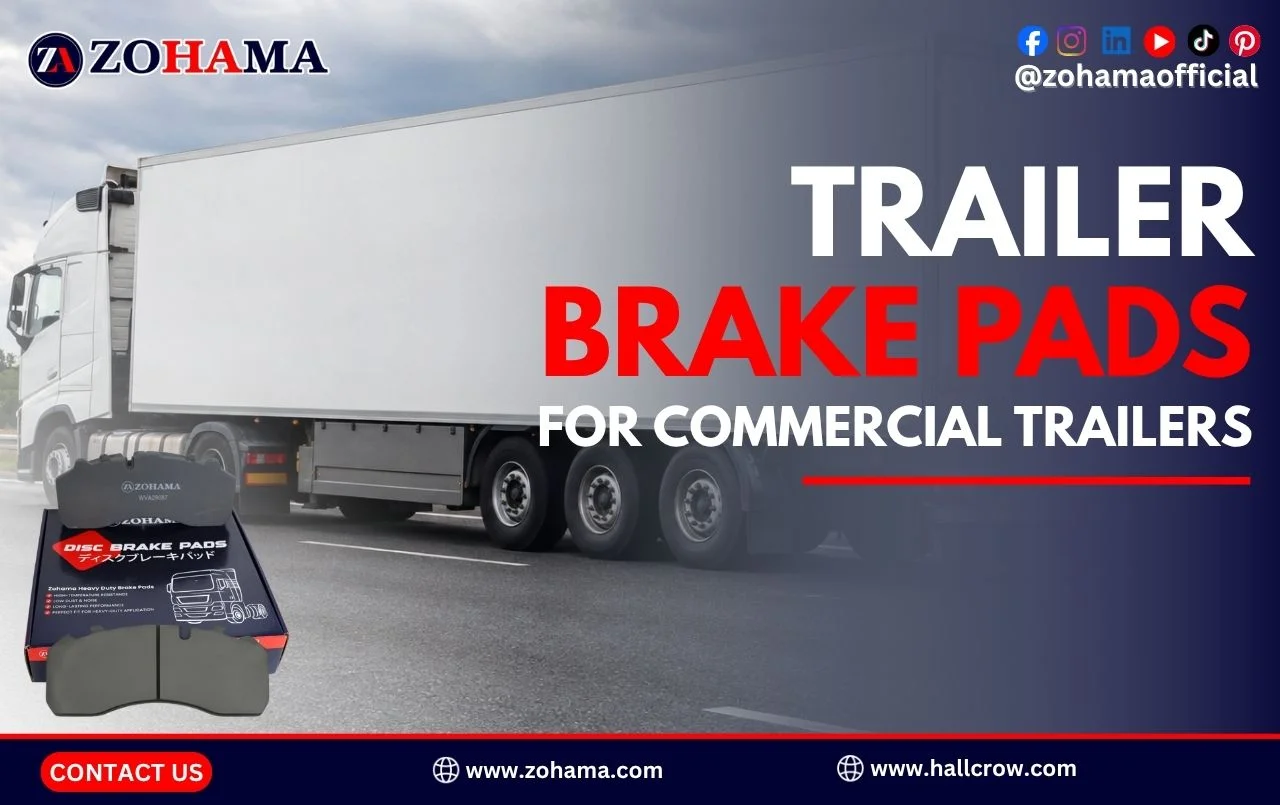
On an articulated rig, the trailer does about half the braking, yet its pads are often an afterthought. For distributors, that makes trailer brake pads a line worth treating on its own terms: a big, steady market defined not by the truck badge but by the axle underneath. This guide covers why trailer pads deserve their own attention, the axle brands that define fitment, what these pads need, and how to source them by axle and WVA number.
Trailer pads sit within the heavy-vehicle range. For the wider segment, see our heavy-duty truck brake pads page, and specific trailer references such as the WVA 29124 trailer and axle pad.
Why Trailer Brake Pads Deserve Their Own Attention
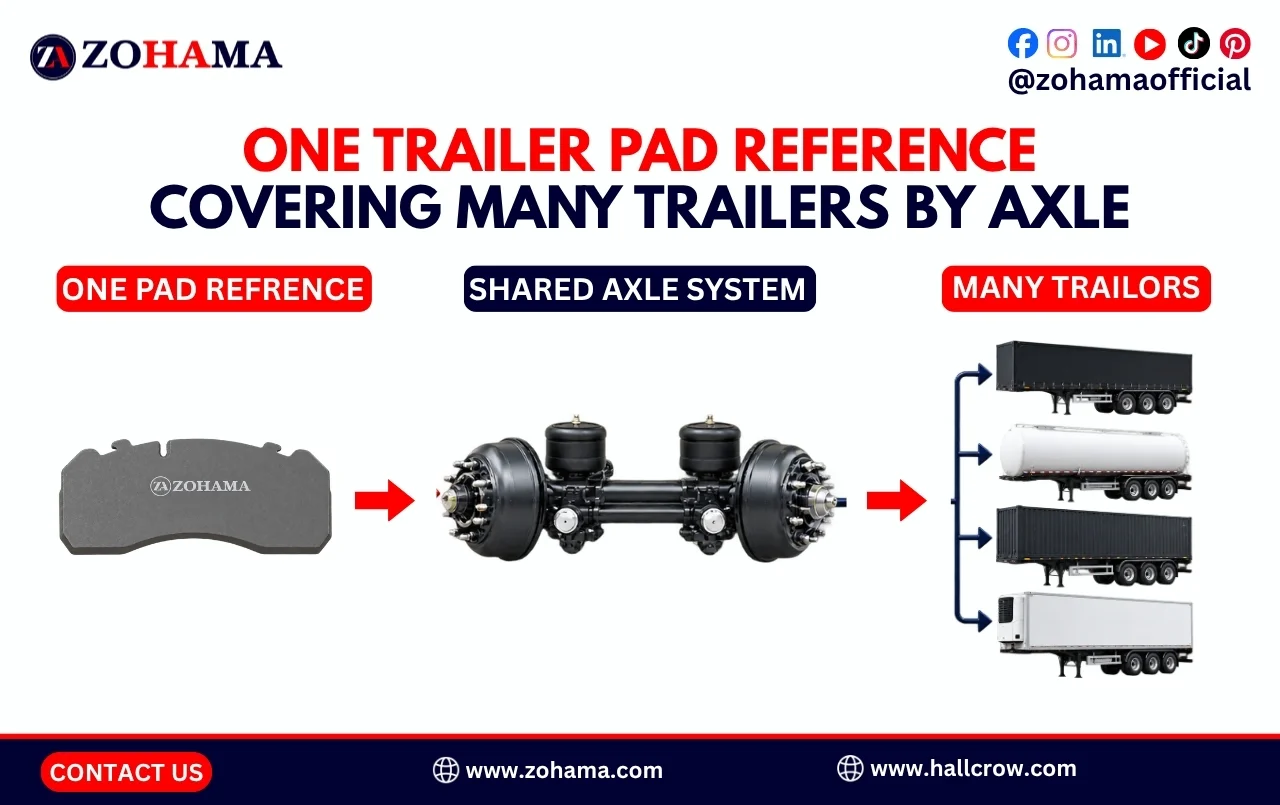
A trailer carries the load, so its brakes work as hard as the truck’s, and a trailer often outlives the tractor that pulls it, being re-hitched across many units. That means steady, independent replacement demand. Because trailers are identified by their axle rather than a vehicle brand, one pad can cover a huge number of trailers, which makes trailer references some of the most efficient lines a commercial distributor can stock.
The Axle Brands That Define Trailer Fitment
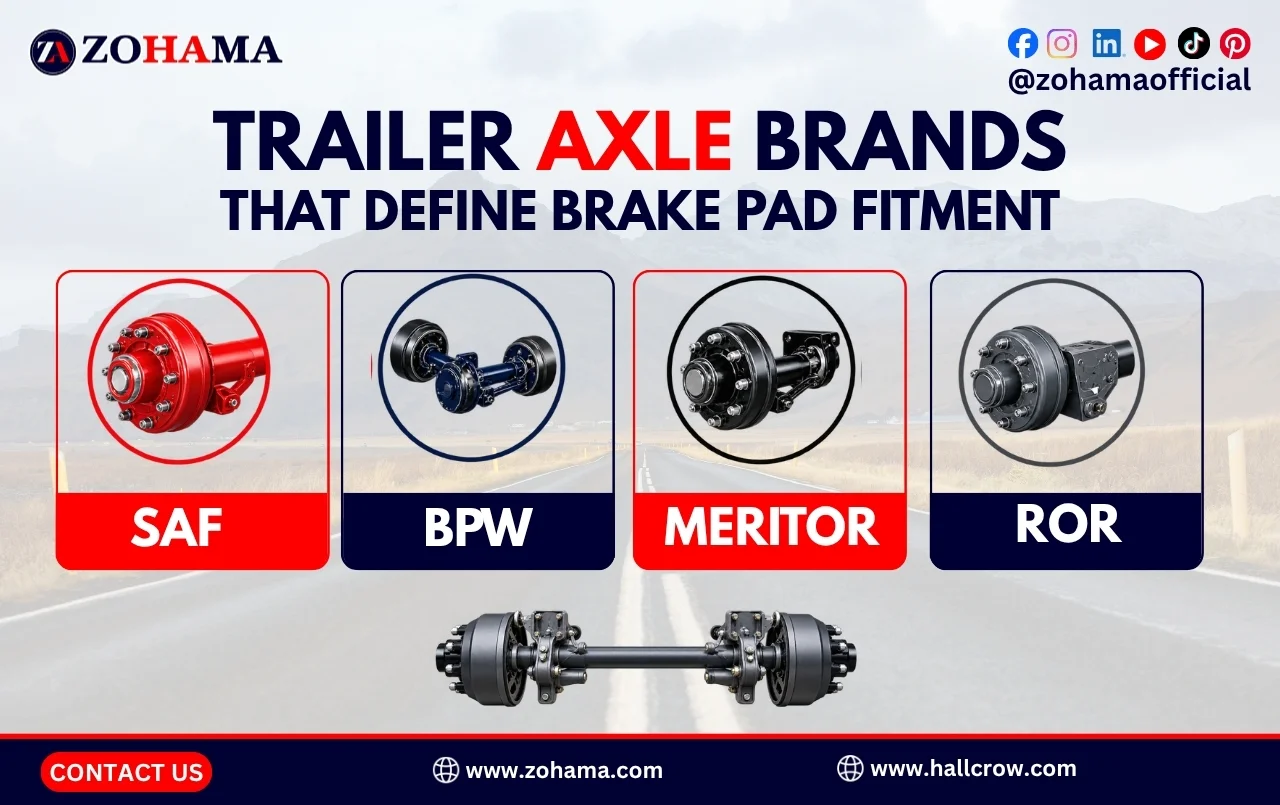
Trailer fitment is an axle question, not a badge question. A handful of axle systems account for most trailers on the road:
| Axle brand | Where it fits |
|---|---|
| SAF | One of the most common trailer axle systems across European fleets. |
| BPW | Widely used on trailers and commercial vehicles worldwide. |
| Meritor / ROR | Common on trailers and steer axles in many markets. |
| Schmitz and others | Trailer-maker systems that share hardware with the above. |
Matching by axle system is why one reference fits so many trailers. References such as the WVA 29124 for Meritor and ROR axles, and the WVA 29159 for SAF and Schmitz, show how axle-based coverage works in practice.
What Trailer Brake Pads Need
Trailers run loaded over long distances, so their pads must deliver:
- Heat and load handling, for sustained braking under full cargo.
- Long service life, so a trailer stays in service and off the workshop ramp.
- Exact axle fitment, since trailer braking is defined by the axle hardware.
- Consistent supply, because trailer fleets replace pads across many identical axles.
Air-Disc and the Modern Trailer
Most modern commercial trailers use air-disc brakes, which give strong, consistent stopping and easier pad changes than older drum systems. Air-disc trailer pads must seat precisely in the caliper and resist the heat of loaded braking. Because air-disc hardware is shared across axle brands, an air-disc trailer reference can cover a wide range of trailers, as with the DAF and trailer coverage of the WVA 29159.
Which Materials Suit Them
Trailer duty leans toward tough materials that handle heat and last. Semi-metallic suits the sustained load and heat of long-haul trailer work, while low-metallic is a strong all-round option. Our guide on brake pad materials for trucks and towing explains how each behaves under load.
Getting Fitment Right
Confirm the axle, not just the trailer make. Identify each pad by its axle system and WVA and OE number using our WVA numbers for commercial brake pads and brake pad part-number lookup guides, and verify against OEM brake pads specifications before ordering.
Sourcing Trailer Pads
Trailer pads are a steady, high-volume line that suits volume buying on the common axle references. If you want a certified manufacturer with strong trailer and axle coverage, explore our distributor and partner program to request a catalogue and pricing. See also our brake pads for commercial vehicles range.
Frequently Asked Questions
Why treat trailer brake pads as a separate line?
Trailers do about half a rig’s braking, often outlive the trucks that pull them, and are identified by axle rather than badge, so they have steady, independent demand and one reference can cover many trailers.
How is trailer fitment determined?
By the axle system, such as SAF, BPW, Meritor and ROR, rather than the trailer maker. Matching the axle and WVA number is the reliable way to confirm a fit.
Which material suits trailer brake pads?
Semi-metallic suits the sustained load and heat of long-haul trailer work, with low-metallic a strong all-round option.
Are most trailer brakes air-disc?
Most modern commercial trailers use air-disc brakes, which give consistent stopping and easier pad changes, and share hardware across axle brands.
Conclusion
Trailer brake pads are a market of their own, defined by the axle and driven by steady, independent demand. Source by axle system, cover the common SAF, BPW and Meritor references, match tough materials to loaded duty, confirm fitment by WVA number, and buy from a supplier with real trailer coverage. Do that and trailer pads become one of the most efficient, high-volume lines in a commercial range.