
Bulk buying is how a commercial parts distributor protects margin and keeps fleets supplied, but buying heavy-vehicle brake pads in volume is not the same as buying car pads. The unit values are higher, the fitment range is wider, and the parts are safety-critical, so a bulk order that is planned badly ties up cash or leaves gaps at the worst moment. This guide sets out how to bulk buy commercial vehicle brake pads well: forecast by fleet, focus on the fast movers, balance savings against fitment, and confirm quality before you commit.
The core principles in our guide on bulk buying car brake pads apply here too, with more weight on fitment and forecasting. For the wider segment, see our heavy-duty truck brake pads page.
Why Commercial Bulk Buying Is Different
A pallet of car pads and a pallet of truck pads are not the same commercial decision. Heavy commercial vehicle pads cost more per unit, cover a wider spread of brands and axles, and cannot be substituted loosely, since they stop loaded vehicles. That means a bulk order needs to be matched carefully to real fleet demand, not just bought for the lowest price per piece.
Forecast by Fleet Type, Not Just Volume

The best bulk orders start with the vehicles in your market. Look at which trucks and buses your customers actually run, how hard they work, and how often they replace pads. A market full of long-haul trucks wears pads differently from one full of city buses or construction vehicles, so forecast by fleet type and duty, then buy to that picture rather than to a flat volume target.
Focus on the Fast-Moving References
Not every reference deserves a bulk order. Concentrate volume on the fast movers: the common brands, axles and WVA numbers your fleets replace most often. Identify these using your sales history and our WVA numbers for commercial brake pads and OEM cross-reference for commercial trucks guides, so bulk savings land on the parts that actually turn over.
Balance Bulk Savings Against Fitment Range
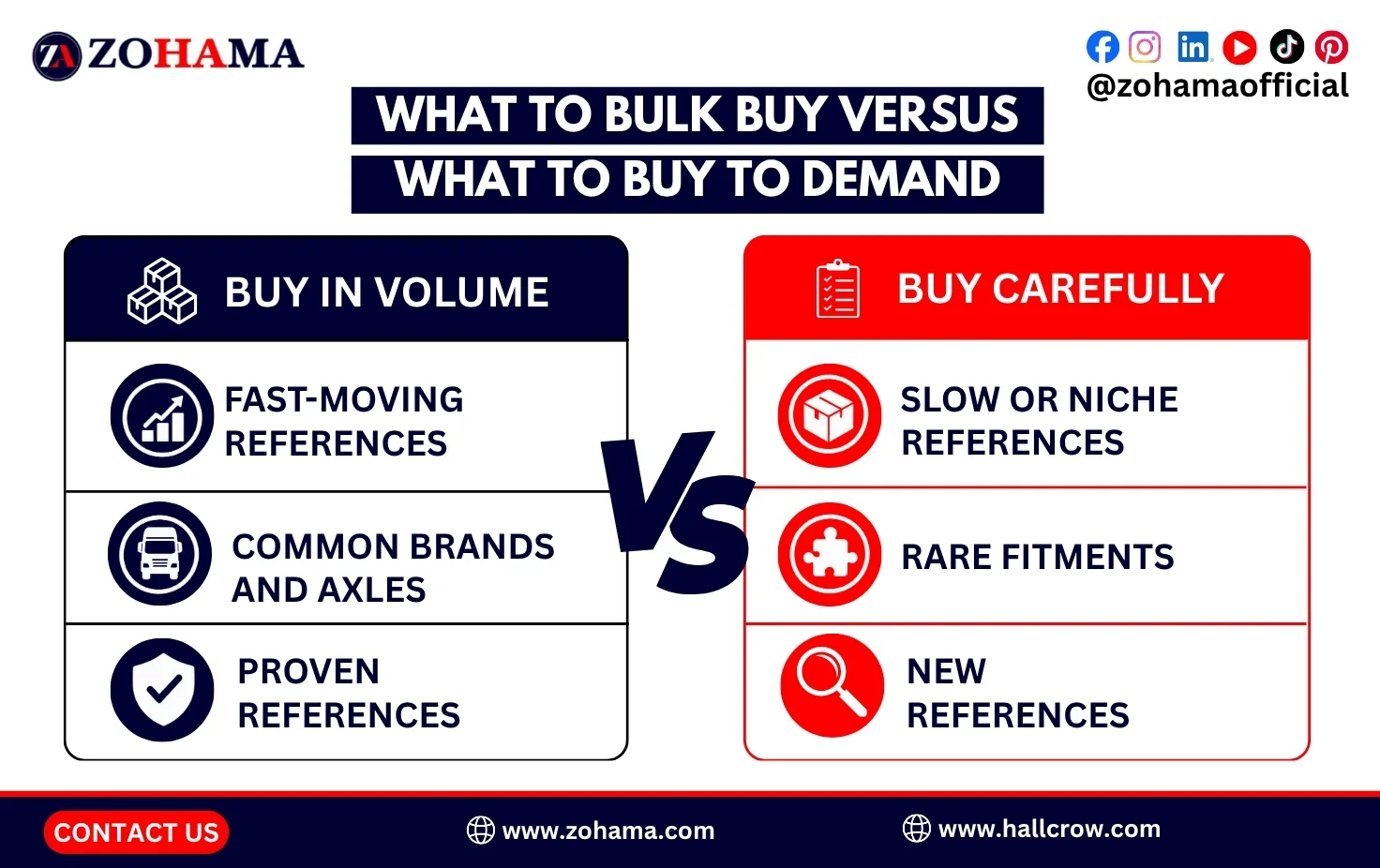
Bulk pricing is only a saving if the stock sells. Use a simple rule to decide what to buy deep and what to buy to demand:
| Buy in volume | Buy carefully |
|---|---|
| Fast-moving references your fleets replace often. | Slow or niche references where cash would be tied up in stock. |
| Common brands and axles across your market. | Rare fitments better ordered to demand. |
| Proven, tested references you trust. | New references until a sample batch is confirmed. |
Buying the fast movers deep and the rest carefully keeps cash working and shelves productive.
Confirm Quality Before You Commit to Volume
The bigger the order, the bigger the risk if quality is wrong, so never place a large commercial order on an unproven reference. Confirm a sample batch first, checking friction material, backing plate and markings, as covered in our guide on quality checks for brake pads. A tested reference is safe to buy in depth; an untested one is not.
Storage and Stock Rotation
Commercial pads are an investment on the shelf, so store them dry and rotate stock so older pads sell first. Good rotation protects the pads and keeps the bulk saving from turning into slow, ageing inventory. Plan storage space before the order lands, not after.
Build a Bulk Program with the Right Supplier
Bulk buying works best as an ongoing program with a supplier who can hold quality and supply consistently at volume, run after run. If you want a certified manufacturer with reliable capacity and factory-direct pricing, explore our distributor and partner program to request a catalogue and pricing for your market. See also our guide on choosing a heavy-duty brake pad supplier.
Frequently Asked Questions
How is bulk buying commercial pads different from car pads?
Commercial pads cost more per unit, cover a wider fitment range, and are safety-critical, so bulk orders must be matched carefully to real fleet demand rather than bought purely on price.
How do I decide what to buy in bulk?
Forecast by fleet type and duty, then buy the fast-moving references deep and slower or niche references to demand, so cash stays on parts that turn over.
Should I bulk buy a new reference?
Not before confirming a sample batch. Check quality on a small order first, then buy in depth once the reference is proven.
How do I protect a bulk order on the shelf?
Store pads dry and rotate stock so older pads sell first, and plan storage space before the order arrives.
Conclusion
Bulk buying commercial vehicle brake pads rewards planning, not just price hunting. Forecast by the fleets in your market, focus volume on the fast movers, balance bulk savings against fitment range, confirm quality before you commit, and rotate stock well. Do that with a supplier who can hold quality at volume, and bulk buying becomes a steady margin advantage rather than a gamble.