
For a fleet, brake pads are not just a safety part, they are a planning problem. Replace them too late and you risk failure and rotor damage; replace them too early and you waste money and workshop time. Getting the interval right, and spotting wear before it becomes a problem, is how a fleet keeps vehicles safe and productive. This guide covers what shortens pad life, how wear indicators work, and how to plan replacement intervals that cut downtime.
This is a maintenance companion to our sourcing guides. For product background, see our brake pads for commercial vehicles range and our heavy-duty truck brake pads page.
Why Replacement Intervals Matter to a Fleet
On a single car, a brake pad change is a small event. Across a fleet of dozens or hundreds of vehicles, it is a scheduling and cost decision that repeats constantly. A good interval strategy keeps every vehicle safe, avoids expensive rotor damage from worn-out pads, and groups replacements to minimise downtime. A poor one leads to surprise failures, off-road vehicles and lost work, so pad wear deserves proper planning.
What Shortens Pad Life
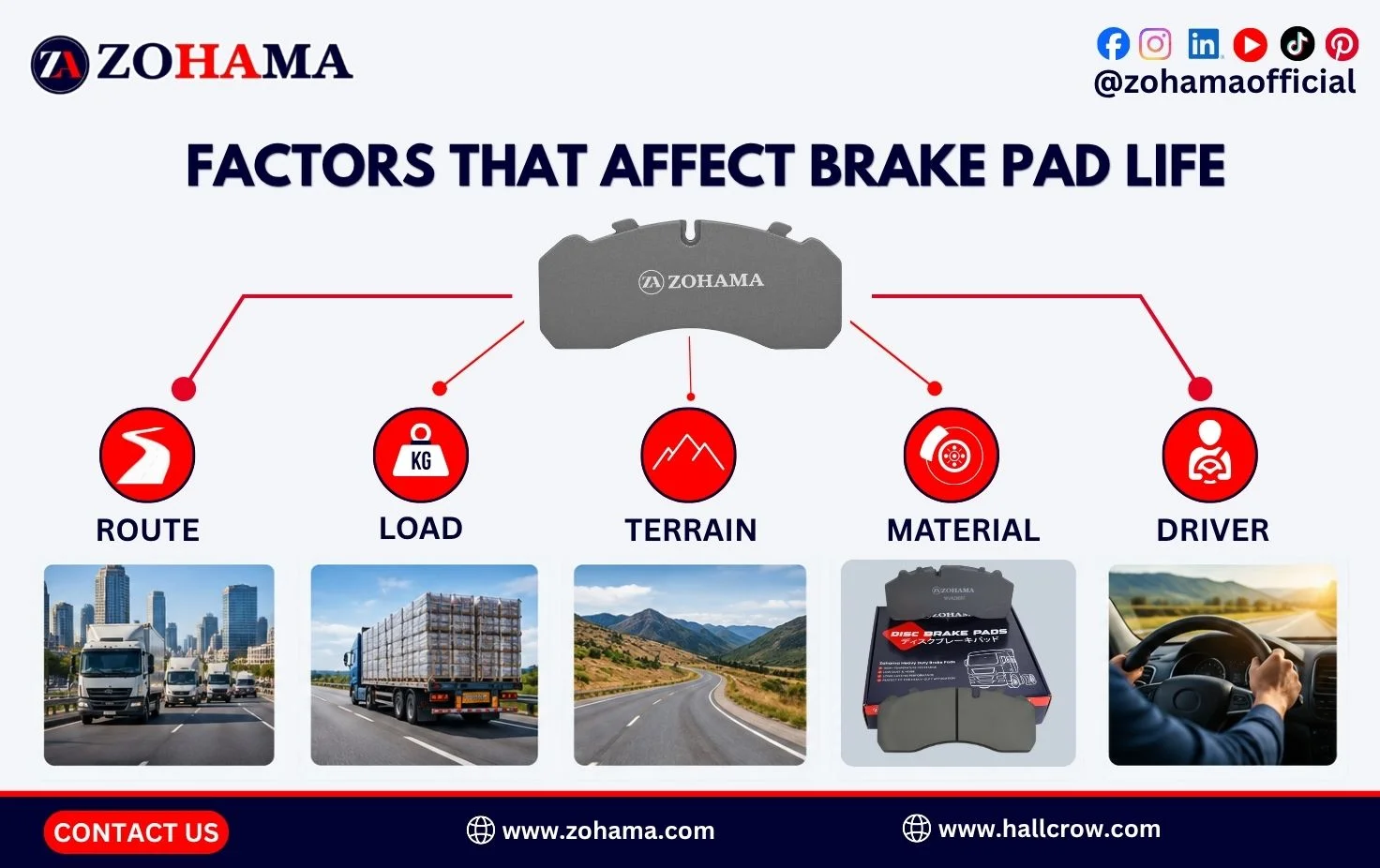
Pad life is not fixed; it depends on how and where a vehicle works:
| Factor | Effect on pad life |
|---|---|
| Route and duty | Stop-start city work wears pads far faster than steady long-haul. |
| Load | Heavier loads mean more braking energy and quicker wear. |
| Terrain and climate | Hills, heat and dust all shorten pad life. |
| Material | The right compound for the duty lasts longer and fades less. |
| Driver behaviour | Smooth, anticipatory braking extends life; hard braking cuts it. |
Because these factors vary by vehicle and route, a fleet is best planning intervals by duty rather than by a single number. Matching the right material to the duty is part of this, as covered in our guide on brake pad materials for trucks and towing.
How Wear Indicators Work
Most commercial pads include a way to signal wear. Mechanical wear indicators make a noise when the pad gets low, prompting inspection, while electronic wear sensors trigger a dashboard warning. Both are there to catch wear before the pad reaches the backing plate, where braking suffers and the rotor is damaged. For a fleet, using these indicators consistently turns pad wear from a surprise into a scheduled task.
Inspecting Pads on Schedule
Indicators are a backup, not a substitute for inspection. Build a regular visual check of pad thickness into fleet servicing, and replace pads before the friction material runs too low. Recording thickness at each service lets a fleet see how fast each vehicle wears and predict the next change, which is the foundation of interval planning.
Planning Replacement Intervals
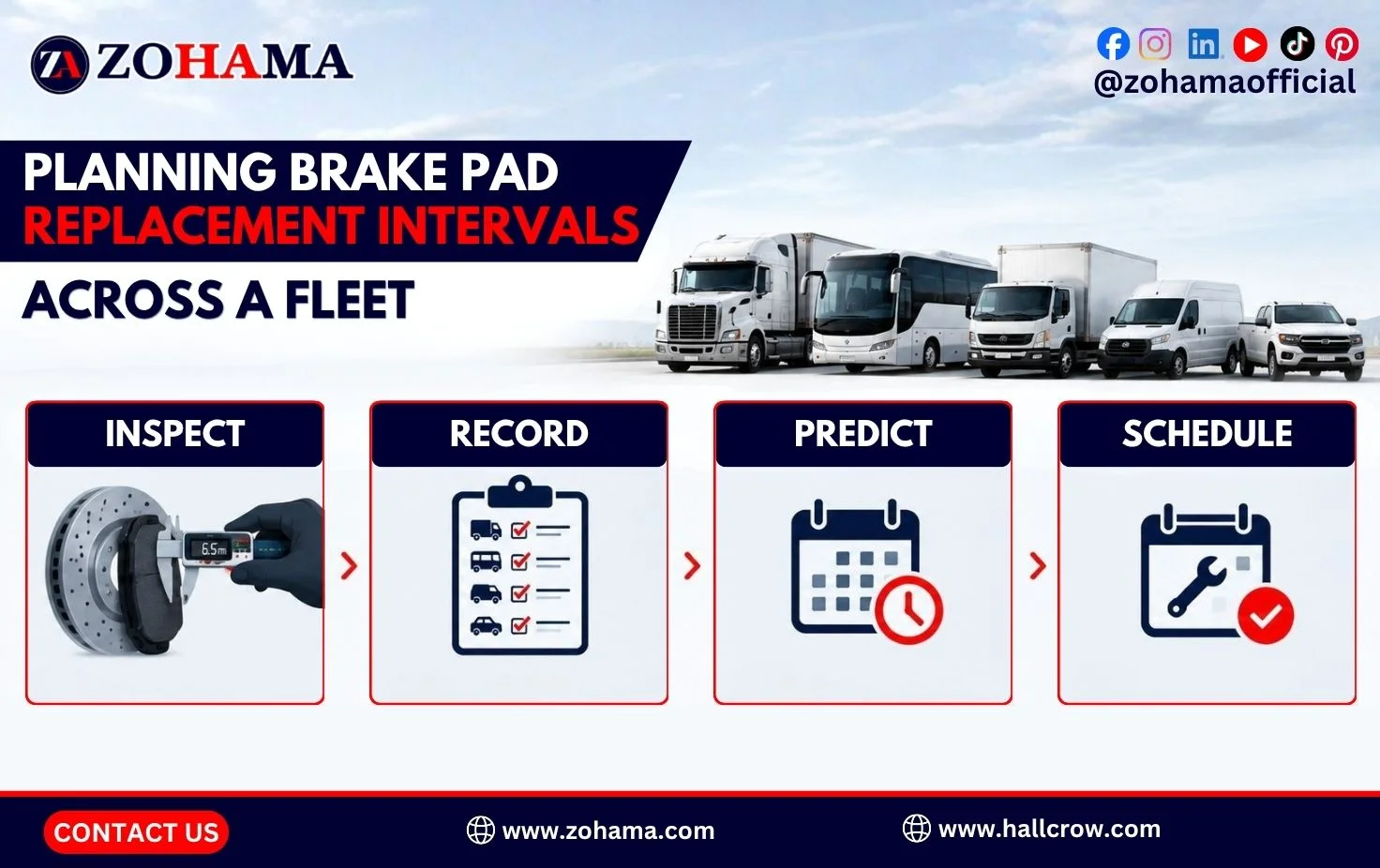
Turn inspection data into a plan. Group vehicles by duty, track how quickly each group wears, and set an interval that replaces pads before they fail while making the most of their life. Where possible, align brake pad changes with other scheduled maintenance so a vehicle comes off the road once, not twice. This is what turns pad replacement from reactive firefighting into predictable, low-cost routine.
The Role of Quality Pads in Interval Planning
Consistent pads make intervals predictable. If every batch performs and wears the same way, a fleet can trust its intervals; if quality varies, wear becomes unpredictable and planning breaks down. That is why sourcing consistent, tested pads matters for maintenance, not just for the initial purchase, as covered in our guides on quality checks for heavy-duty brake pads and choosing a heavy-duty brake pad supplier.
Reduce Downtime with a Reliable Supply Partner
Good interval planning only works if the right pads are on the shelf when a vehicle is due. A reliable supplier who holds consistent quality and stock is part of a fleet’s uptime strategy. If you want a certified manufacturer with dependable supply and full cross-reference support, explore our distributor and partner program, and identify each pad with our brake pad part-number lookup.
Frequently Asked Questions
How often should commercial brake pads be replaced?
There is no single figure; it depends on route, load, terrain, material and driving. Plan intervals by duty, using regular inspection and wear data rather than a fixed number.
How do brake pad wear indicators work?
Mechanical indicators make a noise when the pad is low, and electronic sensors trigger a dashboard warning, both catching wear before the pad reaches the backing plate and damages the rotor.
What shortens brake pad life the most?
Stop-start city duty, heavy loads, hills, heat and hard braking all shorten pad life, while the right material for the duty and smooth driving extend it.
How do quality pads help interval planning?
Consistent pads wear predictably, so a fleet can trust its intervals. Variable quality makes wear unpredictable and undermines planning.
Conclusion
For a fleet, brake pad wear is a planning discipline as much as a safety one. Understand what shortens pad life, use wear indicators and regular inspection to catch wear early, plan intervals by duty, and align changes with other maintenance. Underpin it all with consistent, quality pads and a reliable supplier, and pad replacement becomes predictable, safe and low-cost across the whole fleet.