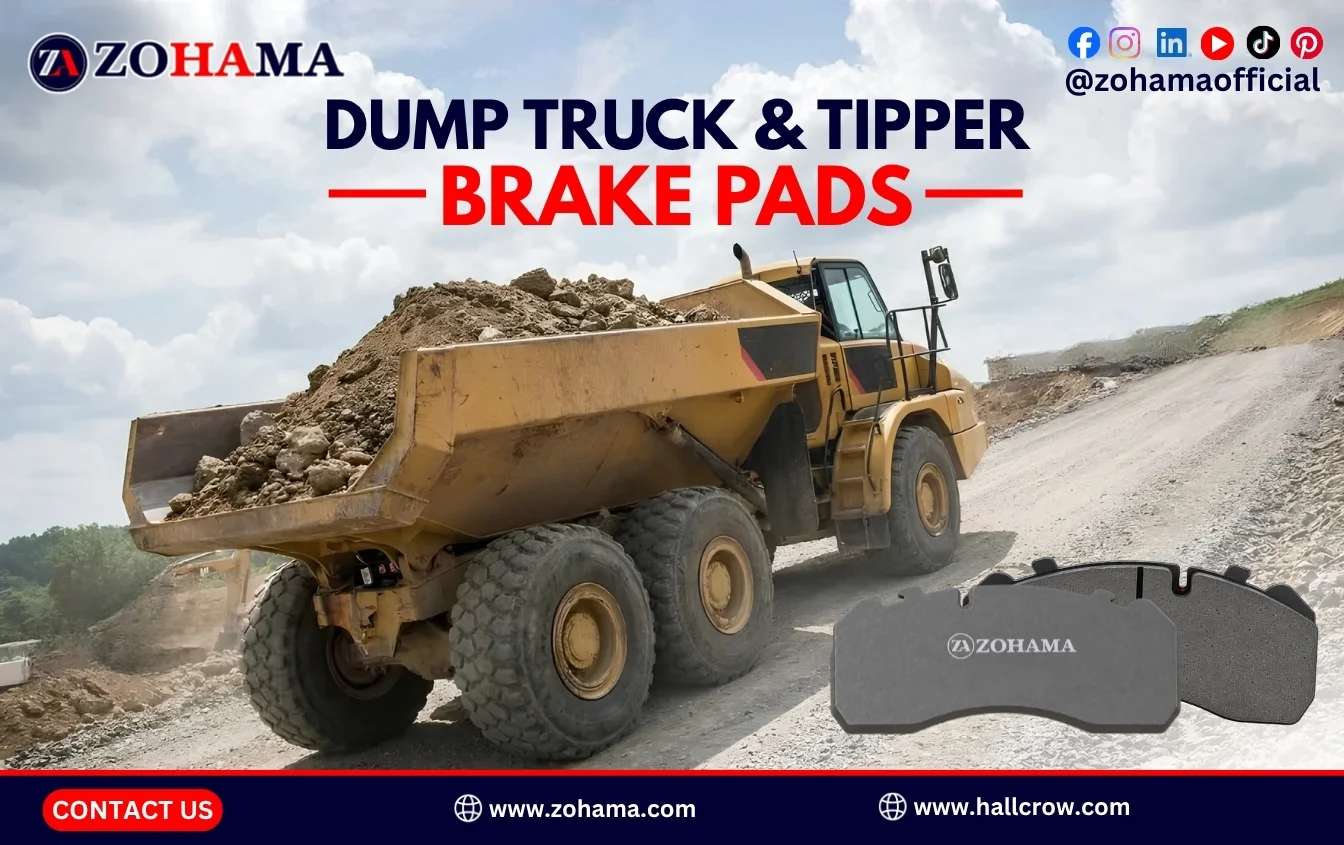
Dump trucks and tippers do some of the hardest braking on any road. Loaded with rock, sand or spoil, they haul on and off construction and mining sites, down graded haul roads, in dust and mud, all day. That punishing duty wears brake pads fast and demands a lot of them. For distributors in construction and mining regions, dump truck pads are a distinct, high-consumption line. This guide covers why their braking is extreme, what these pads need, and how to source them.
Dump trucks sit alongside other off-highway machines, so this guide pairs with our guides on heavy equipment and construction brake pads and agricultural and tractor brake pads. For the wider segment, see our heavy-duty truck brake pads page.
Why Dump Truck Braking Is Extreme
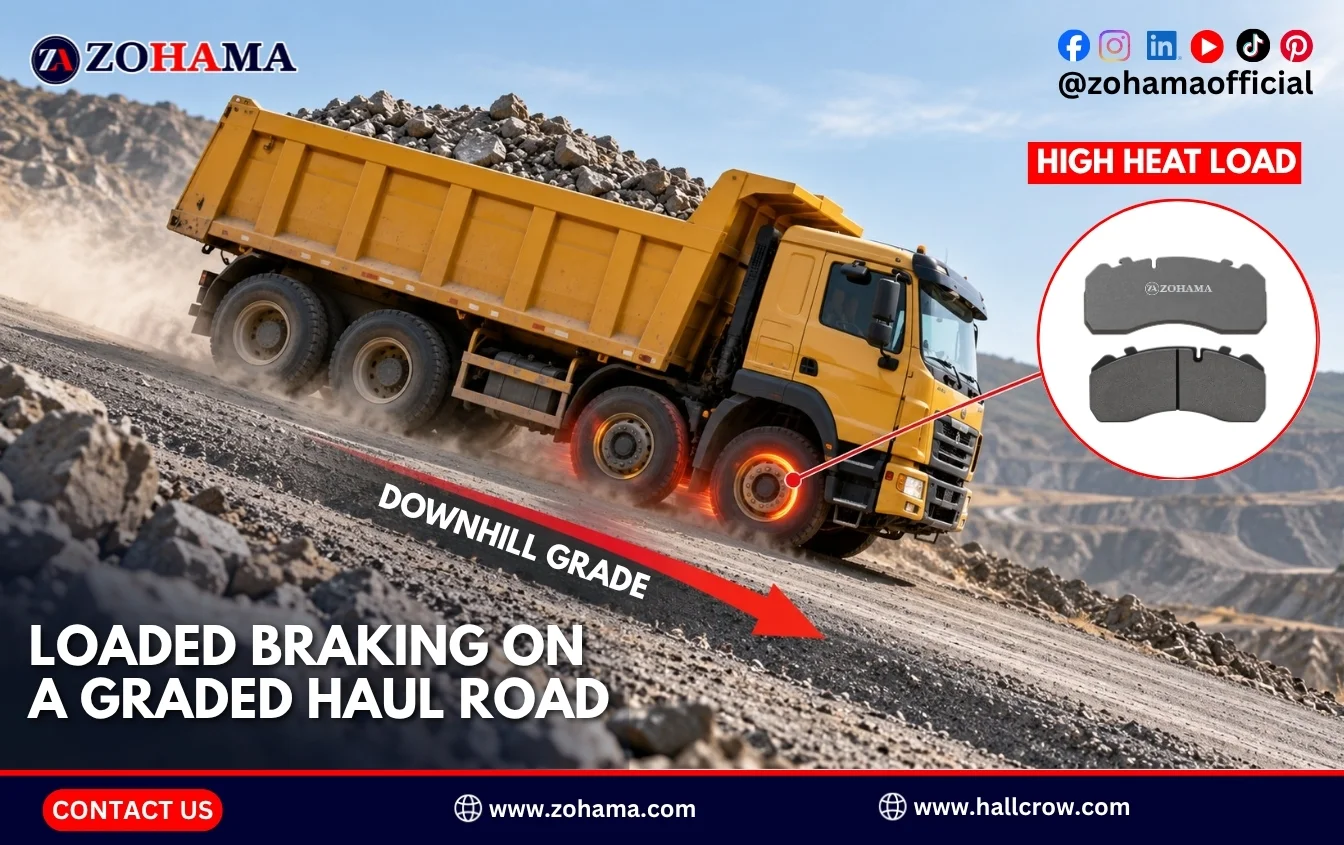
A loaded tipper descending a haul road is one of the toughest braking situations a road-going vehicle faces. The combination of full load, steep grades and repeated stops generates intense, sustained heat where brake fade is a real danger. Add site dust, mud and grit, and constant loading cycles, and it is clear why dump truck pads wear quickly and why cheap pads are a false economy on these vehicles.
The Vehicles: Tippers, Dumpers and Haulers
The segment covers a range of tipping and hauling vehicles: on-road tippers that carry aggregates to and from sites, rigid dump trucks that work within quarries and large projects, and articulated haulers that move spoil over rough ground. Each brakes under heavy load in demanding conditions, and each keeps a distributor’s dump truck line turning over.
What Dump Truck Brake Pads Need
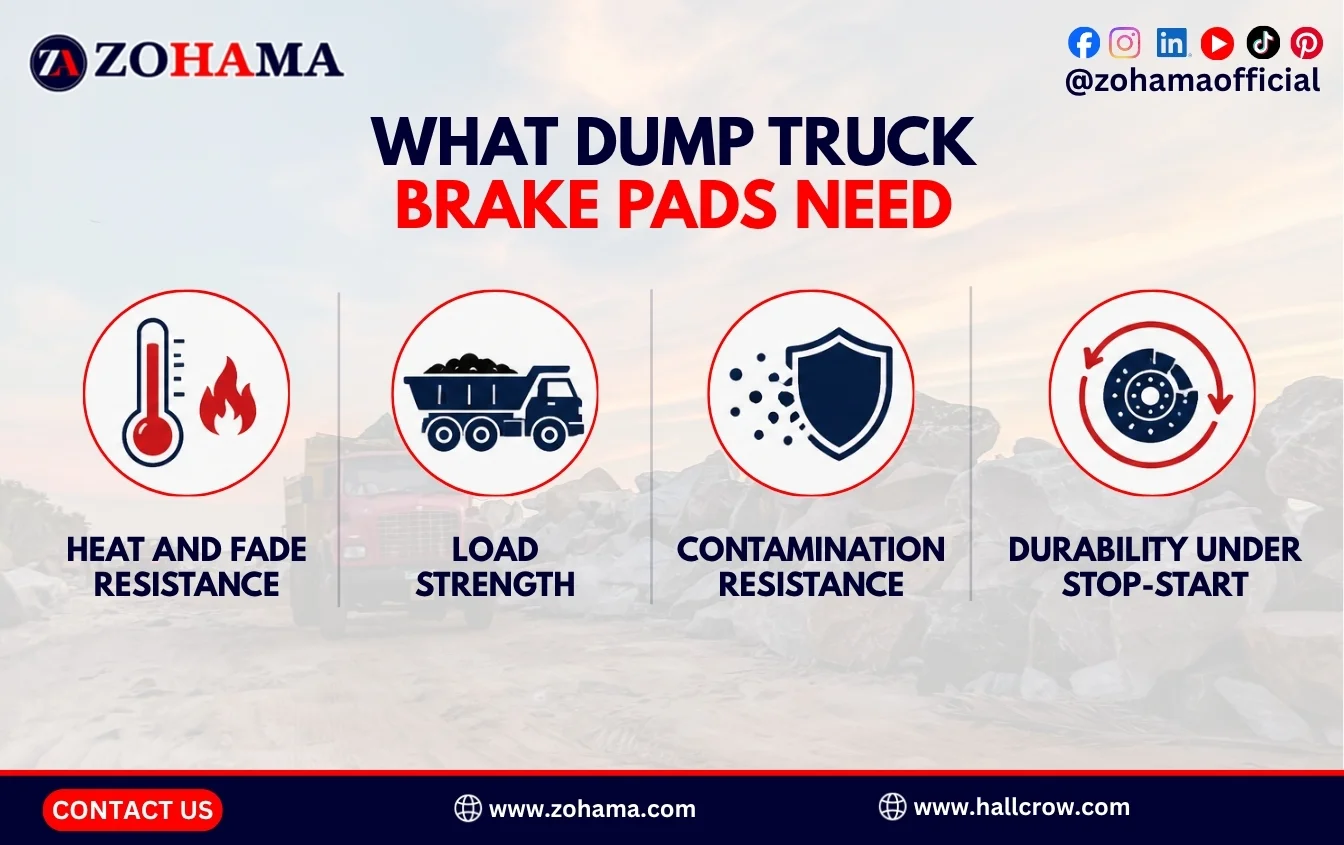
The duty sets the demands:
| Demand | Why it matters on dump trucks and tippers |
|---|---|
| Heat and fade resistance | Loaded descents on grades generate intense, sustained heat. |
| Load strength | Full loads of rock, sand or spoil demand strong, stable braking. |
| Contamination resistance | Dust, mud and grit on sites attack pads and hardware. |
| Durability under stop-start | Constant loading cycles mean frequent, heavy braking all shift. |
A pad that meets these keeps a tipper safe on grades and productive on site, shift after shift.
Which Materials Suit Them
Dump truck duty pushes hard toward tough, heat-resistant materials. Semi-metallic is the natural choice for the heat and load of graded, loaded braking, with low-metallic a strong option for mixed on-road and site work. The same heat demands apply as in our guide on high-temperature brake linings.
A Fitment and Wear Challenge
Dump trucks come from many makers and run in harsh conditions, so fitment and wear both need attention. Confirm the exact reference for each vehicle, and expect shorter replacement intervals than on-highway trucks, so plan stock around higher consumption. Robust hardware and correct shims matter more here, because dust and vibration attack every joint.
Getting Fitment Right
Identify each pad by OEM and WVA number using our brake pad part-number lookup and OEM cross-reference for commercial trucks guide, and verify against OEM brake pads specifications before ordering, since construction references are precise and varied.
Sourcing Dump Truck Pads
High consumption makes dump truck pads a strong, repeat-order line for distributors in construction and mining regions. If you want a certified manufacturer with tough, heat-resistant pads for tippers and haulers, explore our distributor and partner program to request a catalogue and pricing. See also our brake pads for commercial vehicles range.
Frequently Asked Questions
Why is dump truck braking so demanding?
Loaded tippers brake on steep, graded haul roads in dust and mud, with constant loading cycles, generating intense sustained heat where fade is a real risk.
Which vehicles does this cover?
On-road tippers, rigid dump trucks used in quarries and large projects, and articulated haulers that move spoil over rough ground.
Which material suits dump truck pads?
Semi-metallic for the heat and load of graded, loaded braking, with low-metallic a strong option for mixed on-road and site work.
How should I plan stock for dump truck pads?
Expect shorter replacement intervals than on-highway trucks, so plan for higher consumption and keep the fast movers in stock.
Conclusion
Dump trucks and tippers brake harder than almost anything on the road, and their pads pay the price in wear. Match tough, heat-resistant materials to graded, loaded duty, expect shorter intervals and plan stock for high consumption, insist on robust hardware, and confirm fitment by OEM and WVA number. Do that and dump truck pads become a strong, repeat-order line in any construction or mining market.