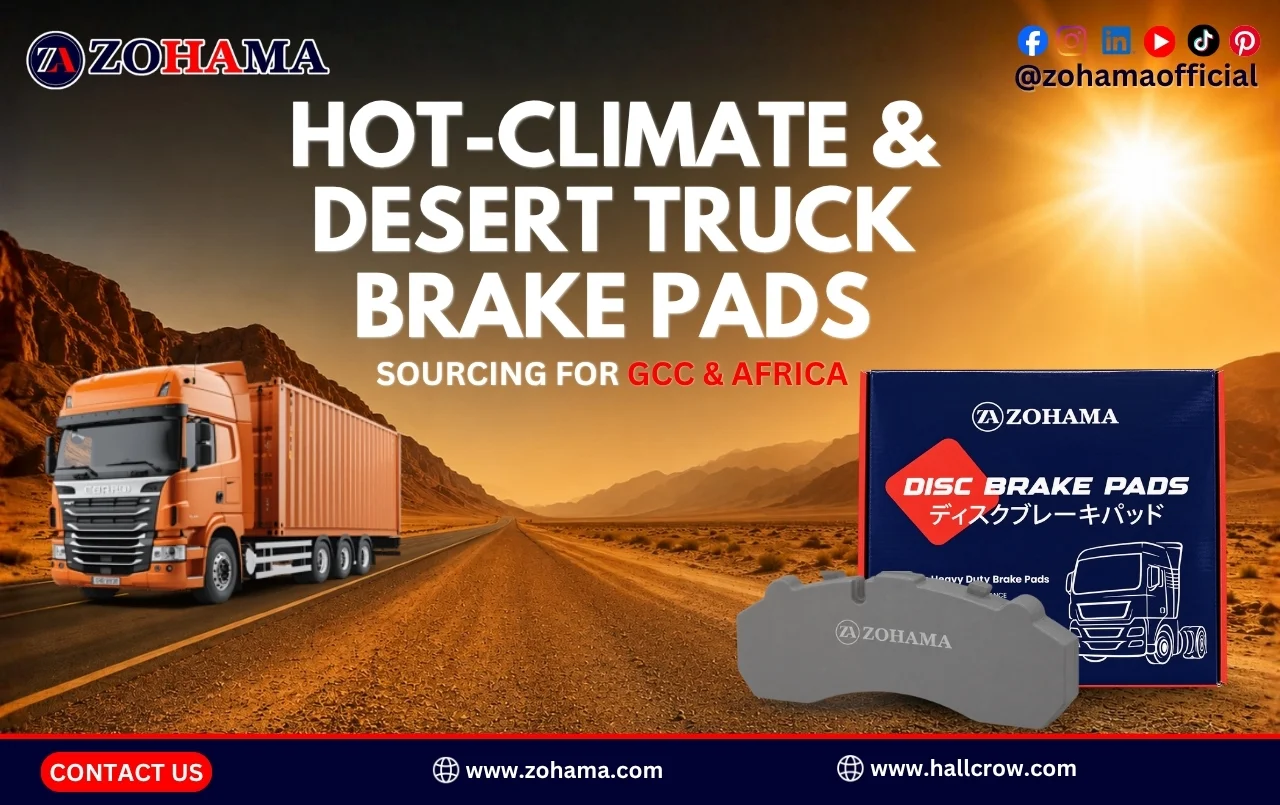
In the GCC and much of Africa, heat is the defining challenge for a truck’s brakes. A commercial vehicle working across the desert faces extreme ambient temperatures on top of the heat its own braking generates, and a pad that cannot cope will fade when it is needed most. For distributors serving these markets, heat-resistant truck brake pads are not a niche line, they are the standard the market demands. This guide covers what hot-climate conditions require, which materials handle heat best, and how to source pads that perform where temperatures are highest.
These pads sit at the demanding end of the commercial range. For the wider segment, see our heavy-duty truck brake pads page and our guide on sourcing heavy-duty brake pads from China.
Why Heat Is the Enemy in Hot-Climate Markets
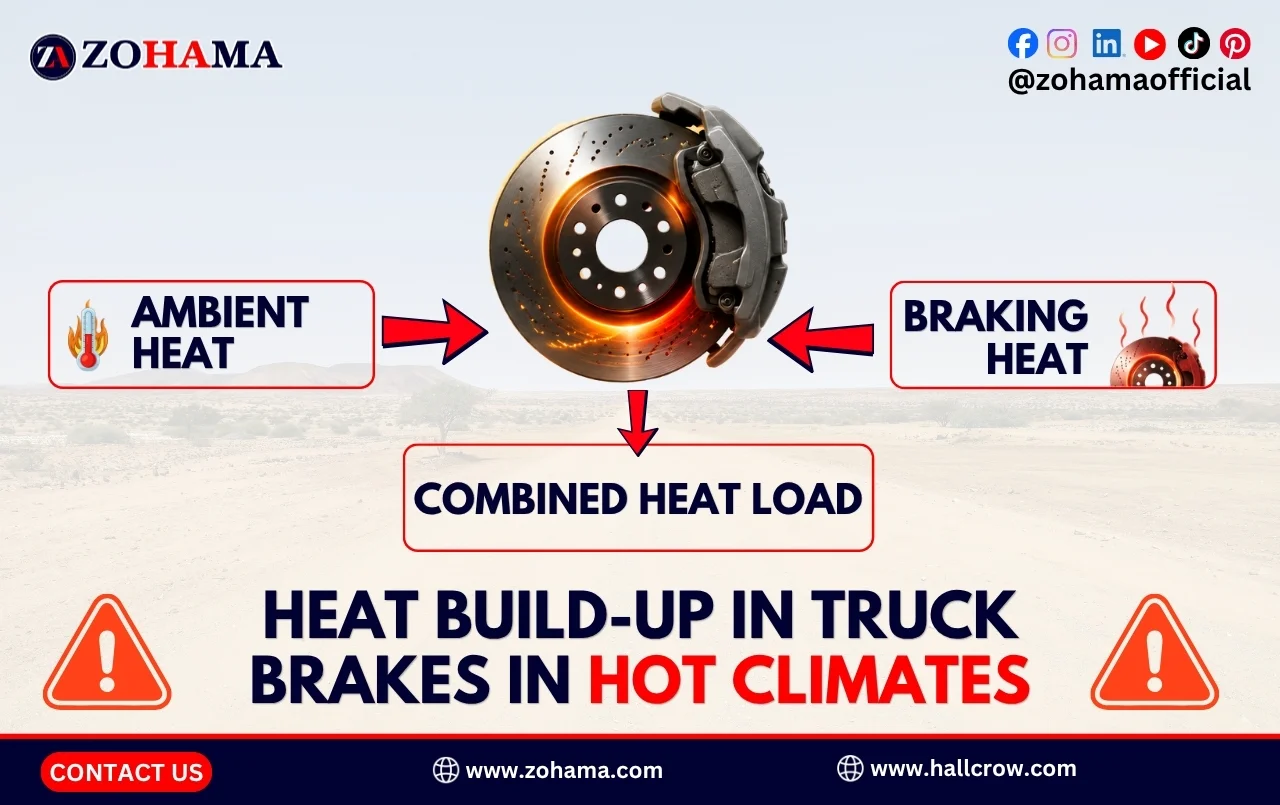
Braking turns motion into heat, and in a hot climate that heat has nowhere to go. When ambient temperatures are already high, the friction material runs hotter and reaches its limit sooner. Past that limit, brake fade sets in and stopping power drops, which on a loaded truck is a serious safety risk. In desert markets, heat management is the single most important quality in a brake pad.
What Desert and Hot-Climate Trucks Demand
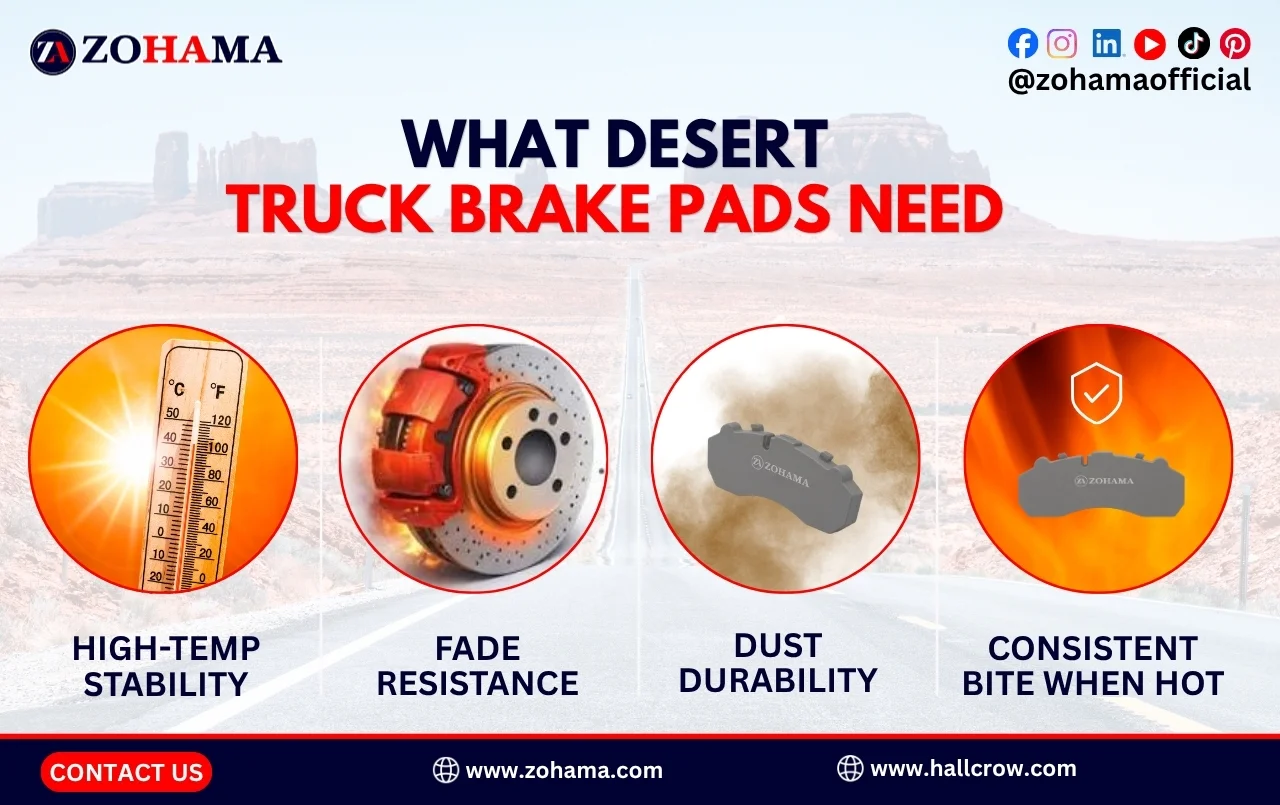
Trucks working in the heat place a specific set of demands on their pads:
| Hot-climate demand | Why it matters in the desert |
|---|---|
| High-temperature stability | Ambient heat plus braking heat pushes pads toward their limit, so the friction material must stay stable when hot. |
| Fade resistance | Long desert descents and heavy loads cause fade in weaker pads, losing stopping power. |
| Durability in dust | Sand and dust are abrasive, so pads and hardware must withstand harsh conditions. |
| Consistent bite when hot | Braking must feel the same at high temperature as when cool, for driver confidence and safety. |
A pad that meets all four is what a hot-climate fleet needs, and it is why sourcing for these markets deserves special attention.
The GCC and Africa Context
Heat-resistant pads are a real commercial opportunity because the demand is large and constant. Across the GCC and Africa, trucks run long desert routes in high ambient heat, construction and haulage fleets work hard year round, and a desert climate is punishing on every part. Distributors who stock pads proven for heat serve fleets that cannot afford fade, which makes this a line worth building rather than an afterthought.
Which Materials Handle Heat Best
Heat pushes hot-climate demand firmly toward tougher friction materials. Semi-metallic pads lead here for their heat handling and stability under sustained load, with low-metallic also used for strong, consistent braking at temperature. Comfort-focused materials rarely suit desert commercial use. Our brake pad materials breakdown explains how each behaves when hot.
Getting Fitment Right
Heat performance only helps if the pad fits, so confirm every reference. Identify each commercial pad by OEM and WVA number using our WVA numbers for commercial brake pads guide and brake pad part-number lookup, and verify against OEM brake pads specifications before ordering.
What Hot-Climate Fleets Want from a Supplier
Fleets in these markets buy on proven performance in the heat:
- Heat-tested pads, with data showing stable performance at high temperature.
- Durability, to withstand dust, sand and hard use.
- Reliable availability, so trucks are not parked waiting for parts in a demanding operating environment.
Sourcing Heat-Resistant Pads
Because heat performance is safety-critical here, source from a supplier who tests for it and confirm quality on every batch. Approve a sample as your reference standard and check batches against it, as covered in our quality checks for brake pads. Confirm a supplier can deliver consistently to your market using our guide on choosing a brake pad supplier.
Build Your Hot-Climate Range
Heat-resistant truck pads are a high-demand line in the GCC and Africa, and stocking them well sets a distributor apart in these markets. If you want a certified manufacturer with heat-tested coverage for commercial vehicles, explore our distributor and partner program to request a catalogue and pricing for your market. See also our brake pads for commercial vehicles range.
Frequently Asked Questions
Why do hot climates need special truck brake pads?
High ambient heat adds to the heat braking already generates, pushing pads to their limit sooner. Without good heat management the pad fades and loses stopping power, which is a serious risk on a loaded truck.
Which material is best for desert conditions?
Semi-metallic leads for heat handling and stability under load, with low-metallic also used for strong, consistent braking at temperature. Comfort-focused materials rarely suit desert commercial use.
Where is demand for these pads strongest?
Across the GCC and Africa, where trucks run long desert routes in high heat and construction and haulage fleets work hard year round. It is a large, constant commercial demand.
How do I source heat-resistant pads with confidence?
Source from a supplier who tests for heat performance, ask for data, and check quality on every batch against an approved sample. Confirm the supplier can deliver reliably to your market.
Conclusion
In the GCC and Africa, heat decides whether a truck brake pad performs or fails, so it must sit at the centre of every sourcing decision. Prioritise proven high-temperature stability and fade resistance, choose tough materials built for the heat, confirm fitment by OEM and WVA number, and buy from a supplier who tests for these conditions. Do that and heat-resistant truck pads become a standout line for the markets that need them most.