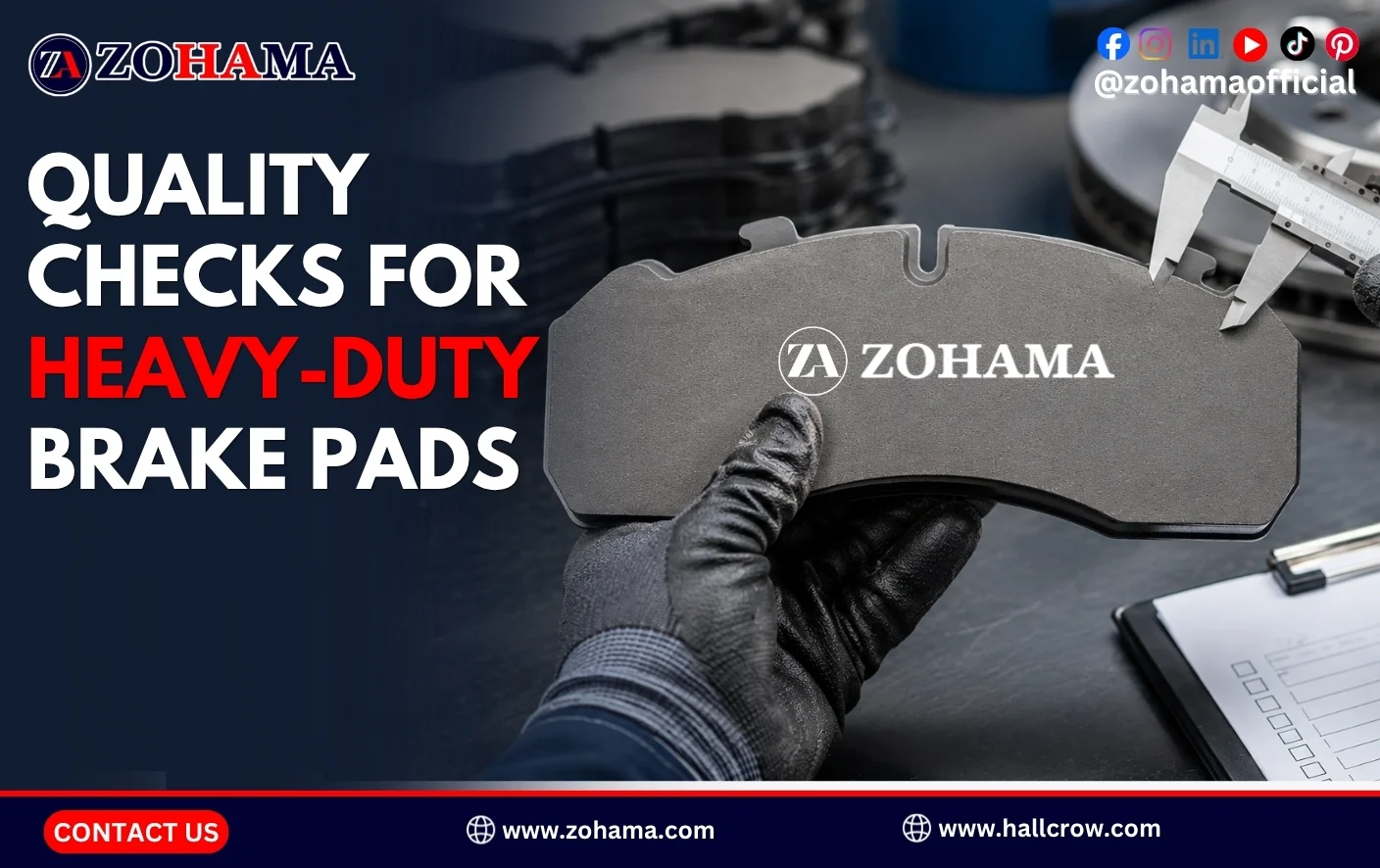
Quality checks matter on every brake pad, but on heavy-duty pads they matter most, because these pads stop loaded trucks and buses where a failure is a hazard, not just a return. For a distributor, a simple, consistent inspection routine is the difference between a reliable line and a reputation problem. This guide sets out what to inspect on heavy-duty brake pads, what good looks like, and how to build incoming inspection into your buying.
The inspection basics in our guide on quality checks for brake pads apply here, with more focus on load-bearing strength and certification. For the wider segment, see our heavy-duty truck brake pads page.
Why Heavy-Duty Quality Checks Matter More
A heavy pad works under far more heat and load than a car pad, so any weakness shows up faster and with worse consequences. A poor bond, a weak backing plate or an inconsistent batch can lead to fade, failure or brake fade under exactly the conditions heavy vehicles face. That is why heavy-duty pads deserve a closer, more disciplined inspection than any lighter product.
What to Inspect
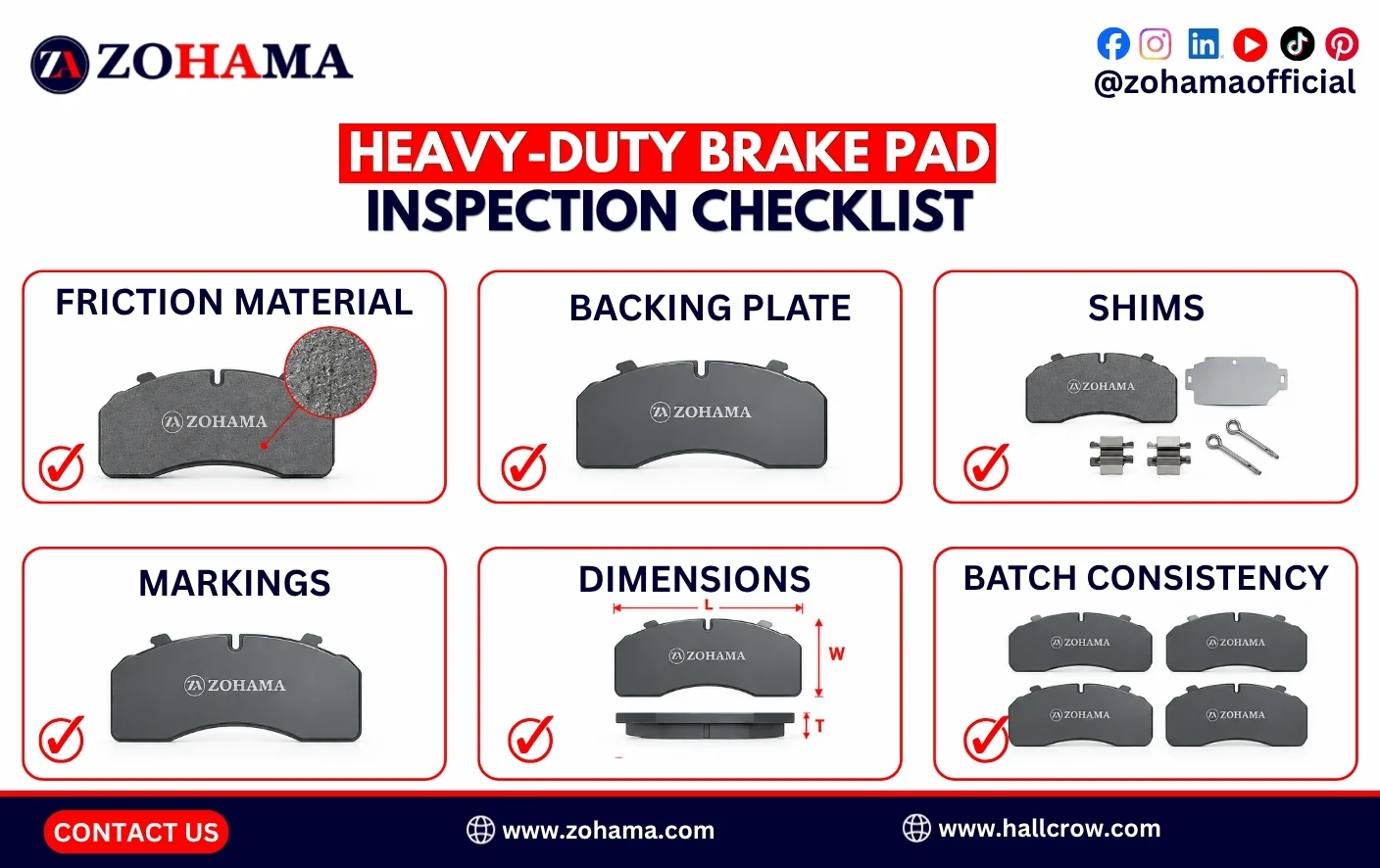
Run every heavy-duty pad against these six checks before it reaches your customers:
| Check | What good looks like |
|---|---|
| Friction material & bond | Even, well-formed material bonded firmly to the plate, no cracks or gaps. |
| Backing plate | Strong, clean, corrosion-protected plate, correct thickness. |
| Shims & hardware | Shims and fittings present and correctly fitted where specified. |
| Markings & certification | Clear WVA number and ECE R90 marking on the pad. |
| Dimensions | Match the stated size for exact caliper fit. |
| Batch consistency | Every pad in the batch matches the approved sample. |
A pad that passes all six is ready to sell with confidence; one that fails any should be held and raised with the supplier.
Check the Friction Material and Bond
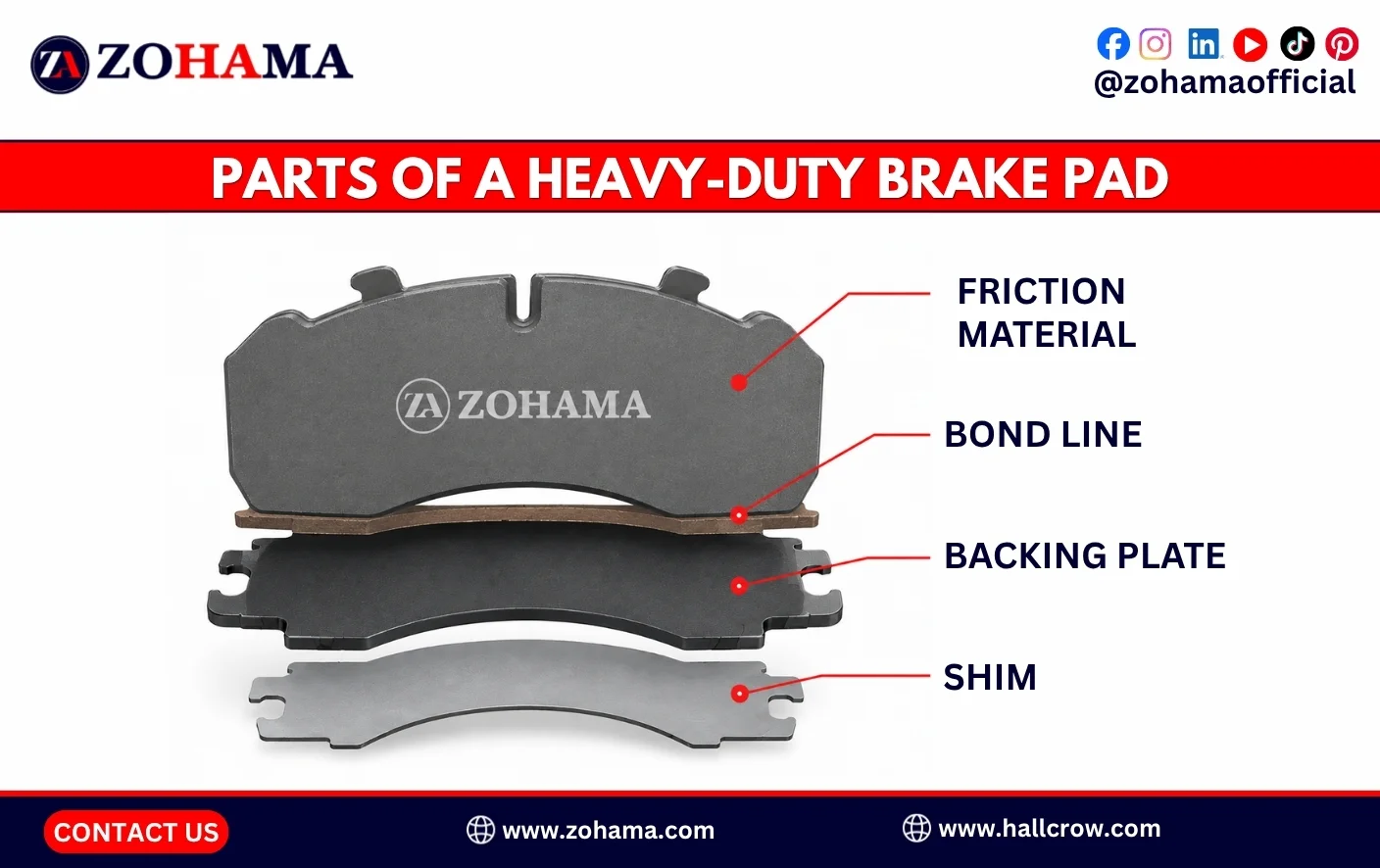
Start with the friction material. It should be even and well formed, with no cracks, chips or uneven edges, and bonded firmly to the backing plate with no gaps. The bond is critical on heavy pads, because heat and load put it under constant stress. The material itself should match the grade you ordered, as covered in our guide on brake pad materials for trucks and towing.
Check the Backing Plate
The backing plate carries the load, so inspect it closely. It should be strong, clean and corrosion-protected, of the correct thickness, with a secure bond to the friction material. On heavy pads, some designs use a mesh or hooked plate for extra shear strength; whatever the design, the plate should show no rust, warping or weak bonding.
Verify Markings and Certification
Genuine heavy-duty pads carry their identification and certification on the pad. Check for a clear WVA number and the ECE R90 marking, which confirms the pad meets the international replacement standard. Cross-check the WVA number against the fitment using our WVA numbers for commercial brake pads guide, so the marking matches the vehicle it is sold for.
Check Dimensions and Fitment
Measure the pad against its stated dimensions. Even a small deviation can stop a heavy pad seating correctly in the caliper, so confirm length, width and thickness match the specification. Verify the reference against OE data using our brake pad part-number lookup and OEM cross-reference for commercial trucks guides.
Check Batch Consistency
A single good sample is not enough. The real test is whether every pad in the batch matches the approved sample, run after run. Inspect a spread across the batch, not just the top of the box, and watch for variation in material, plate or finish. Consistency is the mark of a real manufacturer with quality control, and its absence is a warning sign.
Set Up Incoming Inspection
Turn these checks into a routine. A short incoming-inspection step on every delivery, checking a sample against the six points above, catches problems before they reach customers and builds a record you can raise with suppliers. This discipline is part of choosing well in the first place, as covered in our guide on choosing a heavy-duty brake pad supplier.
Source from a Supplier Who Tests
The best quality check is buying from a manufacturer who tests before shipping, so most of the work is already done. If you want a certified manufacturer with tested heavy-duty friction and consistent batches, explore our distributor and partner program to request a catalogue and pricing. See also our brake pads for commercial vehicles range.
Frequently Asked Questions
Why do heavy-duty pads need closer quality checks?
They work under more heat and load and stop loaded vehicles, so any weakness in bond, plate or consistency shows up faster and with worse consequences than on car pads.
What should I check on a heavy-duty brake pad?
Friction material and bond, backing plate, shims and hardware, WVA and ECE R90 markings, dimensions, and batch consistency.
What does the ECE R90 marking mean?
It confirms the pad meets the international standard for replacement brake pads. A genuine heavy-duty pad should carry a clear ECE R90 marking and WVA number.
How do I check batch consistency?
Inspect a spread of pads across the batch, not just the top of the box, and confirm every pad matches the approved sample in material, plate and finish.
Conclusion
On heavy-duty brake pads, quality checks are not paperwork, they are safety. Inspect the friction material and bond, the backing plate, the markings, the dimensions and the batch consistency, and build a short incoming-inspection routine into every delivery. Do that, and buy from a manufacturer who tests before shipping, and your heavy-vehicle line stays reliable, safe and trusted.