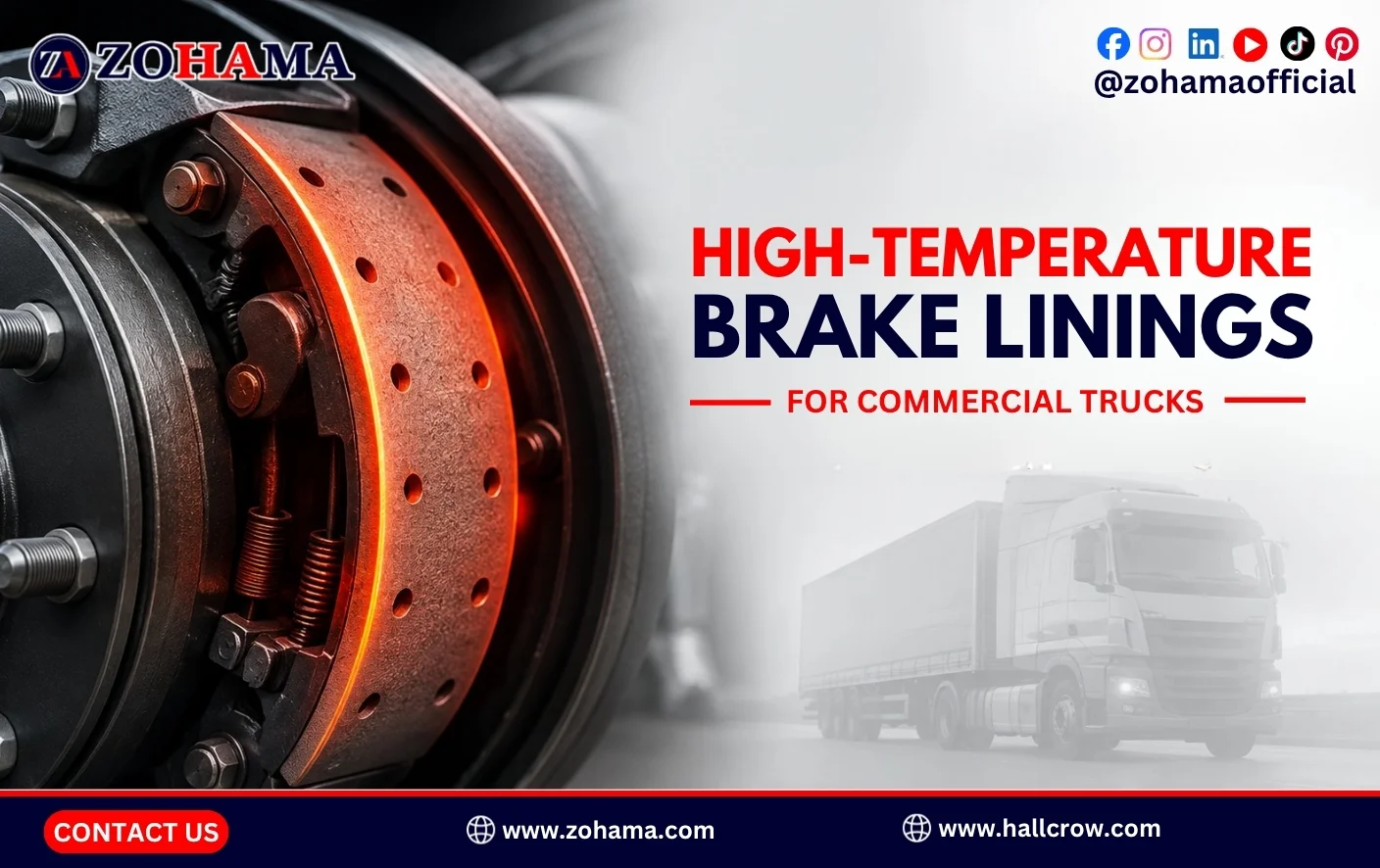
Heat is what separates a good commercial brake lining from a dangerous one. A truck braking under a heavy load turns huge amounts of energy into heat, and the friction lining has to keep working as its temperature climbs. A lining that loses grip when hot is not just a performance problem, it is a safety failure. For distributors serving demanding commercial duty, high-temperature brake linings are a line worth understanding well. This guide explains why heat performance matters, what to look for in a lining, and how to source for the hardest working trucks.
These linings sit at the demanding end of the commercial range. For the wider segment, see our heavy-duty truck brake pads page and our guide on brake pad materials for trucks and towing.
Why Heat Performance Decides a Truck Lining
Every time a truck brakes, friction converts motion into heat. Under a full load, on a long descent, or with repeated stops, that heat builds faster than it can escape, and the lining runs hot. If the friction material cannot hold its grip at temperature, brake fade sets in and stopping power drops. On a loaded commercial vehicle this is a serious hazard, which is why high-temperature performance is the first thing to judge in a truck lining.
What a High-Temperature Lining Delivers
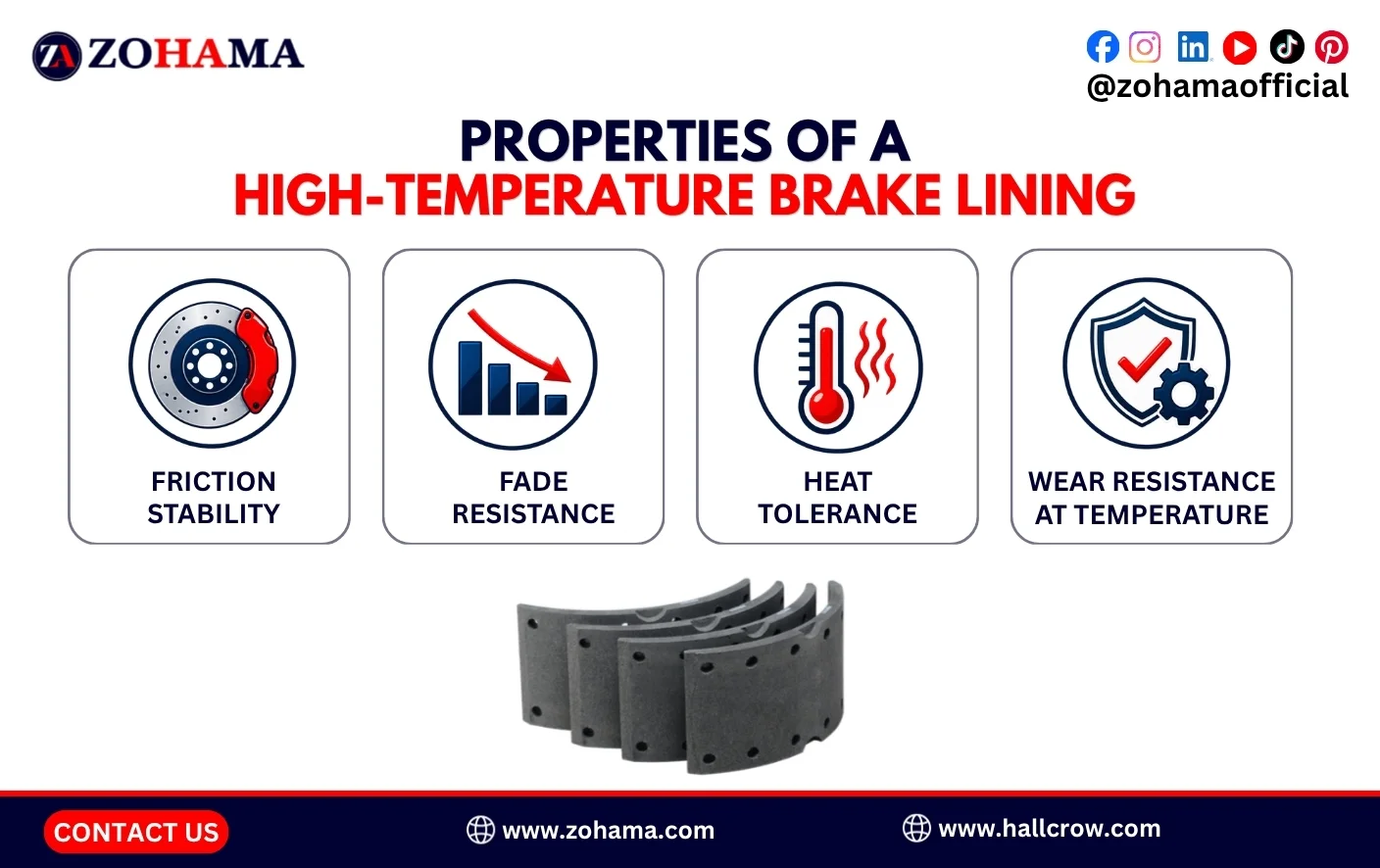
A lining built for heat is defined by four properties working together:
| Property | What it means for a truck |
|---|---|
| High friction stability | The lining holds its grip as it heats, so braking stays predictable under load. |
| Fade resistance | Performance does not drop away on long, loaded descents. |
| Heat tolerance | The material withstands repeated high-temperature cycles without breaking down. |
| Wear resistance at temperature | The lining lasts even when running hot, protecting service life. |
Together these keep braking safe and predictable in exactly the conditions that defeat a weaker lining.
Where High-Temperature Linings Are Needed
Not every truck works its brakes equally hard, but many do, and these are the duties that demand heat-tolerant linings:
- Loaded long-haul, especially on hilly or mountain routes with long descents.
- Heavy and severe duty, where loads are at the top of the vehicle’s rating.
- Hot climates, where ambient heat adds to braking heat, as covered in our guide on hot-climate and desert truck brake pads.
- Frequent-stop operation, where brakes have little time to cool between stops.
Which Materials Deliver High-Temperature Performance
Heat tolerance points firmly toward the tougher friction materials. Semi-metallic leads for its heat handling and stability under sustained load, with low-metallic also strong at temperature. Comfort-focused materials rarely suit this duty. Our brake pad materials breakdown explains how each behaves as it heats.
How to Source High-Temperature Linings
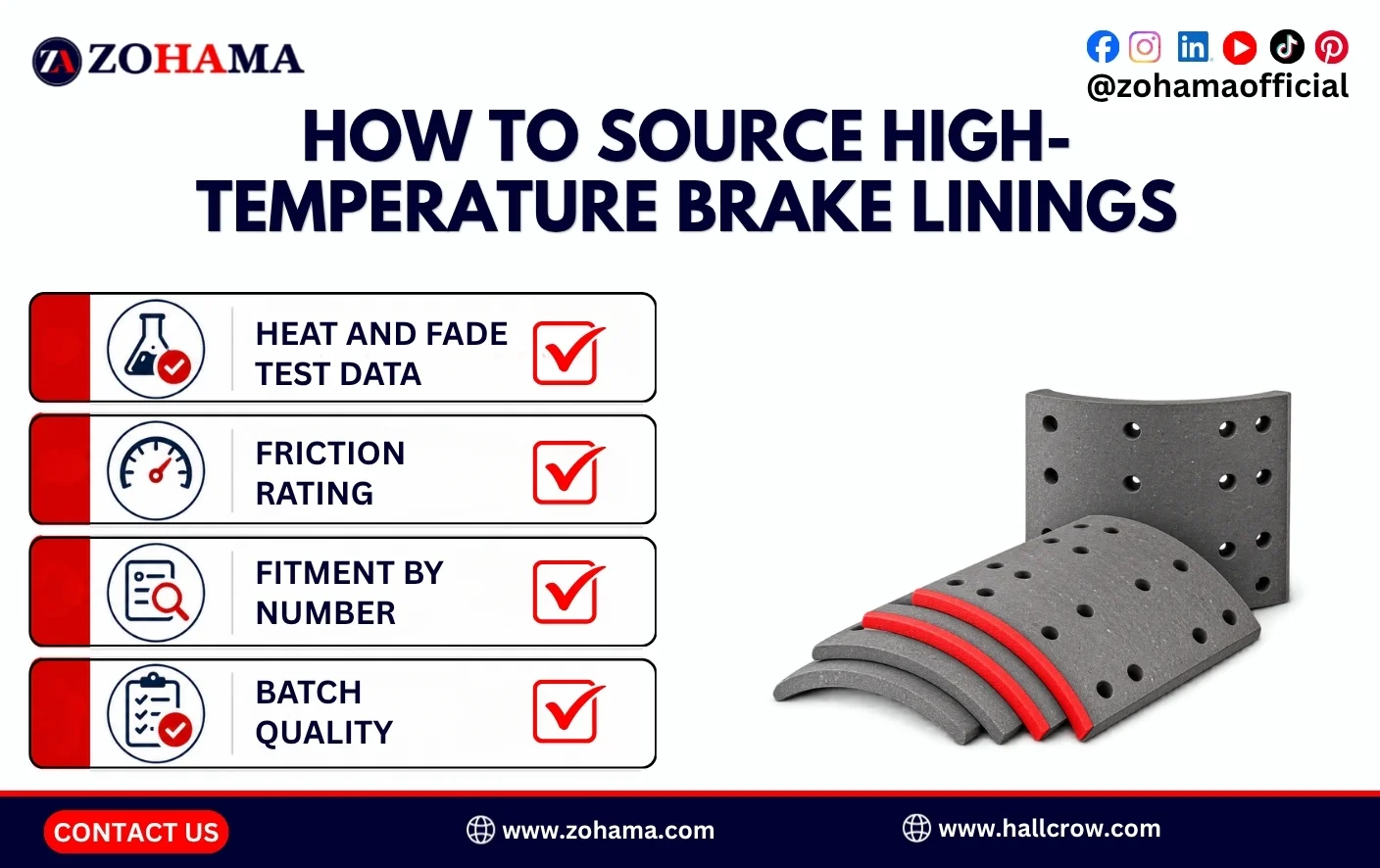
Because heat performance is safety-critical, source it deliberately:
- Ask for heat and fade test data, not just a general durability claim.
- Confirm the friction rating and material suit the duty and load.
- Match fitment by OEM and WVA number, using our brake pad part-number lookup.
- Check quality on every batch, as covered in our quality checks for brake pads.
Serve Demanding Duty with the Right Range
High-temperature linings are what serious commercial fleets rely on, and stocking them well marks a distributor as a supplier for demanding duty. If you want a certified manufacturer with heat-tested friction for commercial vehicles, explore our distributor and partner program to request a catalogue and pricing for your market. See also our brake pads for commercial vehicles range.
Frequently Asked Questions
Why do commercial trucks need high-temperature linings?
Braking under load generates heat faster than it can escape, so the lining runs hot. If it cannot hold its grip at temperature, braking fades and stopping power drops, which is a serious hazard on a loaded truck.
What makes a lining good at high temperature?
High friction stability, fade resistance, heat tolerance and wear resistance at temperature, working together so braking stays safe and predictable when the lining is hot.
Which duties need heat-tolerant linings most?
Loaded long-haul on hilly routes, heavy and severe duty, hot climates, and frequent-stop operation where brakes have little time to cool.
How do I source high-temperature linings with confidence?
Ask for heat and fade test data, confirm the friction rating and material suit the duty, match fitment by OEM and WVA number, and check quality on every batch.
Conclusion
For commercial trucks, heat is the true test of a brake lining. Judge high-temperature stability and fade resistance first, choose tough materials built for the heat, match fitment carefully, and source from a supplier who tests for these conditions. Do that and high-temperature linings become a line that serves the hardest working trucks safely, and marks you as a supplier for demanding duty.