A bulk order multiplies quality, both good and bad. One weak batch of car brake pads can turn into returns, warranty claims and lost customers across your whole market. Checking quality before the container ships is the cheapest insurance a distributor can buy. This guide sets out exactly what to check, when to check it, and which standards to ask for, so every bulk import arrives at the quality you approved.
This follows on from choosing the right partner and planning the order. If you have not covered those yet, see our guides on choosing a passenger car brake pad supplier and bulk buying car brake pads.
Why Quality Checks Matter Before a Bulk Import
Skipping inspection to save time is a false economy. Strong quality control protects three things at once:
- Your reputation. Safety-critical parts that fail damage customer trust fast.
- Your cash. A rejected or unsellable batch ties up capital you cannot recover easily.
- Your supplier relationship. Clear quality standards set expectations that make every future order smoother.
What a Quality Passenger Car Brake Pad Looks Like
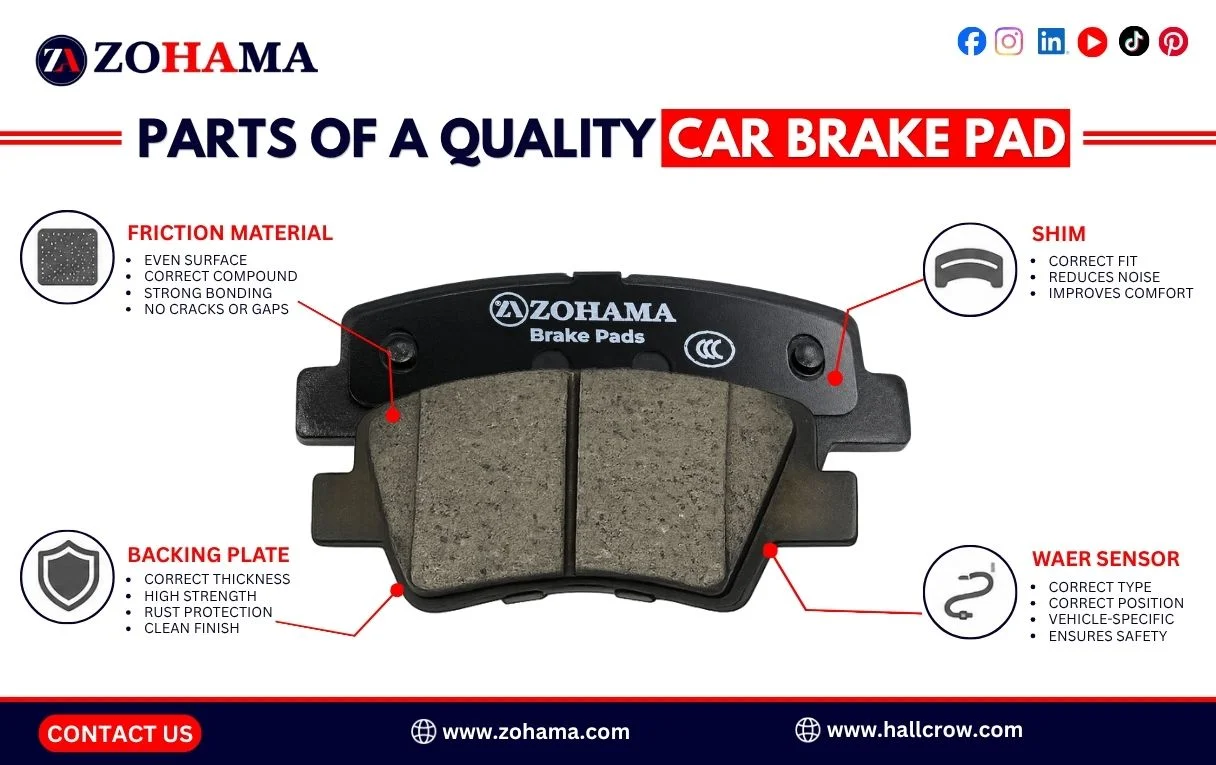
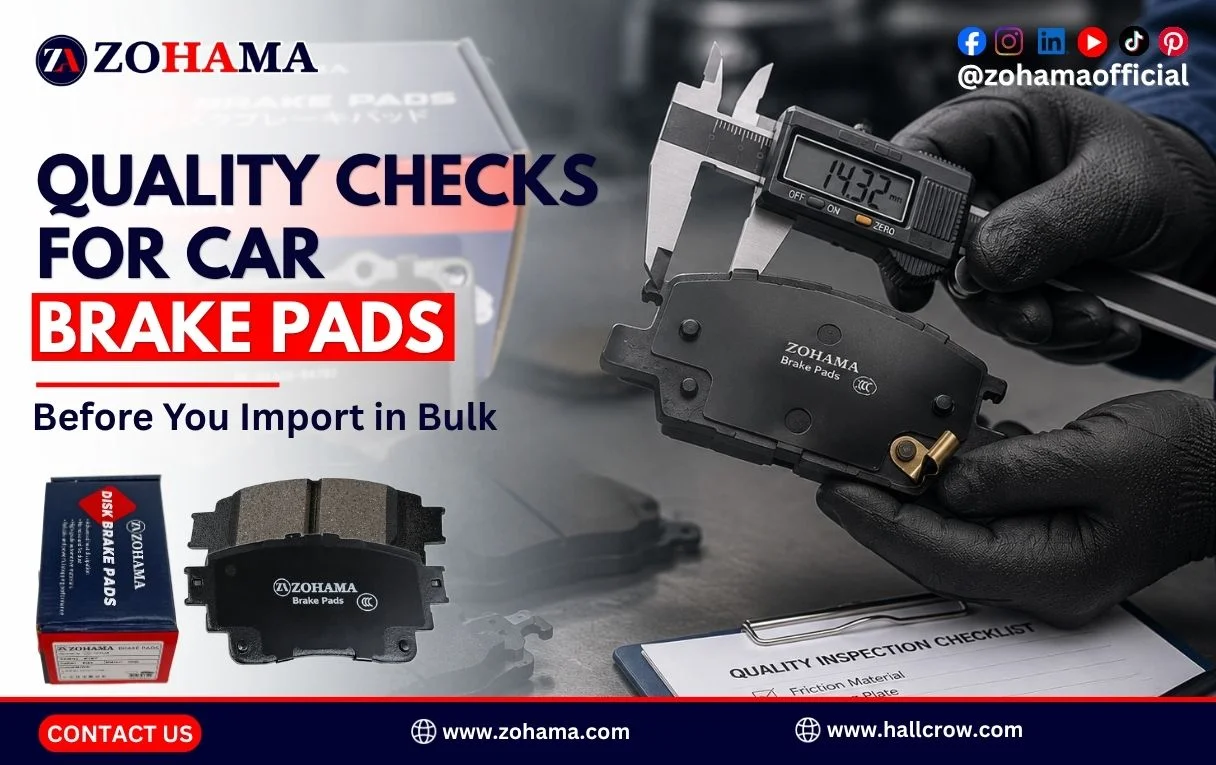
Before you can inspect, you need to know what “good” looks like. A quality pad has friction material that is evenly formed and firmly bonded to a properly finished backing plate, with the correct shim, hardware and wear sensor for its application. Our brake pad materials breakdown explains how the compound affects performance, and the OEM brake pads page shows how an OE-matched pad is built.
The Quality Check Stages
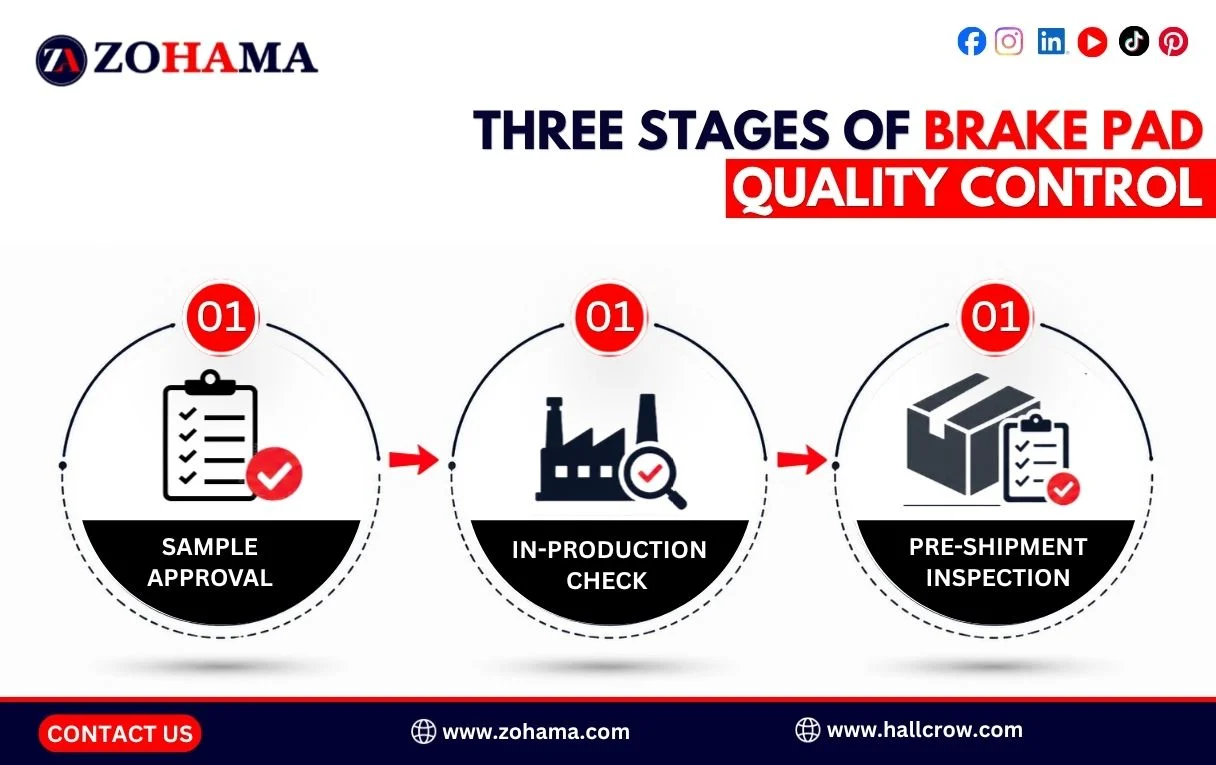
Quality control is not one event, it is a sequence. A simple quality control process for a bulk brake pad order has three stages:
- Sample approval. Approve a physical sample first and keep it as your reference standard.
- In-production check. Where possible, confirm the run matches the approved sample before it is finished.
- Pre-shipment inspection. Check the finished batch against the sample before it leaves the factory.
What to Inspect
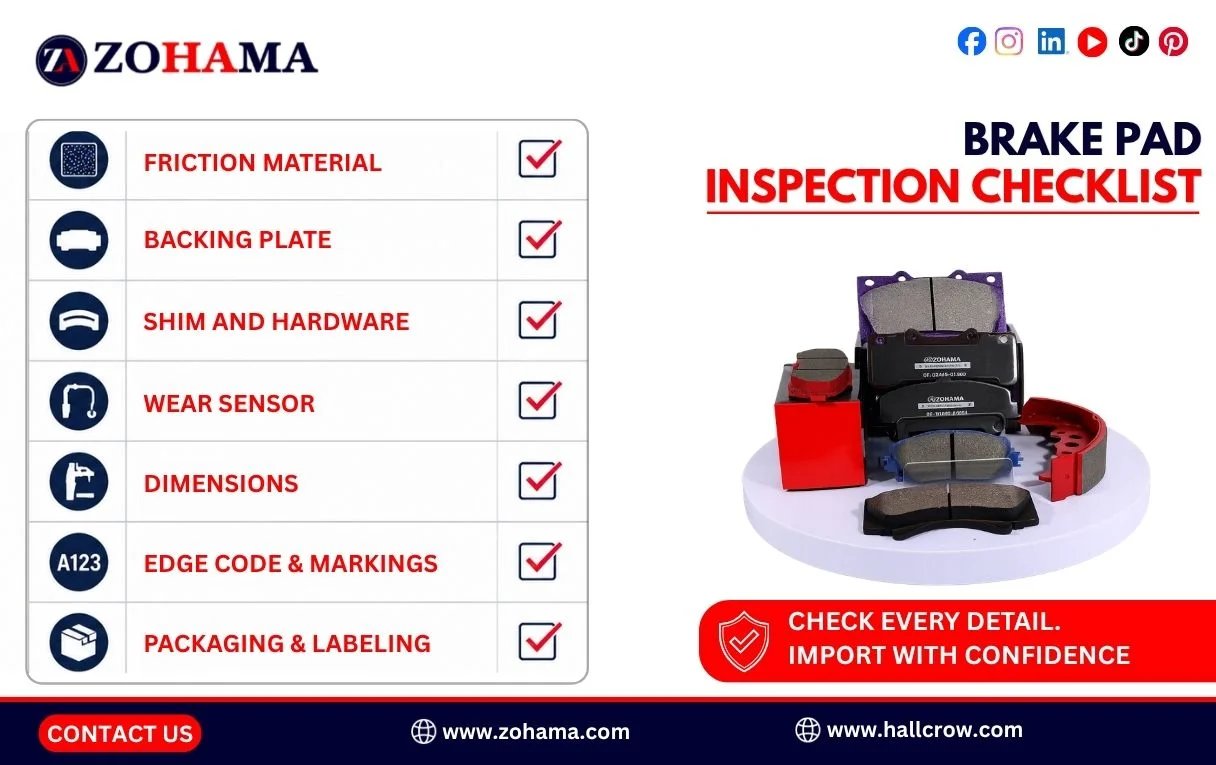
Use a consistent checklist so every order is judged the same way:
| Inspect | What to check |
|---|---|
| Friction material | Even surface, the correct compound, and firmly bonded to the backing plate with no cracks or gaps. |
| Backing plate | Correct thickness, clean edges and proper rust protection. |
| Shim & hardware | Present and correctly fitted where the application requires it. |
| Wear sensor | Correct type and position for the vehicle it is meant for. |
| Dimensions | Length, height and thickness match the reference exactly. |
| Edge code & markings | Reference and any required compliance markings are present and legible. |
| Finish & packaging | Clean finish, protective packaging and correct labelling. |
Matching by dimension and reference is essential. Our brake pad part-number lookup guide shows how to confirm you are inspecting the exact pad you ordered.
Test and Performance Standards to Ask For
Beyond a visual check, ask the supplier for evidence that the pad performs. Look for a recognised automotive quality standard such as the IATF 16949 automotive standard, the compliance required for your market (such as ECE R90), and test data for friction level, shear strength and wear. If a supplier cannot show this, treat it as a warning sign.
Using Third-Party Inspection
For larger orders, an independent inspector at the factory adds a layer of protection:
- They check the finished batch against your approved sample and checklist.
- They report before the goods ship, while you still have leverage to fix issues.
- They give you an objective record, which is useful for repeat orders and disputes.
Document Quality for Repeat Orders
Record what you approved: the sample, the checklist results and the test data. That record becomes the standard for every future order, so consistency improves over time. Verifying the maker up front is part of the same discipline, covered in our guide on what to look for in a Chinese auto parts factory.
Order With Confidence
Quality control is what turns a good supplier into a dependable long-term partner. If you want a manufacturer that supports sample approval, clear standards and consistent batches, explore our distributor and partner program to request a catalogue and pricing for your market.
Frequently Asked Questions
What should I check before importing car brake pads in bulk?
Inspect the friction material, backing plate, shim and hardware, wear sensor, dimensions, edge codes and packaging, and check each against the sample you approved.
When should quality checks happen?
In three stages: approve a sample first, check the run during production where possible, and inspect the finished batch before shipment.
What quality standards should a supplier have?
A recognised automotive quality standard such as IATF 16949, the compliance your market requires (for example ECE R90), and test data for friction, shear strength and wear.
Is third-party inspection worth it?
For larger orders, yes. An independent inspector checks the batch against your sample and reports before the goods ship, while you can still act on any issues.
Conclusion
Checking quality before a bulk import is a simple discipline with a big payoff. Know what a good pad looks like, check in three stages, inspect against a clear checklist, ask for the right standards, and document what you approve. Do that and every container arrives at the quality your customers expect.