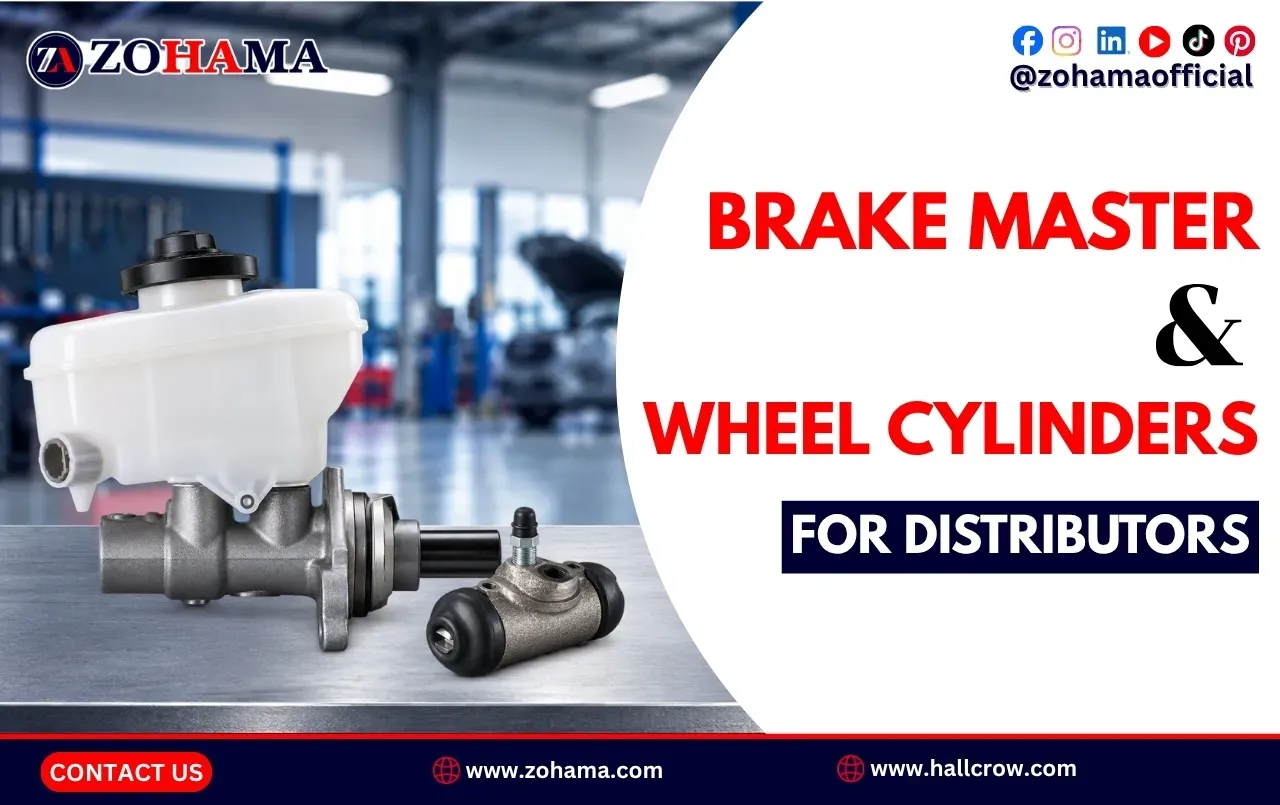
Brake cylinders are the hydraulic heart of a braking system, and a natural line to carry alongside brake pads. The master cylinder turns pedal pressure into hydraulic force, and the wheel cylinders convert it back into the push that applies the brakes. When either fails, the vehicle is unsafe to drive, so replacement is prompt, and both are precision hydraulic parts where quality is sealed inside. This guide sets out what the cylinders do, the types a distributor stocks, what decides quality, and how to source them factory-direct.
Why Brake Cylinders Belong in the Range
Brake cylinders wear and leak with age and heat, and because a failing cylinder means a soft pedal or a dragging brake, the repair is not deferred. They sit squarely in the braking line a distributor already serves, so a workshop sourcing pads can source cylinders from the same supplier. For a parts business built around brakes, cylinders complete the hydraulic side of the system.
Zohama supplies brake master and wheel cylinders factory-direct alongside its pads; see the brake cylinders page for the current coverage.
What the Cylinders Do
Two parts do the hydraulic work, and each fails in its own way:
- Master cylinder: sits at the pedal and converts foot pressure into hydraulic pressure for the whole system. A failing one gives a sinking or spongy pedal.
- Wheel cylinder (drum brakes): at each drum-braked wheel, it pushes the shoes outward against the drum. A failing one leaks fluid and weakens or drags the brake.
- Caliper piston / assembly (disc brakes): the equivalent hydraulic actuator on disc brakes, part of the same hydraulic family.
The Types Distributors Stock
Match the mix to the vehicles and brake systems in your market:
- Master cylinders: by bore size and port configuration for the vehicle’s system.
- Wheel cylinders: for the many vehicles still running rear drum brakes, a steady volume line.
- Repair kits and seals: lower-cost service items where a cylinder is rebuilt rather than replaced.
What Decides Brake Cylinder Quality
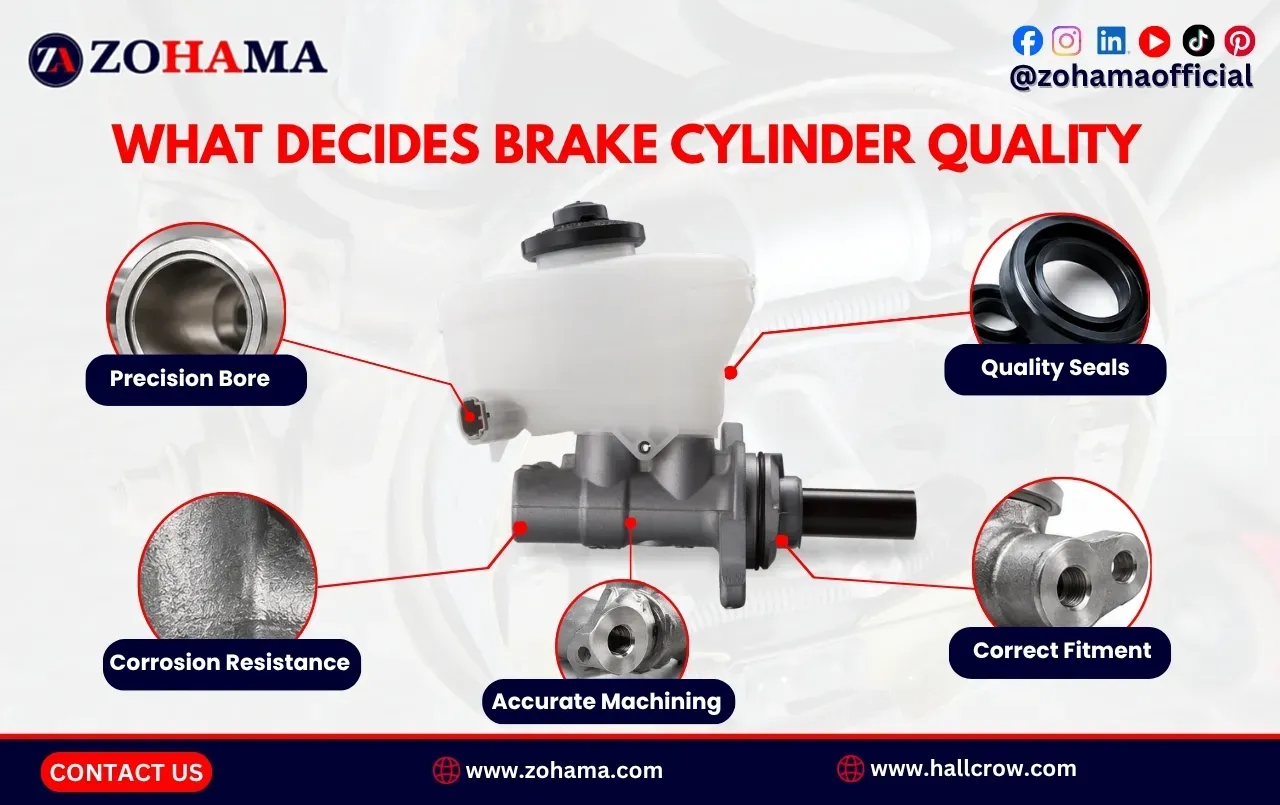
A cylinder looks simple, but the quality is in the bore, the seals and the material:
| Marker | What good looks like |
|---|---|
| Bore finish | Smooth, accurately machined bore so the piston seals and slides correctly |
| Seals / cups | Quality rubber that resists brake fluid, heat and wear without leaking |
| Material and plating | Corrosion-resistant body and piston for a long service life |
| Casting / machining | Accurate casting and machining, free of flaws that cause leaks |
| Fitment accuracy | Correct bore size, ports and reference for the application |
Match by Reference, Not by Appearance
Brake cylinders are precise hydraulic fitment parts, so match them by reference and the system specification, never by appearance. The bore size, port positions and mounting all have to be exactly right, so a cylinder that looks similar can be hydraulically wrong. Confirm the reference against the vehicle before ordering, the same discipline the part-number lookup guide sets out for brake pads.
Vet the Manufacturer and Sample First
Because a weak cylinder fails as a leak or a lost pedal, a safety issue, vetting the maker matters. Confirm you are dealing with a manufacturer, judge specificity over marketing, and sample before volume. The supplier-vetting and inspection discipline is covered in the guides to choosing a supplier and quality checks before bulk import.
Buy Factory-Direct
Buying brake cylinders factory-direct removes the reseller markup and keeps the bore finish, seals and references consistent batch to batch, which a safety-critical hydraulic part depends on. The B2B brake pads page handles the ordering side, and the bulk buying car brake pads guide covers structuring a first volume order.
Add Cylinders to Your Range
Brake cylinders complete the hydraulic side of a braking range, and sourcing them well is a precision-and-vetting exercise: the right types for the market, quality in the bore and seals, matched by reference, sampled first, and bought factory-direct. Send Zohama your cylinder part list for a quote, or join the distributor and partner program for factory pricing and priority stock.
Frequently Asked Questions
What do brake master and wheel cylinders do?
The master cylinder converts pedal pressure into hydraulic pressure for the system, and the wheel cylinders convert it back into the push that applies drum brakes. On disc brakes the caliper piston is the equivalent actuator.
Why add brake cylinders to a parts range?
They are part of the braking system a distributor already serves, and a failing cylinder makes the vehicle unsafe so the repair is prompt, giving steady demand that a brake-focused business can supply from the same relationship.
What decides brake cylinder quality?
A smooth, accurately machined bore, quality seals that resist fluid and heat, corrosion-resistant material and plating, flaw-free casting, and accurate fitment, all sealed inside the unit.
How do I order the correct brake cylinder?
Match by reference and the system specification, confirming bore size, ports and mounting, never by appearance, since a similar-looking cylinder can be hydraulically wrong.
Conclusion
Brake master and wheel cylinders are the hydraulic heart of the braking system and a natural extension of a brake range, and sourcing them well means the right types, quality in the bore and seals, matched by reference, and bought factory-direct. Zohama manufactures brake cylinders to OE spec and supplies them factory-direct to distributors across the GCC, Africa and Central Asia.