Spark plugs are one of the highest-frequency service parts a petrol vehicle consumes, which makes them one of the most dependable repeat lines a distributor can carry. Every service interval brings them up, a car has four, six or eight at a time, and the demand never stops. But “spark plug” covers several materials and a critical heat-range specification, so stocking them well is about range and accuracy, not just volume. This guide sets out the types to stock, what decides quality, how to match them correctly, and how to source factory-direct.
Why Spark Plugs Are a Steady Repeat Line
Spark plugs wear every time the engine runs and are replaced at defined intervals, and because a car uses one per cylinder, a single service is a multi-plug sale. That frequency and multiplication make spark plugs a deep, fast-moving line that turns over quicker than most parts on the shelf. They also pair naturally with ignition coils, so a distributor stocking both covers the ignition service in one visit.
Zohama supplies spark plugs factory-direct alongside its ignition coils range; see the spark plugs page for the current coverage.
The Types Distributors Stock
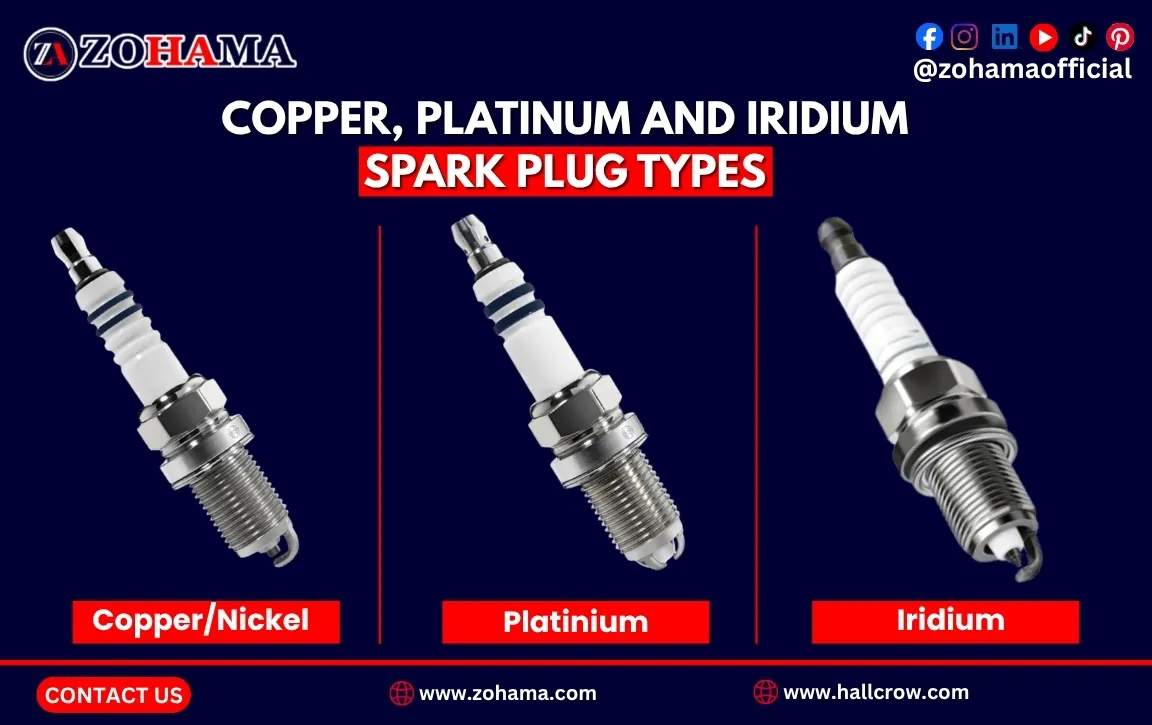
Spark plugs are defined mainly by their electrode material, which sets their life and price point:
- Copper / nickel: the traditional, lower-cost plug with a shorter service life; still widely used on older and basic engines.
- Platinum: longer life and better durability, common as original fitment on many modern engines.
- Iridium: the longest life and finest electrode, specified on many newer and higher-performance engines.
Stock across the three to match what the vehicles in your market were fitted with, since fitting the wrong material or specification shortens life or affects running.
What Decides Spark Plug Quality
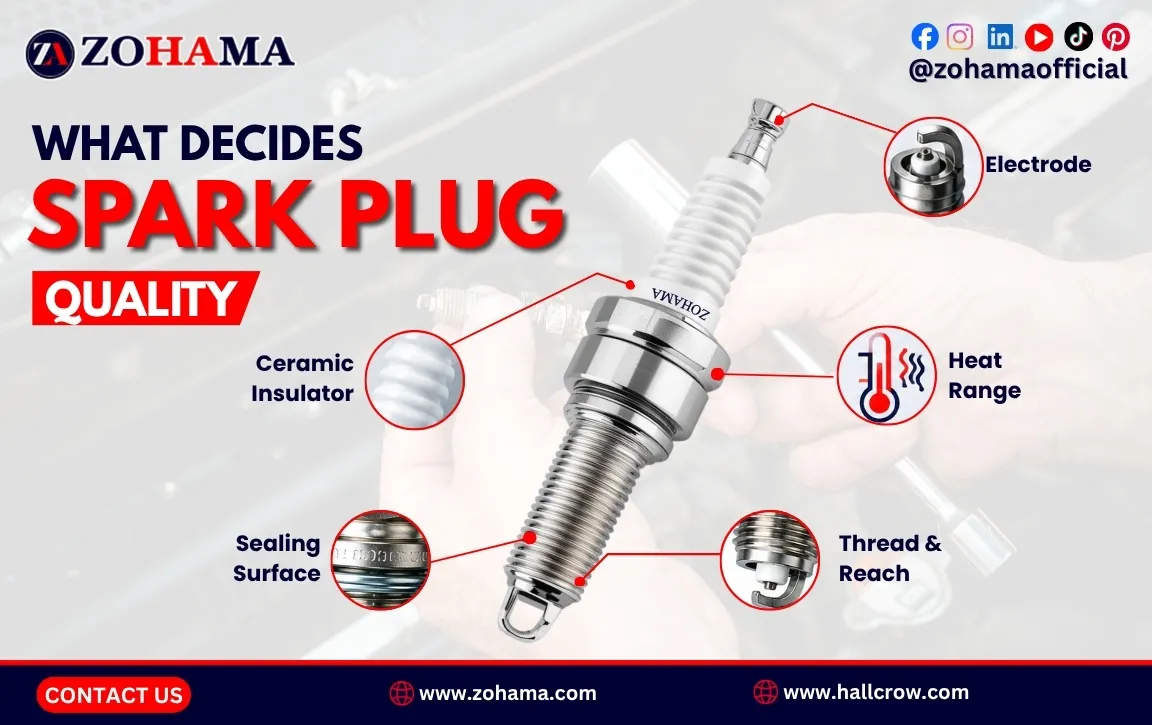
| Marker | What good looks like |
|---|---|
| Electrode material | Correct copper, platinum or iridium, properly formed for a clean spark |
| Insulator | Quality ceramic that resists heat and electrical breakdown |
| Seal / gas-tightness | Sealed so combustion gases do not leak past the plug |
| Heat range | Correct heat range for the engine, so the plug runs at the right temperature |
| Thread and reach | Correct thread size, reach and seat for the application |
Match by Reference and Heat Range
Spark plugs are precise fitment parts, and two things must be right: the physical fit (thread size, reach and seat) and the heat range, which governs how hot the plug runs. A plug that fits physically but has the wrong heat range can foul or overheat, so match by the manufacturer reference and application, never by thread size alone. Confirm the reference against the vehicle before ordering.
Vet the Manufacturer and Sample First
A weak spark plug fails as misfiring, fouling or short life in the customer’s car, so vetting the maker matters. Confirm you are dealing with a manufacturer, judge specificity over marketing, and sample before volume. The supplier-vetting and inspection discipline is covered in the guides to choosing a supplier and quality checks before bulk import.
Buy Factory-Direct
Buying spark plugs factory-direct removes the reseller markup and keeps the electrode material, heat range and fitment consistent batch to batch, which a high-frequency service line depends on. The B2B brake pads page handles the ordering side, and the bulk buying car brake pads guide covers structuring a first volume order.
Stock a Spark Plug Line
Spark plugs are a fast-moving, dependable repeat line, and stocking them well is about range and accuracy: the right materials for the market, quality in the electrode and insulator, matched by reference and heat range, and bought factory-direct. Send Zohama your spark plug part list for a quote, or join the distributor and partner program for factory pricing and priority stock.
Frequently Asked Questions
Why are spark plugs a good wholesale line?
They are replaced at every service interval and a car uses one per cylinder, so a single service is a multi-plug sale, making them a deep, fast-moving repeat line that turns over quickly.
What types of spark plug should I stock?
Copper or nickel for older and basic engines, platinum for many modern engines, and iridium for newer and higher-performance engines, matched to what the vehicles in your market were fitted with.
What is the heat range and why does it matter?
The heat range governs how hot the plug runs. A plug with the wrong heat range can foul or overheat even if it fits physically, so it must match the engine, not just the thread size.
How do I order the correct spark plug?
Match by the manufacturer reference and application, confirming both the physical fit (thread, reach, seat) and the heat range, never by thread size alone.
Conclusion
Spark plugs are a high-frequency, dependable line, and stocking them well is about range and accuracy: the right materials, quality in the electrode and insulator, matched by reference and heat range, and bought factory-direct. Zohama manufactures spark plugs to OE spec and supplies them factory-direct to distributors across the GCC, Africa and Central Asia.