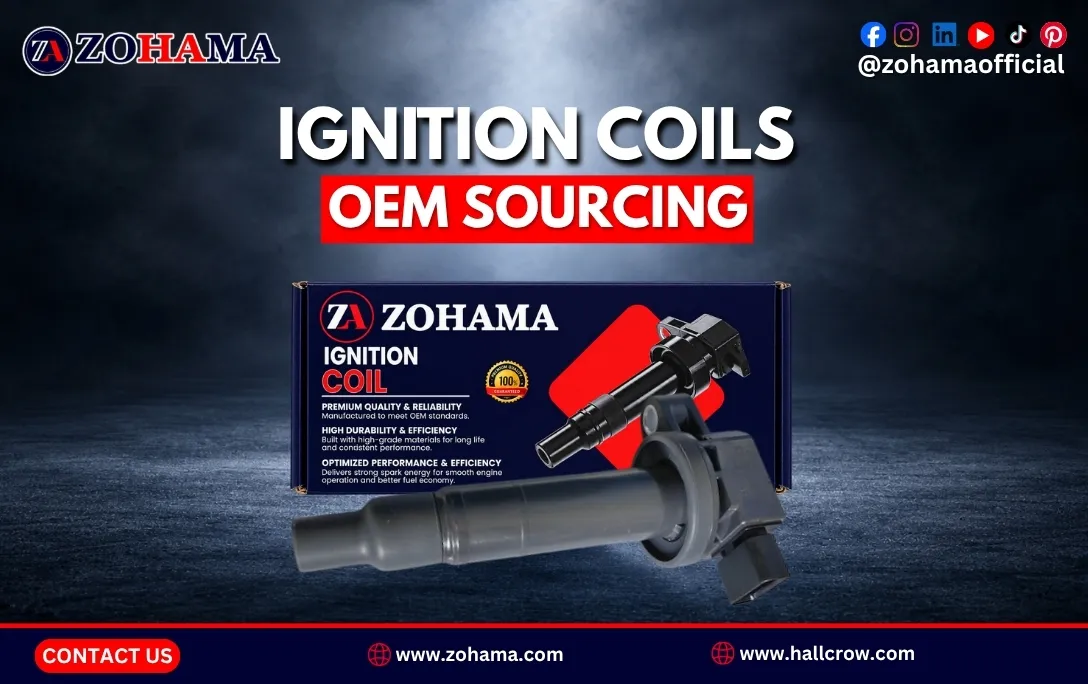
Ignition coils are a high-value electrical line with steady replacement demand, and they sit naturally in a distributor’s range alongside the other service parts a petrol vehicle gets through. A failed coil causes a misfire, a warning light and a car that runs badly, so owners replace them promptly, and modern engines often use one coil per cylinder, which multiplies the demand. But a coil is an electrical component where quality is invisible from the outside, so sourcing well is a vetting exercise. This guide sets out the types a distributor stocks, what decides coil quality, how to match by OE number, and how to buy factory-direct.
Why Ignition Coils Belong in the Range
Ignition coils fail with age, heat and vibration, and because a bad coil makes the engine misfire, the replacement is not deferred the way some parts are. Many modern petrol engines use a coil-on-plug design with one coil per cylinder, so a single fault often leads to a set being replaced, and the demand is both steady and higher in value than a basic service part. For a distributor it is a profitable electrical line that broadens the range beyond mechanical parts.
Zohama supplies ignition coils factory-direct; see the ignition coils page for the current coverage.
The Types Distributors Stock
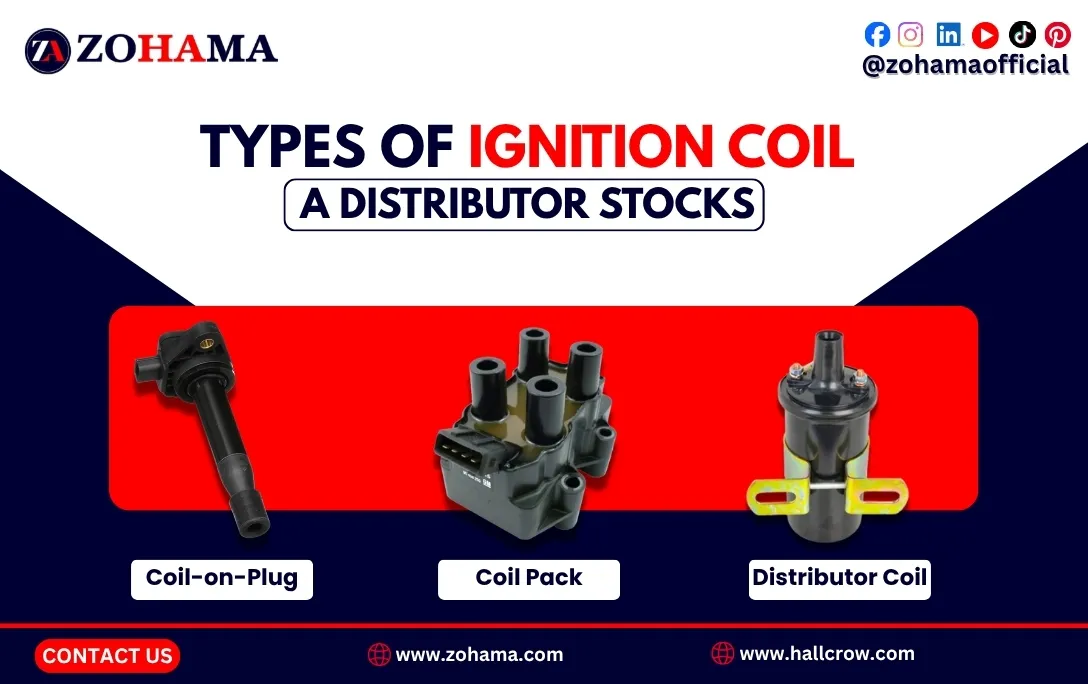
Ignition coil demand splits into a few main designs, and knowing which the market needs helps weight an order:
- Coil-on-plug (pencil / plug-top): one coil per cylinder, mounted directly on the spark plug; the dominant modern design and the volume line.
- Coil packs / blocks: a single unit serving several cylinders, common on a generation of engines still widely driven.
- Distributor-type coils: single canister coils for older vehicles that still use a distributor ignition.
Weight the mix toward coil-on-plug for modern vehicles, keeping coil packs and older types for the installed base in your market.
What Decides Ignition Coil Quality
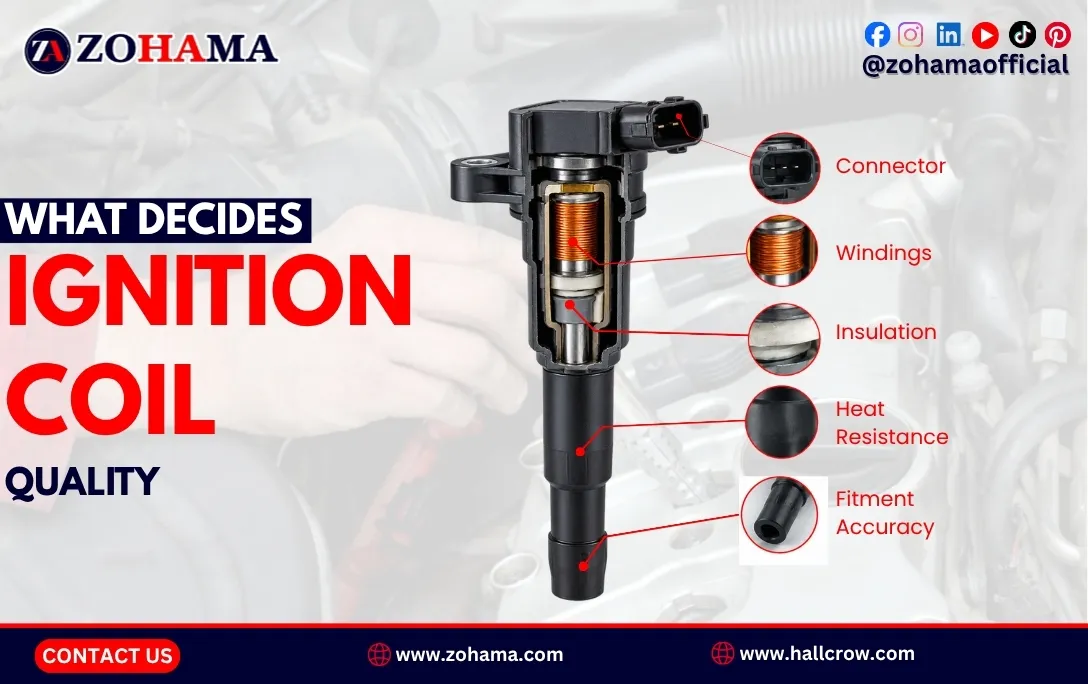
A coil looks simple, but the quality is in the windings, the insulation and the electronics:
| Marker | What good looks like |
|---|---|
| Windings | Correctly wound primary and secondary coils for a strong, stable spark |
| Insulation / potting | Quality epoxy potting that resists heat and prevents internal arcing |
| Connector and terminals | Correct, durable connector and corrosion-resistant terminals |
| Heat resistance | Materials rated for the under-bonnet heat the coil endures |
| Fitment accuracy | Correct connector, boot and reference for the application |
Match by OE Number, Not by Shape
Ignition coils are precise fitment and electrical parts, so match them by OE number and application, never by appearance. The connector type, the plug boot, the mounting and the electrical specification all have to be exactly right, so a coil that looks similar can be the wrong part electrically. Confirm the OE number against the vehicle before ordering, the same discipline the part-number lookup guide sets out for brake pads.
Vet the Manufacturer and Sample First
Because a weak coil fails as a misfire in the customer’s car, not on your shelf, vetting the maker matters. Confirm you are dealing with a manufacturer, judge specificity over marketing, and sample before volume, testing the sample on the vehicle where possible. The supplier-vetting and inspection discipline is covered in the guides to choosing a supplier and quality checks before bulk import.
Buy Factory-Direct
Buying ignition coils factory-direct removes the reseller markup and keeps the windings, potting and electrical specification consistent batch to batch, which is exactly what an electrical part judged by its spark needs. The B2B brake pads page handles the ordering side, and the bulk buying car brake pads guide covers structuring a first volume order.
Add Ignition Coils to Your Range
Ignition coils extend a distributor’s range into a high-value electrical line with steady demand, as long as they are sourced with care: the right types for the market, quality judged inside the unit, matched by OE number, sampled first, and bought factory-direct. Send Zohama your coil part list for a quote, or join the distributor and partner program for factory pricing and priority stock.
Frequently Asked Questions
Why add ignition coils to a parts range?
A failed coil causes a misfire, so owners replace it promptly, and modern engines often use one coil per cylinder, which multiplies the demand into a steady, higher-value electrical line.
What types of ignition coil should I stock?
Coil-on-plug units for modern vehicles as the volume line, coil packs for the generation that uses them, and distributor-type coils for older vehicles, weighted to your market’s vehicle parc.
What decides ignition coil quality?
Correctly wound coils for a strong spark, quality potting and insulation that resist heat and arcing, durable connectors and terminals, and heat-rated materials, all of which are inside the unit.
How do I order the correct ignition coil?
Match by OE number and application, never by shape, since the connector, boot, mounting and electrical specification must be exactly right. A similar-looking coil can be electrically wrong.
Conclusion
Ignition coils are a high-value electrical extension of a parts range, and sourcing them well is a vetting exercise: the right types, quality judged in the windings and potting, matched by OE number, sampled first, and bought factory-direct. Zohama manufactures ignition coils to OE spec and supplies them factory-direct to distributors across the GCC, Africa and Central Asia.