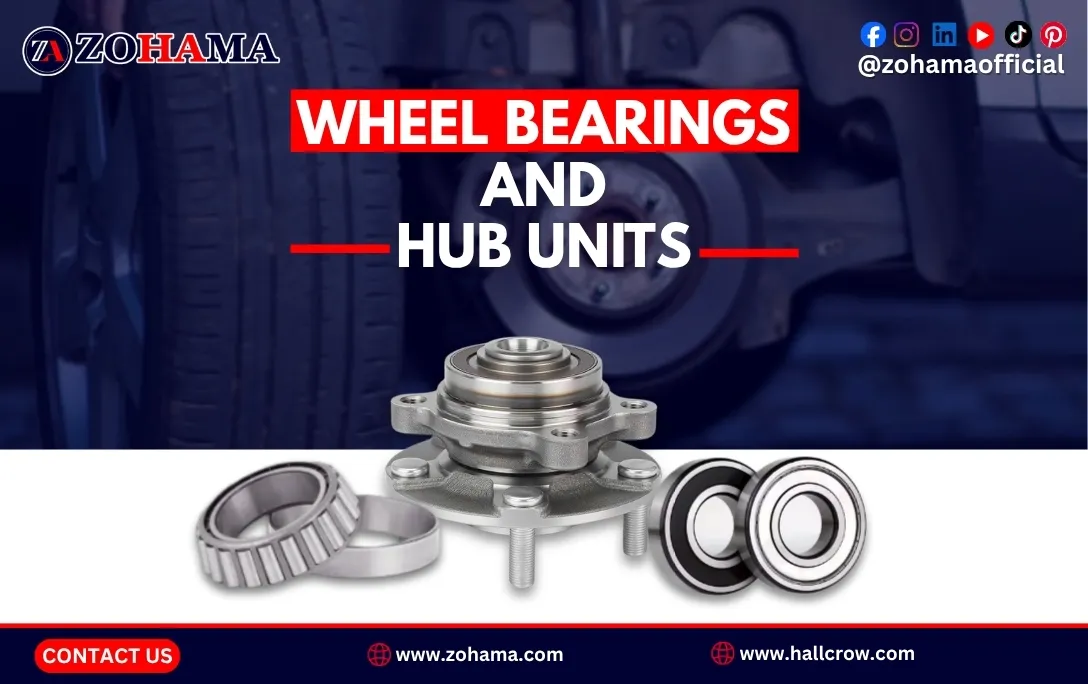
Wheel bearings are a quiet, dependable line that sits naturally beside brakes: the hub is right there when a workshop does a brake job, and a worn bearing is a common find on the same vehicle. They are also safety-critical and precision-made, so quality is not negotiable, and the range from China spans the full quality scale. This guide sets out the types a distributor stocks, what actually decides bearing quality, how to match by reference, and how to source factory-direct.
Why Wheel Bearings Belong in the Range
Wheel bearings wear over mileage and fail on the rough roads common across the GCC, Africa and Central Asia, giving steady replacement demand. They pair naturally with braking, because the bearing and the brake share the hub, so a distributor stocking both captures more of the same repair. For a parts business built around brakes, bearings are a logical, low-friction extension of the range.
Zohama supplies wheel bearings and hub units factory-direct alongside its braking range; see the bearing system page for the current coverage.
The Types Distributors Stock
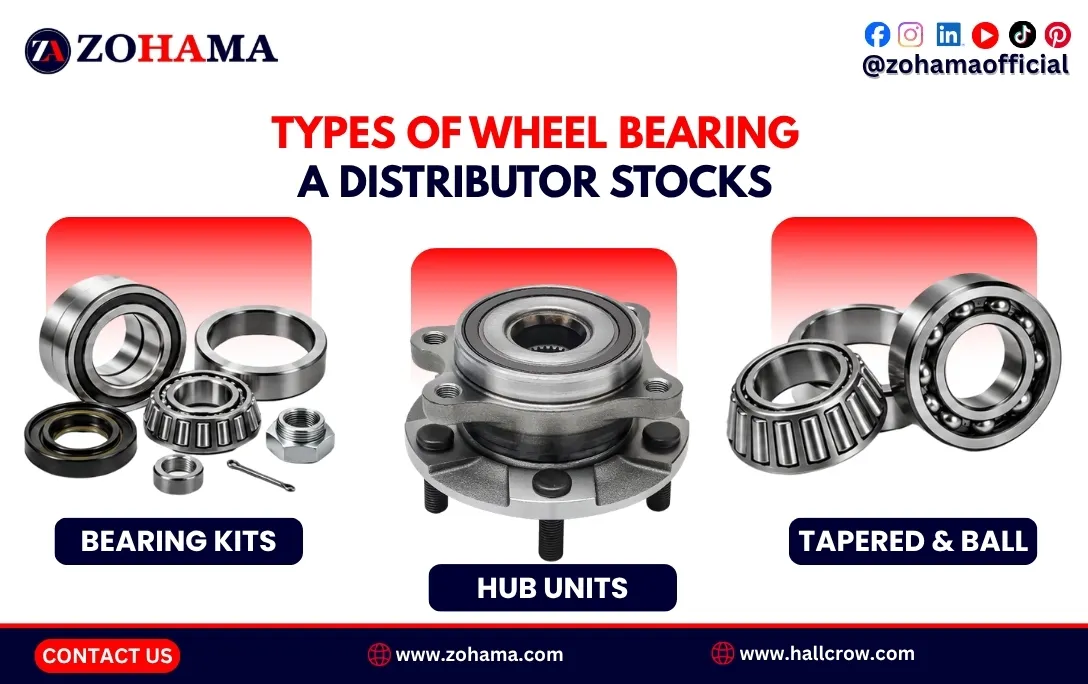
Wheel bearing demand splits into a few main forms, and knowing which the market needs helps weight an order:
- Wheel bearing kits: the bearing with its fitting parts, the common service item for many vehicles.
- Hub bearing units (Generation 1/2/3): a sealed, pre-assembled hub-and-bearing unit used on many modern vehicles, fitted as one part.
- Tapered and ball bearings: for older or heavier applications that use separate bearings rather than a sealed unit.
Match the mix to your market’s vehicle parc, weighting sealed hub units where newer vehicles dominate.
What Decides Bearing Quality
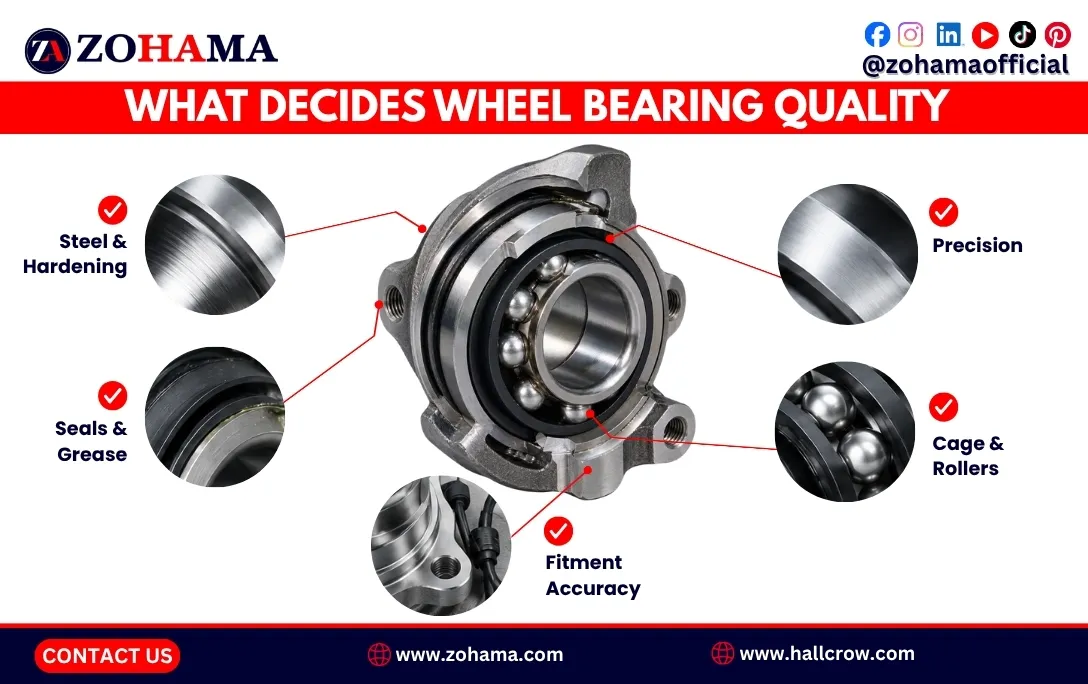
A wheel bearing is a precision part, and the quality is in the steel and the manufacturing:
| Marker | What good looks like |
|---|---|
| Steel and hardening | High-grade bearing steel, correctly heat-treated for load and life |
| Tolerances | Precise machining, so the bearing runs true and quiet |
| Seals and grease | Durable seals and correct grease that keep contaminants out |
| Cage and rollers | Consistent, correctly finished rolling elements and cage |
| Fitment accuracy | Correct dimensions and reference for the application |
Match by Reference, Not by Eye
Wheel bearings and hub units are precise fitment parts, so match them by reference number and application, never by appearance. The dimensions, the ABS sensor ring on many hub units, and the mounting all have to be exactly right, so a close match is a wrong match. Confirm the reference against the vehicle before ordering, the same discipline the part-number lookup guide sets out for brake pads.
Vet the Manufacturer and Sample First
Because a failed wheel bearing is a safety event, not just a return, vetting the maker matters as much as it does for brakes. Confirm you are dealing with a manufacturer, judge specificity over marketing, and sample before volume: a weak bearing fails as noise, play or seizure on the road. The supplier-vetting and inspection discipline is covered in the guides to choosing a supplier and quality checks before bulk import.
Buy Factory-Direct
Buying wheel bearings factory-direct removes the reseller markup and keeps the steel grade, tolerances and references consistent batch to batch, which is exactly what a safety-critical precision part needs. The B2B brake pads page handles the ordering side, and the bulk buying car brake pads guide covers structuring a first volume order.
Add Bearings to Your Range
Wheel bearings extend a brake-centred range into a steady, paired-demand line, but only if they are sourced with the same care: the right types for the market, quality judged in the steel and tolerances, matched by reference, sampled first, and bought factory-direct. Send Zohama your bearing part list for a quote, or join the distributor and partner program for factory pricing and priority stock.
Frequently Asked Questions
Why add wheel bearings to a brake pad range?
The bearing and the brake share the hub, so a workshop doing brakes often finds a worn bearing on the same vehicle, and bearings have steady replacement demand on rough roads, so stocking both captures more of the repair.
What types of wheel bearing should I stock?
Wheel bearing kits for common service, sealed hub bearing units for modern vehicles, and tapered or ball bearings for older and heavier applications, weighted to your market’s vehicle parc.
What decides wheel bearing quality?
High-grade bearing steel correctly heat-treated, precise tolerances so it runs true and quiet, durable seals and correct grease, consistent rolling elements, and accurate fitment.
How do I order the correct wheel bearing?
Match by reference number and application, never by appearance, since dimensions, any ABS sensor ring and the mounting must be exactly right. A close match is a wrong match.
Conclusion
Wheel bearings and hub units are a steady, safety-critical extension of a brake range, and sourcing them well is a precision-and-vetting exercise: the right types, quality in the steel, matched by reference, sampled first, and bought factory-direct. Zohama manufactures wheel bearings and hub units to OE spec and supplies them factory-direct to distributors across the GCC, Africa and Central Asia.