Choosing a heavy-duty brake pad supplier is one of the most important decisions a commercial parts distributor makes. Heavy pads stop loaded trucks and buses, so a weak supplier is not just a commercial risk, it is a safety risk, and the wrong choice multiplies across every vehicle it reaches. The stakes are higher than for car pads, which means the standards for choosing must be higher too. This guide sets out the criteria that matter, the tests to ask for, and the red flags to avoid.
The supplier principles in our guide on choosing a brake pad supplier apply here, with more weight on testing and capacity. For the wider heavy segment, see our heavy-duty truck brake pads page.
Why Heavy-Duty Supplier Selection Is Different
A car pad that underperforms is a problem; a heavy pad that fails under load is a hazard. Heavy vehicles brake with far more energy, generate more heat, and carry loads and passengers, so a commercial vehicle pad has to be right every time. Add the high volumes fleets buy, and a single weak supplier can put a whole market at risk. That is why heavy-duty supplier selection deserves more scrutiny than any other sourcing decision.
The Criteria That Matter
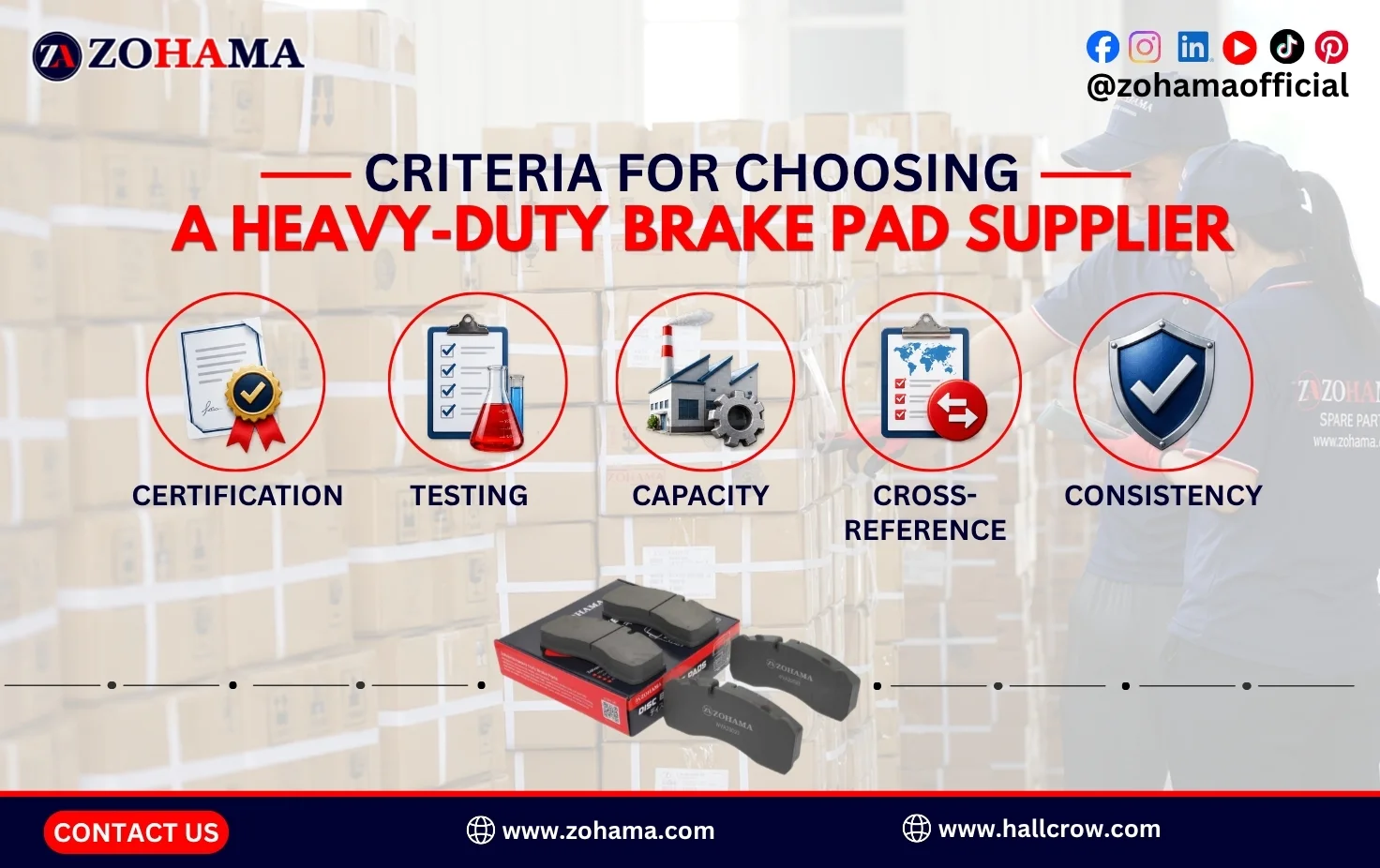
Judge a heavy-duty supplier against these five criteria before committing:
| Criterion | What to confirm |
|---|---|
| Certification | ISO 9001, IATF 16949 and ECE R90 for the products you will buy. |
| Testing | Documented friction, heat and wear testing under load, not just a general claim. |
| Capacity | The ability to supply fleet volumes consistently, run after run. |
| Cross-reference | Clear WVA and OE data so you can confirm fitment and sell on it. |
| Consistency | Batch-to-batch quality that matches the approved sample every time. |
A supplier who meets all five is a partner you can build a business on; one who falls short on any is a risk on parts that stop loaded vehicles.
Certification and Quality Systems
Certification is the baseline of trust. Look for ISO 9001 quality management, IATF 16949 for automotive production, and ECE R90 for the brake pads themselves. Ask to see the certificates for the specific products you will buy, not just the company in general. Our guide on what to look for in a Chinese auto parts factory covers how to verify a genuine manufacturer.
Testing and Performance Data
For heavy pads, tested performance is not optional. Ask for documented data on friction stability, heat and fade resistance, and wear, ideally under loaded conditions rather than general claims. A supplier who tests their pads and shares the results is one who stands behind them.
Production Capacity and Availability
Fleets buy in volume and cannot wait for parts, so a supplier must be able to produce fleet quantities consistently, run after run. Confirm capacity before committing, and plan stock around it, as covered in our guide on sourcing heavy-duty brake pads from China.
Cross-Reference Support
A heavy-duty supplier should give you clear WVA and OE cross-reference data, so you can confirm fitment and sell on it. This is one of the most valuable things a supplier provides, as covered in our guide on OEM cross-reference for commercial trucks and our WVA numbers for commercial brake pads guide.
Red Flags to Avoid
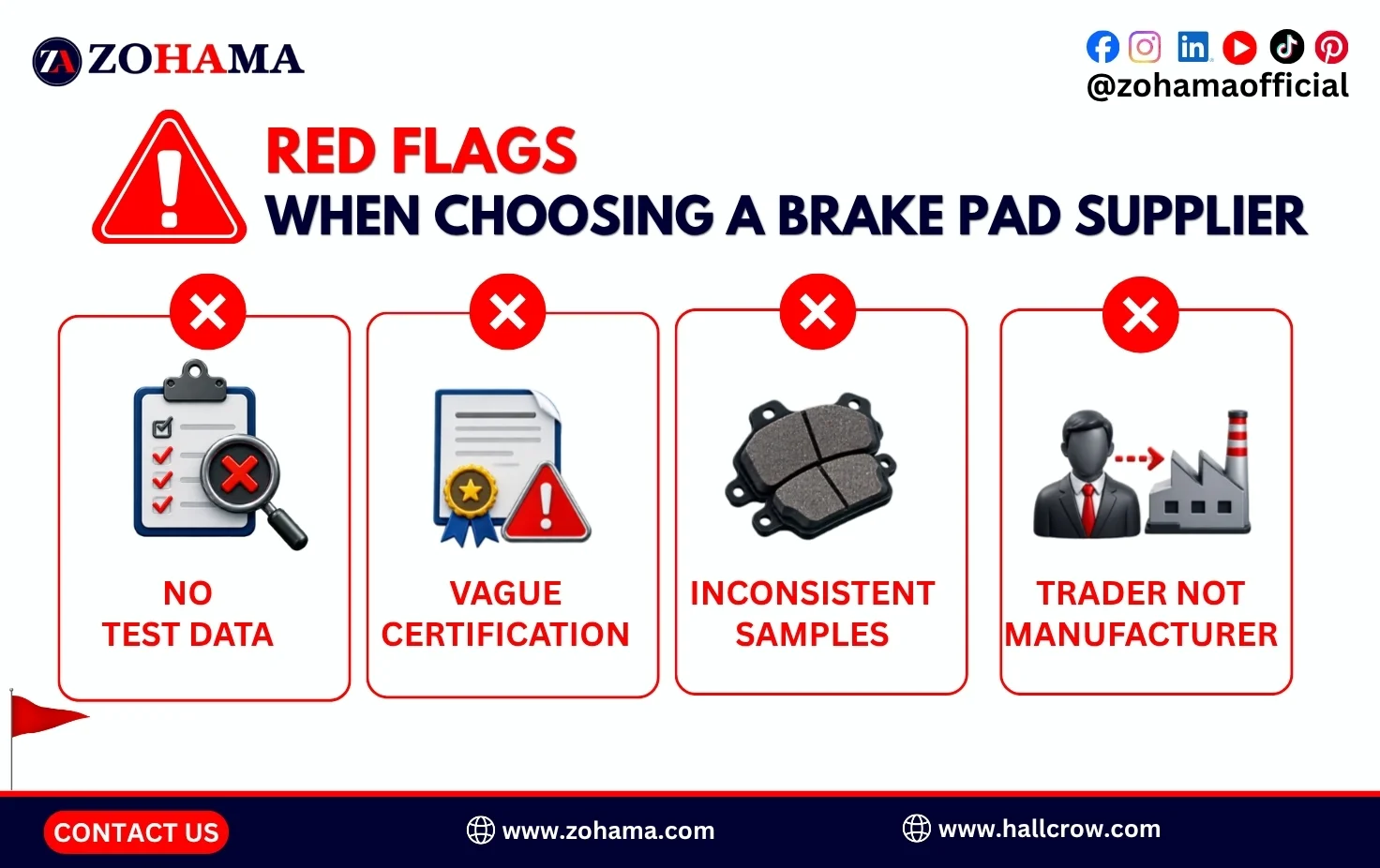
- No test data. A supplier who cannot show friction and heat results on heavy pads.
- Vague certification. Certificates that do not cover the actual products.
- Inconsistent samples. Quality that varies between batches.
- Trader, not manufacturer. No real production control behind the parts.
- Weak cross-reference data. Which makes fitment and selling harder.
Partner with the Right Supplier
The right heavy-duty supplier is a long-term partner, not a one-off vendor, and choosing well protects your customers and your reputation. If you want a certified manufacturer with tested heavy-duty friction, strong cross-reference support and reliable capacity, explore our distributor and partner program to request a catalogue and pricing for your market. See also our brake pads for commercial vehicles range.
Frequently Asked Questions
Why is choosing a heavy-duty supplier more critical?
Heavy pads stop loaded trucks and buses, so a failure is a safety hazard, not just a commercial problem. Fleets also buy in volume, so a single weak supplier can affect a whole market.
What certifications should a heavy-duty supplier have?
ISO 9001 quality management, IATF 16949 for automotive production, and ECE R90 for the pads. Ask for certificates covering the specific products you will buy.
What testing should I ask for?
Documented friction stability, heat and fade resistance, and wear data, ideally under loaded conditions rather than general durability claims.
What are the main red flags?
No test data, vague certification, inconsistent samples, a trader rather than a manufacturer, and weak cross-reference data.
Conclusion
A heavy-duty brake pad supplier holds your reputation and your customers’ safety in their hands, so choose with the scrutiny that deserves. Confirm certification, insist on real test data, check capacity and cross-reference support, and walk away from the red flags. Get the supplier right and the whole heavy-vehicle line becomes a business you can build on with confidence.