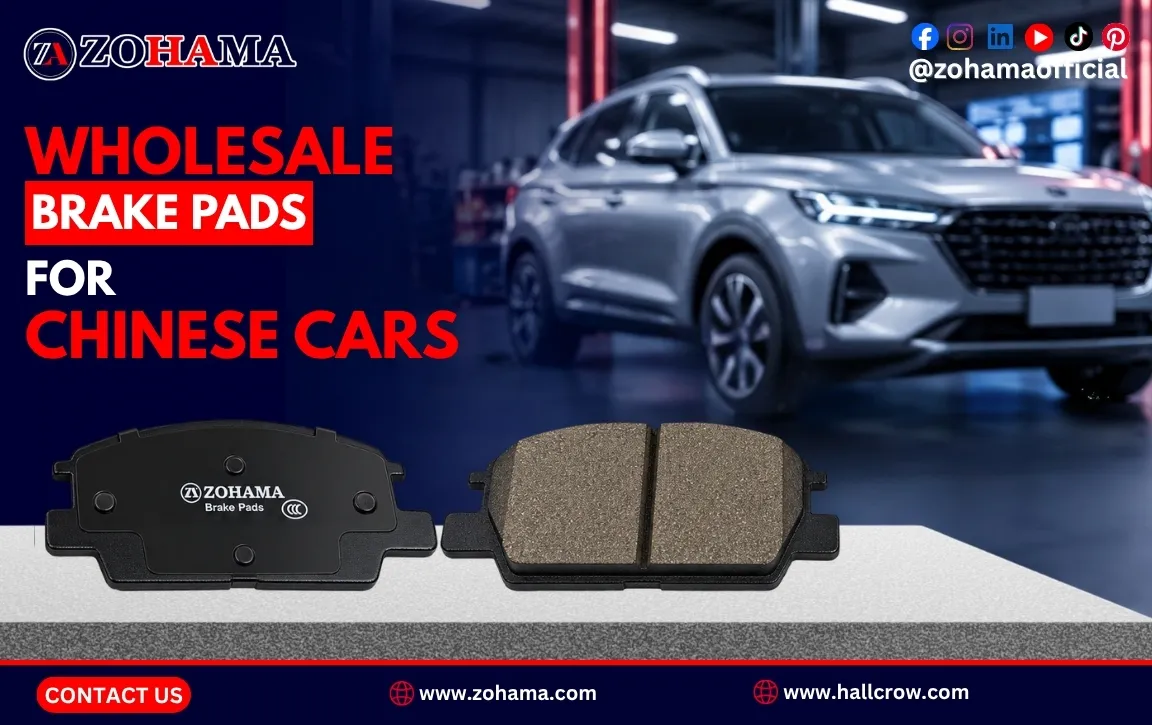
Chinese car brands are the fastest-growing segment on the road across the GCC, Africa and Central Asia, and the brake pad demand is arriving right behind them. The catch is that many distributors are not ready for it: fitment data is harder to find than for the established Japanese and European makes, and a shelf built only for Toyota and Hyundai misses a segment that is expanding every year. This guide sets out why Chinese car pads are a line to get ahead of, which brands drive the demand, how to handle the fitment challenge, and how to source factory-direct.
Why Chinese Car Pads Are a Growing Line
Chinese brands have moved from a curiosity to a major share of new-car sales in these markets, offering well-equipped vehicles at competitive prices, and the first wave of them is now reaching the age where brakes wear and get replaced. That creates a new, rising demand curve that the traditional parts range does not cover. A distributor who stocks Chinese car pads early captures a growing segment that competitors still treat as an afterthought.
Zohama runs a dedicated line for this demand; see the brake pads for Chinese cars range, which sits inside the wider light-vehicle brake pads catalogue.
The Brands Driving Demand
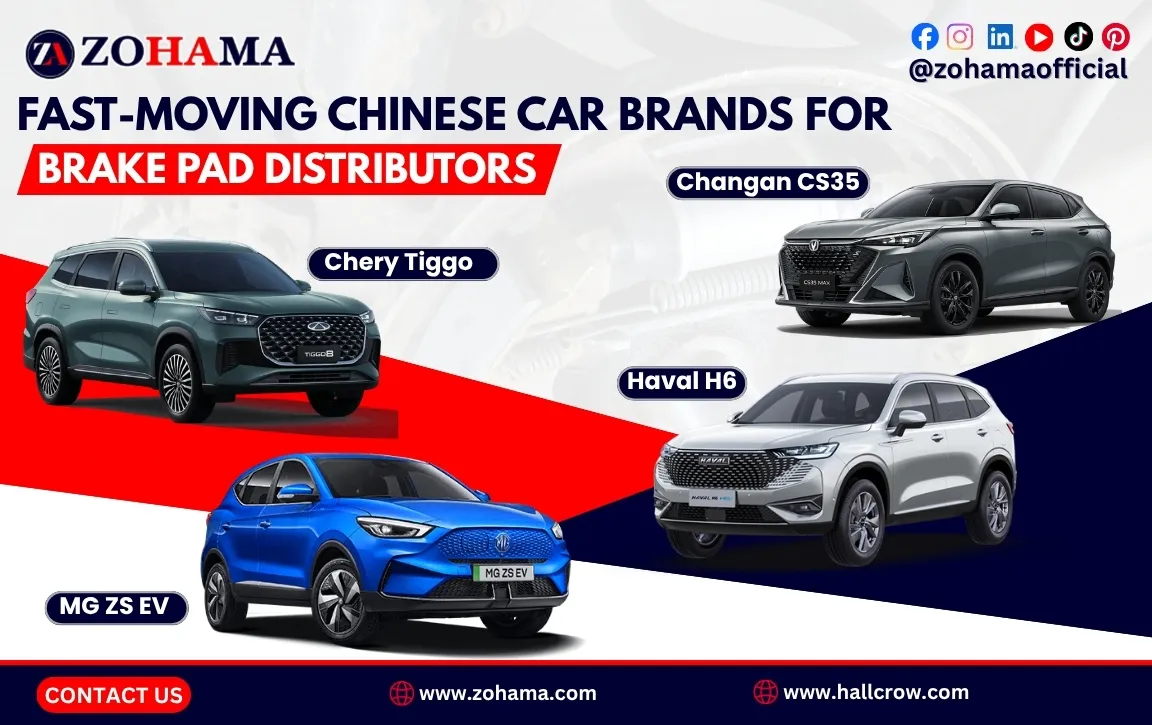
A handful of Chinese brands lead the demand in these markets. Weight a first order toward the ones selling locally:
| Brand | Why it moves | Buyer note |
|---|---|---|
| Chery / Tiggo | Strong SUV and sedan volume | Fast-growing parc; weight fronts |
| Haval / GWM | Popular SUV range | Heavier vehicles; heat-capable fronts |
| MG | Wide sedan and SUV sales | Broad, growing demand |
| Changan, Geely, BYD | Rising volume across segments | Newer parc; demand building |
The Fitment-Data Challenge
The real difficulty with Chinese car pads is not supply, it is identification. The models are newer, the cross-reference data is thinner, and the same brand can use different pads across trims and model years, so a distributor cannot rely on the familiar catalogues. The answer is the same discipline that works everywhere, applied more carefully: order against the OE number and the exact variant, and build your own cross-reference record as you confirm fitments, so each order makes the next one easier.
Confirming the right pad by number is the key habit; the brake pad part-number lookup guide shows how, and the OEM brake pads page lists pads by reference.
Source Chinese Car Pads Factory-Direct
Sourcing from a manufacturer that already covers Chinese car applications solves the fitment problem at the source: the pads are matched to the models and listed by reference, so you are not guessing. Buying factory-direct also gives consistent batches tested to ECE R90 and removes the reseller markup on a growing line. The B2B brake pads page quotes Chinese car pads against confirmed OE numbers rather than model names.
Build and Reorder a Chinese Car Range
- Identify which Chinese brands sell in your market and their fast-moving models.
- Match pads by OE number and variant, and build your own cross-reference record as you confirm each.
- Confirm the order and lock the approved references as your reorder standard.
- Reorder against that list and expand as the segment grows in your market.
For structuring the first volume order, see the bulk buying car brake pads guide.
Get Ahead of a Growing Segment
Chinese car brake pads are where new demand is arriving, and the distributor who stocks them early, matched by OE number and bought factory-direct, captures a segment competitors still overlook. Send Zohama your Chinese car part list for a quote, or join the distributor and partner program for factory pricing and priority stock on the fast-moving numbers.
Frequently Asked Questions
Why stock brake pads for Chinese cars?
Chinese brands are the fastest-growing segment in these markets, and the first wave is now reaching brake-replacement age, creating a new, rising demand curve the traditional range does not cover.
Which Chinese car brands should I prioritise?
Weight toward the brands selling locally, typically Chery and Tiggo, Haval and GWM, and MG, with Changan, Geely and BYD building volume, matched to your market’s parc.
Why is fitment harder for Chinese cars?
The models are newer and cross-reference data is thinner, and the same brand can use different pads across trims and years, so order by OE number and variant and build your own cross-reference record.
Can I order Chinese car pads wholesale with flexible MOQ?
Yes. Volumes are structured around what a distributor moves, and a sample can be requested on any new set before committing to a bulk quantity.
Conclusion
Chinese car brake pads are a fast-growing line that rewards getting ahead of the demand: stock the brands selling locally, handle the fitment by OE number, and buy factory-direct from a manufacturer that already covers the applications. Zohama runs a dedicated Chinese car line and supplies it factory-direct to distributors across the GCC, Africa and Central Asia.