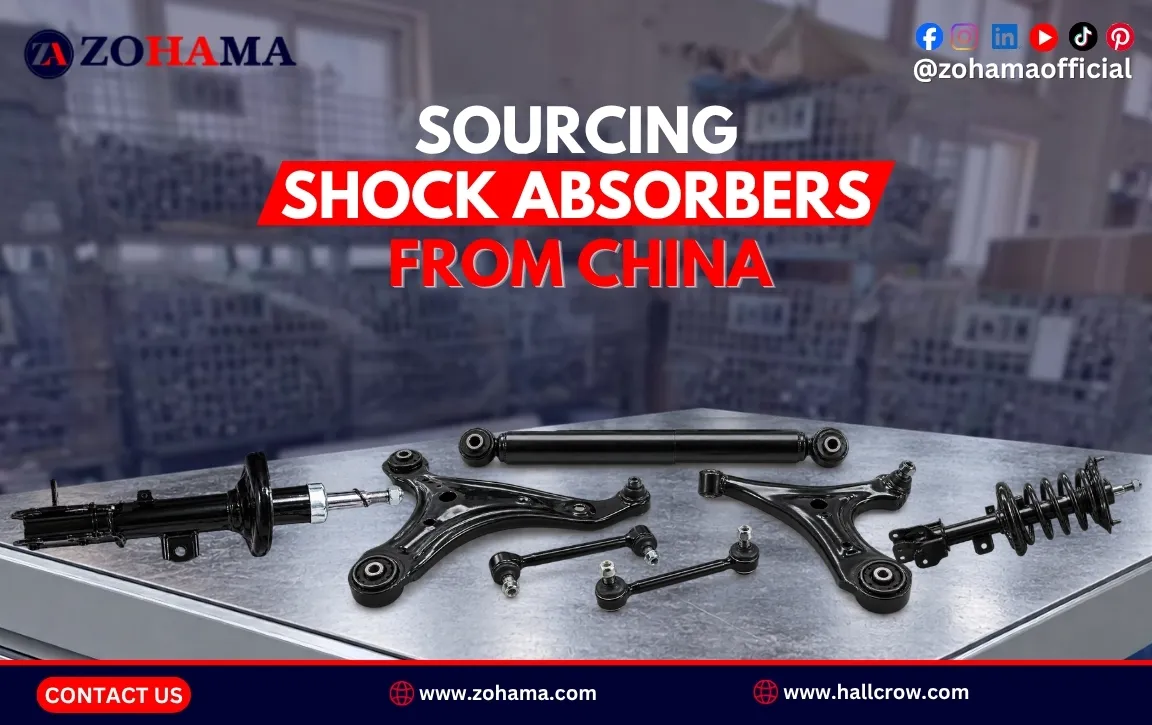
Shock absorbers are a natural line to add alongside brake pads: the same distributors, the same fleets, and the same steady replacement demand as a vehicle covers the rough roads common across the GCC, Africa and Central Asia. But a shock absorber is a more complex unit than a brake pad, and the quality range from China is just as wide, so sourcing well is a vetting exercise. This guide sets out the types a distributor stocks, what separates a good unit, how to vet the manufacturer, and how to buy factory-direct.
Why Shock Absorbers Belong in the Range
Shock absorbers wear gradually and are replaced across a vehicle’s life, especially where road surfaces are poor, which makes them a dependable repeat line. They also pair naturally with a brake and suspension offer: a workshop doing brakes often finds worn shocks on the same vehicle, so a distributor who stocks both captures more of the repair. Adding shocks broadens the range without chasing a new customer base.
Zohama supplies shock absorbers factory-direct alongside its braking range; see the shock absorbers page for the current coverage.
The Types Distributors Stock
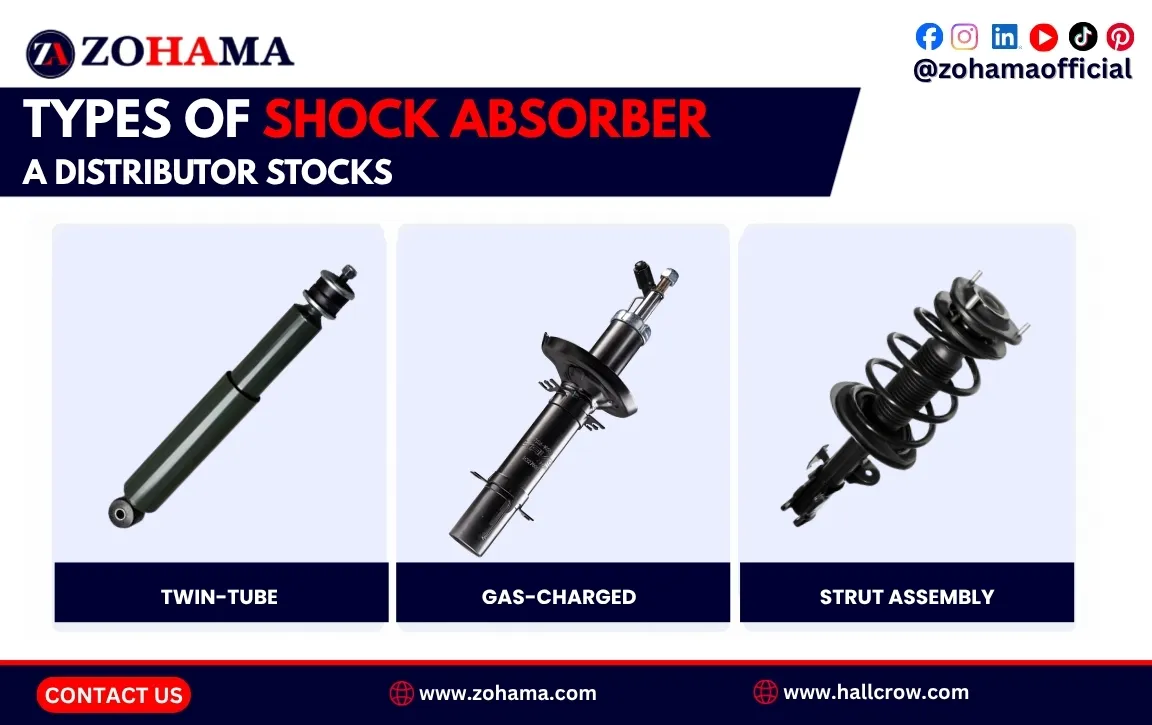
Shock absorbers come in a few main constructions, and knowing which the market needs helps weight an order:
- Twin-tube: the common, cost-effective design for most passenger cars and light vehicles; the volume line for most distributors.
- Gas-charged (twin-tube or mono-tube): better fade resistance and control under load and heat, suited to SUVs, pickups and harder-driven vehicles.
- Struts (shock plus structural suspension): complete strut assemblies for vehicles that use a strut-type front suspension.
Match the mix to your market’s vehicle parc, weighting gas-charged units where SUVs and pickups dominate.
What Separates a Good Shock Absorber
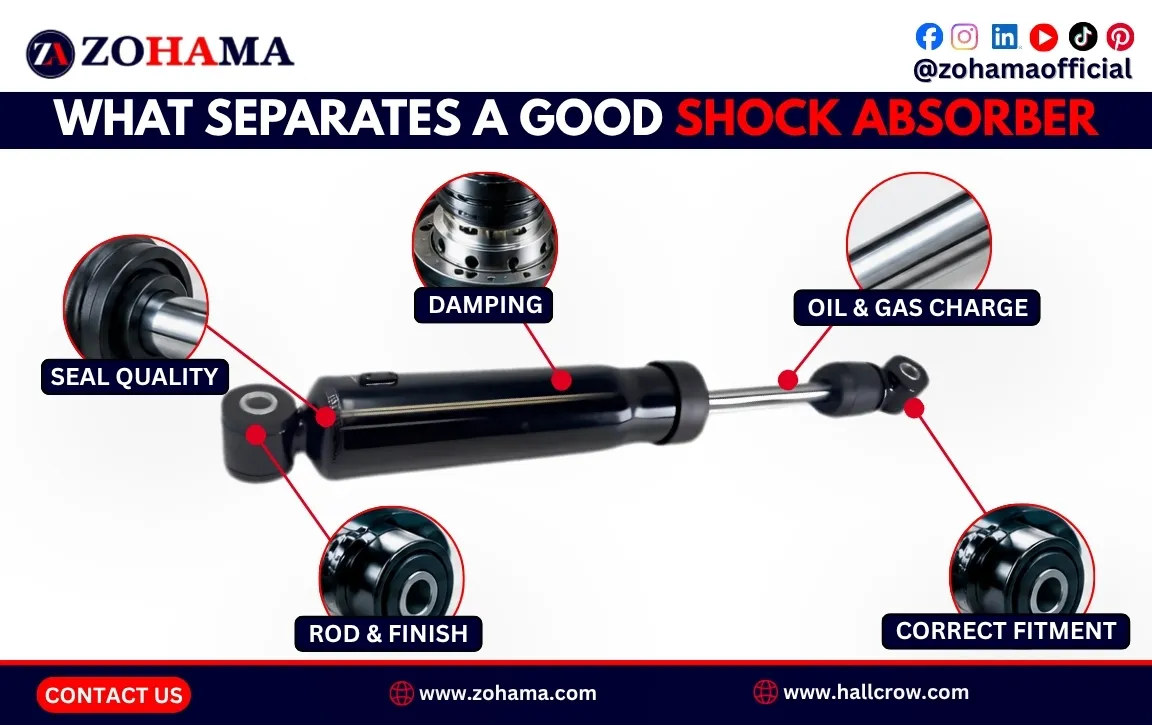
“Shock absorber” on a box tells you little; the quality is inside. What to check:
| Marker | What good looks like |
|---|---|
| Seal quality | Durable seals that resist leaking, the most common failure point |
| Valving / damping | Consistent damping matched to the vehicle, not a generic curve |
| Oil and gas charge | Correct fluid and charge for stable performance under heat |
| Rod and finish | Hardened, corrosion-resistant piston rod and body |
| Fitment accuracy | Correct mounts, length and reference for the application |
How to Vet the Manufacturer
The discipline is the same as for any safety-related part sourced from China: confirm you are dealing with a manufacturer, not a trader, and judge specificity over marketing. A real maker can explain the valving and construction, lists units by application and reference, provides quality documentation, and offers a sample before volume. A reseller leans on adjectives. The vetting that protects a brake pad order protects a shock absorber order just as well.
The same supplier-vetting discipline is covered in the guides to choosing a supplier and sourcing from China.
Sample and Inspect Before Volume
Shock absorbers are worth sampling carefully, because a weak unit fails as a leak or lost damping on the road, not on the shelf. Approve a physical sample on any new reference, keep it as your standard, and inspect the batch before shipment against it. The inspection discipline that applies to brake pads applies here too, covered in the guide to quality checks before bulk import.
Buy Factory-Direct
Buying shock absorbers factory-direct removes the reseller markup and keeps the valving, construction and references consistent batch to batch, which is what a distributor needs on a part judged by how it rides. The B2B brake pads page handles the ordering side, and the bulk buying car brake pads guide covers structuring a first volume order.
Add Shocks to Your Range
Shock absorbers extend a distributor’s range into a steady, paired-demand line, but only if they are sourced with the same care as brakes: the right types for the market, vetted quality, sampled before volume, and bought factory-direct. Send Zohama your shock absorber part list for a quote, or join the distributor and partner program for factory pricing and priority stock.
Frequently Asked Questions
Why add shock absorbers to a brake pad range?
They share the same distributors and fleets and have steady replacement demand, especially on poor roads, and a workshop doing brakes often finds worn shocks on the same vehicle, so stocking both captures more of the repair.
What types of shock absorber should I stock?
Twin-tube for the passenger-car volume, gas-charged units for SUVs, pickups and harder-driven vehicles, and strut assemblies where vehicles use strut-type suspension, weighted to your market’s vehicle parc.
What separates a good shock absorber?
Durable seals, consistent valving matched to the vehicle, the correct oil and gas charge, a hardened corrosion-resistant rod, and accurate fitment, all of which are inside the unit, not on the box.
Should I sample before a bulk shock absorber order?
Yes. A weak unit fails as a leak or lost damping on the road, so approve a physical sample on any new reference and inspect the batch against it before shipment.
Conclusion
Shock absorbers are a natural, steady extension of a brake and suspension range, and sourcing them well from China is a vetting exercise: the right types, quality judged inside the unit, sampled before volume, and bought factory-direct. Zohama manufactures shock absorbers to OE spec and supplies them factory-direct to distributors across the GCC, Africa and Central Asia.