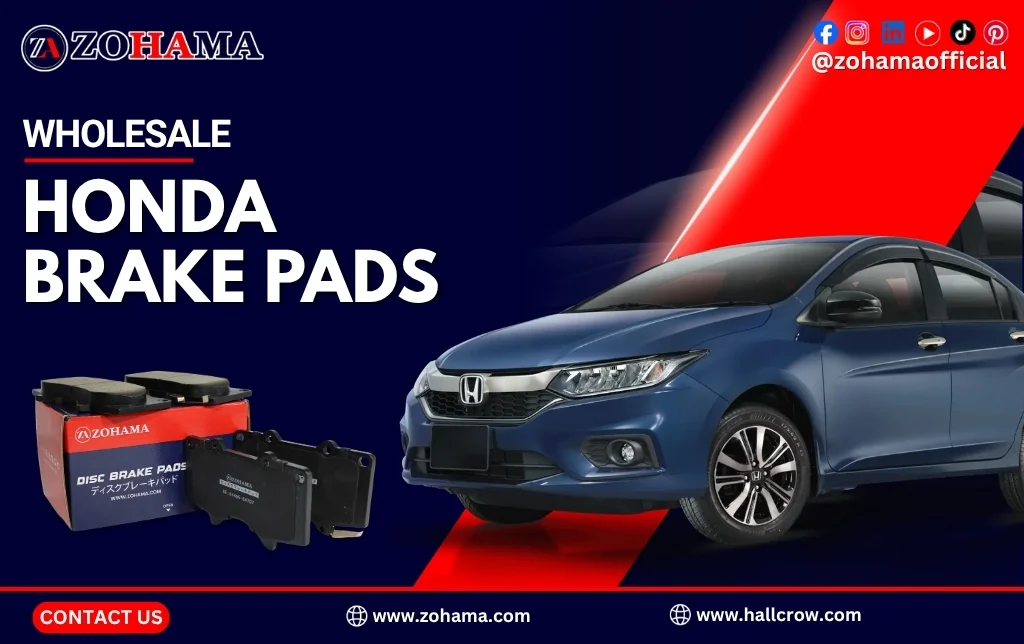
Honda is one of the steadiest lines a passenger-car parts distributor can carry. The cars stay on the road for years, the owners keep servicing them, and the brake pads wear out on a predictable cycle, which means repeat demand you can plan a purchase order around. The catch is that Honda’s line looks simpler than it is. A single model name can hide three or four different pad sets across its generations, and the high-demand numbers are exactly the ones the grey market likes to copy. This guide is about stocking Honda the way an experienced buyer does: reading the numbers correctly, avoiding the fitment traps, and sourcing factory-direct so the pad in the box matches the label on it.
Why Honda Sits in Every Serious Distributor’s Range
Demand for Honda pads is broad and self-renewing. The Civic, Accord and CR-V have sold in enormous numbers across the GCC, Africa and Central Asia, and each of those platforms has been through several generations that are all still being driven and repaired today. For a distributor that translates into three things: a large installed base, a service interval that brings the same customer back, and a brand name workshops trust enough that they will ask for it specifically. A shelf that covers the main Honda numbers is a shelf that turns over.
Zohama’s Honda brake pads range is built for exactly this demand, with each pad matched to its OE reference and vehicle application so your team can quote a fitment without a phone call. It sits inside the wider light-vehicle brake pads catalogue, so a Honda order can travel in the same container as the rest of your passenger-car range.
Reading a Honda Part Number Before You Order
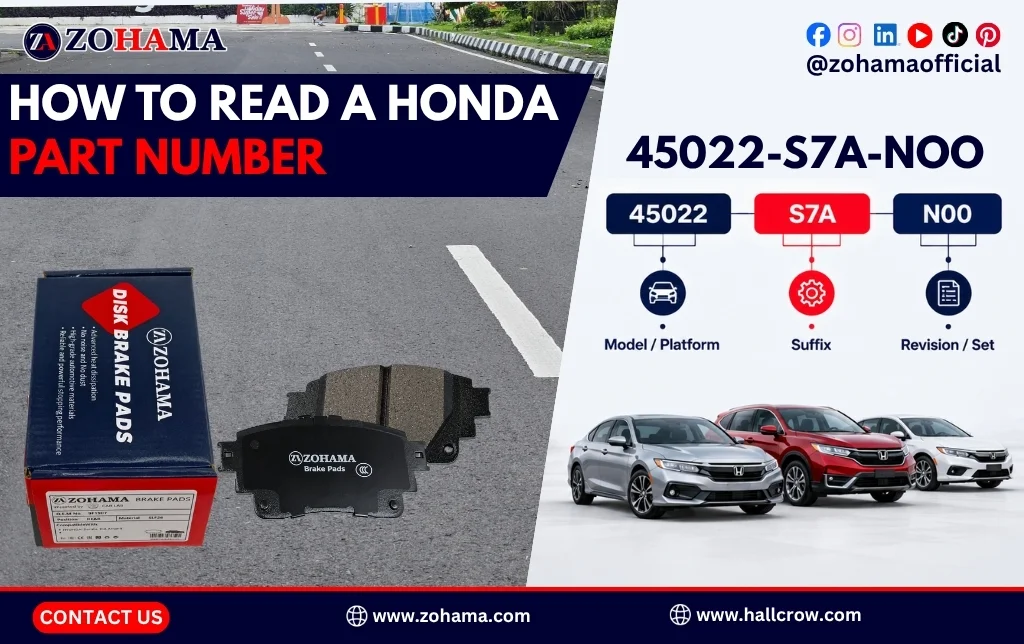
Honda’s front pad numbers usually carry a five-character prefix tied to the model platform, followed by a suffix that identifies the exact set. A number such as 45022-S7A-N00, for example, is a front pad for a specific Honda platform, and the block after the first dash is what tells you which one. Two things matter for a buyer. First, the front and rear pads carry different numbers, so a Civic order is really two line items, not one. Second, a small change in the suffix can mean a different friction shape or a different generation, not just a cosmetic revision.
The safe habit is to order against the full OE number, not the model name. Zohama lists every Honda pad with its complete reference on the OEM brake pads page, and the brake pad part-number lookup guide walks through how to confirm you are matching the exact set the vehicle needs.
The Models Behind Your Honda Orders
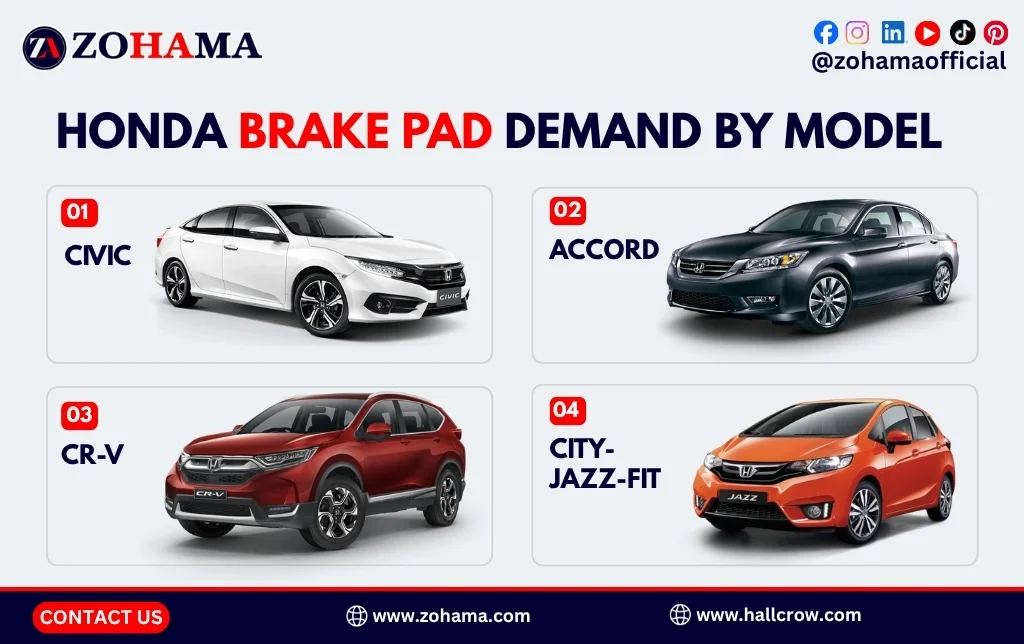
Most Honda pad demand concentrates on four platforms. Knowing which ones drive your market helps you weight the first order instead of spreading it thin across everything.
| Platform | Why it moves | Buyer note |
|---|---|---|
| Civic | Huge installed base across several generations; frequent servicing | Front and rear differ by generation; confirm the suffix |
| Accord | Long-lived sedan, higher-value owners who service on schedule | Larger front pads; steady rear demand too |
| CR-V | Popular SUV, heavier vehicle so pads wear on a firm cycle | Front demand strongest; a reliable repeat line |
| City / Jazz / Fit | High volume in compact-car markets | Smaller pad sets; verify front number, generations vary |
A first Honda order that covers the front sets for these four, plus the fastest-moving rears, will cover most of what a general workshop asks for. You can browse the full model coverage on the Honda brake pads page.
Generational Fitment: One Civic Pad Is Not Every Civic Pad
This is where inexperienced buyers lose money. “Civic brake pads” is not a single SKU. A Civic from one generation can take a different pad from the Civic two generations later, even though the customer calls both a Civic. Order by model name alone and you will end up with returns, cross-shipping and a workshop that stops trusting your fitment. The fix is not complicated, but it has to be a rule: every Honda pad on your quote is tied to its OE number and the model year range it fits, and that is what your customer confirms before you pick and pack.
Building your catalogue this way once saves the argument every time after. Zohama supplies each pad with its reference and application already matched, so importing it into your own system is a copy across, not a research project. If you sell a mixed passenger range, the same discipline runs through the whole light-vehicle catalogue.
Factory-Direct vs the Grey Market on Popular Honda Numbers
The most popular Honda numbers are also the most copied. When a pad number sells in volume, loose-boxed and unbranded versions of it appear, and they are cheap because the friction compound and the backing plate are not what the label claims. For a distributor this is a reputation risk, not a bargain: the failure shows up as a warranty claim in your market, not the seller’s. Buying factory-direct from the manufacturer removes the layer where a number gets substituted. You are ordering a known compound, pressed and finished under one quality system, tested to ECE R90, in packaging you control.
That is the core argument for sourcing Honda pads factory-direct rather than through a reseller, and it is the same reason the B2B brake pads page exists: distributor pricing, consistent batches, and documentation that stands up when your customer asks for it.
Placing and Reordering a Honda Wholesale Line
A first Honda order and every reorder after it run the same way:
- Send your Honda part list, OE numbers or vehicle applications in whatever format you already use.
- Get a quote with pricing, lead time and MOQ, plus a sample on any new number before you commit to volume.
- Confirm the order, packaging and labelling, and lock the OE numbers you approved as your reorder standard.
- Reorder against that approved list, so batch two matches batch one and your catalogue never drifts.
For a fuller view of how experienced buyers structure a first volume order, see the guide on bulk buying car brake pads.
Stock Your Honda Range
Honda is a line that rewards getting the details right: broad demand, predictable repeat, and a fitment structure that punishes shortcuts. Match by OE number, respect the generations, and buy factory-direct, and it becomes one of the most dependable shelves in your passenger-car range. Send Zohama your Honda part list for a quote, or join the distributor and partner program for factory pricing and priority stock on the fast-moving numbers.
Frequently Asked Questions
Are Honda brake pads a good wholesale line?
Yes. Honda’s large installed base and regular service intervals create steady, self-renewing demand, and workshops trust the brand enough to request it by name, which makes it a reliable repeat seller.
How do I order the correct Honda brake pad?
Order against the full OE number and the model year range, not the model name. Front and rear pads have different numbers, and generations of the same model can take different sets.
Why buy Honda pads factory-direct instead of from a reseller?
Factory-direct removes the layer where a popular number can be substituted with an unbranded copy. You get a known compound tested to ECE R90, consistent batches and packaging you control.
Can I order Honda brake pads in bulk with flexible MOQ?
Yes. Order volumes are structured around what a distributor actually moves, and you can request a sample on any new number before committing to a bulk quantity.
Conclusion
Honda demand is steady, but the money is in the details: read the numbers, respect the generations, and source from the factory rather than the grey market. Do that and a Honda shelf pays you back order after order. Zohama manufactures Honda-fit pads to OE spec and supplies them factory-direct to distributors across the GCC, Africa and Central Asia.