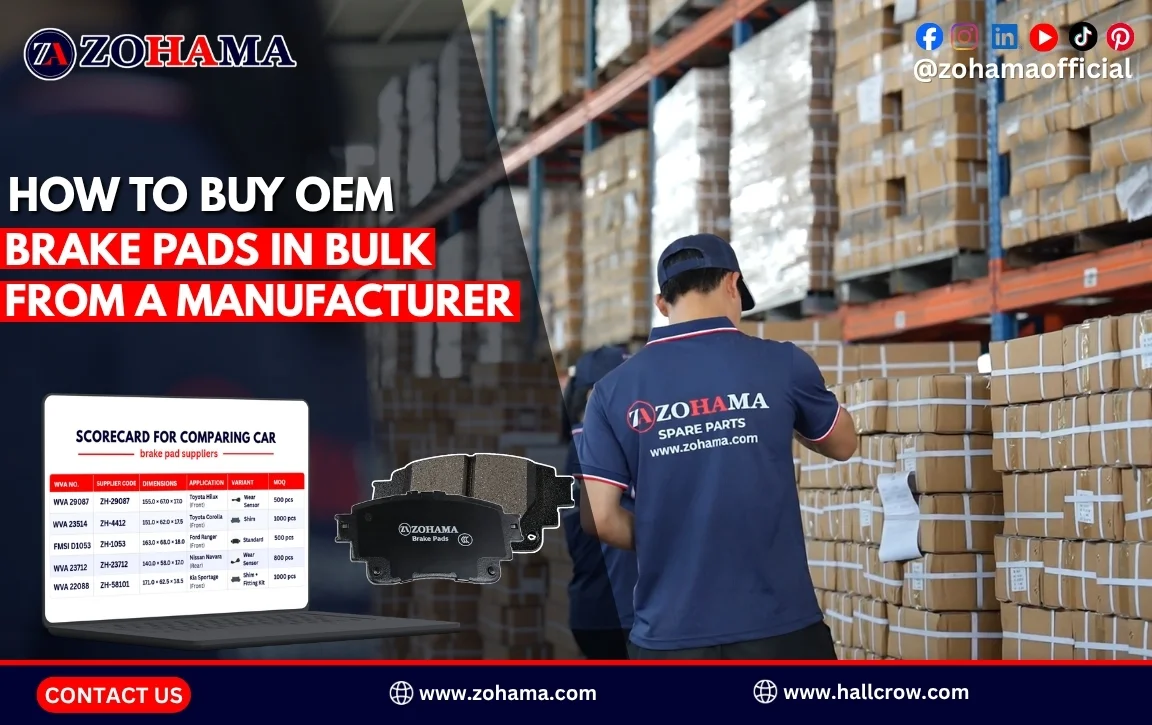
Buying a single box of brake pads and buying a container of them are not the same transaction. In bulk, small decisions get multiplied: the wrong number, a compound that varies batch to batch, or a supplier who cannot document what they shipped becomes a whole market’s worth of returns instead of one unhappy customer. This guide walks through how a distributor actually places a bulk OEM brake pad order factory-direct, from the first part list to a repeat supply line, and what to lock down at each step so the order that arrives is the one you approved.
What “Factory-Direct OEM” Actually Means for a Bulk Buyer
Two words in this space get used loosely, so it is worth being precise before money moves. “OEM” here means the pad is built to original-equipment fit, form and friction specification, and carries the OE reference number the vehicle needs, not that it came out of a car maker’s own branded box. “Factory-direct” means you are buying from the plant that formulates, presses and finishes the pad, not from a trader who buys it in and relabels it. For a bulk buyer, the second point is the one that protects the first: when you order direct, there is no layer in between where a number can quietly be substituted for a cheaper one.
Zohama is a manufacturer, so the friction formulation, pressing and finishing all happen under one quality system, tested to ECE R90. The OEM brake pads page shows how the OE-matched range is organised by number, which is where a bulk order starts.
Manufacturer vs Trader: Who You Are Actually Buying From
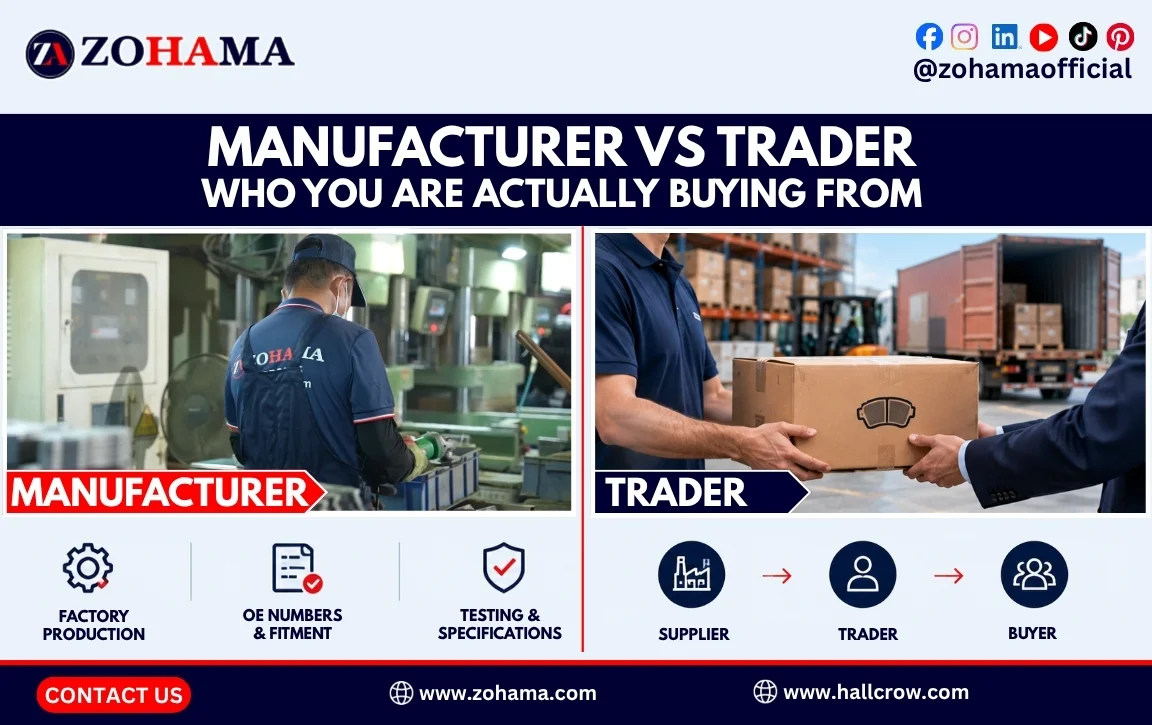
Before the first order, know which of the two you are dealing with, because it changes everything downstream. A manufacturer can explain a batch, adjust a compound, hold a specification across a full production run and stand behind the paperwork. A trader can only forward you an apology from whoever actually made the pad. In bulk, that difference is the whole risk. If a supplier cannot tell you how the pad is formulated or show you the test data, you are buying from a middleman, whatever the website says.
The reliable tell is specificity: a real manufacturer talks in OE numbers, vehicle applications and friction specs, not adjectives. The individual product pages behind the OEM catalogue state the actual number and fitment rather than “premium quality” filler, which is the signal a bulk buyer should look for.
Building Your Bulk Order: What to Prepare at Each Stage
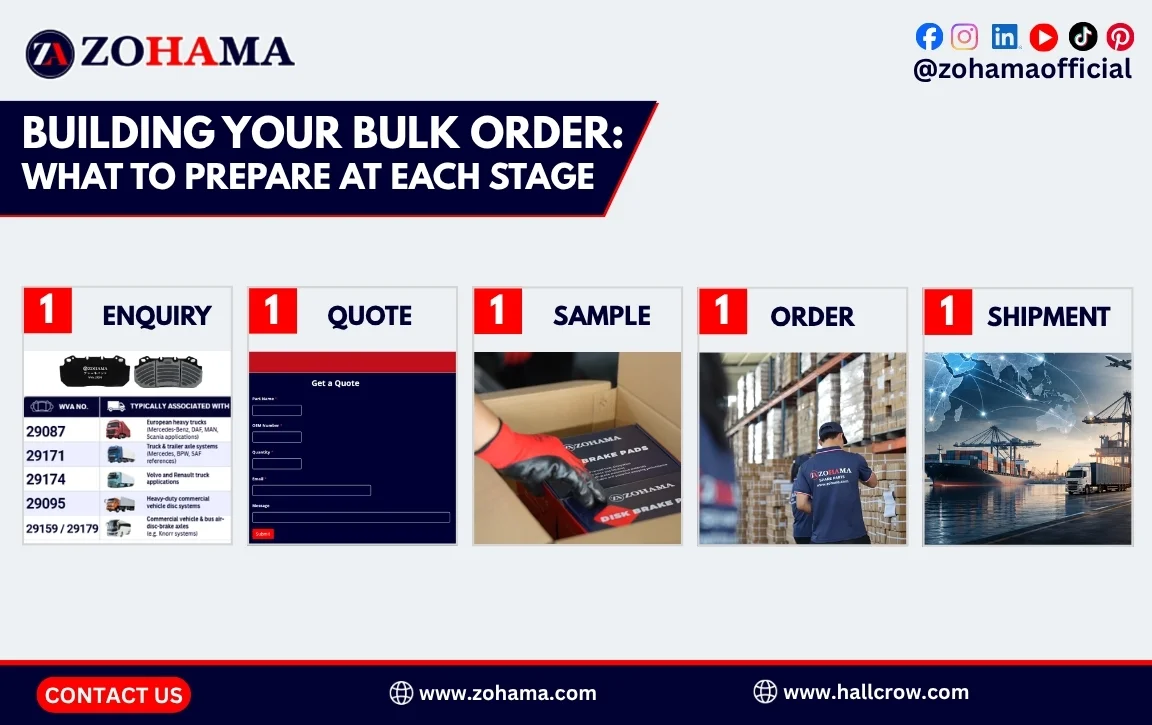
A bulk order goes smoothest when you arrive with the right information at the right stage. This is what to have ready:
| Stage | What you prepare | Why it matters |
|---|---|---|
| Enquiry | Part list, OE numbers or vehicle applications | Lets the factory quote exact pads, not guesses |
| Quote | Target volumes per number, destination market | Sets pricing tier, MOQ and correct documentation |
| Sample | The numbers you have not bought before | Confirms fit and compound before volume is committed |
| Order | Approved numbers, packaging and label choice | Locks the standard every future batch is matched to |
| Shipment | Destination and customs requirements | Ensures paperwork clears your port without delay |
If you are unsure you are matching the exact pad, the brake pad part-number lookup guide shows how to confirm a number before it goes on the order.
Samples and Approval Before You Commit
On any number you have not bought before, get a physical sample and approve it first, then keep it as your reference standard. This is the cheapest insurance in the whole process. The sample tells you the pad fits, the compound behaves, and the finish and packaging are what you expected, all before a container’s worth of it is pressed. Once approved, that sample becomes the thing every future batch is checked against, so “the same as last time” has an actual physical meaning instead of a hope.
Sample cost and turnaround are confirmed as part of the quote. For the full inspection discipline that experienced importers run alongside sampling, see the guide on quality checks for passenger car brake pads before bulk import.
MOQ, Pricing Tiers and Packaging Options
Bulk pricing is not a single number, it moves with volume, the specific pad, and how it is packed and labelled. A few things are worth understanding going in. Minimum order quantities are set per pad model and are structured around what a distributor actually moves, not a one-size pallet minimum. Pricing improves with volume, so consolidating your fastest numbers into a larger order usually beats spreading small quantities across everything. And packaging is a decision you make once: your own labelling or Zohama-branded, set up at the first order and kept consistent on every reorder.
Because the pricing comes straight from the production line with no import-and-relabel markup in between, factory-direct is where the margin actually sits for a distributor. The B2B brake pads page is set up for this: send a part list and get pricing, lead time and MOQ back, with no account to create just to see a number.
Lead Time, Documentation and Getting the Container Moving
Lead time depends on availability, order volume and destination, and the factory gives a specific timeline with every quote so you can plan inventory around it rather than guess. The other half of a clean shipment is documentation: a manufacturer with real export experience knows which paperwork your customs office wants before you ask, and handles it for the destination market. That is the difference between a container that clears and one that sits at the port accruing costs while someone chases a missing document.
Reordering: Turning One Order Into a Supply Line
The first bulk order is a test. The value is in the second, third and tenth, when the process is known and the standard is set. To get there, do three things after the first order lands: record what you approved (the sample, the numbers, the packaging); reorder against that exact approved list so batch two matches batch one; and keep the OE-number-and-application format in your own catalogue so nothing drifts as your range grows.
Handled this way, a manufacturer stops being a supplier you buy from and becomes a supply line you plan around. For the wider view of structuring volume orders over time, the bulk buying car brake pads guide covers it, and the light-vehicle catalogue shows the full range a single supply line can cover.
Order With Confidence
Buying OEM brake pads in bulk is a discipline, not a gamble: buy from the maker not a trader, sample before you commit, lock your approved numbers, and reorder against them. Send Zohama your part list for factory-direct pricing, or join the distributor and partner program for priority stock and volume pricing on your market’s fastest movers.
Frequently Asked Questions
What does “OEM brake pads” mean when buying in bulk?
It means the pad is built to original-equipment fit, form and friction spec and carries the correct OE reference number. It does not require a car maker’s branded box; it requires the pad to match the OE specification.
What is the minimum order quantity for a bulk OEM order?
MOQ is set per pad model and structured around distributor volumes rather than a fixed pallet minimum. Send your part list and the factory confirms exact minimums for your order.
Should I order a sample before a bulk order?
Yes, on any number you have not bought before. Approve a physical sample first and keep it as your reference standard, so every future batch can be checked against it.
Why buy factory-direct instead of through a trading company?
Factory-direct removes the layer where a number can be substituted, gives you consistent batches under one quality system, and removes the reseller markup, which is where the distributor margin sits.
Conclusion
A bulk order multiplies whatever you put into it. Prepare the right information at each stage, buy from the manufacturer, sample and approve before you commit, and turn the first order into a documented, repeatable supply line. Zohama manufactures OEM-spec brake pads and supplies them factory-direct to distributors across the GCC, Africa and Central Asia.