Most buyers choose a brake pad by its material, ceramic or NAO or low-metallic, and stop there. But two pads of the same material can be worlds apart in quality. That difference is grade. Grade is what separates a pad that performs and lasts from one that fades and generates complaints, even when both are labelled the same. This buyer’s reference explains what grade means, the common quality tiers, and how to spec the right grade for your market.
Grade sits alongside material choice, which we cover in matching brake pad material to market and the brake pad materials breakdown. This article focuses on quality level.
What “Grade” Means for a Brake Pad
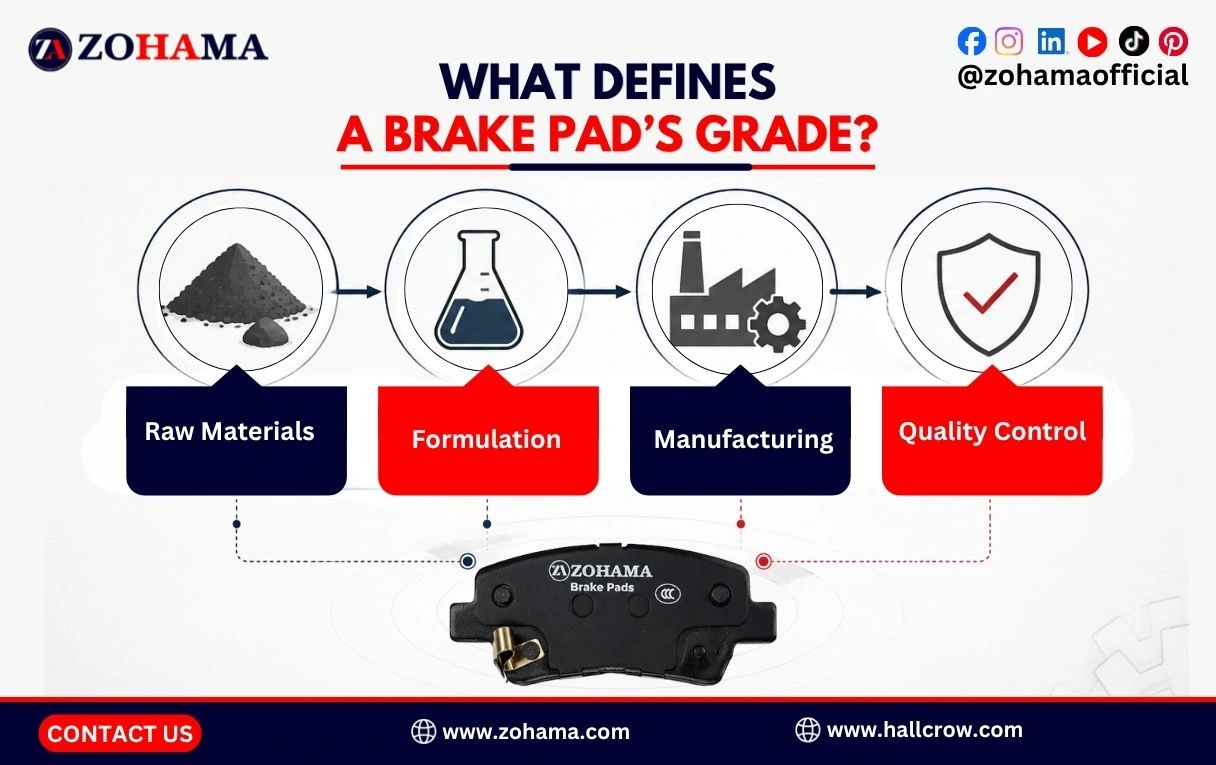
Grade is the quality level of a pad within its material type. It is set by four things working together:
- Raw materials. The purity and quality of the friction and backing components.
- Formulation. How well the compound is balanced for performance and wear.
- Manufacturing. The precision and consistency of the production process.
- Quality control. How rigorously each batch is tested before it ships.
The Common Grade Tiers
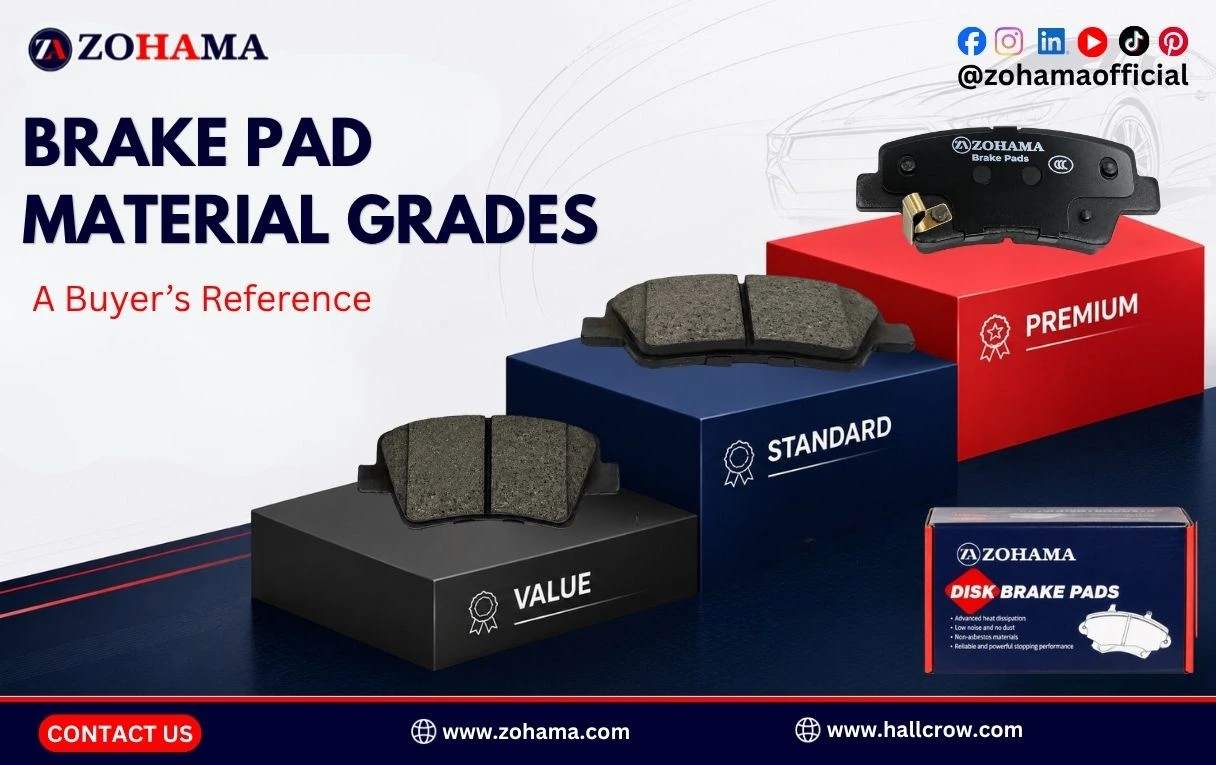
Most passenger car brake pads fall into three broad grades. Knowing them lets you match quality to price and market:
| Grade | Best for | What defines it |
|---|---|---|
| Economy / value | Price-sensitive markets and older vehicles | Lower-cost materials and basic performance, while still safe and compliant. |
| Standard / OE-equivalent | Mainstream everyday demand | Balanced quality and price that matches typical original-equipment performance. |
| Premium / OE | Quality-focused markets and newer or premium cars | Top raw materials, best consistency, longest life, lowest noise and dust. |
Every grade should still be safe and compliant. Grade is about performance, life and refinement, not about whether a pad is roadworthy. Our types of brake pads page covers how material and grade combine.
Why Grade Matters as Much as Material
Two ceramic pads can perform completely differently if one is a value grade and the other is premium. The material sets the character; the grade sets the quality. For a distributor, ignoring grade leads to inconsistent products under the same label, which drives returns and erodes trust. In a disc brake that difference shows up as noise, dust, fade and short life. Judging grade is therefore central to buying well.
How to Identify the Grade You Are Buying
Grade is not always stated, so verify it rather than assume:
- Ask for test data on friction level, wear and noise, not just a material name.
- Check certification and quality systems behind the product.
- Request a sample and judge finish, bonding and consistency.
- Confirm batch consistency, so the grade holds across the whole order.
This ties directly to inspection. See our quality checks for car brake pads for the full process.
Matching Grade to Your Market
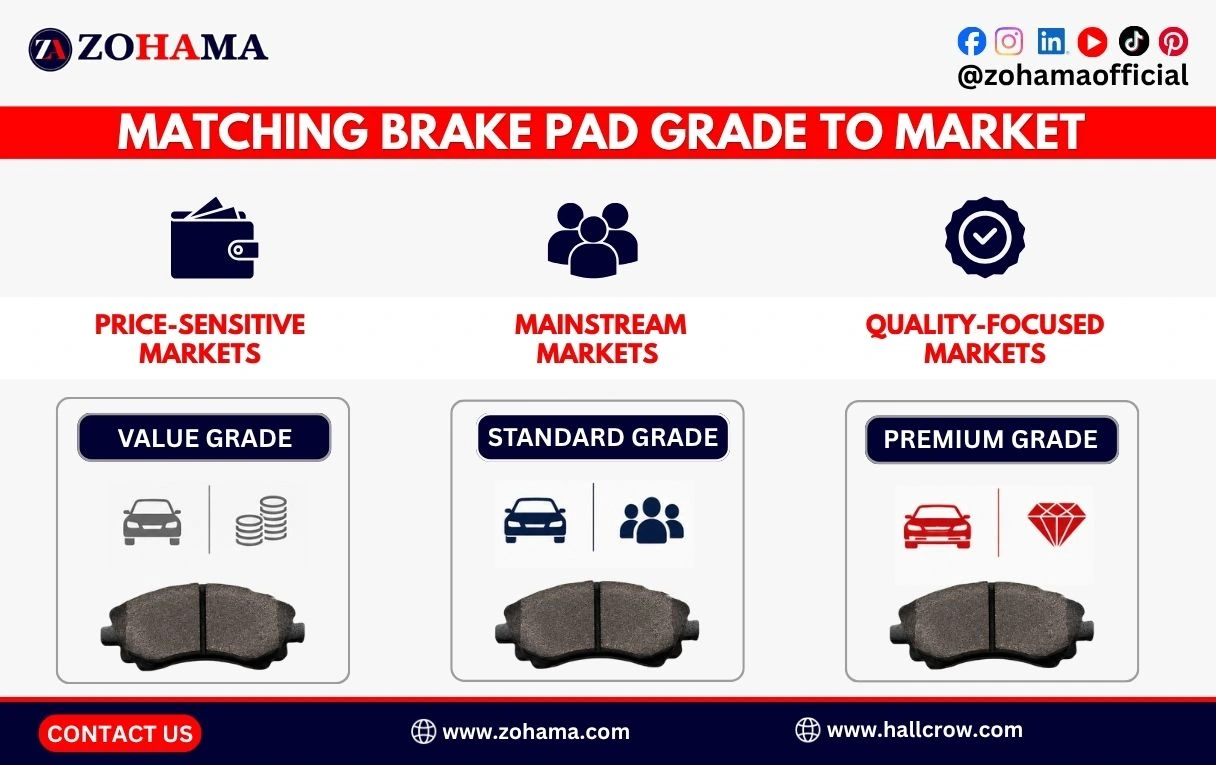
The right grade depends on who you sell to:
- Price-sensitive markets: lead with value grade, kept safe and compliant.
- Mainstream markets: standard, OE-equivalent grade covers most demand.
- Quality-focused or premium markets: premium grade for newer and higher-value cars.
Most distributors carry more than one grade so they can serve different customers and price points from the same range.
How to Spec by Grade
Make grade an explicit part of every order, not an assumption. State the material, the grade, the compliance your market requires, and the exact reference. See our brake pad part-number lookup guide for identifying references, and choosing a passenger car brake pad supplier for confirming a supplier can deliver the grade consistently.
Build the Right Grade Mix
A well-run range offers the right grade for each customer, not one grade for everyone. If you want a manufacturer that can supply consistent value, standard and premium grades across materials, explore our distributor and partner program to request a catalogue and pricing for your market.
Frequently Asked Questions
What does brake pad grade mean?
Grade is the quality level of a pad within its material type, set by the raw materials, formulation, manufacturing and quality control. Two pads of the same material can be different grades.
Why does grade matter if two pads are the same material?
Because the material sets the character and the grade sets the quality. A value-grade ceramic pad and a premium-grade ceramic pad can perform very differently in noise, dust, life and fade.
How do I know what grade I am buying?
Ask for test data, check certification, request a sample, and confirm batch consistency. Grade is not always stated, so verify rather than assume.
Which grade should I stock?
It depends on your market. Price-sensitive markets favour value grade, mainstream markets favour standard, and quality-focused markets favour premium. Most distributors carry more than one grade.
Conclusion
Material tells you what a brake pad is; grade tells you how good it is. Understand what sets grade, know the value, standard and premium tiers, verify the grade you are buying, and match it to your market. Spec grade explicitly and you avoid the inconsistency that quietly costs distributors customers, while giving every buyer the right pad at the right price.