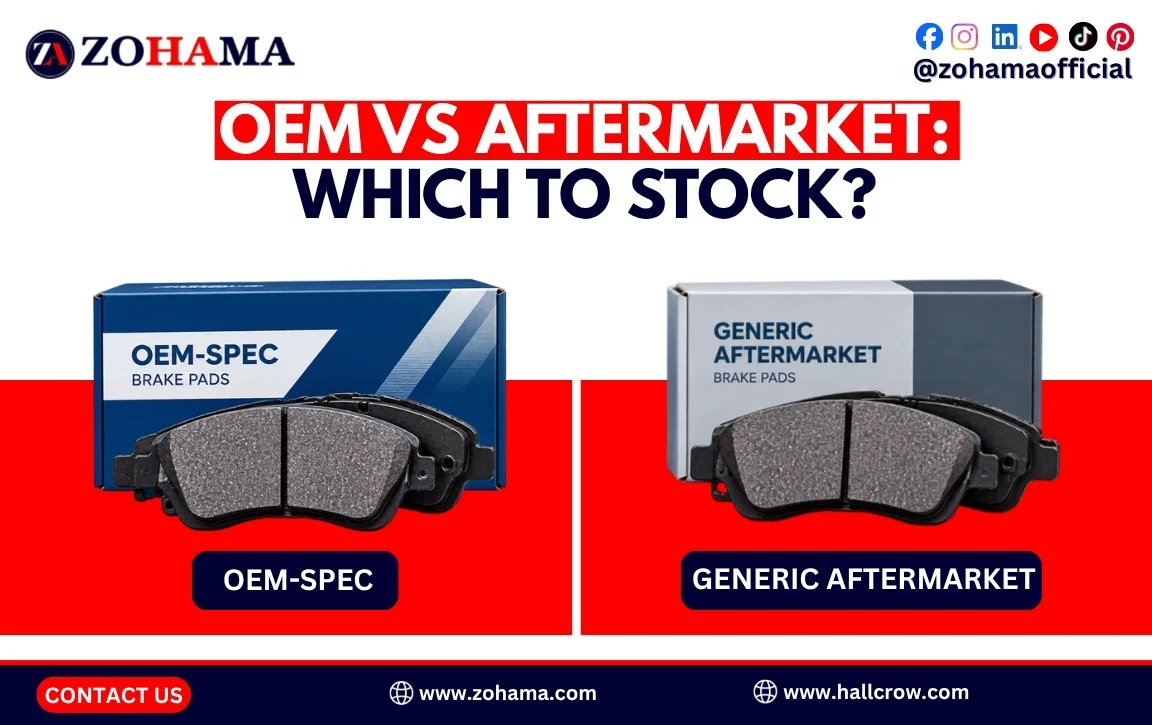
Every distributor faces this decision at the shelf: stock OEM-spec brake pads, generic aftermarket, or both? The answer is not the same for every market, and getting it wrong shows up either in thin margins or in returns. This article breaks down what the two categories really are, weighs them factor by factor, and gives you a simple way to decide what belongs on your shelf, and in what mix.
First, a quick definition, because the term OEM is used loosely: on our OEM brake pads page, OEM-spec means built to the original-equipment fit, form and friction specification, and matched by OEM number.
First, Clear Up the Labels
The confusion starts with the words. “OEM” can mean a part actually made by the vehicle maker’s supplier, or, more commonly in the aftermarket, a pad built to the same specification as the original and matched by OEM number. “Aftermarket” covers everything from premium equivalents to the cheapest generic pad that merely fits the caliper. So the real choice is not OEM versus aftermarket as two clean boxes; it is OEM-spec quality versus generic quality, at different price and risk levels.
The Comparison, Factor by Factor
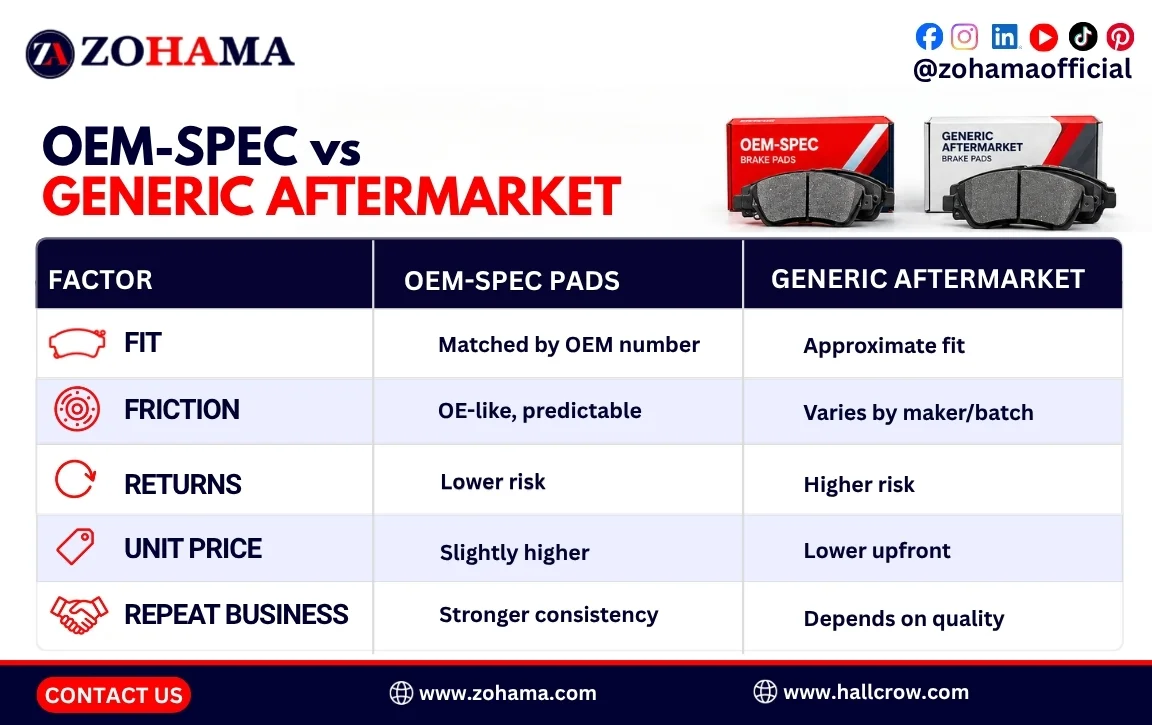
Here is how the two stack up on the things that affect a distributor’s business, not just the driver’s:
| Factor | OEM-spec pads | Generic aftermarket |
|---|---|---|
| Fit | Matched to the original by OEM number. | Approximate, fits the caliper. |
| Friction | Tuned to OE behaviour, predictable. | Varies by batch and maker. |
| Returns / complaints | Lower, consistent performance. | Higher risk on noise, dust, wear. |
| Unit price | Slightly higher. | Lower up front. |
| Repeat business | Stronger, customers trust the fit. | Weaker if quality drifts. |
The pattern is clear: generic aftermarket wins on up-front price, OEM-spec wins on everything that affects repeat business and returns.
When Generic Aftermarket Makes Sense
Cheap generic pads are not always the wrong call. In very price-sensitive segments, for older vehicles, or where a customer explicitly wants the lowest cost, a budget line has a place. The risk is that the savings are front-loaded: they arrive at purchase, while the costs, returns, complaints and lost repeat business, arrive later and are harder to see. Stock generic where the market truly demands it, with eyes open to that trade-off.
When OEM-Spec Is the Stronger Line
For the core of most ranges, OEM-spec pads are the stronger commercial choice. They match by number so your team quotes fitment with confidence, they perform predictably so returns stay low, and they carry the certifications your customers increasingly ask about. On safety-critical parts, that reliability is what builds the trust that brings customers back. It is why the light vehicle brake pads range is built to OEM specification and matched by OEM number.
The Real Answer: A Deliberate Mix
Most successful distributors do not choose one or the other; they choose a deliberate mix. Lead with OEM-spec on the fast-moving, fitment-sensitive references where trust and repeat business matter most, and carry a generic option only where the market genuinely demands the lowest price. The mistake is defaulting to whatever is cheapest without deciding, which quietly fills your shelf with returns risk.
How to Decide for Your Market
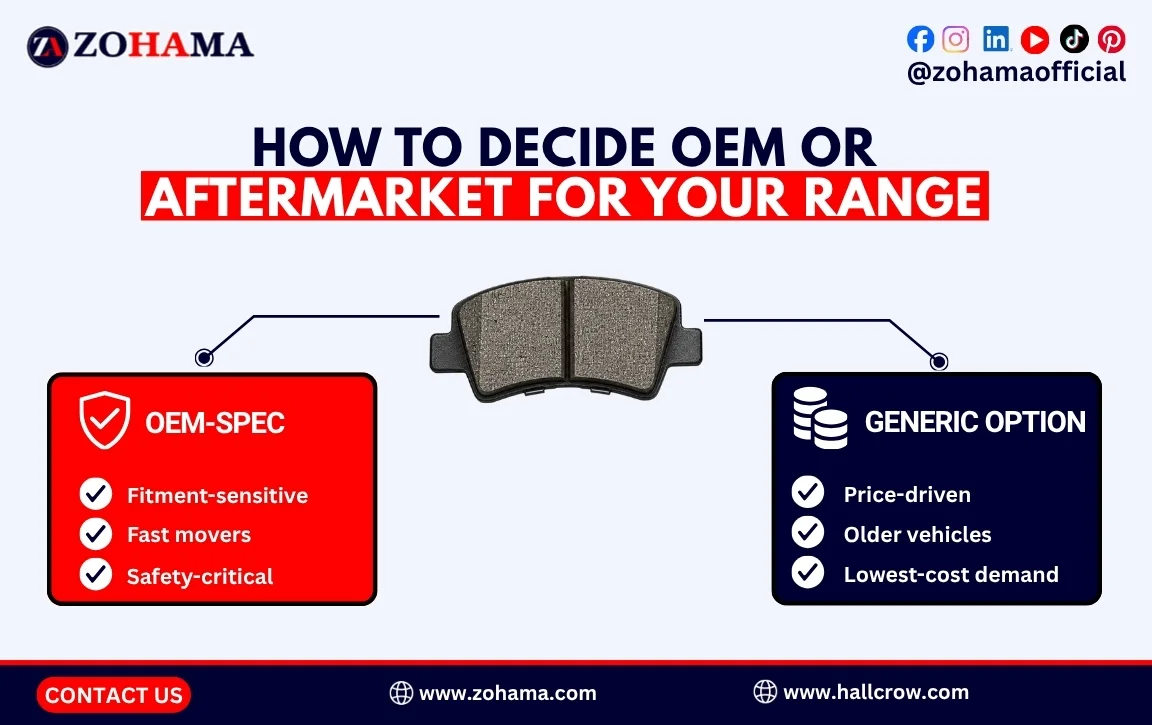
Run each core reference through three quick questions:
- Is it fitment-sensitive or safety-critical? Lean OEM-spec.
- Is it a fast mover you will reorder for years? Lean OEM-spec, so quality never drifts.
- Is the segment purely price-driven? A generic option may earn a place, alongside the OEM-spec line, not instead of it.
For how to plan the resulting range and order it, see our guides on bulk buying car brake pads and choosing a passenger car brake pad supplier.
Build Your Range
OEM versus aftermarket is not a loyalty test; it is a stocking decision you make reference by reference. Lead with OEM-spec where fit and trust matter, add generic only where the market demands it, and source both from a manufacturer who holds quality consistent. To build an OEM-spec range matched by number, browse our OEM brake pads, or request a quote through our B2B brake pads page.
Frequently Asked Questions
What is the difference between OEM and aftermarket brake pads?
OEM-spec pads are built to the original-equipment fit and friction specification and matched by OEM number. Aftermarket covers everything from premium equivalents to cheap generic pads that only fit the caliper, so quality varies widely.
Should a distributor stock OEM or aftermarket?
Usually a deliberate mix. Lead with OEM-spec on fast-moving, fitment-sensitive references where trust and repeat business matter, and carry a generic option only where the market genuinely demands the lowest price.
Are OEM-spec brake pads worth the higher price for resale?
For most core references, yes. The slightly higher unit cost is offset by lower returns, predictable performance and stronger repeat business, which protect margin over time.
How do I know a pad is genuinely OEM-spec?
It should be matched by OEM number, carry certifications such as IATF 16949 and ECE R90, and come from a manufacturer who can show consistent batch quality.
Conclusion
The OEM versus aftermarket question is really a series of small stocking decisions, one per reference, not a single side to pick. Understand what the labels really mean, weigh the factors that affect your business rather than just the driver’s, lead with OEM-spec where fit and trust matter, and add generic only where the market demands it. Decide deliberately, and your range balances margin and reliability instead of drifting toward whatever is cheapest.