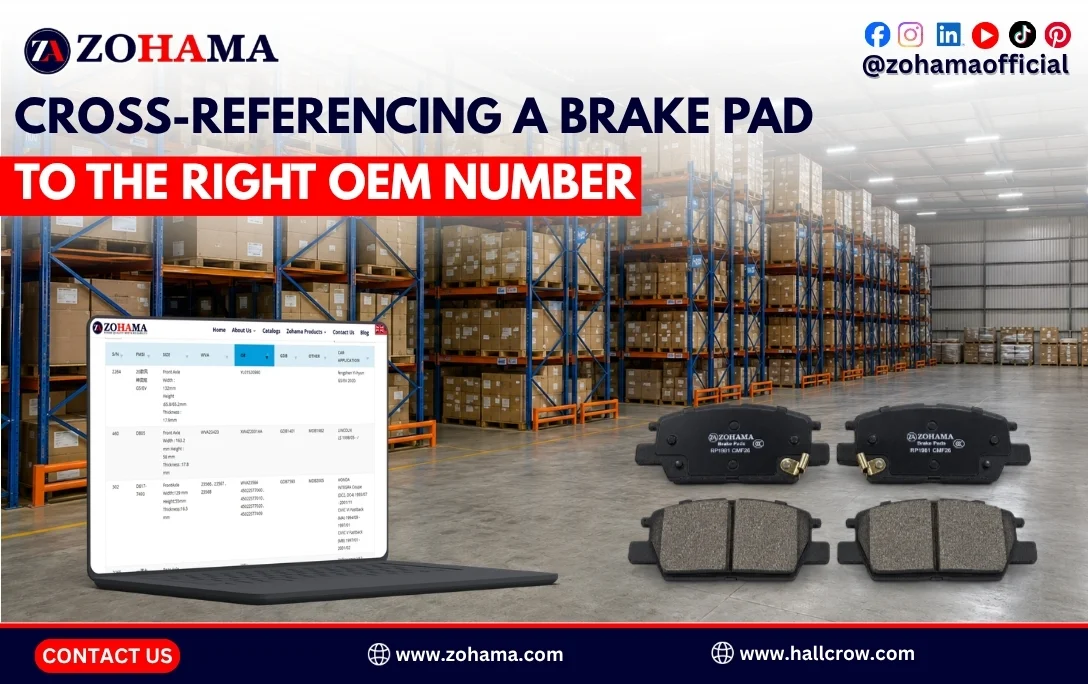
Every wrong brake pad on a bulk order started as a cross-reference that was never done. The distributor guessed from a model name, the number did not match the pad, and a whole line of stock became returns. Cross-referencing is the small discipline that prevents it: turning a vehicle, a part off the shelf or a customer’s enquiry into the one correct OEM number to order. This guide explains the numbers on a brake pad, how to cross-reference from either direction, and how to build a reference sheet so ordering the right pad becomes a lookup rather than a guess.
What Cross-Referencing Means When You’re Ordering
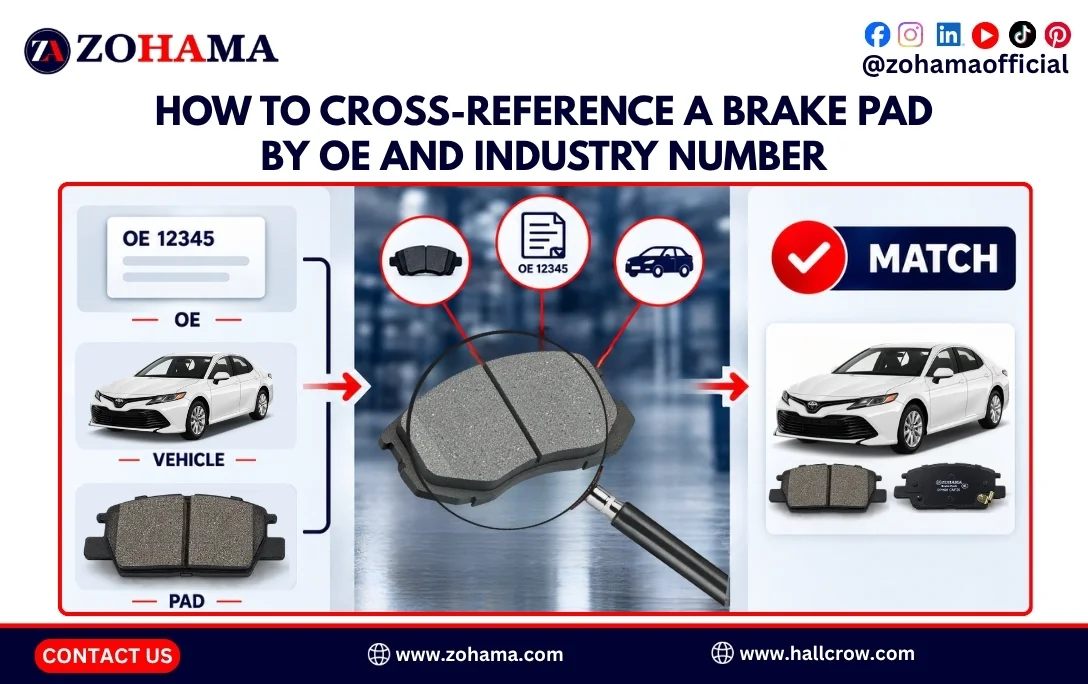
Cross-referencing is simply confirming that a pad, a number and a vehicle all describe the same part before money moves. For a distributor it works in two directions. Sometimes you start with an OE number a customer quotes and need to confirm the pad and the vehicles it covers. Sometimes you start with a vehicle and need to find the OE number to order against. Either way the goal is the same: one confirmed number, not a model name and a hope. Done as a habit it removes almost every fitment return from a bulk order.
The Numbers on a Brake Pad
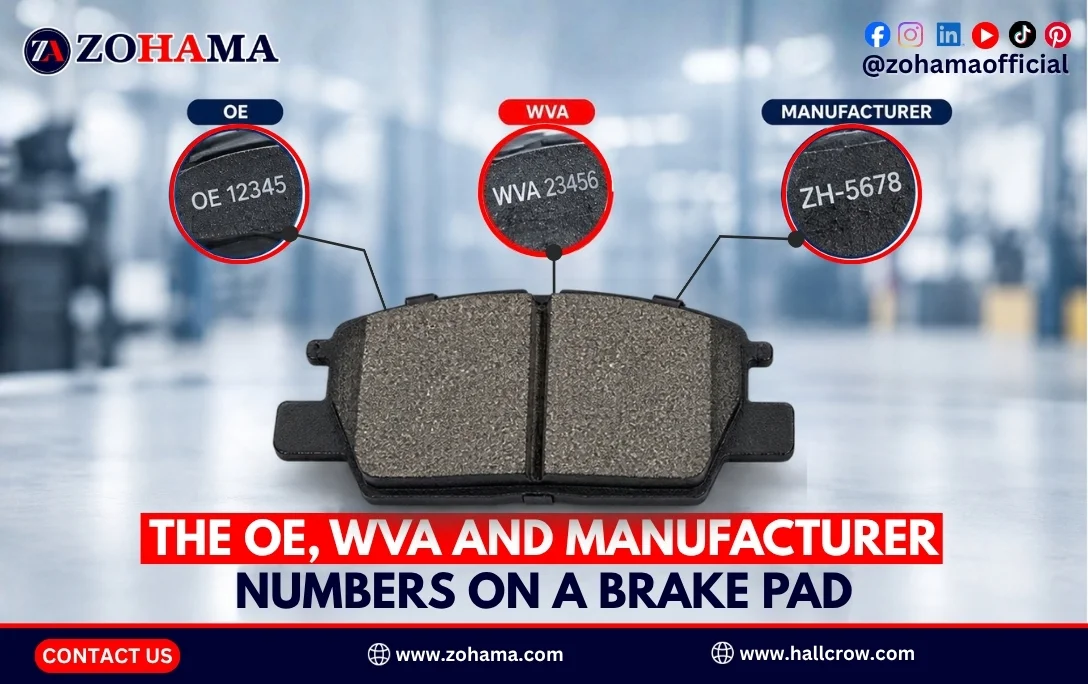
A brake pad can carry more than one reference, and knowing what each is stops the confusion that causes mis-orders:
- OE number: the vehicle manufacturer’s own part number for the pad originally fitted. This ties the pad to a make and often a model and axle.
- Industry reference (WVA or FMSI): a standardised number that identifies the pad shape and configuration independent of any one brand.
- Manufacturer / supplier code: the maker’s own catalogue number, which should map back to the OE and industry references.
A good supplier lists every pad against these references. Zohama’s OEM brake pads page is organised by OE number for exactly this reason, so a cross-reference is a lookup rather than research.
Starting From an OE Number
When a customer quotes an OE number, that is the strongest starting point you can have. Confirm it against the pad’s specification and the vehicles it covers, and you have both the exact part and the demand behind it, because one OE-referenced pad often fits several vehicles. This is the fastest, safest order to place: the number came off the original part or the vehicle’s parts catalogue, so there is little to guess.
The brake pad part-number lookup guide walks through confirming an OE number against the correct pad before it goes on an order.
Starting From a Vehicle
Often you start the other way: a workshop names a make, model and year, and you need the OE number to order. Here the discipline matters most, because a model name spans generations and axles that can take different pads. Narrow it down by confirming the exact variant and the axle (front or rear), then match to the OE number. Never stop at the model name; the name is the question, the OE number is the answer.
How the Numbers Connect
Cross-referencing is lining these up until they agree. Worked as a habit it looks like this:
| You start with | You confirm against | You end with |
|---|---|---|
| An OE number from the customer | The pad spec and its fitments | The exact pad and the vehicles it covers |
| A vehicle, axle and variant | The matching OE number | One number to order against |
| A pad on your shelf | Its OE and industry references | The vehicles it correctly fits |
Why This Matters for a Bulk Order
On a single retail sale a mismatch is one return. On a bulk order it is a multiplied one: the wrong number ordered in volume becomes a container of stock you cannot sell and a market full of workshops who stop trusting your fitment. Cross-referencing before the order is the cheapest insurance a distributor buys. It costs a few minutes per line and saves the freight, the write-off and the reputation.
This is why cross-referencing sits at the front of the bulk buying car brake pads process, and why the B2B brake pads page quotes against confirmed numbers rather than model names.
Build a Cross-Reference Sheet for Your Catalogue
The buyers who never mis-ship keep their own cross-reference sheet and add to it with every confirmed order. A simple structure holds it together:
- Record each confirmed pad with its OE number, industry reference and the vehicles it fits.
- Note the axle (front or rear) so a vehicle’s two line items stay distinct.
- Reuse the sheet on the next enquiry, so a repeat vehicle is an instant lookup.
- Reorder against the recorded number, never the model name, every time.
Order the Right Number, Every Time
Cross-referencing is the habit that turns brake pad ordering from a guess into a lookup, and it is what keeps a bulk order clean. Zohama lists every pad by its OE and industry references so the cross-reference is built in. Send your part list or vehicle applications for a quote, or join the distributor and partner program for factory pricing on confirmed, cross-referenced numbers.
Frequently Asked Questions
What is a brake pad cross-reference?
It is confirming that a pad, its OE and industry numbers, and a vehicle all describe the same part before you order, so you place the one correct OEM number rather than guessing from a model name.
What numbers are on a brake pad?
Usually the OE number (the vehicle maker’s part number), an industry reference such as WVA or FMSI (identifying the pad shape), and the manufacturer’s own catalogue code, which should map back to the others.
How do I find the OE number from a vehicle?
Confirm the exact variant and the axle, then match to the OE number rather than stopping at the model name, since one model can span generations and axles that take different pads.
Why does cross-referencing matter for bulk orders?
A mismatch ordered in volume becomes a container of unsellable stock and lost workshop trust. A few minutes of cross-referencing per line saves the freight, the write-off and the reputation.
Conclusion
Cross-referencing to the right OEM number is the discipline that keeps a brake pad order correct, whether you start from a number or a vehicle. Confirm the pad, the number and the fitment until they agree, record it, and reorder against it. Zohama lists its pads by OE and industry reference so that cross-reference is a lookup, not a research project.