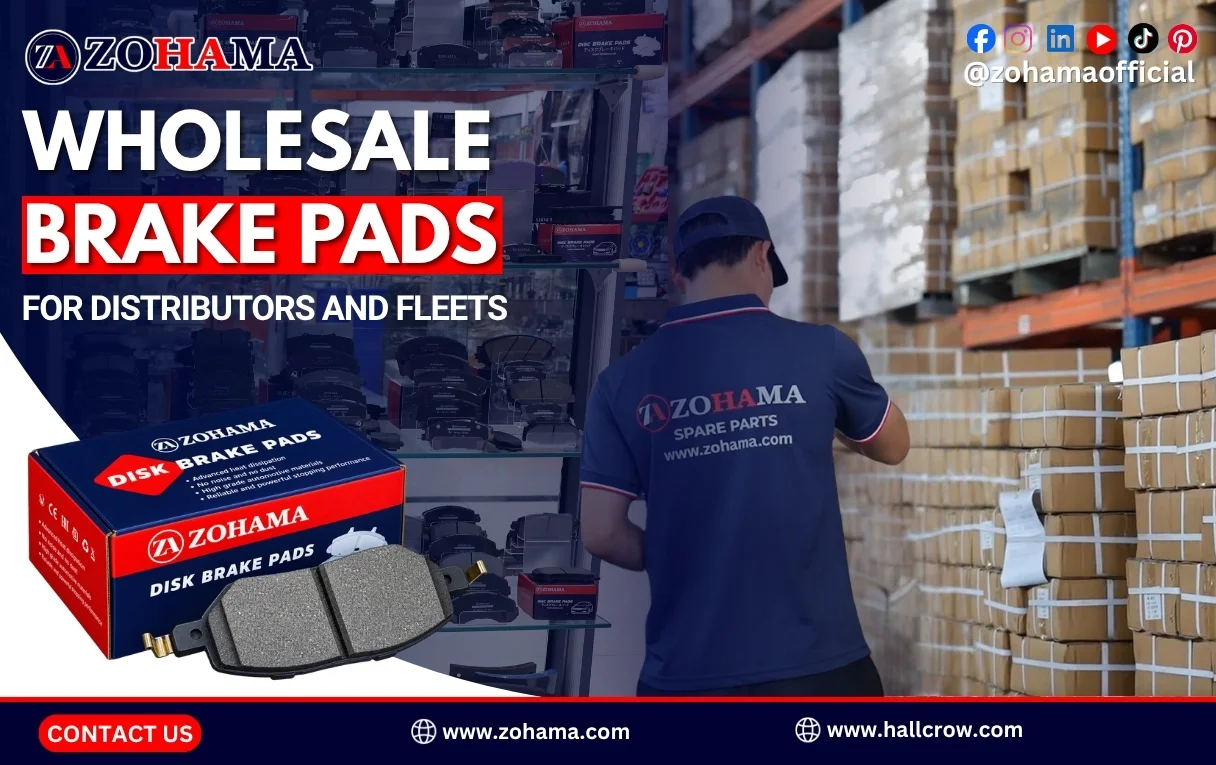
Buying brake pads wholesale is a different discipline from buying them retail, and the businesses that do it well treat it as one. Wholesale is not just “the same pad, cheaper by the box.” It changes where your margin comes from, how you plan a range, and what consistency has to mean across a shelf you restock again and again. This guide sets out how wholesale brake pad buying actually works for distributors, importers and fleet operators, and how to build a wholesale line that holds its quality and its price over time.
What “Wholesale” Really Changes About Buying Brake Pads
At retail you buy one pad set for one vehicle and the transaction ends. At wholesale you buy to resell or to keep a fleet running, which means the decision is about a range and a supply line, not a single part. Three things change with it: you deal directly with a sales team on volume, packaging and lead time instead of a cart; the pad has to hold its specification across a whole production run, not one box; and the price has to survive a container without eroding your margin. Everything else follows from those three.
Zohama’s light-vehicle brake pads catalogue is built around this: every pad carries its OE reference and application so a wholesale buyer can quote a range without checking each item, and the B2B brake pads page handles the volume side directly.
Who Buys Brake Pads Wholesale
Wholesale brake pad demand comes from a specific set of buyers, and knowing which one you are shapes how you order:
- Importers bringing container loads into a market, who need broad coverage and clean documentation.
- Regional distributors running a warehouse and a sales team, who reorder against a set range.
- Independent wholesalers supplying garages and parts shops, who compete on availability and fitment accuracy.
- Fleet operators and workshop chains ordering enough volume to want factory pricing over retail.
The Economics: Where Wholesale Margin Comes From
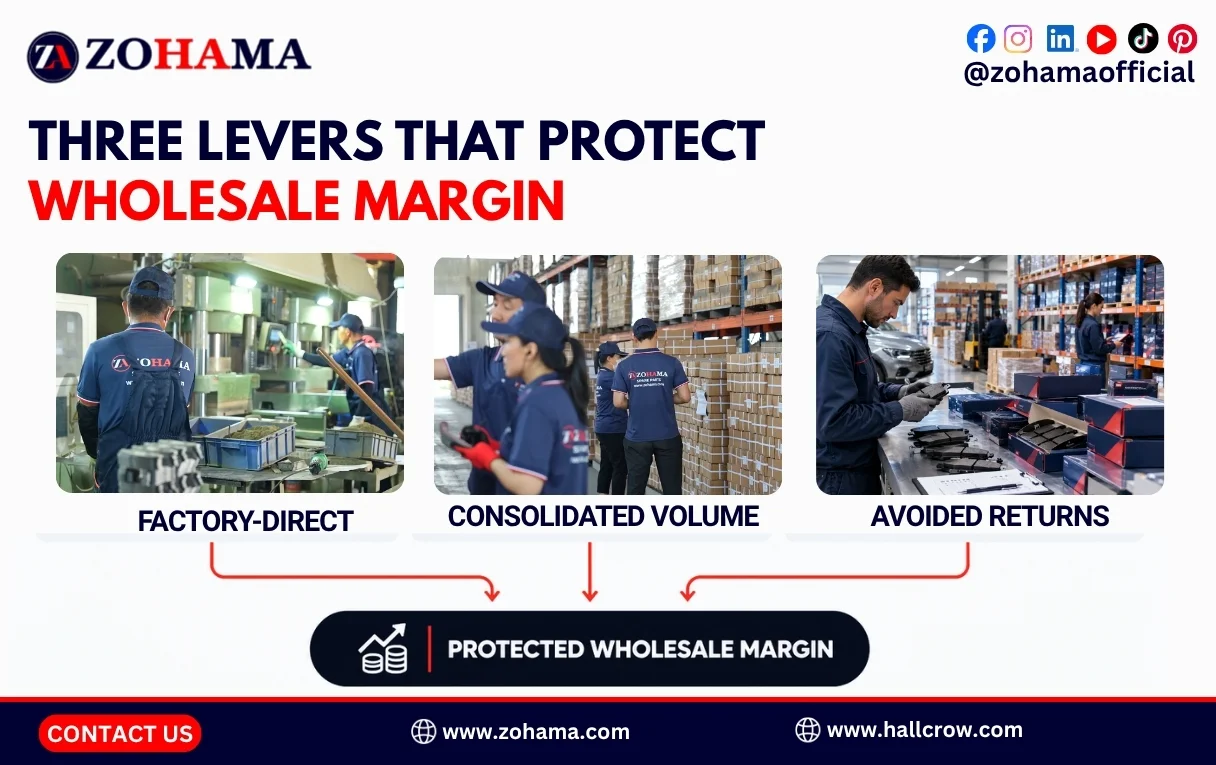
Wholesale margin is not just the gap between your buy price and your sell price. It comes from three levers a good buyer manages together. Buying factory-direct removes the reseller markup, so the margin starts with you rather than with a middleman. Consolidating your fastest-moving numbers into larger orders improves the unit price, because pricing tiers reward volume. And avoiding returns protects the margin you already have, since a batch that fails in your market costs far more than the discount that cheap batch offered. The distributors who last are the ones who defend all three, not just the first.
Building a Wholesale Range That Covers Your Market
A wholesale range works when it matches the vehicles actually on the road in your market. A sensible way to weight a first order:
| Range tier | What it covers | Why it earns its shelf space |
|---|---|---|
| Core movers | Top Japanese and Korean model pads | Highest turnover; funds the rest of the range |
| Brand depth | Toyota, Honda, Nissan, Hyundai fronts and rears | Workshops ask for these by name |
| European line | Mercedes and common European fitments | Higher value per unit, steady demand |
| Chinese-car line | Growing Chinese passenger brands | Fast-rising demand many suppliers miss |
| Heavy option | Truck and bus pads if you supply fleets | Captures commercial buyers from one supplier |
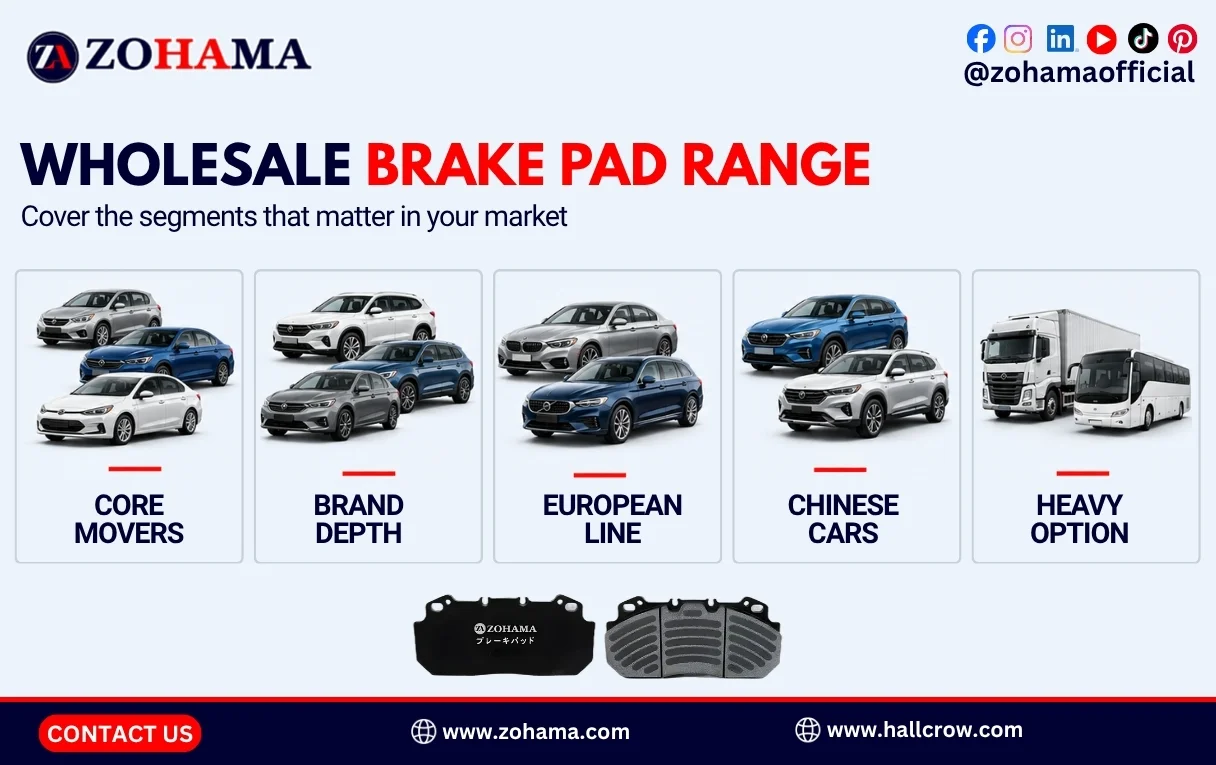
You can browse the passenger range on the light-vehicle catalogue, match exact fitments through the OEM brake pads page, and cover the commercial side from the heavy-vehicle brake pads range if your customers run trucks and buses.
Planning a Wholesale Order
A wholesale order runs cleanest when it is planned, not reactive. Send your part list, OE numbers or vehicle applications in the format you already use; get a quote with pricing, lead time and MOQ, plus a sample on any new line; confirm the order, packaging and labelling; and take delivery with documentation handled for your market. Doing it in that order means the range you receive is the range you approved.
For the full mechanics of structuring a first volume order, the bulk buying car brake pads guide covers it, and the part-number lookup guide helps confirm every number before it goes on the order.
Keeping a Wholesale Line Consistent
The value of a wholesale line is repeat, and repeat depends on consistency. Lock your approved OE numbers as a standard, reorder against that exact list so each batch matches the last, and keep the number-and-application format in your own catalogue so nothing drifts as the range grows. A wholesale shelf that behaves the same on the tenth order as the first is what turns a supplier into a supply line and a customer into a repeat one.
Stock a Wholesale Line That Holds
Wholesale rewards the buyer who treats it as a system: direct pricing, a range matched to the market, and consistency defended order after order. Send Zohama your part list for a wholesale quote, or join the distributor and partner program for factory pricing and priority stock on your market’s fastest movers.
Frequently Asked Questions
What is the minimum order for wholesale brake pads?
MOQ is set per pad model and structured around distributor volumes rather than a fixed pallet minimum. Send your part list and the exact minimums for your order are confirmed with the quote.
Where does wholesale margin actually come from?
From buying factory-direct to remove the reseller markup, consolidating fast movers into larger orders for better unit pricing, and avoiding returns, since a failed batch costs more than any discount saved.
How do I build a wholesale range for my market?
Match it to the vehicles on the road locally: core Japanese and Korean movers, brand depth in Toyota, Honda, Nissan and Hyundai, a European line, a Chinese-car line, and a heavy option if you supply fleets.
Can fleets buy brake pads wholesale directly?
Yes. Fleet operators and workshop chains ordering enough volume can buy factory-direct at wholesale pricing rather than retail, covering both passenger and commercial pads from one supplier.
Conclusion
Wholesale brake pads reward planning over price-chasing. Understand where the margin comes from, build a range that fits your market, plan each order, and defend consistency across every reorder. Do that and a wholesale line becomes one of the most dependable parts of the business. Zohama manufactures OE-spec brake pads and supplies distributors, importers and fleets factory-direct across the GCC, Africa and Central Asia.