Searching for a brake pad manufacturer in China returns hundreds of names, and on the surface they look alike: similar photos, similar promises, similar price ranges. The difference that matters to a distributor is not visible on a listing page, it shows up three months later when a batch either matches the sample or does not. This checklist is how an experienced buyer separates a real manufacturer from a reseller before any money moves, so the supplier you choose is one you can build a business on rather than one you spend a year cleaning up after.
Why “Made in China” Is Now a Sourcing Decision, Not a Warning
China is one of the largest producers of automotive friction parts in the world, and the range runs the full length of the quality scale, from loose-boxed commodity pads to certified OE-spec production. That is the whole point: the country is not the variable, the manufacturer is. A distributor who picks well gets competitive pricing, deep model coverage and consistent quality; one who picks on price alone gets exactly the batch variance the low price paid for. The job is not to avoid China, it is to vet the specific factory.
Manufacturer or Trader? The First Filter
The single most useful question to answer first is whether you are talking to the factory or to a middleman. A manufacturer controls the friction formulation, pressing and finishing, can explain how a pad is made, can adjust a specification, and stands behind a batch. A trader buys pads in and relabels them, so when something goes wrong they can only forward your complaint to whoever actually made it. In bulk, that gap is the whole risk. Everything else on this checklist is easier to judge once you know which of the two you are dealing with.
Zohama is a manufacturer, which is why its OEM brake pads are listed by exact number and application rather than as a generic catalogue, and why the B2B brake pads page quotes on real specifications instead of adjectives.
The Buyer’s Checklist
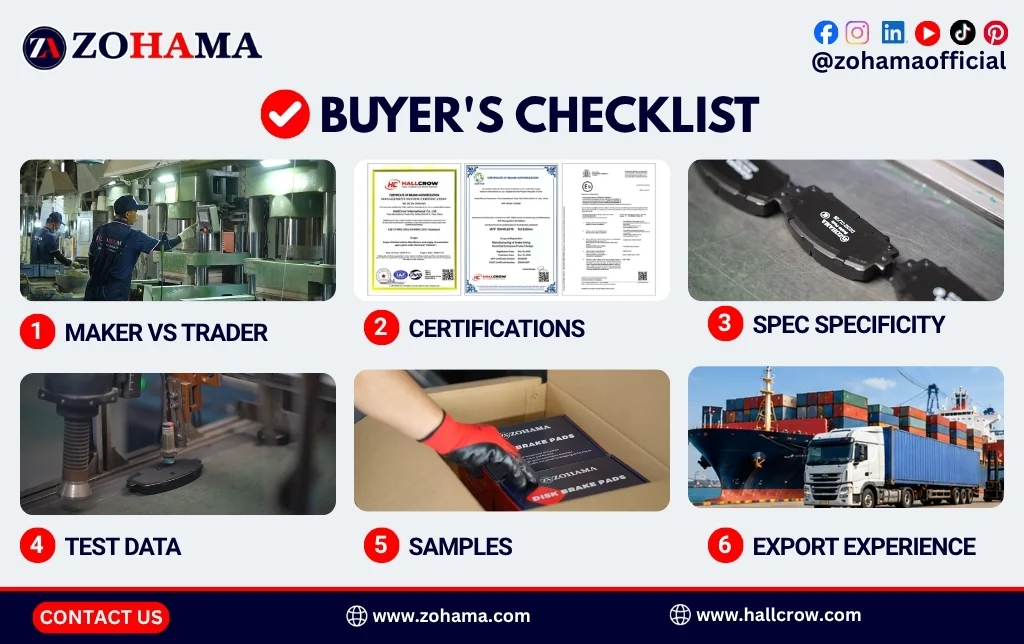
Run every candidate supplier through the same checks, judged the same way, so you are comparing like with like:
| What to verify | How to verify it | Red flag |
|---|---|---|
| Maker vs trader | Ask how the pad is formulated and pressed | Vague answers, no process detail |
| Certifications | Request ISO 9001, IATF 16949, ECE R90 proof | “Certified” claimed but no documents |
| Spec specificity | Check listings state OE number and fitment | Only “premium quality” language |
| Test data | Ask for friction, shear and wear results | No data, or data that never arrives |
| Samples | Request a physical sample per new number | Reluctance to sample before volume |
| Export experience | Ask about your market and documentation | No history in your region |
Certifications That Actually Matter
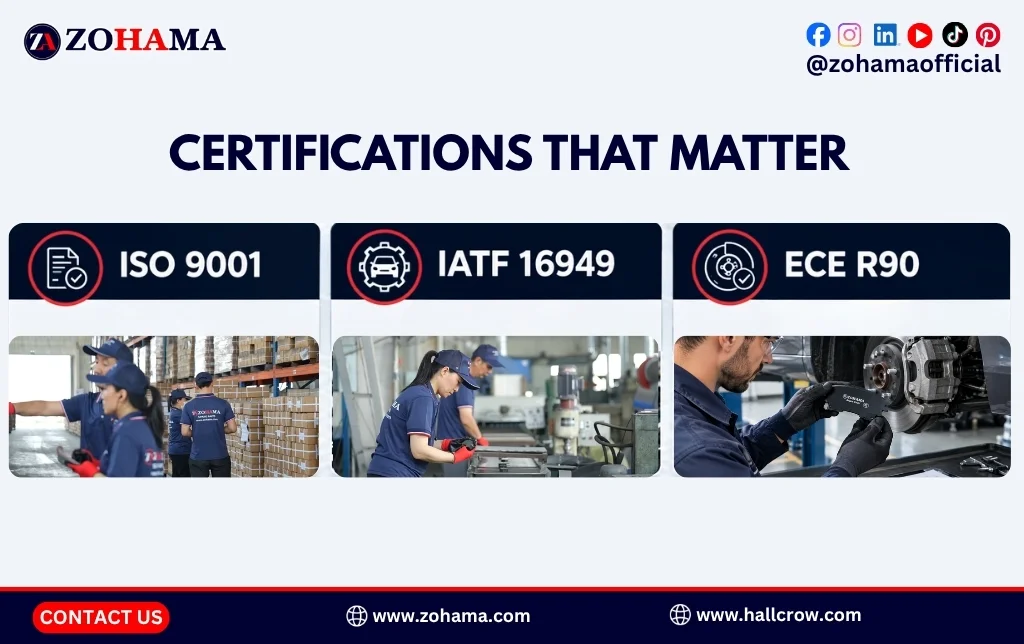
Three certifications carry real weight for a brake pad, and a serious manufacturer can produce all of them on request. ISO 9001 covers the quality-management system, IATF 16949 is the automotive-specific standard that shows the process is built for auto parts, and ECE R90 is the braking approval your own customers will eventually ask about. The test is not whether a supplier claims these, it is whether they hand you the certificates without friction. If proof is slow or never comes, treat the claim as marketing.
For the deeper view of how compliance and compound choice affect a pad, the brake pad materials breakdown explains what these standards are actually protecting.
Judge Product Specificity Over Marketing
A reliable tell of a real manufacturer is how specific they are. A maker talks in OE numbers, vehicle applications, friction classes and dimensions, because they know exactly what comes off their line. A reseller leans on adjectives, because they are describing a box, not a process. When you read a supplier’s product pages, look for the exact reference and fitment on each item. Specificity is hard to fake and easy to check, which makes it one of the fastest filters you have.
Samples, MOQ and the First Order
Before a bulk commitment, a good manufacturer expects you to sample. Approve a physical sample on any number you have not bought before and keep it as your reference standard, then judge every future batch against it. Minimum order quantities should be structured around what a distributor actually moves rather than a fixed pallet, and pricing should improve with volume. A supplier who resists sampling or hides MOQ until you commit is telling you something.
The full inspection routine that experienced importers run is covered in the guide on quality checks for passenger car brake pads before bulk import, and how to weigh a supplier overall in how to choose a passenger car brake pad supplier.
Logistics and Documentation Experience
The best pad in the world is worthless sitting at a port because the paperwork was wrong. A manufacturer with real export experience in your region knows which documents your customs office wants before you ask and prepares them for the destination market. Ask directly about shipments to your market. A supplier who has done it before saves you the education; one who has not will learn on your container.
Where Zohama Fits
Zohama is a manufacturer with certified production, OE-matched listings, sampling on new lines and export experience across the GCC, Africa and Central Asia, which is the profile this checklist is built to find. For the wider context of sourcing from China, the guide on sourcing light-vehicle brake pads from China walks through it end to end, and the distributor and partner program is where a vetted partnership starts.
Frequently Asked Questions
How do I tell a brake pad manufacturer from a trader in China?
Ask how the pad is formulated, pressed and finished. A manufacturer can explain the process, adjust a specification and stand behind a batch; a trader gives vague answers because they only buy and relabel.
What certifications should a brake pad manufacturer have?
ISO 9001 for the quality system, IATF 16949 for automotive-specific process control, and ECE R90 for braking approval. A serious maker provides the certificates on request without delay.
Should I order samples before a bulk order?
Yes. Approve a physical sample on any new number and keep it as your reference standard, then check every future batch against it. Reluctance to sample before volume is a warning sign.
Does export experience in my market matter?
It matters a great deal. A manufacturer that has shipped to your region knows the documentation your customs office needs and prepares it, which is the difference between a container that clears and one that sits at the port.
Conclusion
Choosing a brake pad manufacturer in China is a vetting exercise, not a gamble. Filter for a real maker over a trader, demand the certifications, judge specificity over marketing, insist on samples, and confirm export experience in your market. Run every candidate through the same checklist and the right partner becomes obvious. Zohama manufactures OE-spec brake pads and supplies distributors across its served markets factory-direct.