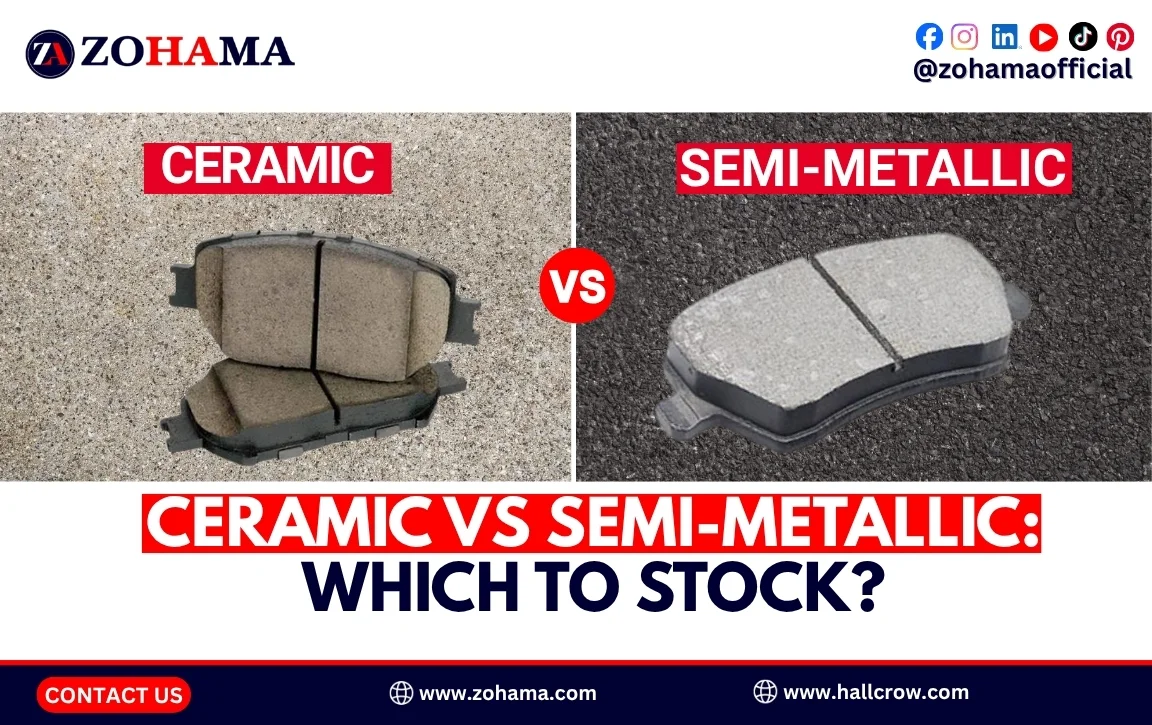
Ceramic and semi-metallic are the two friction materials a distributor sells most, and buyers ask for both. The question is not which is “better,” because neither wins outright; it is which one suits which vehicle and market, and therefore what mix belongs on your shelf. This guide compares the two on the things that decide a sale, then gives you a simple rule for stocking the right ratio for your market.
Both materials, and low-metallic and NAO alongside them, are covered in our light vehicle brake pads range.
Two Materials, Two Jobs
Ceramic and semi-metallic solve the same problem, stopping the vehicle, but they are tuned for different priorities. Ceramic is built around comfort: quiet, clean, smooth and easy on rotors. Semi-metallic is built around strength: it handles heat and load better than any comfort-focused material. Understanding that split, comfort versus strength, is the whole basis for deciding what to stock.
Head to Head
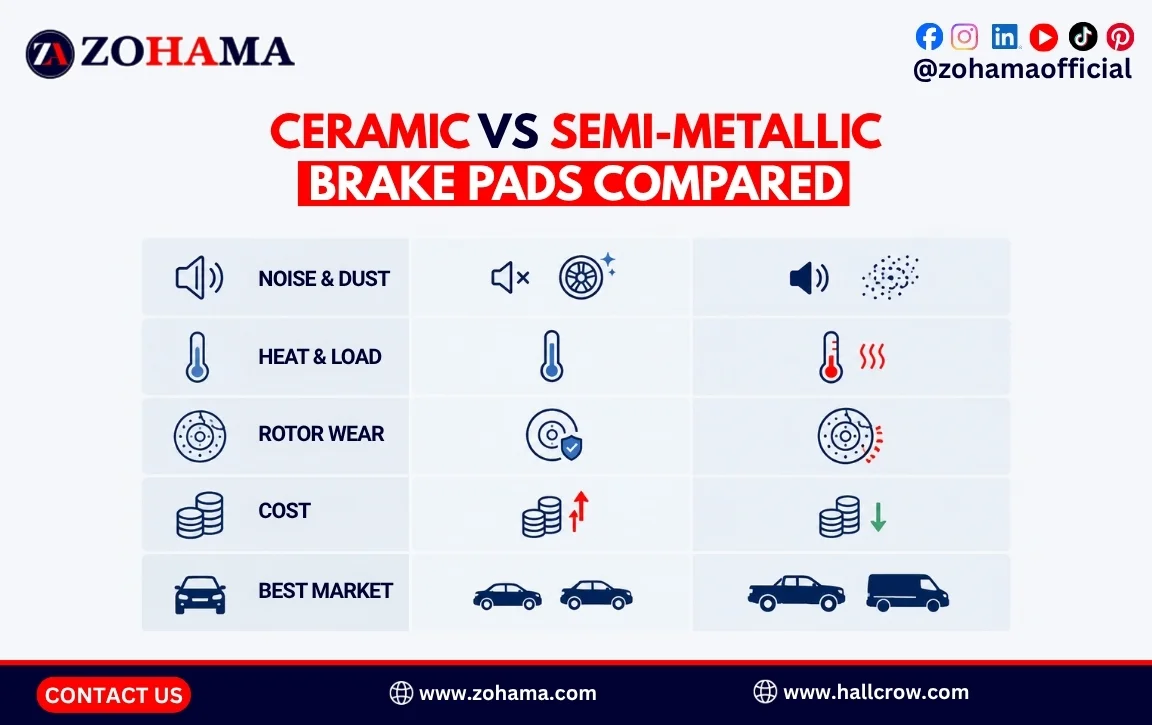
Here is how they compare on the factors that matter to the vehicles your customers drive:
| Factor | Ceramic | Semi-metallic |
|---|---|---|
| Noise & dust | Very low, clean wheels. | More dust, a little noisier. |
| Heat & load | Good for normal driving. | Best under heat and heavy load. |
| Rotor wear | Gentle on rotors. | More aggressive on rotors. |
| Cost | Higher. | Lower. |
| Best market | Passenger cars, SUVs, comfort buyers. | Pickups, LCVs, heavy or hot-climate use. |
Which Vehicles Want Ceramic
Ceramic sells into the comfort end of the market: passenger cars and SUVs where drivers notice quiet braking, clean wheels and a smooth pedal. In markets full of daily cars and family vehicles, ceramic is the volume seller, and customers will pay a little more for the refinement. It is the natural first choice for most passenger-car references, which is why it anchors the light vehicle brake pads range.
Which Vehicles Want Semi-Metallic
Semi-metallic sells into the working end: pickups, light commercial vehicles, towing, and hot climates where ambient heat adds to braking heat. Here, strength beats refinement, and the lower cost is a bonus. In markets with a lot of pickups and load-carrying vehicles, semi-metallic is not the budget option, it is the correct one. For the heavier side of this, see our guide on sourcing semi-metallic brake pads.
The Stocking Rule: Match the Mix to the Parc
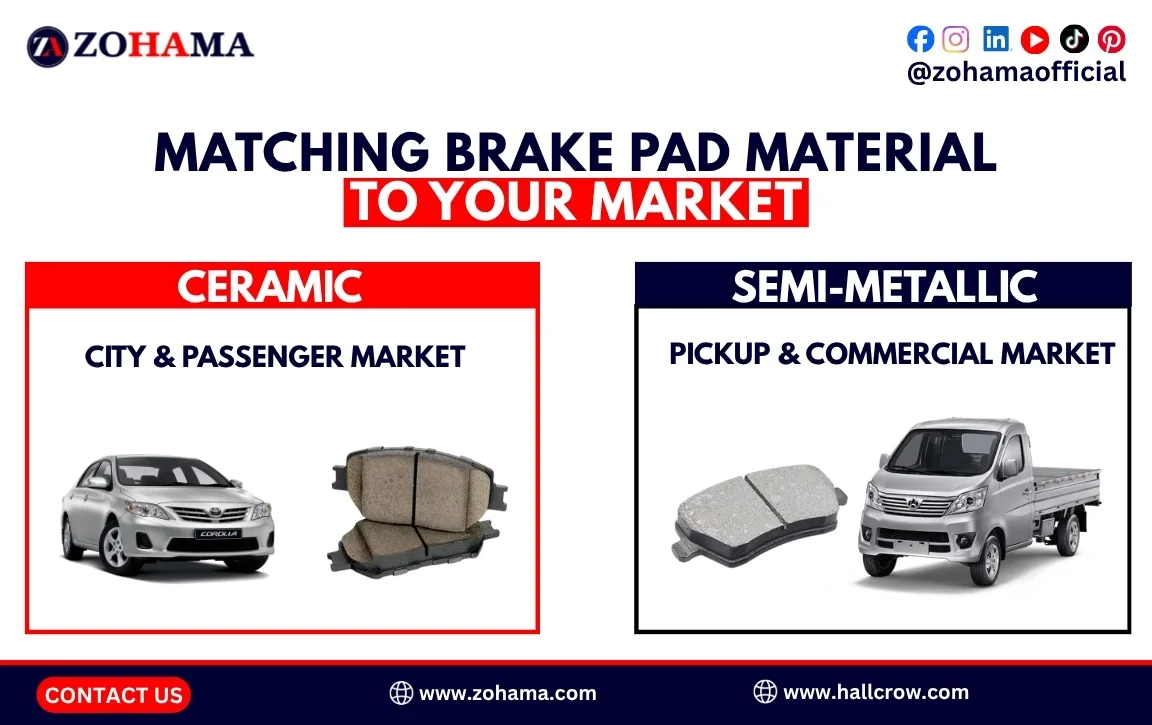
Do not stock ceramic and semi-metallic in a fixed ratio; match the mix to the vehicles on the road in your market. A city market full of passenger cars leans ceramic; a market full of pickups and commercial use leans semi-metallic; most markets are a blend and want both, weighted toward whichever dominates. Look at your fastest-moving references and stock the material each vehicle actually calls for, rather than defaulting to one across the board.
Don’t Forget Low-Metallic and NAO
Ceramic and semi-metallic are the headline choice, but two more materials fill the gaps: low-metallic gives strong, controllable braking between the two, and NAO gives soft, quiet braking for compact and city cars. A complete range carries all four, matched by application. See how they all compare in our brake pad materials breakdown.
Source Both From One Manufacturer
The cleanest way to carry the right mix is to source every material from one manufacturer, matched by OEM number, so a mixed order performs consistently. Browse the full material range and match by number on our OEM brake pads page, or request a quote and catalogue through our B2B brake pads page.
Frequently Asked Questions
Is ceramic or semi-metallic better?
Neither outright. Ceramic is better for comfort, quiet and clean wheels on passenger cars; semi-metallic is better for heat, load and heavy or hot-climate use. The right choice depends on the vehicle.
Which should a distributor stock more of?
Match the mix to your market. Passenger-car markets lean ceramic; pickup and commercial markets lean semi-metallic; most markets want both, weighted toward whichever type of vehicle dominates.
Which is cheaper?
Semi-metallic is usually lower cost, and ceramic higher. But in pickup and hot-climate markets, semi-metallic is the correct material, not just the cheaper one.
Do I need other materials besides these two?
A complete range also carries low-metallic for strong, controllable braking and NAO for quiet compact-car braking, matched by application.
Conclusion
Ceramic versus semi-metallic is a stocking question, not a winner-takes-all one. Ceramic owns the comfort end, semi-metallic the working end, and the right ratio is whatever your market’s vehicles call for. Match the mix to the parc, round it out with low-metallic and NAO, and source the whole range from one manufacturer matched by number. Do that and every customer finds the right pad on your shelf.