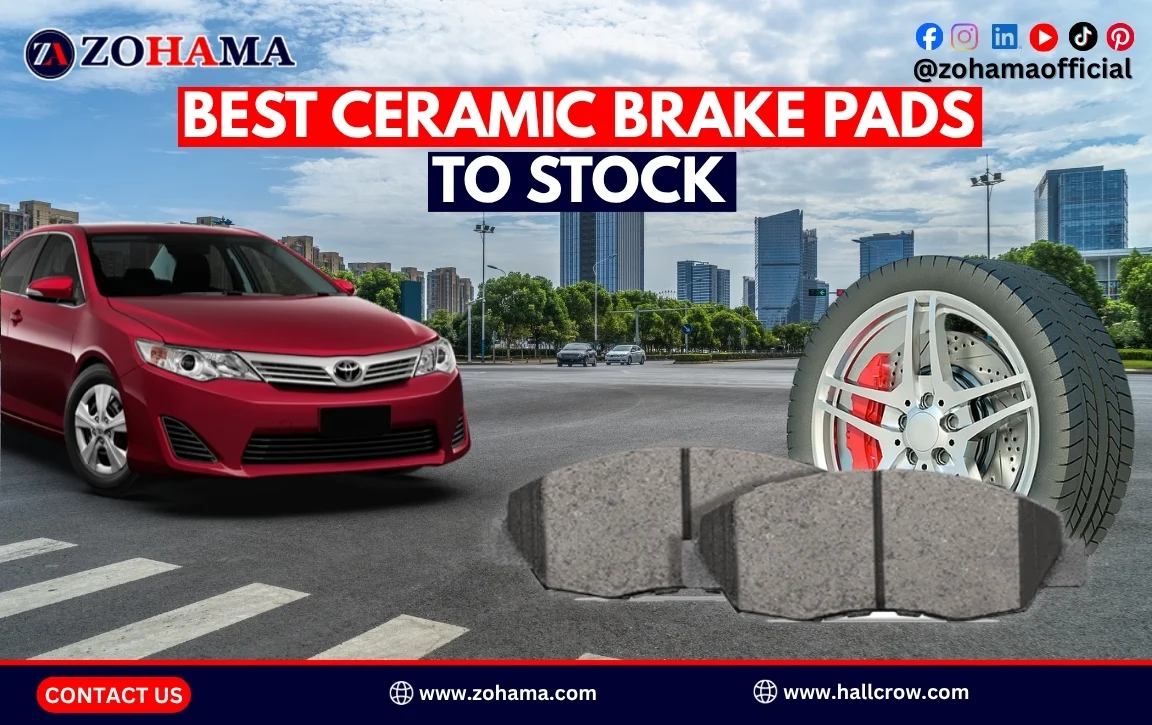
Ceramic brake pads are the line passenger-car customers increasingly ask for by name, which makes them a line a distributor needs to stock well rather than as an afterthought. But “ceramic” covers a wide quality range, and stocking the right ceramic pads for the right vehicles is what turns customer demand into repeat sales. This guide sets out where ceramic sells best, which vehicles to prioritise, what actually separates a good ceramic pad from a badge on a box, and how to source the line factory-direct.
Why Customers Are Asking for Ceramic
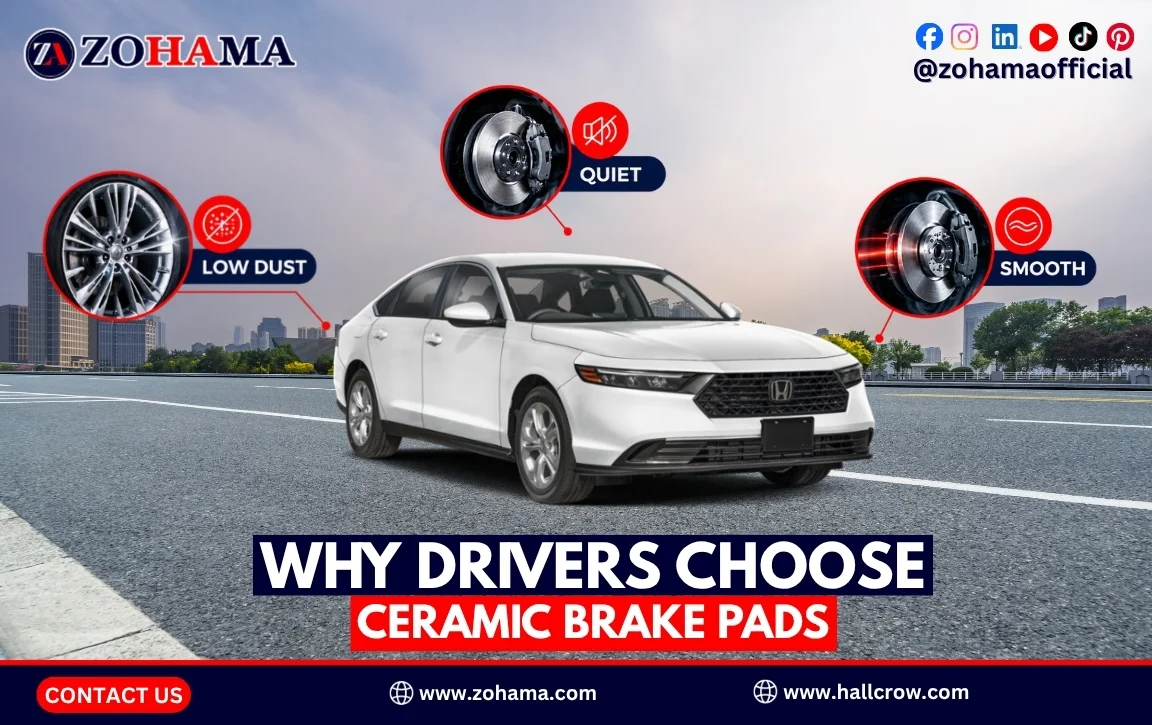
Ceramic pads earned their demand on three qualities drivers notice: low dust, so wheels stay cleaner; quiet operation, with less of the squeal that brings a car back to the workshop; and smooth, consistent braking in normal road use. For a distributor that reputation matters because it is customer-led. When drivers request ceramic by name, the workshop needs a ceramic line to sell, and the distributor who stocks a good one captures that demand instead of losing it.
Where ceramic fits against other materials is worth understanding before you weight an order; the brake pad materials breakdown compares the compounds in detail.
Which Vehicles to Prioritise for Ceramic
Ceramic is not the right pad for every vehicle, so stock it where it sells. Prioritise:
- Passenger sedans and hatchbacks driven mostly in normal road and city conditions, where low dust and quiet matter most.
- Higher-value and newer cars whose owners notice wheel cleanliness and refinement and will pay for it.
- Vehicles whose owners specifically request ceramic, which is itself a signal of where local demand sits.
Match the ceramic line to the fast-moving models in your market, drawing on the light-vehicle brake pads catalogue and matching exact fitments through the OEM brake pads page.
What Separates a Good Ceramic Pad
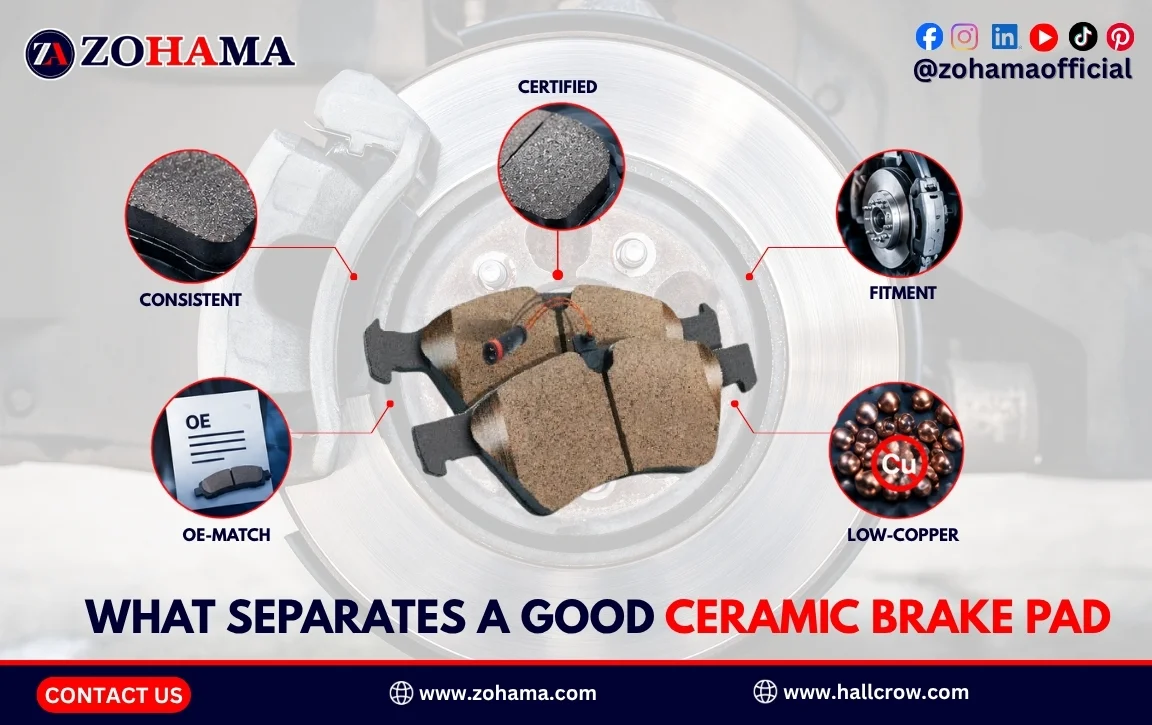
“Ceramic” on a box tells you little; the quality is in how the pad is made and proven. What to check:
| Marker | What good looks like |
|---|---|
| Compound consistency | Even friction material, firmly bonded, batch to batch |
| Certification | ECE R90 approval, ISO 9001 and IATF 16949 production |
| Fitment accuracy | Correct shim, hardware and sensor for the application |
| Reference data | OE number and application matched and documented |
| Low-copper / asbestos-free | Formulated to current compliance expectations |
Source Ceramic Factory-Direct
Because ceramic is a premium line customers ask for by name, a weak batch does more reputational damage than a cheap economy pad would. Buying factory-direct from the manufacturer protects that: a known compound, pressed and finished under one quality system, tested to ECE R90, in packaging you control. That is where the margin and the consistency both come from. The B2B brake pads page quotes ceramic lines against confirmed OE numbers, and the quality checks for passenger car brake pads guide covers verifying a batch before bulk import.
Build and Reorder a Ceramic Line
- Identify the fast-moving models in your market where ceramic demand is strongest.
- Match ceramic pads to those models by OE number and request a sample on each new set.
- Confirm the order and lock the approved ceramic numbers as your reorder standard.
- Reorder against that list so the ceramic line stays consistent batch to batch.
For structuring the first volume order, see the bulk buying car brake pads guide.
Stock Ceramic That Sells
Ceramic is customer-led demand, so stock a good one and stock it for the right vehicles. Match by OE number, check the quality markers, and buy factory-direct. Send Zohama your part list for a ceramic quote, or join the distributor and partner program for factory pricing and priority stock on the fast-moving ceramic numbers.
Frequently Asked Questions
Why do customers ask for ceramic brake pads?
Ceramic pads produce low dust, run quietly and brake smoothly in normal road use, qualities drivers notice, which is why they are increasingly requested by name and worth stocking well.
Are all ceramic brake pads the same quality?
No. “Ceramic” covers a wide range. Quality shows in compound consistency, ECE R90 certification, fitment accuracy, documented OE references and asbestos-free, low-copper formulation.
Which vehicles should I stock ceramic pads for?
Prioritise passenger sedans and hatchbacks in normal road use, higher-value and newer cars whose owners value cleanliness and refinement, and any vehicles whose owners request ceramic.
Can I order ceramic brake pads wholesale with flexible MOQ?
Yes. Volumes are structured around what a distributor moves, and a sample can be requested on any new ceramic set before committing to a bulk quantity.
Conclusion
Ceramic is a customer-led, premium line, and stocking it well, the right pads for the right vehicles, matched by OE number and bought factory-direct, turns that demand into repeat sales. Zohama manufactures ceramic passenger-car pads to OE spec and supplies them factory-direct to distributors across the GCC, Africa and Central Asia.