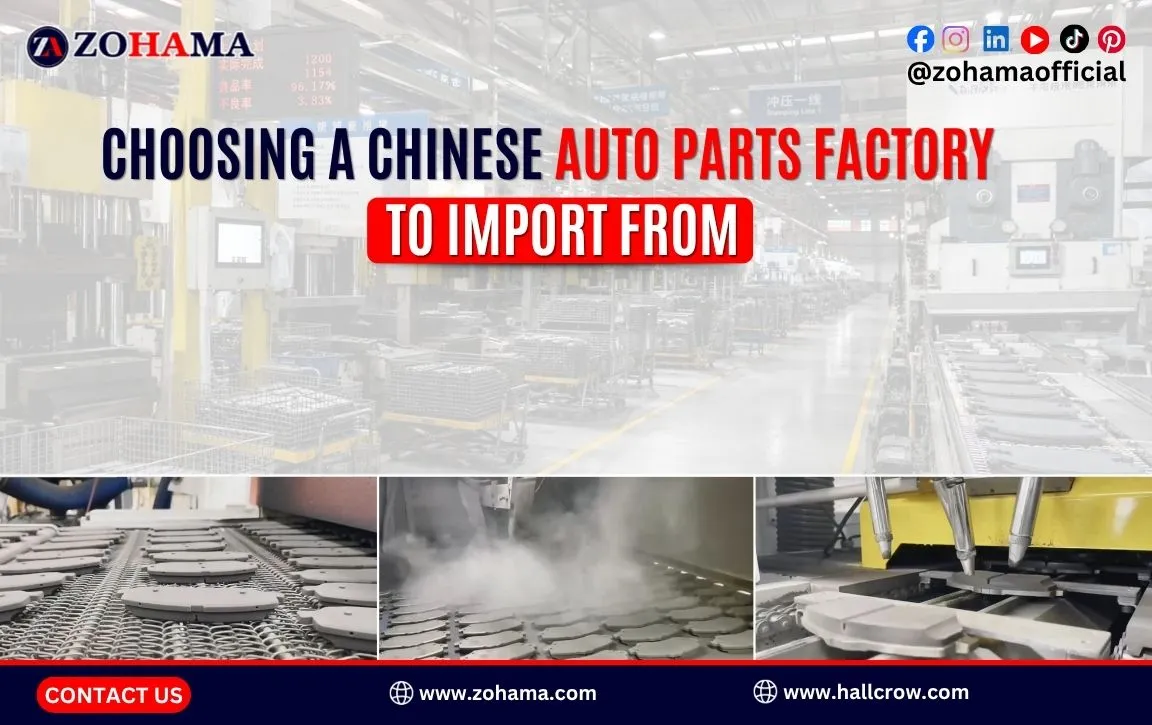
The global automotive supply chain has undergone a dramatic transformation over the past two decades. China has emerged as one of the most significant contributors to that transformation, producing a vast range of components that power vehicles across every continent. From brake pads and suspension systems to engine components and electrical parts, the country’s manufacturing ecosystem is both expansive and competitive.
For importers, fleet operators, and distribution businesses, the opportunity to import auto parts from China is real and financially attractive. Labor efficiencies, advanced production infrastructure, and a mature supplier network have made China the top sourcing destination for automotive components worldwide. However, the scale of that ecosystem also introduces complexity. Not every factory operates to the same standard, and selecting the wrong supplier can result in quality failures, compliance issues, shipment delays, and costly returns.
This guide is designed to help buyers make informed, confident decisions. Whether you are sourcing for the first time or looking to optimize an existing supply chain, understanding what to evaluate in a Chinese auto parts factory is the foundation of a successful import strategy.
Why China Remains the Leading Source for Automotive Components
Before diving into evaluation criteria, it is worth understanding why China continues to dominate global automotive parts manufacturing. The country produces components across virtually every vehicle category, including passenger cars, commercial trucks, motorcycles, and electric vehicles. Many of the top auto parts manufacturers in China operate across these categories, supplying both OEM and aftermarket components to global markets.
Several structural factors sustain China’s competitive position:
- A deep network of specialized industrial clusters where factories, tooling suppliers, raw material vendors, and logistics providers operate in close proximity
- Significant investment in manufacturing automation and precision engineering over the past decade
- Government-supported trade zones that streamline export documentation and reduce lead times
- A large and skilled industrial workforce with experience in international quality standards
- Established relationships with global OEM brands, which has elevated technical capability across the sector
For buyers looking to access wholesale car parts from China, these structural advantages translate into competitive pricing, broad product availability, and increasingly reliable quality when the right supplier is selected.
Key Factors to Evaluate When Choosing a Chinese Auto Parts Factory
Quality Management Systems and Certifications
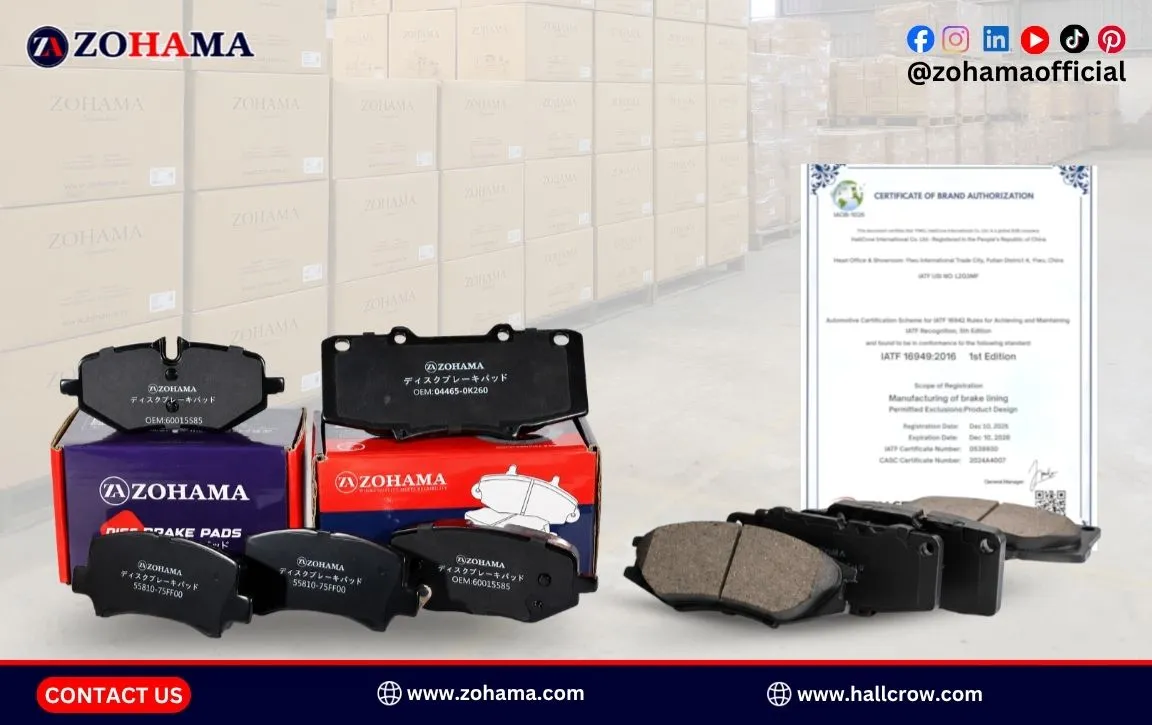
The most important starting point in any supplier evaluation is understanding the factory’s approach to quality management. A credible automotive parts manufacturer in China will hold internationally recognized certifications that demonstrate process discipline and product consistency.
Certifications to look for:
- IATF 16949 — The global standard for automotive quality management systems, developed specifically for companies in the automotive supply chain. Holding this certification signals that a factory operates systematic controls over production, inspection, and continuous improvement.
- ISO 9001 — A broader quality management standard that covers process documentation, customer satisfaction, and internal audits. While not automotive-specific, it is a baseline indicator of management maturity.
- ISO/TS 16949 — An older version of what became IATF 16949, still referenced by some factories. Buyers should verify whether the factory has transitioned to the current IATF standard.
- CE Marking — Relevant for parts destined for the European market, confirming conformity with EU safety and performance directives.
- DOT Compliance — Critical for brake pads, tires, and other safety-critical components entering the US market. The Department of Transportation requires specific testing and labeling.
Ask every potential supplier for their certification documents and verify authenticity through the issuing body. A reputable OEM auto parts supplier will provide this documentation without hesitation and be able to explain the scope of their certification.
OEM Capabilities and Product Specifications
Not all factories operate at OEM level. Some produce aftermarket parts that may differ in material composition, dimensional tolerances, or performance characteristics from the original equipment specification. Others manufacture exclusively for OEM contracts and maintain the tooling, documentation, and production controls to match original specifications precisely.
When evaluating a factory’s OEM capabilities, consider the following:
- Does the factory hold active OEM contracts with recognizable automotive brands?
- Can they produce to buyer-supplied drawings and specifications?
- Do they maintain first article inspection reports, process control plans, and measurement system analyses?
- What testing equipment is in use on the production floor and in the quality lab?
A factory with genuine OEM auto parts supplier credentials will typically have experience working with technical packages, including CAD drawings, material datasheets, and tolerance documentation. This matters not just for quality, but for regulatory traceability in markets with strict product liability standards.
For categories like OEM brake pads, where performance directly affects vehicle safety, OEM-level production discipline is non-negotiable. Substandard brake pads can fail under heat or load conditions that a compliant part would handle reliably.
Production Capacity and Lead Times
A factory may produce exceptional parts but lack the production capacity to fulfill your order volume reliably or within the timeframes your business requires. Before committing to a supplier, align on capacity clearly.
Key capacity-related questions to ask:
- What is the factory’s monthly production volume for the specific parts you require?
- How much of that capacity is already committed to existing customers?
- What is the standard lead time from purchase order to ready-to-ship?
- How does the factory manage peak demand or urgent orders?
- What is the capacity scaling process if your order volumes grow over time?
A bulk auto parts supplier in China operating at scale will typically have dedicated production lines, defined scheduling systems, and a clear capacity reservation process. Smaller factories may offer more flexibility and customization but carry higher risk during periods of high demand.
Minimum Order Quantities (MOQ)
MOQ is a critical factor that determines whether a factory is commercially viable for your business model. Large automotive component factories often set MOQs that are well-suited for distribution businesses and fleet operators but may be prohibitive for smaller importers or businesses testing a new product category.
Understanding MOQ in context:
- MOQ is often tied to production batch sizing, tooling setup costs, and raw material procurement minimums
- Some factories apply separate MOQs per SKU, which can significantly increase the total commitment when sourcing a broad range of parts
- Negotiating MOQ flexibility is possible, particularly for long-term relationships or when placing mixed product orders
- Some bulk auto parts suppliers in China offer tiered pricing structures where volume commitments unlock lower per-unit pricing
When comparing suppliers, evaluate the total landed cost at various order volumes rather than unit price alone. A factory with a higher MOQ and lower unit price may deliver better economics than one with a flexible MOQ but higher pricing.
Range of Products and Cross-Category Capability
Sourcing from multiple factories for different product categories introduces supplier management complexity, extended procurement cycles, and higher logistics costs. A Chinese auto parts factory with broad product coverage can simplify your supply chain considerably.
Evaluate whether the factory produces across complementary categories:
- Brake systems (brake pads, rotors, calipers, brake lines)
- Suspension and steering components (shock absorbers, control arms, tie rods, ball joints)
- Engine components (filters, gaskets, belts, pulleys)
- Electrical parts (sensors, switches, alternators, starters)
- Body and exterior parts (mirrors, lights, grilles, trim pieces)
- Filtration (oil filters, air filters, fuel filters)
A factory with strong cross-category capability also tends to have more mature process systems and broader quality infrastructure, since managing diverse product lines requires systematic discipline.
Pricing Transparency and Commercial Terms
Pricing from a Chinese auto parts exporter should be understood within a structured framework. Request formal quotations that itemize:
- Unit price at stated MOQ
- Packaging type and labeling specifications
- Incoterms (EXW, FOB, CIF, or DDP — each transfers cost and risk differently)
- Payment terms (T/T in advance, Letter of Credit, or trade credit for established relationships)
- Price validity period
- Tooling or NRE (non-recurring engineering) charges for custom parts
Be cautious of unusually low pricing. In auto parts sourcing from China, pricing that falls significantly below market benchmarks often reflects compromised material quality, outsourced production to unvetted subcontractors, or misrepresented specifications. Professional buyers treat pricing as one data point within a broader evaluation, not a primary decision driver.
How to Verify and Evaluate a Factory Before Placing Orders
Conduct a Factory Audit
Documentation tells part of the story. A factory visit or structured audit tells the rest. For significant sourcing commitments, a direct factory audit is a worthwhile investment that reduces downstream risk considerably.
During an on-site audit, evaluate:
- Factory size and layout relative to claimed production capacity
- Condition and modernity of production equipment
- Raw material storage, traceability, and handling procedures
- In-process quality inspection checkpoints
- Finished goods inspection and packaging procedures
- Worker training documentation and production floor discipline
- Environmental and social compliance indicators
If a direct visit is not feasible, engage a reputable third-party inspection company with automotive sector experience. Organizations such as SGS, Bureau Veritas, and Intertek offer structured factory assessments and production monitoring services that provide an independent quality verification layer.
Request and Test Product Samples
Before placing a production order, always request physical samples of the specific parts you intend to import. Sample evaluation serves several purposes:
- It confirms that the factory can produce to the specifications discussed
- It provides a reference standard against which production batches can be inspected
- It allows for independent laboratory testing of material composition and performance characteristics
- It reveals any dimensional or finish discrepancies before they affect a full shipment
For safety-critical components like brake pads, conduct laboratory testing that includes friction coefficient measurement, compressibility testing, shear strength assessment, and heat resistance evaluation. For other parts, dimensional inspection against engineering drawings and visual quality assessment are minimum requirements.
Retain approved samples as contractual reference standards and reference them explicitly in your purchase order documentation.
Review References and Trading History
A factory’s track record with other buyers provides valuable insight into reliability, consistency, and responsiveness. When evaluating a car parts factory in China, request:
- Contact details for current or recent customers willing to provide references
- Export documentation or shipping records as evidence of trading activity
- Registered company information verifiable through China’s National Enterprise Credit Information Publicity System
- Third-party platform ratings and reviews if the factory operates on B2B sourcing platforms
For importers unfamiliar with sourcing from China directly, working with a verified sourcing agent or trading company with established factory relationships can reduce risk and administrative burden during the initial sourcing phase.
Assess Communication Quality and Responsiveness
The quality of communication during the pre-sale process is often predictive of the supplier relationship experience once orders are placed. Evaluate:
- Response time to inquiries and requests for information
- Clarity and professionalism of written communication
- Willingness to answer technical questions with specific, substantiated answers
- Availability of English-speaking technical staff or account managers
- Responsiveness to requests for documentation, certifications, and sample arrangements
A supplier that is difficult to engage before any commercial commitment is unlikely to improve in responsiveness once they have your order and deposit.
Navigating Compliance and Regulatory Requirements
Importing auto parts from China into regulated markets involves import compliance requirements that differ by destination country and product category. Overlooking these obligations can result in customs delays, product recalls, or legal liability.
Key compliance areas to address:
- Country of Origin Marking — Parts must be clearly labeled with country of origin per destination country customs regulations
- Safety Certifications — Brake pads, tires, lighting, and other safety-critical components may require market-specific certifications (DOT for the US, ECE for Europe, JASIC for Japan)
- RoHS / REACH Compliance — Electronic and electrical components destined for the EU must comply with hazardous substance restrictions
- Customs Classification — Accurate HS code classification affects duty rates and compliance obligations; work with a licensed customs broker for complex shipments
- Intellectual Property — Confirm that any parts bearing brand names or trademarks are legitimately licensed; importing counterfeit parts carries significant legal risk
An experienced automotive parts manufacturer in China with established export history will typically be familiar with these requirements and able to provide supporting documentation as part of the shipment package.
Building a Long-Term Supplier Relationship
The most cost-effective and reliable supply chains are built on long-term supplier partnerships rather than transactional spot purchasing. Investing in relationship development with a quality Chinese auto parts factory delivers compounding benefits over time.
Strategies for building durable supplier relationships:
Communicate demand forecasts regularly
Sharing your projected order volumes three to six months ahead allows the factory to plan capacity, reserve raw materials, and schedule production efficiently. This reduces lead times and improves fill rates on your side.
Conduct periodic performance reviews
Establish agreed performance metrics covering on-time delivery rate, defect rate, documentation accuracy, and responsiveness. Review these metrics quarterly and discuss improvement plans where needed. This creates accountability and signals that you are a buyer who takes quality seriously.
Visit the factory
In Chinese business culture, in-person relationship building carries significant weight. Factory visits, even annual ones, strengthen trust, improve communication, and give you a clearer operational picture of your supplier.
Consolidate your spend
A supplier who receives a larger share of your purchasing volume is naturally more motivated to prioritize your orders, offer favorable pricing, and invest in capability development that benefits your product categories.
Pay on agreed terms
Reliable, on-time payment is one of the most powerful relationship-building behaviors a buyer can practice. Suppliers who trust their customers to pay reliably are more willing to extend credit, hold inventory, and accommodate urgent requests.
Engage in joint problem solving
When quality or delivery issues arise and they will occasionally approach them as collaborative problems rather than adversarial disputes. Suppliers who feel their customers work with them constructively are more likely to invest in systemic fixes rather than short-term workarounds.
Provide clear feedback on samples and shipments
Specific, documented feedback on what meets specification and what does not helps the factory improve systematically. Vague complaints are difficult to act on; precise feedback with reference to drawings or approved samples accelerates resolution.
A well-managed relationship with a reputable wholesale car parts supplier in China is a significant competitive asset. It enables faster response to market opportunities, more consistent product quality, and a reliable supply base that can scale with your business.
Red Flags to Watch for When Evaluating Suppliers
Not every factory presenting itself as a qualified auto parts manufacturer will deliver on its claims. Watch for these warning indicators during the evaluation process:
- Reluctance to provide certification documents or inconsistencies in the documentation provided
- Inability to answer specific technical questions about production processes or material specifications
- Significantly lower pricing than comparable suppliers without a credible explanation
- Vague or evasive responses to questions about subcontracting
- Pressure to skip the sampling process or accept samples that differ from your specifications
- No traceable company registration or verifiable export history
- Communication that drops off after initial pricing discussions
- Inability to provide references or examples of similar products supplied to other buyers
Trust your evaluation process. The time invested in due diligence before placing a first order is substantially less than the cost of managing a failed shipment or a product liability issue.
How Zohama Simplifies Auto Parts Sourcing from China
At Zohama.com, we have built our supplier network around the evaluation criteria described in this guide. Every factory in our network has been assessed for quality certifications, OEM capabilities, production capacity, and export compliance track record. Our product range spans brake systems, engine components, suspension parts, electrical components, filtration, and more all sourced from verified automotive component manufacturers.
Whether you are a distribution business building out your product catalog, a fleet operator managing maintenance costs, or a trading company looking for a reliable China auto parts exporter, Zohama offers a transparent, professional sourcing experience backed by supplier accountability.
Frequently Asked Questions – Importing Auto Parts from China
What is a Chinese auto parts factory and why should I consider importing from one?
A Chinese auto parts factory is a manufacturing facility that produces automotive components such as brake pads, engine parts, suspension systems, and electrical components. Importing auto parts from China can offer competitive pricing, access to OEM-grade parts, and a wide product range. Choosing a reliable supplier ensures consistent quality and compliance with destination country regulations.
How do I verify an OEM auto parts supplier in China?
To verify an OEM auto parts supplier, check certifications such as IATF 16949 or ISO 9001, request product samples, review production capabilities, and examine their export history. Factory audits and third-party inspections are effective ways to ensure compliance with quality standards.
What are key factors to consider when evaluating an automotive parts manufacturer in China?
Key factors include production capacity, minimum order quantities (MOQ), OEM capabilities, cross-category product range, quality certifications, pricing transparency, and communication responsiveness. Evaluating these elements reduces risks of shipment delays, defective parts, or compliance issues.
How can I ensure imported auto parts meet regulatory standards?
Always confirm that the supplier provides documentation for import compliance requirements. Check certifications relevant to your market, such as DOT for the US, CE for Europe, and RoHS/REACH for electronic components. Proper customs classification and labeling also help avoid regulatory delays.
What is the minimum order quantity (MOQ) for wholesale car parts from China?
MOQ varies by factory and product category. Larger factories may have higher MOQs suited for distributors or fleet operators, while some bulk auto parts suppliers in China offer tiered pricing or flexible MOQ arrangements for long-term partners. Always evaluate MOQ in context with overall cost and supply chain needs.
How do I build a long-term relationship with a China auto parts exporter?
Communicate forecasted order volumes, provide clear feedback on samples and shipments, pay on agreed terms, and conduct periodic performance reviews. Visiting the factory and engaging in collaborative problem-solving further strengthens trust and ensures consistent product quality.
What red flags should I watch for when selecting a Chinese auto parts factory?
Be cautious if a factory hesitates to provide certification documents, cannot answer technical questions, offers unusually low prices without explanation, avoids sampling, or has no verifiable export history. Ignoring these warning signs can lead to quality failures, shipment delays, and regulatory issues.
Can I import safety-critical components like brake pads from China?
Yes, but always source from verified OEM auto parts suppliers with proper quality certifications. Conduct sample testing and ensure compliance with destination country safety standards. For example, DOT certification is required for brake pads in the US, and CE marking applies in the European Union.
How do I start importing automotive components from China if I am a first-time buyer?
Start by researching verified suppliers, requesting product samples, understanding import compliance requirements, and assessing production capacity. Engaging a sourcing agent or using a platform like Zohama.com can simplify the process and reduce risks for first-time importers.
Conclusion
Choosing the right Chinese auto parts factory to import from is one of the most consequential decisions in automotive parts sourcing. The rewards of getting it right are real: competitive pricing, consistent quality, scalable supply, and a supplier relationship that supports business growth over the long term.
The evaluation framework covered in this guide quality certifications, OEM capabilities, production capacity, MOQ alignment, factory audits, sample testing, and compliance verification gives you the tools to make that decision with confidence rather than guesswork.
China’s automotive manufacturing ecosystem is genuinely capable of delivering world-class components. The key is knowing how to identify the factories and OEM auto parts suppliers that operate at that level, and building the kind of structured, trust-based relationships that bring out the best in those partnerships.
Start every new sourcing relationship with rigorous due diligence, document your quality standards clearly, and invest in the supplier relationship as a long-term asset. That approach, applied consistently, is the foundation of a supply chain that delivers competitive advantage rather than operational risk.